What Is BBL Oil? A Complete Guide to Oil Barrels Explained Simply
BBL stands for barrel of oil, a standard volume measure. One BBL equals exactly 42 US gallons or about 159 liters of crude oil. This unit is widely used in the oil and gas industry for consistency.
The 42-gallon size comes from early oil storage and shipping practices. It was a manageable barrel size for handling and transport. This history explains why the BBL remains the standard today.
Oil prices are quoted per barrel (bbl) in global markets. This helps keep volume and cost comparisons consistent across contracts and countries. Understanding BBL is essential for following market reports.
BBL also aids logistics, matching tank capacities and transportation units. This standard simplifies tracking, accounting, and operations worldwide. It stays the key reference for measuring oil volumes.
Key Takeaways
- One BBL equals exactly 42 US gallons or roughly 159 liters of crude oil.
- The 42-gallon barrel size is the industry standard for measuring oil volume.
- Oil prices are almost always quoted per barrel (bbl) in contracts and markets.
- Barrels help standardize volume across different oil types and trading regions.
- Bbl volumes assume standard pressure (14.7 psi) and temperature (60°F) conditions.
- Common multiples include Mbbl (thousand barrels) and MMbbl (million barrels).
What Exactly Is a BBL in Oil Measurement?
The term bbl stands for “barrel” in the oil industry. It is the common unit for measuring crude oil volume. It also applies to many petroleum products.
People in the oil industry use it daily. One bbl equals exactly 42 U.S. Gallons, which is about 159 liters.
The volume unit was set in the 1800s and still used. It equals one oil barrel at 14.696 psi and 60°F. This standard helps with oil price and production tracking.
The bbl unit is used for crude oil measurements. It also covers condensate and natural gas liquids. Refined oil products use it too.
Using a uniform volume helps traders, producers, and analysts compare data worldwide. Without this fixed measure, understanding global supply and demand would grow much harder.
| Volume Unit | Gallons (U.S.) | Liters |
|---|---|---|
| 1 bbl (oil barrel) | 42 | 158.987 |
To convert bbl into other volumes, multiply or divide by these exact numbers. This standardization avoids confusion when calculating shipment sizes or market values.
Sometimes variations happen for specific products or regions. But the 42-gallon barrel remains the baseline in oil measurement.
Why Is an Oil Barrel 42 Gallons, Not 40 Or 55?
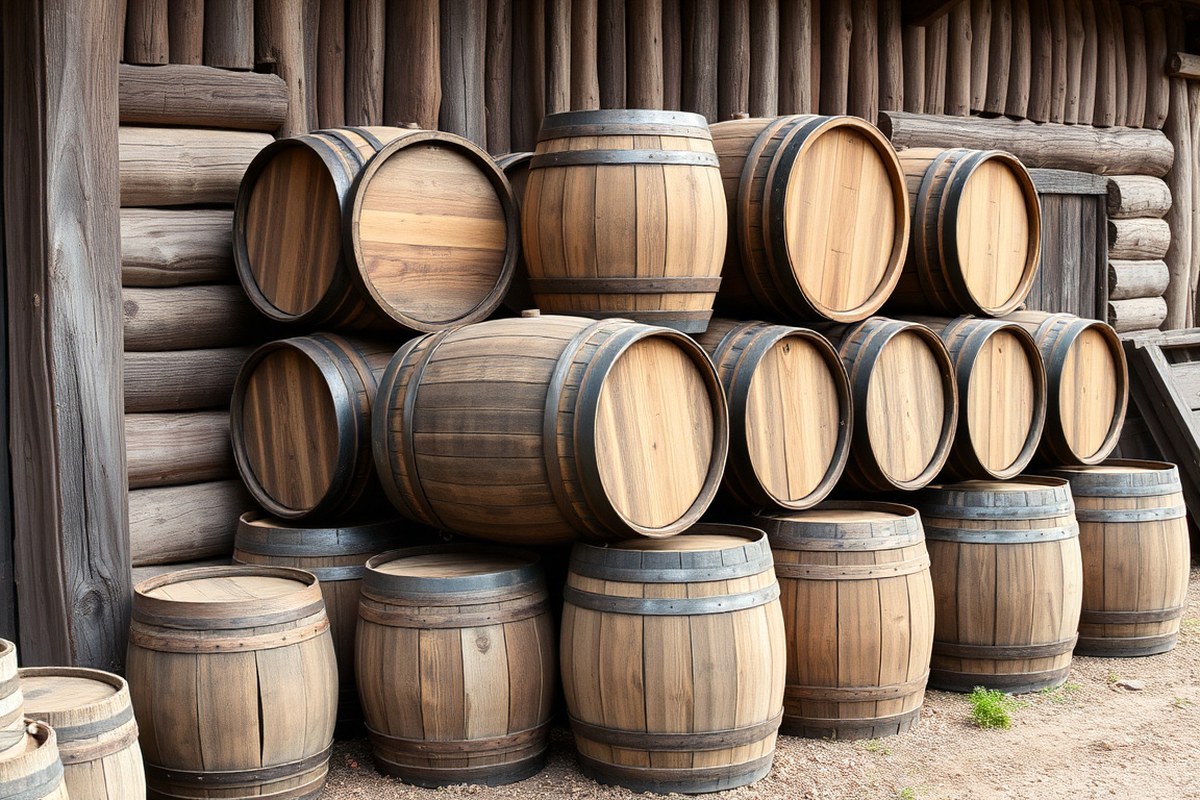
The reason the standard oil barrel holds 42 gallons goes back to the 1860s in Pennsylvania. Oil producers chose 42 gallons as a good wooden barrel size.
It was practical, easy to handle, and fit transport needs well. This size balanced the needs for handling, storage, and transport without being too heavy or bulky.
By the 1700s, 42 gallons became a common barrel size. It was used to ship fish, molasses, and whale oil. The oil industry used this barrel size from older standards.
The 42-gallon size matched the wooden barrel design already in place. These barrels were also painted blue, leading to the abbreviation “bbl” for blue barrel.
Choosing 42 gallons also helped reduce product loss from evaporation and leakage during transport. Smaller barrels meant more units to handle and higher transport costs. Bigger barrels were harder to move and risked damage.
Forty-two gallons made barrels easy to carry and load. It fit well with rail and wagon transport methods in that time.
Standard Oil made 42-gallon blue barrels very popular across the US. This helped set the 42-gallon barrel as the industry standard.S. The 42-gallon barrel size is still the official oil measure.
Crude oil is rarely transported this way today, though. The 42-gallon standard is now a unit of measure rather than a physical container size.
One 42-gallon crude barrel produces about 44 gallons of refined products. This old measure stayed fixed because it matched 1860s tech and shipping limits.
Remember, the 42-gallon barrel size was set long before modern transport. So it suits measurement, not today’s shipping needs.
How Is the BBL Volume Measured and Standardized?
A 42-gallon barrel, or bbl, volume is measured at 60°F. This is the standard temperature. It equals about 15°C.6°C) and normal atmospheric pressure. These conditions come from the American Petroleum Institute’s standards.
Oil expands or contracts as temperature changes. So measurements must be adjusted to this baseline.
Measuring at 60°F keeps volume comparisons fair across different climates and times of year. For example, oil in hot Texas looks like it has more volume. The same oil in cold Alaska shows less volume.
This is without standardization. Pressure matters less for liquid crude oil volume. It is usually defined around 14.7 psi or 1 atmosphere.7 pounds per square inch, typical atmospheric pressure.
To adjust volumes to standard conditions, the actual temperature of the oil sample is recorded. Then a temperature correction factor is applied. This factor shows how much the volume changes with every degree above or below 60°F. For instance, crude oil volume can change by roughly 0.5% with a 10°F temperature difference.
Here is a volume comparison: heating oil increases volume. Cooling oil decreases volume. The standard is 60°F.
| Temperature (°F) | Volume Relative to 60°F (%) |
|---|---|
| 40 | About -1 % (contracted) |
| 60 | 0 % (reference) |
| 80 | About +1 % (expanded) |
| 100 | About +2 % (expanded) |
These changes matter for trading, reporting, and reservoir estimates. Without standardization, there would be confusion over actual oil quantities.
You may see temperature gauges and densitometers at measurement points. They help correct readings to standard conditions.
The process costs time and requires skilled operators. But the accuracy it delivers prevents financial disputes. Sometimes the pressure is slightly adjusted for specific contract terms.
But 60°F and atmospheric pressure remain the baseline for most measurements. This practice helps you compare volumes worldwide. It is key to the oil and gas business.
Are Crude Oil Barrels Physical Containers Used for Transport?
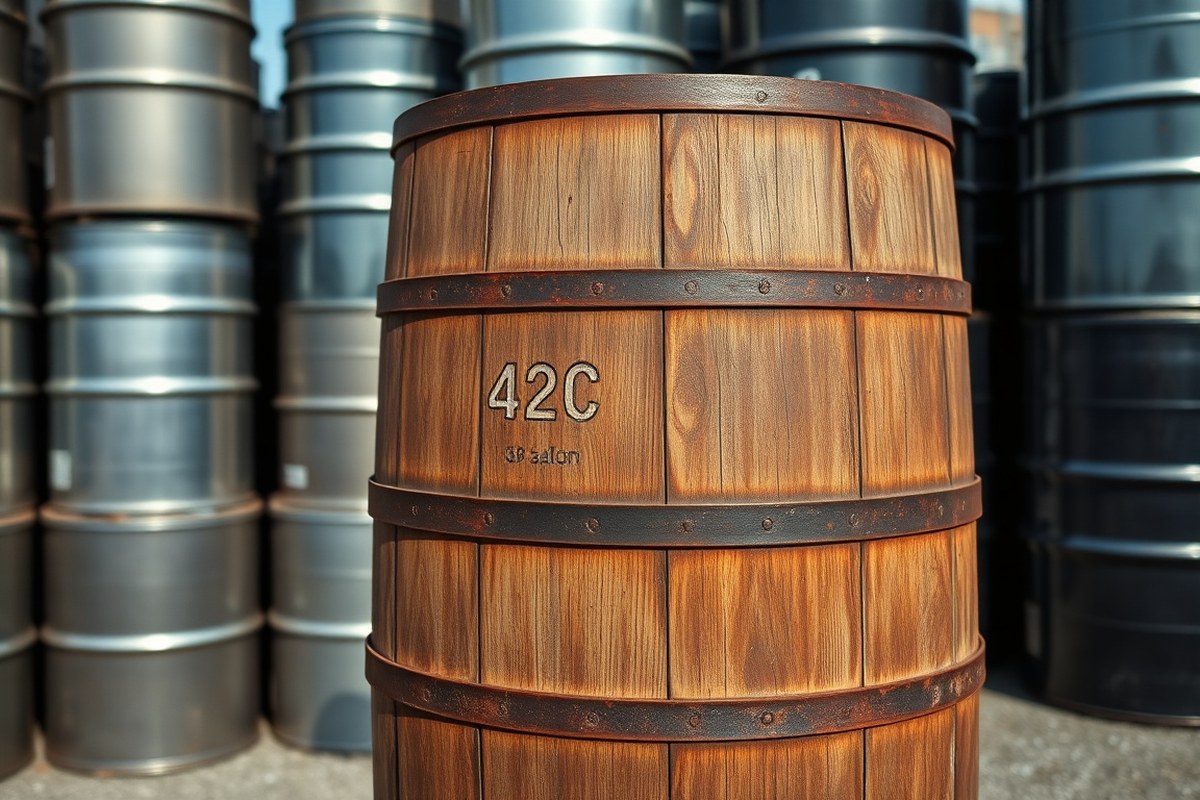
Crude oil is no longer shipped in physical 42-gallon barrels today. In the 1850s, producers used wooden barrels to move oil. They often reused whiskey or fish barrels for this purpose.
These barrels set the standard unit of measurement. But they stopped being practical as oil volumes and transport methods grew.
Most crude oil now moves by pipelines, oil tankers, and rail cars. Pipelines carry millions of barrels daily across countries. Large oil tankers transport crude overseas in bulk, often holding millions of barrels per trip.
Rail cars offer flexible regional transport where pipelines don’t reach. These methods are far cheaper and more efficient than shipping in individual barrels.
Physical barrels aren’t used anymore, but the 42-gallon barrel still measures oil. This unit is used worldwide for pricing oil. The industry kept this standard for consistency in reporting production, sales, and consumption.
Pricing crude oil at, say, $62 per barrel is easy to understand. The barrel unit keeps oil measurement simple across the industry. Actual containers are now steel tanks and pipelines underground.
How Do Common BBL Multiples Like Mbbl and MMbbl Work?
The abbreviations Mbbl and MMbbl help simplify large volume numbers in the oil industry. “Mbbl” means one thousand barrels of oil, while “MMbbl” means one million barrels. This convention uses “M” to mean thousand.
“MM” stands for million. It’s a holdover from Roman numerals where M equals 1,000.
Daily oil production is often shown as bbl/d or BPD, standing for barrels per day. For instance, if a field produces 200 bbl/d, that’s 200 barrels every day on average. This rate helps operators track output but does not promise the exact same production going forward.
Other common multiples include:
- Bbl: a single barrel, 42 gallons of oil
- Mbbl: one thousand barrels (1,000 bbl)
- MMbbl: one million barrels (1,000,000 bbl)
- Bbl/d or BPD: barrels produced per day
- BOE: barrels of oil equivalent combining oil and gas volumes
- BOE/d: barrels of oil equivalent produced daily
Clear understanding of these helps you read oil reports correctly. For example, a reported production of 5 Mbbl over 10 days means 5,000 barrels total.
The report shows 500 bbl/d to mean average daily barrels pumped. This rate covers the entire stated period.
| Notation | Meaning | Example |
|---|---|---|
| Bbl | Single barrel of oil | 5,000 bbl produced in a month |
| Mbbl | Thousand barrels | 10 Mbbl equals 10,000 barrels |
| MMbbl | Million barrels | 3 MMbbl equals 3 million barrels |
| Bbl/d or BPD | Barrels produced per day | 200 bbl/d means 200 barrels daily |
Using these units correctly lets you compare production volumes, calculate reserves, and value oil assets. Accurate reading also supports trading and investment decisions in energy markets. Keep in mind that daily production rates can fluctuate due to maintenance or market demand changes.
Double-check whether numbers use lowercase or uppercase “M” to avoid costly misinterpretations.
What Is the Difference Between BBL and Barrels of Oil Equivalent (BOE)?
Bbl measures the volume of oil, specifically 42 U.S. Gallons. BOE stands for barrel of oil equivalent and represents energy across oil and gas. BOE converts different fuels into one energy unit using a set conversion ratio.
Definition and Use of BOE
BOE expresses the combined energy of oil and natural gas as a single figure. It helps companies report total energy reserves in an easy-to-understand way. Unlike bbl, which just measures liquid oil volume, BOE covers diverse hydrocarbons.
BOE is calculated by converting natural gas volumes into oil energy equivalents. This lets you sum energy from gas and oil in one number. Companies often use BOE in financial reports to simplify asset values.
Energy Content of One Barrel of Oil
One barrel of oil contains about 5.8 million British thermal units (MMBtu). That equals roughly 1,700 kilowatt-hours (kWh) or about 6.1 gigajoules (GJ). These values assume average crude oil at standard conditions near 59°F.
The heating value varies by oil type, but these figures provide a good baseline. The Internal Revenue Service defines this heating value to standardize energy reporting. Using this value lets you compare oil directly with other fuels.
Converting Natural Gas to BOE
Natural gas converts to BOE by a standard ratio. One BOE equals about 6,000 cubic feet of gas. This ratio helps compare oil and gas volumes.
One thousand cubic feet (1 Mcf) hold roughly 1/6 the energy of one barrel of oil. So multiply natural gas volume by 1/6 to get BOE.
For example, 12,000 cubic feet of gas equals 2 BOE. You get this by dividing 12,000 by 6,000. This shows how gas volume converts to BOE.
This method simplifies combining gas and oil reserves in energy terms. Keep in mind, actual energy values for gas can vary slightly by composition.
How to Convert BBL into Other Volume Units Easily
One oil barrel (bbl) equals about 159 liters or roughly 0.159 cubic meters. To convert bbl to other units, use fixed multipliers. Multiply by factors for liters, gallons, cubic feet, or cubic meters.
This changes bbl into the needed measurement. You can use these straightforward multipliers to report or trade volumes consistently.
Common Volume Units Used in Oil Industry
The oil industry uses several volume units for production and trading. A barrel (bbl) is standard for crude oil and refined products. Other units include liters, U.S. Gallons, cubic feet, and cubic meters.
Gas volumes use million or billion cubic feet. This shows a larger scale but relates to volume.
It helps compare gas sizes clearly. Knowing these units helps you compare production and prices easily across markets.
Exact Conversion Factors for BBL
Here are the most reliable conversion factors for one bbl of oil. One barrel equals 42 U.S. Gallons by definition. This standard stays consistent for custody transfer and reporting.
| Unit | Equivalent to 1 bbl | How to Interpret It |
|---|---|---|
| U.S. Gallons | 42 gallons | Customary petroleum barrel volume in the U.S. |
| Liters | 158.9873 liters | Usually rounded to 159 liters for simplicity |
| Cubic meters (m³) | 0.1589873 m³ | Common metric volume in international trade |
| Imperial gallons | About 34.97 gallons | Smaller than U.S gallons; used in the UK |
| Cubic feet (ft³) | Approximately 5.615 ft³ | Used for natural gas, relates oil volume by space |
Variations in temperature and density can tweak these numbers slightly. For major transactions, custody transfer meters measure volumes more accurately at specified temperatures.
Worked Conversion Example
Say you have 1,000 bbl of crude oil and want to find liters and cubic meters. Multiply by 158.9873 for liters: 1,000 bbl × 158.9873 = 158,987 liters. That’s about 159,000 liters.
For cubic meters, multiply by 0.1589873: 1,000 bbl × 0.1589873 = 158.9873 m³. You have roughly 159 cubic meters of oil.
Use this approach for quick calculations in trading reports. Rounding to three decimals or whole liters usually works unless high precision is required. Keep in mind that large shipments may use custody measurement methods rather than rough conversions.
How to Read and Interpret BBL Figures in Oil Reports
Reading bbl figures accurately helps you understand oil production, sales, and reserves clearly. Each bbl value ties to volumes, pricing, or rates.
So grasping their meaning avoids costly errors. You need to spot what the numbers truly represent to make good decisions.
Understanding Pricing per BBL
When you see “$X per bbl,” it means the price for one barrel of crude oil. This price reflects oil’s market rate based on standard 42-gallon barrels. It sets the baseline for trade, contracts, and revenue calculations.
Prices quoted per bbl typically show up in daily market reports or contracts. They allow quick comparisons across different grades or suppliers without confusing measures. Bear in mind, prices can fluctuate due to quality, location, and demand.
Interpreting Production Numbers Accurately
Barrels per day (BPD) shows how much oil a field or company produces daily. This can mean a single well, an entire field, or even global output. Clarifying the source helps avoid overestimating or underestimating production scale.
Barrels per stream day (BPSD) applies to refinery units. It shows continuous output for 24 hours. It reflects how much product a unit makes when running.
This differs from BPD because it assumes nonstop running without downtime. Always check if reported figures specify this.
Common Mistakes and How to Avoid Them
Reading bbl data wrongly can lead to costly decisions. Mixing up BPD and BPSD happens often. People confuse gross and net volumes too.
Others misread price units regularly, causing errors. They skew your analysis of production or market value.
Here’s a checklist to read bbl data correctly:
- Confirm if bbl numbers are per day, per stream day, or total volumes
- Check whether prices are per barrel of crude or other product types
- Look for units in thousands (Mbbl) or millions (MMbbl) for scale
- Verify if reported volumes include liquids only or combined hydrocarbon equivalents
- Be sure the time frames for figures match your analysis period
- Don’t confuse barrels with barrels of oil equivalent (BOE), which include gas volume
- Watch for updates or revisions in production or reserves data
Interpreting bbl data with care keeps production, pricing, and reserves clear. Always check units, time periods, and definitions to avoid simple but costly misunderstandings.
Double-check if bbl volumes refer to actual production or theoretical capacity. Confusing these skews forecasts and investment decisions.
How to Calculate Oil Value from BBL Volume and Price
Calculating an oil shipment’s gross value depends on barrels and price. You multiply the volume in barrels (bbl) by price per barrel. This gives the shipment’s total gross value.
You multiply the total bbl by the current market price to get the gross commodity value. Several factors affect this calculation.
Oil quality changes the value. Transport costs also alter the final amount you get.
For example, say you have 2,000 bbl of crude oil priced at $75 per bbl. The simple gross value is 2,000 times $75, which equals $150,000.
This number does not include deductions for transport or quality adjustments. These can lower the effective price you receive.
- Identify the total volume in barrels (bbl). This is the base for your calculation.
- Check the current market price per barrel, usually given in US dollars.
- Multiply the bbl volume by the price per barrel to get the gross value.
- Adjust for oil quality if needed, for example, lower API gravity might reduce the price.
- Subtract transportation or handling fees if these costs apply to your transaction.
- Confirm if temperature corrections are needed, especially for custody transfer at different temps.
- Calculate the net value after all adjustments to estimate your actual revenue.
Transport fees can cut into the gross value significantly, especially for distant or offshore fields. Quality adjustments matter too. A heavy crude might sell for less per barrel than a light crude.
Temperature changes can slightly alter volume. But usually these corrections are small, around 0.05% volume increase near 60°F compared to 15°C.
To avoid surprises, always confirm which costs and adjustments apply before finalizing your revenue calculations. Knowing the step-by-step math helps you estimate income accurately and plan logistics or sales strategies better.
Your First Steps to Using BBL Oil Measures Confidently
Get started with oil volume measures by following these concrete steps. Each step helps you check your understanding and skills.
- Day 1: Learn what a BBL is and why it equals 42 gallons. Confirm by converting a small example volume yourself.
- Day 2: Practice reading oil reports that list volumes in BBL and its multiples. Check you can tell Mbbl from MMbbl.
- Week 1: Convert BBL to barrels of oil equivalent (BOE) when natural gas is involved. Test with real oil price data.
- Week 2: Use simple formulas to find oil’s dollar value. Multiply BBL volume by price per barrel. This gives you the total value in dollars. Verify calculations.
- Week 3: Check updates from oil traders or engineers each week. They explain how BBL keeps its standard. Stay informed to understand any changes. Note any changes.
- Week 4: Apply your knowledge to interpret daily production or stock reports accurately. Confirm by comparing numbers and units.
Frequently Asked Questions
Why Is the Abbreviation for Barrel of Oil “Bbl”?
The “bbl” abbreviation comes from the early oil industry. It likely stood for “blue barrel” used for crude oil storage in Pennsylvania.
Does the Volume of a Bbl Change with Oil Temperature?
Yes, oil expands when heated, changing the volume slightly. Standard measurements use 60°F to keep volumes consistent worldwide.
Can Bbl Be Used for Liquids Other Than Crude Oil?
Yes, bbl can measure refined products like gasoline. Different liquids may have slightly different volumes per tonne.
Why Is the Barrel Volume Important for Oil Trading?
Barrel volume standardizes pricing and contracts globally. This ensures all traders agree on the same quantity.
Are Digital Tools Available for Tracking Bbl in Shipping?
Yes, many platforms track bbl for shipments with real-time data. These tools help improve accuracy and logistics.
Before You Go
Understanding BBL oil measurement helps you work clearly with oil volumes and prices. Start by applying simple conversions to your current data. This skill lets you manage and analyze oil information with ease and confidence.