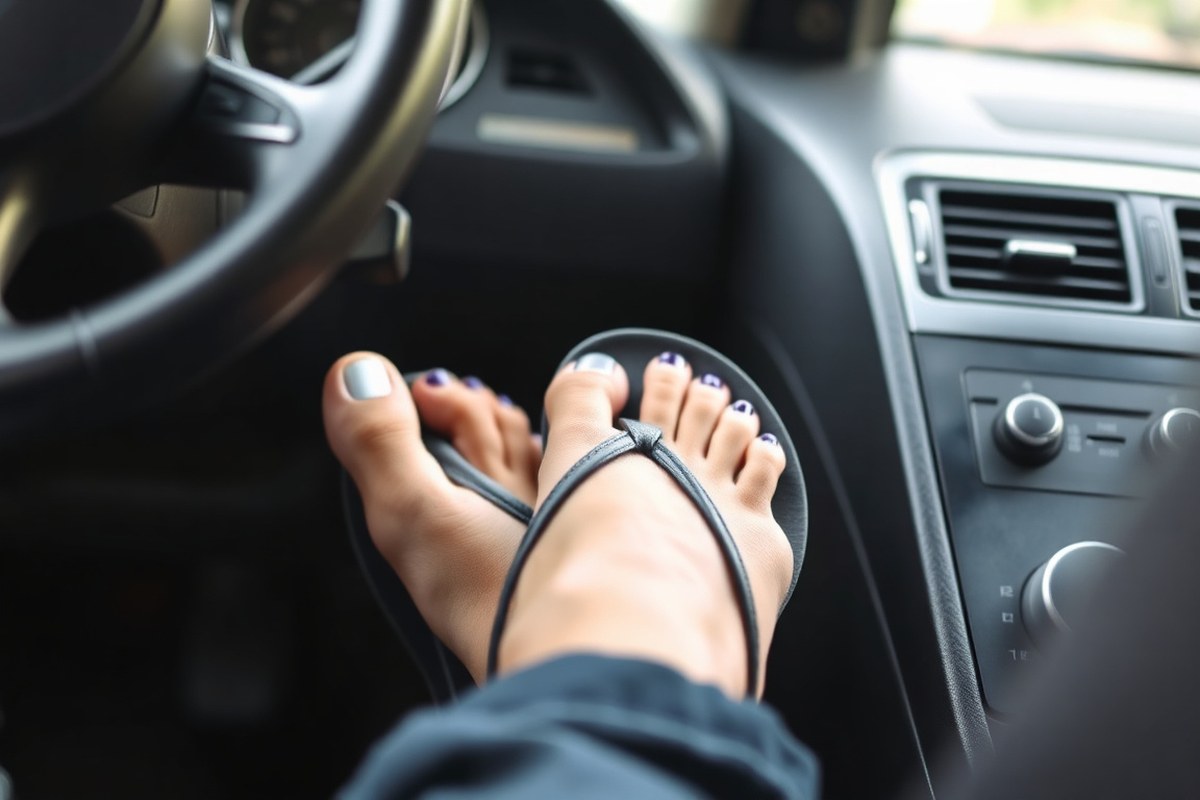
Can You Drive with Flip Flops? What Actually Works and Safety Tips
Can you drive with flip flops? Yes, you legally can drive in flip flops in all 50 states.
The law doesn’t prohibit flip flops, but you still must drive safely. Every state holds you responsible to operate your vehicle without danger, no matter your footwear.
Driving in flip flops can slow your foot movement and affect braking. They bend easily and can catch under pedals, causing delays. A small brake delay at highway speeds can add many feet before stopping.
Before you drive, make sure your flip flops fit well and stay on securely. Watch for your sandals slipping or catching on pedals. If you feel unsafe, change to a better shoe to maintain your full control behind the wheel.
Key Takeaways
- Flip flops are legal to wear for driving in every US state.
- Your choice of footwear must not cause unsafe vehicle operation.
- Flip flops can add about 0.1 seconds delay to your brake response.
- They increase stopping distance by roughly 11.5 feet at 60 mph.
- At least 10% more fault may be assigned in accidents wearing flip flops.
- Loose or wet flip flops are more likely to slip off or catch pedals.
Is Driving with Flip Flops Legal in All States?
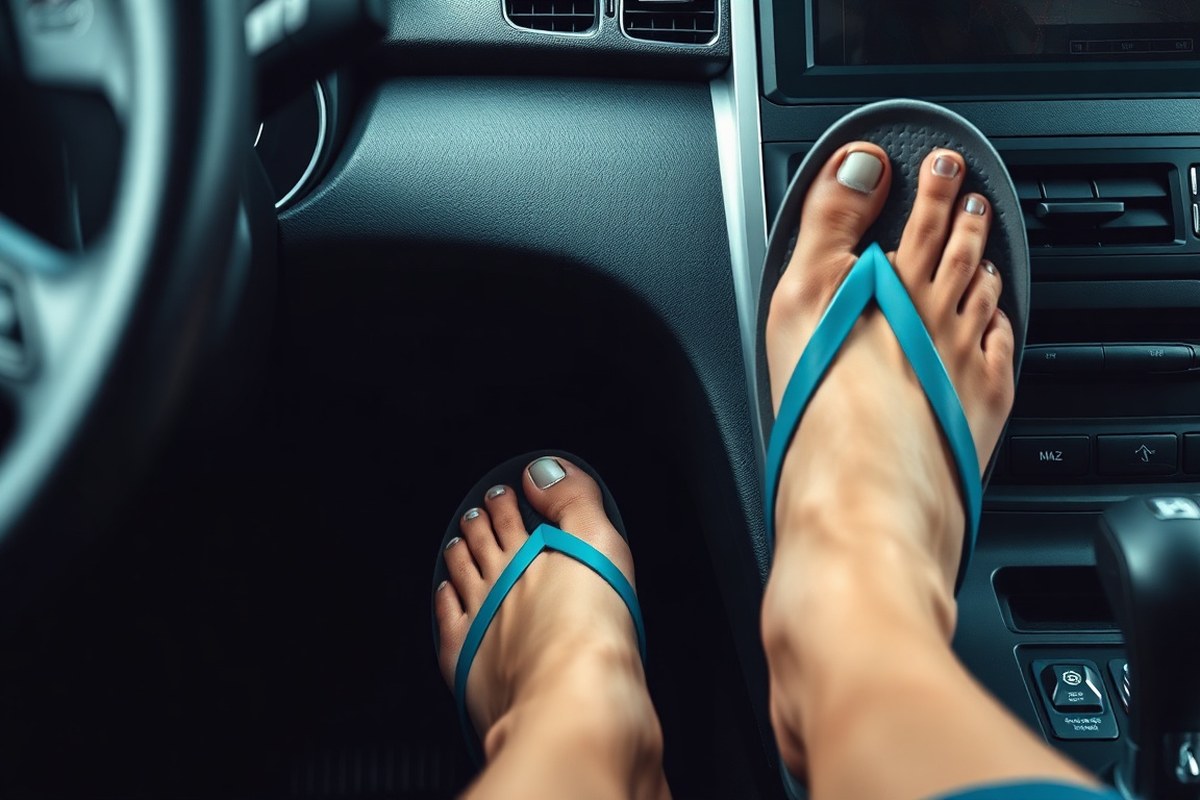
In the US, no state bans driving while wearing flip flops. Federal law doesn’t say what shoes you have to wear. You must stay in control of your car no matter your footwear or if you drive without shoes.
DMVs across the country offer different advice. But none say driving in flip flops is illegal. Missouri’s Highway Patrol says driving barefoot is legal there.
They warn thin flip flops can bend or slip on wet feet. Slipping can make it harder to control the pedals safely. Texas and Florida also allow barefoot or flip flop driving.
Their official guides remind drivers to stay safe and avoid careless driving. But they do not ban any shoe types.
It’s a common myth that flip flops or barefoot driving is illegal. Police can ticket you only for careless driving linked to your shoes. Poor control caused by your footwear might lead to a citation.
Otherwise, just wearing flip flops won’t cause legal problems. If a flip flop slips off and causes a hazard, you might get cited. The officer must see that the shoe caused unsafe driving.
Otherwise, no ticket usually happens just for the shoe. This is true across all 50 states under their general traffic safety laws.
Some states, like Alabama, ban barefoot riding only for motorcycle drivers, not in cars. But these are exceptions, not the rule. Most official sources confirm that no law lists flip flops, sandals or barefoot driving as illegal.
Trouble starts only if your footwear causes unsafe driving behavior. Then, regular traffic laws apply based on how you drove. Shoes alone don’t lead to tickets without unsafe driving problems.
Which States Have Restrictions or Warnings About Flip Flop Driving?
No states specifically ban driving with flip flops in regular passenger vehicles. You can legally drive with flip flops anywhere in the US.
Some states warn against it due to safety risks. But they don’t have explicit laws against it.
Alabama stands out because it prohibits barefoot driving. But only for motorcycle and motor-driven cycle riders. This is an exception related to the different control demands of those vehicles.
Bare feet, flip flops, sandals, and heels are allowed. Drivers in all states can use them. There are no specific laws against these shoes.
Penalties don’t target flip flop use directly. But driving while impaired by your footwear can lead to fines. Authorities use general reckless or careless driving laws if your shoes cause unsafe driving.
The fines and punishments depend on the state and incident severity. For example, Virginia treats reckless driving harshly with fines up to $2,500 and possible jail time.
| State or Vehicle Type | Flip Flop Driving Laws | Penalties or Warnings |
|---|---|---|
| Alabama (motorcycles) | Barefoot driving banned | Fine or citation possible |
| All States (passenger vehicles) | Flip flops legal | Possible penalties under careless driving laws |
| Virginia | No specific ban | Reckless driving fines up to $2,500, jail possible |
| Commercial Vehicles | Varies; generally stricter | More regulations, safety gear required |
| Motorcycles (other than AL) | Generally no footwear restrictions | Subject to helmet and safety rules |
Commercial drivers often face tighter footwear regulations. They need gear that ensures safe pedal control. Flip flops would typically be unsafe and not allowed.
Motorcycles, except in Alabama, have no laws banning flip flops or barefoot riding. But they do require helmets and other safety equipment.
Be ready to switch to safer footwear if an officer doubts your flip flops are safe.
Driving with flip flops can risk pedal slippage or catching on the pedals. This can cause an accident and bring penalties as a result.
State laws focus on your driving ability, not the shoe brand. Courts and insurance may also view flip flop use as a factor in your fault.
How Do Flip Flops Affect Driving Safety Compared to Other Footwear?
Flip flops fit loosely on your feet. They can slip off easily. This creates risks while using the pedals.
They may also get caught under pedals, causing you to lose control. Moccasins or sneakers fit snugly on your feet.
They keep good contact with pedals. This helps you control brakes and gas better.
Studies from Saudi Arabia and others show flip flops rate low. Barefoot driving also scores poorly. Both cause more control issues and mistakes.
Drivers with flip flops take twice as long to move their foot. They switch slower from gas to brake pedals. This delay can be dangerous.
Barefoot driving is better than flip flops but still not great. Bare feet don’t grip pedals well. They also reduce feedback from pedals.
Proper footwear improves control and reduces reaction time at the pedals. Shoes with secure fits and nonslip soles support quicker braking and safer driving. Flip flops have thin, flexible soles that lower pedal feedback.
Their loose straps make slipping more likely. Both reduce your control over the pedals.
| Footwear Type | Driving Safety Rating | Why |
|---|---|---|
| Driving moccasins | Excellent | Designed specifically for pedal control |
| Sneakers/athletic shoes | Excellent | Secure fit, good grip, proper feedback |
| Loafers | Very good | Flat sole, stays on foot |
| Boat shoes | Very good | Grip sole, secure fit |
| Flip flops | Poor | Slip risk, interference risk |
| High heels | Poor | Angle interferes with pedal control |
| Bare feet | Moderate | Better grip than flip flops but less protection |
Wearing proper shoes in the car costs nothing if you keep a pair inside. Removing flip flops and driving barefoot works as a low-effort, safer alternative. Flip flops with ankle straps improve safety slightly but don’t match closed, supportive shoes.
Changing footwear before driving means better throttle and brake control, reducing accident chances. Slip delays and pedal misapplications often happen with loose or unstable footwear like flip flops. The safest choice is to bring proper shoes when you drive.
Good shoes prevent delays and loss of pedal control. Carrying them helps keep you safer on the road.
What Are the Potential Legal Consequences of Driving in Flip Flops?
Police can’t ticket you just for wearing flip flops while driving. No state law bans flip flop footwear alone. Flip flops can cause unsafe driving by slipping off pedals.
This may block your control of the car. You could get cited for careless or reckless driving. The charge won’t be for the footwear itself but for the unsafe behavior it caused.
Careless driving usually means not paying enough attention or driving without reasonable control. Reckless driving means willful or wanton disregard for others’ safety. Pennsylvania treats careless driving as a summary offense.
Fines increase if someone is injured. The penalties get tougher with more serious harm. Reckless driving can bring a $200 fine and a six-month license suspension.
Flip flops can lead to penalties beyond tickets if they cause accidents. You might face serious legal troubles. They go past just getting a traffic citation.
Minor collisions could lead to out-of-pocket repairs and a possible careless driving ticket. Serious crashes with injuries can lead to lawsuits or insurance claims. Your flip flop use might be called negligence.
These cases add extra costs and legal risk. Fatal crashes might bring criminal probes and wrongful death lawsuits.
Flip flops could count as proof of losing control. This situation results in severe legal consequences.
Florida, Texas, and New York do not ban flip flops directly. They use general laws like careless or reckless driving.
Texas may fine you up to $200 and jail time for 30 days. New York treats reckless driving as a misdemeanor with stronger penalties.
Your footwear choice can impact how police and courts view your driving if a crash happens. Wearing flip flops risks your sandal slipping off or limiting pedal feel.
This can cause lost control and unsafe driving, giving police legal reason to cite you. Keeping safer, more secure footwear while driving helps you avoid these risks and legal trouble.
How Does Driving in Flip Flops Affect Insurance and Accident Liability?
Wearing flip flops while driving can reduce the payout in an accident claim. Insurers see flip flops as a risky shoe choice that might cause loss of control. Your compensation usually gets cut by your fault percentage in the accident, known as comparative negligence.
Comparative negligence means each party’s fault affects the settlement. For example, you get $10,000 for damages.
But if you’re 30% at fault for wearing flip flops, you might only get $7,000. The insurance company reduces your payout by your share of blame, which includes unsafe footwear.
Courts often use flip flops as evidence to show negligence. Your flip flop slipping off or getting caught under pedals can show you breached your duty.
This breach could cause a crash. That breach lowers your chance to collect full damages and might increase liability claims against you.
Insurance claims adjusters look for signs your footwear caused trouble during the accident. You should clearly explain if your flip flops affected your control. Also say if they stayed secure on your feet.
Admitting you wore flip flops can weaken your compensation claim. Be ready for this possibility.
Avoid saying flip flops caused your accident when filing claims. Instead, focus on safe driving facts.
Many states let juries decide fault by weighing evidence, including your footwear choice. This makes wearing flip flops a straightforward way to assign some blame to you in court.
Some drivers in flip flop accidents face citations for careless driving. Others get cited for reckless driving, depending on the severity.
The fault for flip flop-related accidents depends on how much the footwear contributed to the crash. You have a duty to pick shoes that let you control pedals properly.
Flip flops that slip off or trap pedals can make you liable for bigger damages. These go beyond regular driving mistakes.
When Should You Remove Flip Flops to Drive Safely?
Remove your flip flops before driving if they slip, bend, or get stuck. You want clear, confident control of the pedals. Barefoot driving can be safer when flip flops cause trouble and is legal where you drive.
Signs Flip Flops Are Unsafe While Driving
Flip flops cause trouble when they slip off or bend under the pedals. Your sandal might catch on the carpet or twist while pressing. When your foot slips or your sandal hinders pedal control, change shoes.
Distracted foot movements or delays in pedal response signal unsafe conditions. Flip flops also slide more if your feet get wet. These issues increase the chance of accidents or loss of vehicle control.
Steps to Safely Remove Flip Flops Before Driving
Taking off flip flops before you drive helps keep your focus on the road. Follow these simple steps to switch safely without causing a distraction or losing control:
- Pull over to a safe spot off the road and engage the parking brake.
- Take off your flip flops slowly, keeping your foot over the brake pedal.
- Place the flip flops flat on the floor or beside your seat to avoid slipping pedals.
- Test pressing the brake and gas pedals barefoot before driving again.
- Keep a pair of flat shoes or loafers in your vehicle for quick changes.
These steps take less than a minute. They lower risk by avoiding sandal interference while driving.
Best Practices When Driving Barefoot Temporarily
Barefoot driving gives your foot direct pedal contact, improving feel and control. It is legal in many areas and safer than thin, flimsy flip flops.
Make sure your feet are clean and dry to prevent slipping on pedals. Rest your foot steadily and avoid sudden moves until you feel fully balanced. Barefoot driving may be uncomfortable or against local laws, so wear secure flats.
What Are the Best Footwear Alternatives to Flip Flops for Driving?
Choosing shoes that fit well helps you control pedals better. Flat soles with good grip work best. Flip flops don’t offer this control.
Closed shoes that won’t slide off give you safer braking and quicker responses. Some sandals with secure straps also work. But you want to avoid any loose footwear that can catch under pedals.
Driving Shoes and Loafers
Driving shoes and loafers often have thin, flexible soles designed for pedal feel. These shoes fit closely.
So they won’t slip or shift while you press the gas or brake. Their smooth soles provide good pedal grip without adding bulk that slows your foot’s movement.
Such shoes usually cost between $50 and $150 and last well if used mainly for driving. Leather loafers or driving moccasins offer comfort and stay put, making your foot actions precise. They work well for daily drivers who want smarter shoes with easy pedal control.
Safe Sandals and Alternatives
Some sandals are okay if they have secure straps that hold your foot firmly. Look for sandals with adjustable ankle straps. Choose those with closed toes or thick soles.
These reduce the chance of catching pedals. Thin flip flop straps aren’t enough to keep your foot stable under quick stops or turns.
Closed-toe sandals with a solid sole improve your pedal grip compared to regular flip flops. Driving in hot weather means picking sandals with flexible soles. Aim for soles about 3-5 mm thick.
This keeps them from bending too much. Avoid sandals with slippery bottoms or loose, flapping parts.
Footwear Features for Better Driving Control
Stable shoes for driving have soles that are flat, flexible, and non-slip. This helps you shift your foot from gas to brake faster, which is key for safety. Avoid shoes with thick, bulky soles or heels that can slow pedal response.
Good driving footwear also fits well without extra looseness. Straps or laces prevent movement inside the shoe, so your foot stays steady. Comfort matters too, since pain can distract you from smooth pedal use.
Here’s a look at how flat-soled shoes compare to flip flops for driving safety:
| Metric | Flat-Soled Footwear | Flip Flops | Difference |
|---|---|---|---|
| Pedal transition time (gas → brake) | 0.02 seconds | 0.10, 0.13 seconds | +0.08, 0.11 seconds slower |
| Additional stopping distance at 60 mph | Baseline | ~11.5 feet (3.5 m) | +11.5 feet longer stopping |
| Reduction in applied braking force | Baseline | −3% | 3% less effective braking |
| Drivers reporting sandal catching a pedal | Not reported | 10% | Risk of pedal catch |
The extra 0.08 to 0.11 seconds in pedal transition time may seem small but adds about 11.5 feet of stopping distance. This can make the difference in avoiding accidents. Flat-soled shoes also give firmer braking force than flip flops, which often slip or get stuck.
- Flat, flexible soles under 10 mm thick improve pedal feel.
- Secure fit stops foot slipping or moving around inside the shoe.
- Closed toes or sturdy straps reduce catching on pedals.
- Comfortable fit lets you keep your foot calm and steady.
How Do Footwear Rules Differ for Commercial and Motorcycle Drivers?
Commercial truck drivers don’t face an outright ban on flip flops. Instead, their employers set strict footwear rules.
These rules follow workplace safety standards to stop slips. They also prevent losing control when driving or handling cargo.
The Federal Motor Carrier Safety Administration (FMCSA) doesn’t list specific shoes. But requires drivers to wear clothing that doesn’t limit safe vehicle control. Employers often require closed-toe, sturdy shoes or boots.
Wearing flip flops at a loading dock breaks safety rules. This can lead to fines or losing your job. It’s not a traffic offense.
Motorcyclists face tougher rules in some places. One state, for example, requires all riders to wear shoes. This law is enforceable on the road as a citable offence.
It helps riders keep full control of the pedals. It also protects their feet from injuries during a crash. Flip flops are not allowed there because they don’t offer enough grip or protection.
Private car drivers don’t have these workplace limits. No U.S. State explicitly bans flip flops or sandals for driving. The rule is simply that your footwear must not prevent you from controlling the car safely.
That means you can legally drive barefoot or in flip flops. But risk control problems if your foot slips.
These safety rules affect daily driving and liability mainly for commercial drivers and motorcyclists. Employers may refuse drivers without proper shoes, affecting job availability. Insurance claims may note improper footwear, complicating liability if an accident occurs.
Private drivers deal with fewer legal problems. But they risk trouble if their shoes block the pedals.
Wearing flip flops might be legal in many places. But they can slip and reduce pedal control, especially for truck drivers and motorcyclists.
Common Myths About Driving in Flip Flops Debunked
There is no federal ban on driving with flip flops. It is legal in every U.S. State.
Wearing flip flops does not lead to immediate legal penalties unless it causes dangerous driving. The risk of accidents caused specifically by flip flops is often exaggerated.
Myth: Flip Flops Are Illegal Everywhere
No state has banned driving in flip flops. So they are legal everywhere you drive.
Some people confuse safe driving recommendations with actual laws against flip flop use. Flip flops may increase risk but are not outlawed by any traffic rules.
States may encourage safer footwear, but they don’t prohibit flip flops by name. You should check local regulations for any specific restrictions if you often drive in certain areas. False claims about flip flop bans often spread through social media or casual advice.
Myth: Police Can Pull You over Just for Flip Flops
Police cannot stop you just because you wear flip flops while driving. Officers usually only intervene if your footwear causes unsafe driving or an accident. They focus on behavior like losing control or reckless driving, not the shoes themselves.
In 2018, a Pennsylvania driver lost control when her flip flop slipped. Authorities charged her with negligent driving, not for her choice of shoes. This proves legal trouble depends on how you drive, not just your footwear.
Myth: Flip Flops Automatically Void Insurance Claims
Insurance companies do not deny claims simply because you wore flip flops during a crash. They review the full circumstances to see if the footwear contributed to negligence. Wearing flip flops alone is rarely enough to reject a claim or reduce coverage.
However, insurers might investigate cases where flip flops clearly caused a loss of vehicle control. They look for driver fault, such as delayed braking or poor pedal grip linked to footwear. To avoid trouble, wear more secure shoes for longer drives or tricky conditions.
- Search your state’s DMV website or laws on footwear and driving.
- Check police or legal sites for any driving footwear regulations.
- Watch for credible sources over social media rumors.
- Ask law enforcement or a traffic lawyer if unsure about local rules.
- Remember that unsafe driving, not shoes alone, triggers penalties.
Step-by-Step Action Plan for Safer Driving Footwear
Follow these simple steps to keep your driving safe and legal. Each step helps prevent common issues linked to flip flop driving.
- Before You Drive: Check your current footwear for grip and support. Swap flip flops for sneakers if they lack these, especially for longer trips.
- Day 1: Keep a pair of secure shoes in your car. Use them for driving and notice if your foot feels more stable on pedals.
- Week 1: Practice driving with different shoes to find what works best. Stick to shoes that give good pedal control and comfort.
- After 2 Weeks: Make it a habit to change your shoes before driving. Monitor if your braking and acceleration feel smoother.
- Before Long Trips: Plan shoe changes and avoid flip flops entirely. Observe if you feel less distracted and more confident behind the wheel.
- Monthly Review: Check local driving laws. Update your habits if new rules about footwear appear in your area.
- Ongoing: Educate passengers about safe footwear for driving. Encourage them to switch if needed and see road safety improve.
Frequently Asked Questions
Can Flip Flops Cause Accidents Even If Driving Is Legal?
Yes, flip flops can slip off pedals or reduce braking power. This increases your accident risk, so use caution while driving in them.
Is It Safer to Drive Barefoot Than in Flip Flops?
Driving barefoot often offers better pedal feel than flip flops. Flip flops can bend under pedals or make your foot slip.
Can Wearing Flip Flops Affect Your Reaction Time Driving?
Flip flops add about 0.10 to 0.13 seconds to brake response. That delay can increase stopping distance noticeably at highway speeds.
Should Drivers Replace Flip Flops with Better Shoes for Long Trips?
Yes, sturdier, closed-toe shoes improve control and comfort on long drives. Flip flops aren’t ideal for extended or demanding driving situations.
Do Insurance Companies Penalize Drivers Wearing Flip Flops in Accidents?
Insurance typically won’t deny claims just for flip flops. But if flip flops caused poor control, it might reduce your payout.
Before You Go
Driving with flip flops is often legal but risky. Choose stable shoes for better control and safety. Keep a reliable pair in your car and switch before you drive.