How Many Square Miles Is: A Complete Guide with Clear Examples & Conversions
How many square miles is a place really? A square mile is the area inside a square that has one mile on each side. Since a mile is 5,280 feet long, that means a square mile covers 27,878,400 square feet.
You can picture it as a big square that’s one mile across and one mile down. To find square miles, multiply length by width in miles. That gives the area size.
When the shape isn’t square or rectangular, break it into parts. Use a formula that fits each part’s shape.
This method works best if you know accurate distances in miles. Always use the statute mile. It was set in 1593 for land measures.
This unit is official for measuring land. That keeps your calculations consistent and accurate.
Key Takeaways
- A square mile equals the area of a square with 5,280-foot sides.
- To calculate square miles, multiply length and width in miles.
- Use statute miles to ensure consistent and official measurements.
- Break irregular shapes into rectangles to estimate total square miles.
- One square mile equals 27,878,400 square feet of area.
- Remember square miles measure area, so multiply miles times miles.
What Is a Square Mile and How Large Is It?
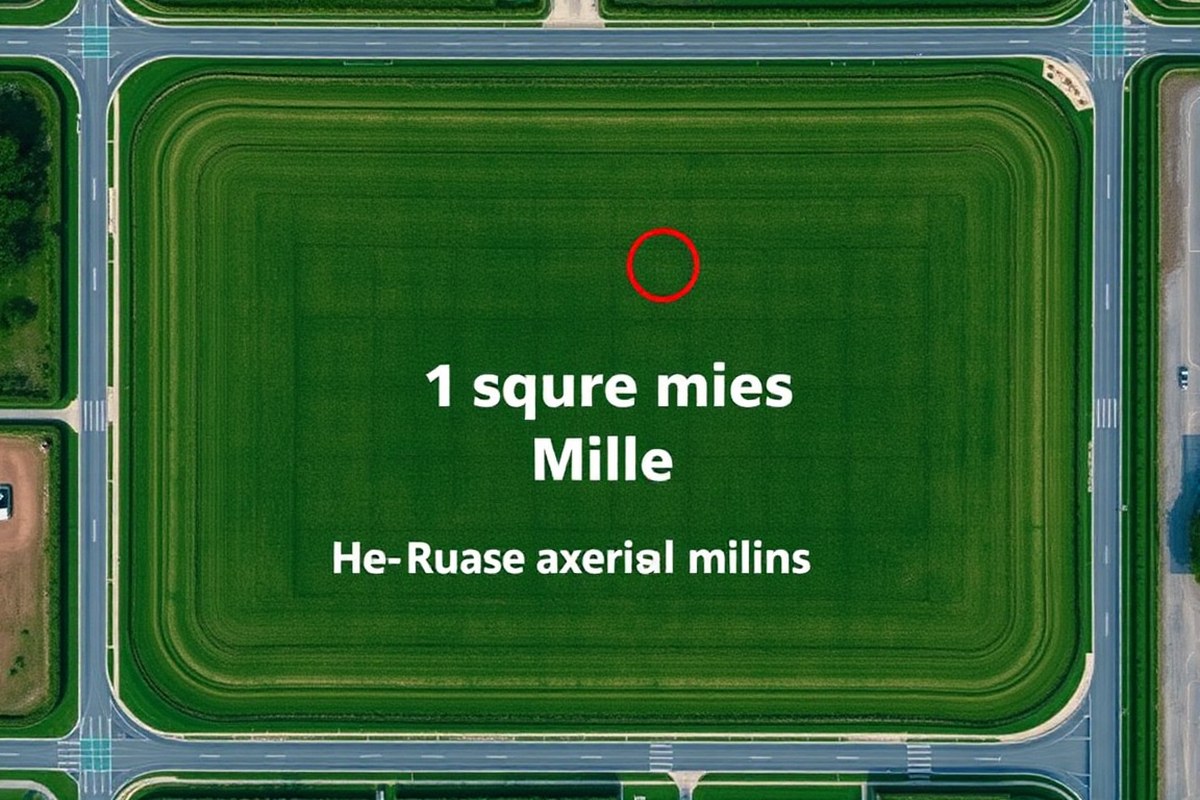
A square mile measures area, not distance. It is the space inside a perfect square where each side is one mile long. One mile equals 5,280 feet.
A square mile is a square. Each side is 5,280 feet long.
Multiply length by width to get area. One mile times one mile is area. This equals 27,878,400 square feet.
In metric units, this equals about 2.59 square kilometers or 2,589,988 square meters. A square mile covers a large space.
It’s bigger than just the word “mile” suggests. Think of it as a big area.”
Picture a one-mile by one-mile box. Lay it flat on the ground. That is one square mile.
Its area is 640 acres, another common land measure used especially for farms and parks. A square mile does not contain miles as linear units inside; it’s an area. The side length is important.
Square mile area equals one mile times one mile. That creates the size.
Step-by-Step How to Calculate Square Miles
To calculate square miles, multiply the length and width of your area in miles. You must first convert other units like feet or kilometers into miles before calculating. For irregular shapes, breaking the area into smaller shapes helps find the total in square miles.
Using Length × Width for Rectangles
Multiplying length by width gives the area of rectangular land in square miles. Both measurements should be in miles for the formula to work correctly.
To calculate, convert any non-mile measurements first. For example, convert 5,280 feet to 1 mile before multiplying.
- Measure the length of the area in miles.
- Measure the width in miles.
- Multiply length by width to find the area in square miles.
Never multiply miles by feet directly; convert all units to miles first.
Estimating Area for Irregular Shapes
Divide an irregular shape into rectangles and triangles to estimate its area. Calculate each smaller area separately and then add them together.
This method simplifies complex shapes into manageable parts. Use known formulas for rectangles and triangles for accurate results.
- Sketch the irregular shape.
- Break it into rectangles and triangles.
- Measure each part’s dimensions in miles.
- Calculate the area of each shape using proper formulas.
- Add all areas together to get the total square miles.
Accuracy depends on how well you divide the shape and measure each part.
Calculating Areas of Circles in Square Miles
Use the formula π times radius squared to find a circle’s area in square miles. Ensure the radius is measured in miles before calculating.
This method helps estimate areas of circular parks or lakes. Squaring the radius means to multiply the radius by itself.
- Measure the radius of the circle in miles.
- Square the radius (multiply the radius by itself).
- Multiply the squared radius by π (about 3.1416).
- The result is the area in square miles.
Always confirm your radius unit is miles to avoid errors in the area.
How to Convert Square Miles to Other Area Units
To convert square miles to other units, use fixed multipliers for each unit. One square mile equals 640 acres or roughly 2.59 square kilometers.
For smaller units like square feet or yards, numbers grow large. They are easy to calculate using the right formula.
Square Miles to Acres Conversion
One square mile covers exactly 640 acres. This number comes from the traditional definition of an acre as a specific land area.
To convert square miles to acres, multiply the number of square miles by 640. For example, 2 square miles equal 1,280 acres.
Square Miles to Square Kilometers
A square mile converts to about 2.59 square kilometers. This is useful when working with international data or comparing areas between countries.
Multiply the square miles value by 2.59 to get the area in square kilometers. The conversion is approximate but common in geography and planning.
Square Miles to Square Feet and Yards
One square mile equals roughly 27.9 million square feet. This is a handy figure for precise calculations on smaller scales.
For square yards, multiply square miles by 3,097,600. Knowing these exact numbers helps when measuring land parcels or construction zones. The table below sums up these conversions:
| Area Unit | Equivalent of 1 Square Mile |
|---|---|
| Acres | 640 |
| Square Kilometers | 2.59 |
| Square Feet | 27,878,400 |
| Square Yards | 3,097,600 |
Using these conversions, you can switch between units as needed. Just multiply by the right factor for the unit you choose. That way, you handle areas in ways that fit your project or study.
Visualizing a Square Mile in Real Life
Walking across one square mile takes about 20 minutes at a normal pace. A square mile is a square with sides exactly one mile long. That means the distance you cover is roughly 5,280 feet in one direction.
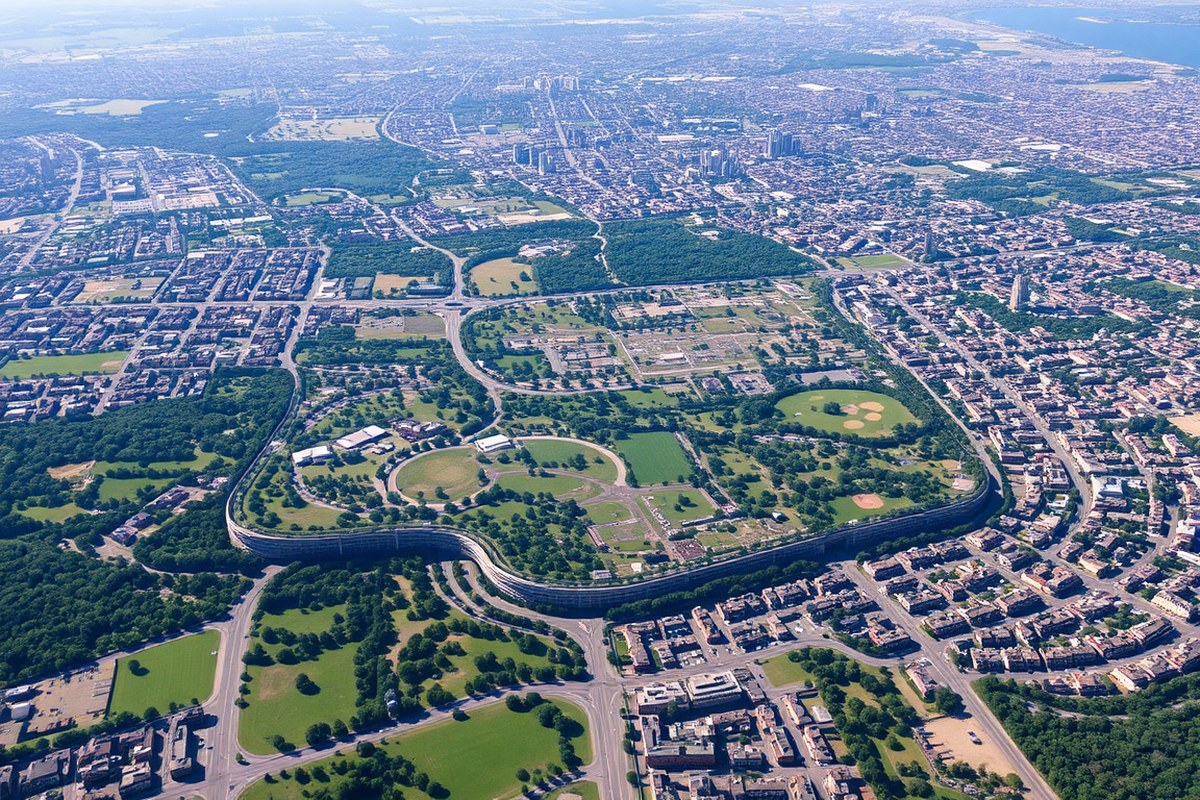
To picture this area, think about places or landmarks you may know. Central Park in New York is about 1.3 square miles, just a bit larger than one square mile. So, walking across Central Park feels similar to crossing a single square mile.
Here are some easy ways to imagine a square mile:
- Picture 640 football fields without end zones laid out in a perfect square.
- Picture a square that’s 2,236 steps long on each side. Your stride measures about 2.5 feet.
- Think about a city block about 0.1 mile long. Ten blocks in a row won’t quite make a square mile.
- Consider a small urban park like many in towns, often less than 0.1 square miles. So you’d need 10 or more such parks to make a square mile.
- Visualize a large ranch or farmland listed as several square miles on real estate sites.
A square mile is a simple unit for measuring large areas. Cities, parks, and states often use square miles. Yellowstone National Park covers 3,472 square miles, showing how big this unit can be.
Thinking about a square mile means picturing a one-mile-long side. You could walk a mile straight across it. It shows a clear sense of distance.
A square mile matches many outdoor places you know. It’s easier to understand than strange numbers. This helps you picture the actual size better.
Common Mistakes and Confusions About Square Miles
One common mistake is thinking miles and square miles measure the same thing. A mile measures length or distance, like a road’s length. Square miles measure area, showing how much space covers a flat surface.
You cannot convert miles directly into square miles. To get square miles from miles, you must multiply miles by miles. A square 3 miles long on each side measures area.
Multiply 3 by 3 to get the area. That equals 9 square miles.
Many confuse square miles with cubic miles, but they differ greatly. Square miles only cover two dimensions: length and width. Cubic miles measure volume by adding height or depth.
It’s like measuring a mountain’s size. This shows how much space the object takes up.
Understanding the difference helps with tasks like land measurement. States, cities, and parks are measured in square miles to describe their total area. Manhattan covers about 22 square miles of land area.
This measures its surface size. It does not show straight-line distance.
Mixing up these units causes errors in maps or property plans. Squares only reflect area, not distance or volume. Mistaking size can cause buying too much or too little land.
It can also cause confusion when working with land. Knowing land size clearly matters.
Never multiply or divide miles and square miles without understanding their dimensions. It causes big calculation errors.
Famous Places Measured in Square Miles for Perspective
Understanding the size of famous places helps put square miles into perspective. You can compare city, park, or state areas to understand size. It helps you see what a square mile really covers.
These examples help you think about space in square miles. Square miles are a common way to measure places.
| Place | Type | Area (Square Miles) |
|---|---|---|
| Manhattan, New York | City Borough | 22.7 |
| Yellowstone National Park | National Park | 3,472 |
| Texas | State | 268,598 |
| California | State | 163,696 |
| United States | Country | 3,797,000 |
Manhattan covers about 22.7 square miles, making it easy to picture in your mind. Yellowstone, at 3,472 square miles, is massive by comparison. It’s one of the largest national parks in the U.S.
States are much bigger than cities or parks. Texas, for instance, is more than 268,000 square miles.
California is smaller but still large, spanning over 163,000 square miles. Knowing these sizes helps understand how vast land areas can be.
Measuring places in square miles works by multiplying two lengths. For example, a place that’s one mile wide and one mile long equals one square mile. Using these lengths gives you precise area calculations for large regions.
These numbers matter for planning and mapping land. Knowing the square miles helps governments, planners, and surveyors handle resources.
Knowing size in square miles makes comparing places easier. You get a clearer idea of their scale.
Square Mile Compared with Square Kilometer and Other Units
One square mile equals about 2.59 square kilometers. This means if you have an area in square miles, multiply it by 2.59 to get the size in square kilometers. For example, 3 square miles is roughly 7.77 square kilometers.
On the other hand, if you have square kilometers, multiply by 0.386 to convert to square miles. So, 5 square kilometers equals about 1.93 square miles. You can use these straightforward conversions when switching between US customary and metric units.
Most people in the US think in square miles. But many other countries and scientific work use square kilometers.
Using the right unit depends on your audience or data source. For example, urban planners in Europe usually prefer square kilometers for clarity.
Metric units simplify calculations in many fields because they scale by tens. This makes comparing, adding, or dividing areas easier. Imperial units like square miles can feel hard to understand sometimes.
This is true if you also use kilometers or meters. Mixing units can make it confusing to picture size.
Using the incorrect unit can confuse readers or cause errors in data reporting. Check if land size numbers use square miles or kilometers. This is important when reading international reports.
Knowing the unit helps you understand the area better. This prevents big mistakes in understanding the area’s scale.
Consider measuring wildfire damage. US news outlets often describe it in square miles.
Scientists might communicate the same data in square kilometers, especially outside the US. Converting between the two helps cross-check information quickly.
Always include the unit when you share area measurements. That way, others don’t guess or convert wrongly themselves. When sharing results internationally, add both square miles and square kilometers.
That way, all readers can follow your information clearly. Including both units avoids confusion.
How the Square Mile Is Used in Urban Planning and Population Density
Square miles measure how large a city or town is. Urban planners use this unit to map city limits. They also divide areas for housing, business, and parks.
Knowing total square miles helps plan roads and utilities. It also supports public transit systems fitting the city size.
Population density shows how many people live in each square mile of an area. For example, New York City has about 29,000 people per square mile.
This number shows how crowded an area is. Planners use it to place schools, hospitals, or parks where needed.
Planners also use square miles to set zoning rules. Zoning controls what types of buildings go in areas. This includes residential zones and commercial zones.
Measuring land in square miles helps balance growth. It also avoids overcrowding and keeps neighborhoods livable.
Measuring square miles uses tools like measuring wheels or digital mapping software. These tools provide precise distances that translate into exact areas. Accurate measurements save time and money by preventing costly errors in land use and planning.
Always cross-check area measurements from different tools to catch mistakes early in planning projects.
Tools and Formulas for Accurate Square Mile Calculations
Calculating or converting square miles can be easy with the right tools. Use online calculators for fast results. You can also use a formula.
This needs length and width measurements. Checking your math and units carefully helps avoid costly mistakes.
Using Online Square Mile Calculators
Online converters are fast and reliable for turning acres, square feet, or kilometers into square miles. Just enter your values, select your units, and the calculator does the rest. Many websites and smartphone apps offer free tools to handle these conversions instantly.
Some calculators let you type in irregular shapes or multiple measurements to estimate total square miles. This saves time especially when surveying land or comparing large areas. Using a trusted source reduces errors associated with manual math.
Manual Formula for Calculating Square Miles
Measure the length and width in miles first. Multiply these two numbers to get the area in square miles. For example, a land plot 3 miles long and 2 miles wide equals 6 square miles.
Make sure to convert your measurements to miles first. For instance, if length is in feet, divide by 5,280 to change it into miles. Then multiply length and width after conversion.
Tips to Avoid Calculation Mistakes
Double-check that your length and width are in miles before multiplying. Mixing units like feet for length and miles for width causes wrong results. Use a calculator and re-enter numbers each time to avoid typos.
- Confirm units match before calculations
- Use parentheses when converting units
- Recalculate with different tools for comparison
- Keep measurements as precise as possible
- Avoid rounding early in your calculations
- Record your steps to track changes
Keeping track of each step helps you spot errors early. Double-check your units and calculations if results seem wrong.
Step-by-Step Action Plan for Working with Square Miles
Get practical with square miles by following these clear steps. They help you measure, convert, and use this unit confidently.
- Day 1: Identify the area you want to measure. Check for maps or official data.
- Day 2: Use the formula: length in miles × width in miles. Confirm your numbers are in miles.
- Day 3: Convert square miles into other units if needed. For example, multiply by 2.59 for square kilometers.
- Day 4: Visualize the area by comparing it with known places. Use a city park or a neighborhood for scale.
- Week 1: Double-check your calculations with a mapping tool or GIS software. Adjust if there are big differences.
- Week 2: Apply the measurement to your project, like planning or studying population density. See if it fits your goals.
- Month 1: Review the results and compare with official statistics. Update your approach if needed for accuracy.
Frequently Asked Questions
How Many Square Miles Is Central Park in New York City?
Central Park covers about 1.3 square miles. It’s a great size to understand how city parks can compare to whole neighborhoods.
How Many Square Miles Is the State of Texas?
Texas is about 268,596 square miles in area. It makes Texas one of the largest states in the United States by land.
How Many Square Miles Is Manhattan?
Manhattan covers roughly 22 square miles. The island’s relatively small size holds a dense population and many city landmarks.
How Many Square Miles Is Yellowstone National Park?
Yellowstone National Park is about 3,472 square miles. It shows how this unit scales up for large natural areas.
How Many Square Miles Is the City of London?
The City of London is around 1.1 square miles. It’s known as “the Square Mile” but is a bit bigger than that.
Wrapping Up
Understanding a square mile helps you handle area measurements with ease. Try measuring a local park using these steps. You’ll learn more by doing and see the size clearly.