How Many Minutes Are in 20 Miles: Accurate Time Estimates and Practical Tips
Wondering how many minutes are in 20 miles? It depends on your speed.
Driving at 25 mph in the city takes about 48 minutes. Highway speeds near 65 mph cut it down to about 18 minutes.
To get a quick estimate, divide 1,200 by your speed in miles per hour. This formula gives you the time in minutes to cover 20 miles. It works best for steady speeds without stops or delays.
Keep in mind, traffic, stops, and road type change your travel time. Starting with your average speed is the simplest way to plan for the trip time. Adjust your estimate if you expect delays or slower zones.
For example, cycling at 10 mph means 20 miles takes about 2 hours. Walking at 3 mph takes roughly 6 hours for 20 miles. Knowing these times helps you budget your travel and rest breaks better.
Key Takeaways
- At 25 mph, expect to spend roughly 48 minutes driving 20 miles.
- Driving at 60 to 65 mph usually takes between 18 and 20 minutes for 20 miles.
- Use the formula: Minutes = 1200 ÷ speed (mph) for a quick time estimate.
- Traffic and delays can easily add extra minutes beyond your speed-based estimate.
- City driving typically takes twice as long as highway driving for 20 miles.
- Plan extra time if you anticipate stops or slower speed zones on your route.
How Many Minutes Does It Take to Drive 20 Miles?
To find the minutes to drive 20 miles, use this formula. Divide 60 by your speed. Then multiply by the distance.
Here, speed is your driving speed in miles per hour, and distance is 20 miles. This calculates minutes per mile from your speed.
Then multiply by the distance in miles. That gives total travel time.
For example, at 25 mph, divide 60 by 25. Multiply that by 20 miles. You get 48 minutes total driving.
Driving 20 miles at 45 mph takes about (60 ÷ 45) × 20, or 26.7 minutes, roughly 27 minutes. At 65 mph, the calculation is (60 ÷ 65) × 20, which comes to about 18.5 minutes.
These numbers match typical city and highway travel times. Cities with average speeds of 25 mph often mean roughly 48 minutes to cover 20 miles. On highways, speeds often reach 65 mph.
At that rate, driving 20 miles takes 18 to 20 minutes. Knowing this helps you plan your trips better and set realistic expectations for your travel time.
How to Calculate Minutes for 20 Miles at Any Speed
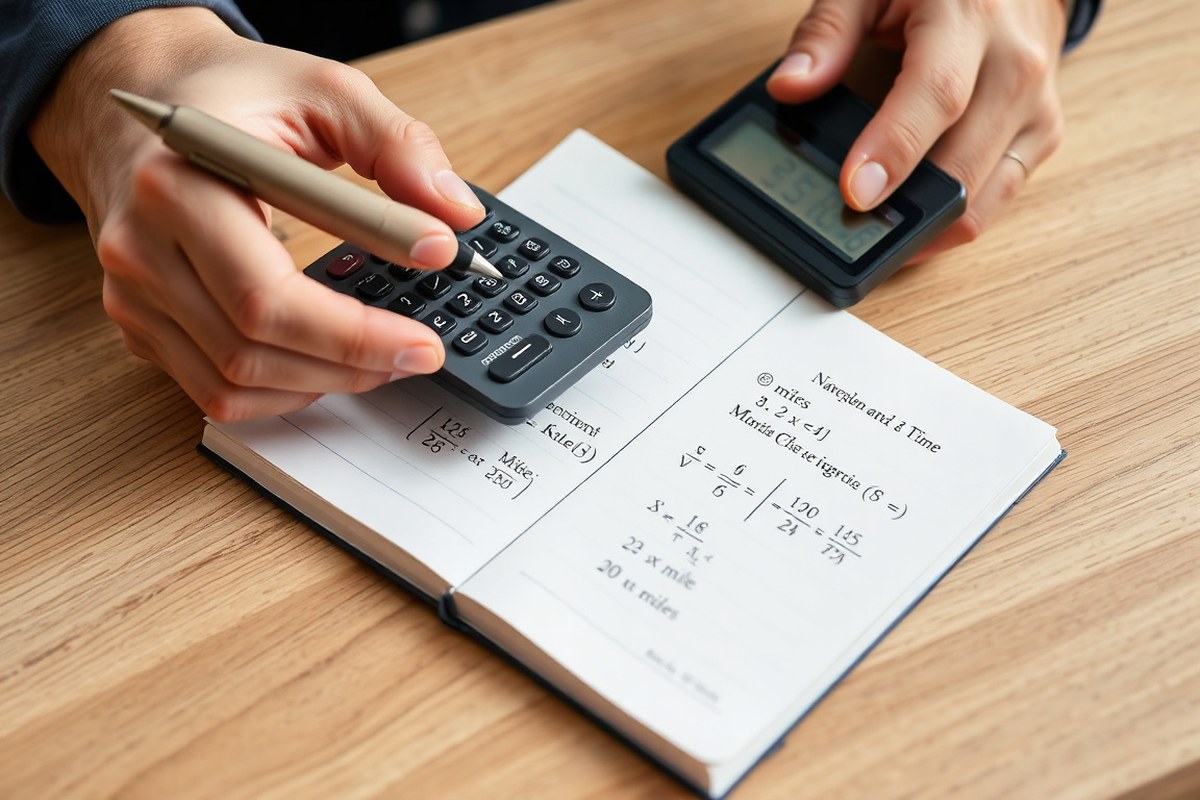
You can find how many minutes it takes to travel 20 miles. Divide the distance by your speed to get the time.
Then multiply the result by 60 to convert hours to minutes. This method works for any speed, even ones not shown on common tables.
Formula to Calculate Time from Speed
To calculate time, use this formula: Time (minutes) = (Distance ÷ Speed) × 60. This means you first divide 20 miles by your speed in miles per hour.
Then, multiply the answer by 60 since one hour equals 60 minutes. You get the total minutes it takes to cover 20 miles at that speed. For example, if you travel at 40 mph, divide 20 by 40 for 0.5 hours and then multiply by 60 to get 30 minutes.
Example Calculations for 20 Miles
Try calculating times for a few speeds. At 25 mph, divide 20 by 25 to get 0.8 hours. Multiply 0.8 by 60, which equals 48 minutes.
At 65 mph, divide 20 by 65 to get about 0.31 hours. Multiply by 60 and the result is roughly 18 minutes. At 15 mph, the time is 80 minutes.
This method applies to any speed. You can try speeds like 37 mph, 50 mph, or 10 mph. No need for a table or chart.
Tips for Quick Mental Estimates
You can do this calculation with a smartphone calculator or mentally for rough times. First, estimate the distance divided by speed as a fraction or decimal.
Multiply that decimal by 60 to switch from hours to minutes. Round numbers to keep math simple, like using 20 ÷ 40 = 0.5 and multiplying by 60 for 30 minutes.
For rough guesses, 20 miles at 20 mph takes about 60 minutes. At 60 mph, it takes about 20 minutes. Scale times up or down from those numbers.
- Identify your travel speed in miles per hour.
- Divide the distance (20 miles) by your speed.
- Multiply the result by 60 to convert hours to minutes.
- Check your calculation using a calculator or mental math.
- Adjust your estimate if your actual speed varies during your trip.
Use the same formula if your speed changes during the trip. Calculate each leg’s time separately to get the total.
How Long Does It Take to Walk or Bike 20 Miles?
How Long Does It Take to Walk or Bike 20 Miles?
Walking 20 miles usually takes between 4.5 and 10 hours, depending on your pace. Biking cuts that time down significantly, with trips often lasting from about 1 to 2 hours. Your speed, terrain, and breaks all affect these totals.
Average Walking Speeds and Times
The average walking speed ranges between 2 and 4.5 miles per hour. Most people walk around 3.2 mph, which takes roughly 6 hours and 15 minutes to cover 20 miles. Slower walkers can take up to 10 hours.
The table below shows different walking speeds and how long each takes to finish 20 miles.
| Walking Speed (mph) | Pace (min/mile) | Time for 20 Miles |
|---|---|---|
| 2.0 (slow) | 30:00 | 10 hours |
| 2.5 (easy) | 24:00 | 8 hours |
| 3.0 (moderate) | 20:00 | 6 hr 40 min |
| 3.2 (average) | 18:45 | 6 hr 15 min |
| 3.5 (brisk) | 17:09 | 5 hr 43 min |
| 4.0 (fast) | 15:00 | 5 hours |
| 4.5 (very fast) | 13:20 | 4 hr 27 min |
Faster walking speeds shrink your time, but only if you can keep it up. When you get tired, your pace slows down.
This makes the trip take longer. Planning breaks also will add to your total time.
Typical Biking Speeds and Duration
Most casual cyclists ride between 10 and 15 mph. At 12 mph, cycling 20 miles takes about 1 hour and 40 minutes. Riding a bike at about 15 mph cuts your trip time.
You can finish in around 1 hour and 20 minutes. That speed helps you get there faster than walking.
Experienced riders on smooth roads might push near 15 mph or more. Beginners or riders on rough trails will likely be slower. Counting your breaks helps estimate how long the whole trip will take.
Influences of Terrain and Rest Breaks
Hills and uneven terrain slow both walking and biking times. Walking uphill lowers your speed and tires you faster. You might slow to 2 mph or less on steep climbs.
Cycling up hills cuts your average speed by a good margin. On steep terrain, your 15 mph speed might drop to 8 or 10 mph. Downhill sections help make up for the lost time but can be risky.
Adding short breaks every 30 to 60 minutes helps keep energy high. Walking 20 miles needs a few short breaks. Taking 5 to 10 minutes rests can add 20 to 30 minutes.
These stops help you keep going over the long walk. Biking with quick snack and rest breaks adds 15 to 25 minutes.
The exact time depends on your pace and the terrain. Short rests keep you refreshed on your bike ride.
What External Factors Affect Travel Time for 20 Miles?
Traffic Congestion Slows Down Your Drive
Heavy traffic can easily double the time it takes to travel 20 miles. During rush hour, your speed might drop to 10 to 20 mph. You usually drive 50 or 60 mph at other times.
Traffic slows down a lot during busy hours. This means a trip that should take 20 minutes can stretch to an hour or more.
Stop-and-go traffic and traffic lights add delays beyond just slower speeds. To avoid the worst congestion, try planning your trip outside peak hours. Using real-time traffic apps helps you see delays before you start driving.
Bad Weather Means Slower Speeds
Rain, snow, and fog force you to drive slower for safety, increasing your travel time significantly. Heavy rain can slow you down a lot. Your speed might drop from 60 mph to 35 mph.
You often have to drive even slower when it rains harder. That nearly doubles the time to cover 20 miles.
Slippery roads require extra caution and longer braking distances. Check weather forecasts before you leave, and expect delays in poor weather. Reduce your speed and increase the gap to the car ahead.
Roadwork and Stops Cause Extra Delays
Road construction often reduces lanes or forces you to stop, adding minutes to your trip. Even a few traffic cones and flaggers can slow cars to a crawl. These delays can add 5 to 20 minutes depending on the site.
Plan for possible roadwork by checking local traffic news or department of transportation websites. Watch for signs about construction ahead. Slow down and be alert for workers.
Keep an eye out for construction equipment on or near the road. These temporary stops aren’t included in simple speed calculations.
Timing and Location Change Travel Experience
Driving 20 miles on a quiet Sunday morning takes about 20 to 25 minutes. The speed is usually normal for a highway. You can expect no heavy traffic then.
On a weekday rush hour, that same distance can need over an hour. City routes with many lights and turns also make the trip slower than straight highways.
Routes with frequent intersections often have more stops, further increasing travel time. Use maps or apps that show current traffic and road conditions to pick the fastest path. Adjust your departure time based on expected traffic patterns.
Differences Between City and Highway Travel for 20 Miles
Driving 20 miles in the city usually takes much longer than on the highway. City speeds average about 25 mph.
Highway speeds can reach 65 mph or more. Traffic lights, stop signs, and intersections mean frequent stops, slowing you down significantly.
Highway travel allows you to maintain a steady speed with fewer interruptions. You can cover about 16 miles in 15 minutes on highways. In the city, you can only go about 6 miles in the same time.
City driving takes longer because of stops and slower speeds. Rush hour traffic in big cities often lasts over an hour.
A 20-mile trip takes much longer than usual during these times. Expect heavy congestion and slower speeds then.
| Travel Setting | Average Speed (mph) | Travel Time for 20 Miles (minutes) |
|---|---|---|
| City Driving | 25 | 48 |
| City Driving (Rush Hour) | 20 | 60+ |
| Highway Driving | 65 | 18 |
Stoplights and intersections add delays in city travel by forcing you to stop and start often. Red lights or busy crosswalks can increase wait times, pushing the average speed lower. Highway roads usually have fewer stops and allow a smoother, quicker travel flow.
City trips take two to three times longer than highway drives. A 20-mile trip that’s quick on highways is slow in cities. Plan extra time when driving the same distance in town.
Plan extra time if you drive during rush hour or through densely populated areas. Adjust your schedule by considering these common delays.
Tip: Use real-time traffic apps before your trip. They help you estimate city travel time better. Try to avoid peak traffic hours whenever you can.
Safe Speed and Legal Limits When Driving 20 Miles
Speed limits on roads for a 20-mile trip usually range from 25 to 70 mph. In cities, expect 25 to 45 mph limits. Highways often allow 55 to 70 mph.
Some rural highways may have limits closer to 65 mph. But local rules can vary.
Following speed limits is key to driving safely and legally. Exceeding these limits can lead to fines, points on your license, and higher insurance rates. Police watch for cars that speed a lot over 10 mph above limit.
They may pull you over faster if you do this often. Keep your speed closer to the limit to avoid trouble.
Speeding 10 mph or more might save only a few minutes. The small time gain isn’t worth the possible risk or ticket. Driving safely keeps you and others safer on the road.
You might save 3 to 4 minutes over 20 miles. But the chance of accidents rises sharply. Crashes at higher speeds cause more severe injuries and damage.
To balance safety and travel time, use the posted speed limits as your plan’s baseline. Allow extra time for traffic, weather, or road conditions. Driving at or slightly below the speed limit reduces stress and helps avoid mistakes.
Adjust your speed based on conditions too. Rain, fog, or heavy traffic means slower speeds despite the limit. Being alert and patient protects you and other drivers from crashes on your 20-mile trip.
How Breaks, Stops, and Delays Influence Total Time for 20 Miles
Adding breaks, fuel stops, or unexpected delays changes the total time to cover 20 miles. A short break every 5 to 10 miles can let you stretch or refocus.
For example, a two-minute pause at mile 5 can make the final 10 miles smoother. You should add at least 5 to 10 minutes for breaks on a typical 20-mile trip.
Common delays include traffic lights, fuel stops, traffic jams, or roadwork. These can add 5 to 15 minutes depending on your route and time of day.
Rush hour or bad weather often causes longer delays. Planning for these helps avoid underestimating your travel time.
- Fuel or quick snack stops: 5 to 10 minutes
- Traffic signals and stop signs: 3 to 7 minutes
- Unexpected traffic jams: 5 to 15 minutes
- Road construction or detours: 10 to 20 minutes
- Short rest breaks for drivers or cyclists: 2 to 5 minutes each
You can estimate total trip time by adding these stop times to your driving time. A 20-mile drive normally takes 30 minutes. Adding two short stops and fueling will take about 40 to 45 minutes.
On a bike ride, breaks every 5 or 6 miles can add 10 minutes or more. Add these numbers up based on your needs before leaving.
To minimize surprises, avoid starting trips during rush hour if possible. Use a navigation app with live traffic updates.
Carry snacks and water to skip extra pit stops. Planning breaks at regular intervals can keep you fresh without adding too much delay.
Common Mistakes When Estimating Minutes in 20 Miles and How to Avoid Them
One common error is ignoring traffic when estimating minutes for 20 miles. People often calculate time by dividing distance by speed. This misses delays from congestion, stoplights, or accidents that slow down travel dramatically.
Another frequent mistake is miscalculating speed. Some assume constant speed, but real driving varies.
Speeds drop near intersections, during lane changes, or on curves. Using a single average speed often leads to underestimating total time.
Not accounting for stops also causes wide differences between estimates and actual time. Short breaks, gas stops, or waiting at lights add minutes quickly. These pauses are easy to overlook but must be included for accuracy.
- Assuming speed doesn’t change during the entire trip
- Using ideal highway speeds without checking road type
- Ignoring rush hour or weekend traffic patterns
- Forgetting to add time for red lights or stop signs
- Not including time for short breaks or unexpected delays
- Relying only on map apps without real-time updates
Calculating time using tools that factor in traffic, like Google Maps, helps. These tools show real-time speed changes and suggest alternate routes. Checking the time of day also improves estimates, since peak hours add delays.
You can improve estimates by timing a similar 20-mile trip yourself. This gives a realistic benchmark for your usual routes and conditions. Adjust your speed assumptions based on whether the trip is on city streets or highways.
Add 5 to 10 extra minutes for a 20-mile trip.
Quick Reference Table of Time Estimates for 20 Miles by Speed and Mode
Planning a trip for 20 miles means knowing your speed. Your mode of travel affects how long it takes. Estimate trip time based on both factors.
Below is a table showing time estimates for walking, biking, and driving at common speeds. You can use this as a quick reference when deciding your departure or estimating arrival.
| Mode | Speed (mph) | Time for 20 miles (minutes) |
|---|---|---|
| Walking (slow) | 3 | 400 |
| Walking (brisk) | 4 | 300 |
| Biking (leisure) | 14 | 86 |
| Biking (moderate) | 18 | 67 |
| Driving (local) | 25 | 48 |
| Driving (suburban) | 35 | 34 |
| Driving (highway) | 55 | 22 |
| Driving (fast highway) | 65 | 18 |
| Driving (expressway) | 75 | 16 |
This table helps you choose your schedule by replacing guesswork with clear numbers. For example, if you plan to bike at 14 mph, expect about 86 minutes.
Driving at 55 mph drops that to 22 minutes. Use your intended speed to find minutes and decide on breaks or fuel stops.
Keep in mind conditions like traffic or weather can add extra time. You know those chances are high.
Build in a 10-15% buffer. That way, your plans stay flexible and real.
Step-by-Step Action Plan for Estimating Travel Time for 20 Miles
Follow this plan to find how long 20 miles will take. Pick your mode of travel first.
Then calculate time based on your choice. Use it to plan trips better and avoid surprises.
- Before you start: Choose your travel mode, driving, biking, or walking. Check typical speeds for each mode to estimate time.
- Day 1: Use the formula Time = Distance ÷ Speed to calculate a basic estimate. Try it with your expected speed.
- Within a week: Identify key factors like traffic, terrain, or weather affecting your trip. Note these on your route plan.
- After your first trip: Record the actual time it took to complete 20 miles. Compare it to your estimate.
- Week 2: Change your speed or timing based on real trips. Use what you saw happening around you. Make your estimates more accurate.
- Before next trip: Account for legal speed limits and breaks you need during your travel. Add time for stops.
- Ongoing: Avoid common errors like ignoring delays or assuming constant speed. Keep updating your estimates regularly.
Frequently Asked Questions
How Far Is 20 Miles in Minutes?
Driving 20 miles usually takes between 18 and 40 minutes depending on speed. Faster highway speeds cut time, while city traffic slows it down.
How Far Is 20 Miles in Drive Time?
Driving 20 miles takes around 24 minutes on city roads, 9 minutes on highways. This varies with traffic and speed limits.
How Long Do You Drive 20 Miles?
At a steady 30 mph, it takes about 40 minutes to drive 20 miles. Speed changes will shorten or lengthen the trip time.
How Many Minutes Is a 20 Mile Ride?
A 20 mile car ride usually takes 20 to 40 minutes. It depends on your speed and the road conditions. Biking or walking takes much longer.
How Many Miles Can You Drive in 20 Minutes?
At 60 mph, you can drive roughly 20 miles in 20 minutes. Slower speeds cover less distance in the same time.
Final Thoughts
Traveling 20 miles takes different times depending on how you go and conditions along the way. Use your speed and any delays to get closer estimates. Start tracking your trips today to plan your next 20-mile journey with confidence.