How Long Does It Take to Learn to Drive: A Complete Guide for Beginners
You might ask how long learning to drive usually takes. Most folks pass the test after about 3 to 6 months of practice. Some can learn faster with steady lessons and practice, taking as little as 2 months.
Usually, you need about 45 hours of professional lessons. You also need 20 to 22 hours of private practice at home.
Those hours add up to building skills and confidence behind the wheel. Starting with a learner’s permit is often needed before you hit the road.
Be ready for supervised driving time, especially if you’re under 18. Some states require 30 to 50 hours, with a portion done at night.
Your practice matters a lot. So keeping regular, focused sessions will help you improve quicker and safer.
Key Takeaways
- Expect to spend 3 to 6 months practicing before passing your road test.
- Plan for about 45 hours of formal lessons combined with 20+ hours of practice.
- Get a learner’s permit early to start supervised driving legally.
- Complete at least 30 to 50 hours of driving, including some night hours.
- Practice regularly to build confidence and improve driving skills quickly.
- Start with simple skills like steering, braking, and parking first.
How Long Does It Typically Take to Learn Driving?
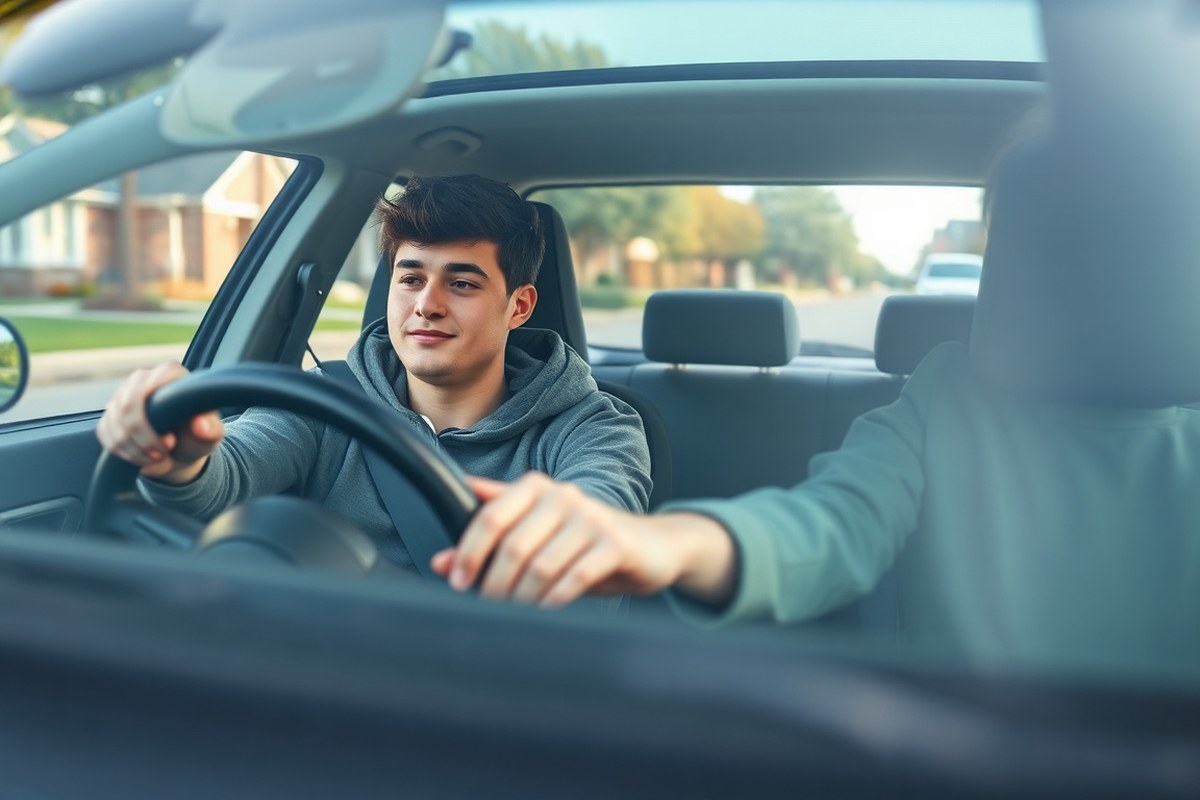
Most new drivers need between 40 and 70 total practice hours to pass the road test. About 45 hours of professional lessons combined with 22 hours of private practice is common. The American Automobile Association suggests around 50 hours of supervised driving before taking the test.
Teenagers often take longer to become test-ready because of graduated licensing rules. Many states make teens log 40 to 70 hours of driving. They need at least 10 hours of that at night.
This is supervised driving practice. This practice period usually lasts 3 to 6 months before they can take the road test.
Adults learning to drive may progress faster since they often practice more flexibly. However, the total practice hours needed stay close to the same range. You learn at different speeds depending on many things.
Your skill, practice time, and teacher all matter. These factors change how soon you’re ready to drive.
Practicing consistently helps you gain control of basic skills like steering and braking. Most beginners get these fundamentals after a few hours. Perfecting smooth acceleration and night driving often takes additional time and focused practice.
You’ll know you’re ready when you can handle common road conditions safely. Passing the driving test requires both confidence and skill under different situations. Rushing through practice increases the chance of needing multiple test attempts.
Key Phases and Timeline of Learning to Drive
Learning to drive happens in clear steps. First, you study and get a learner’s permit. Then, you take lessons, practice, and prepare for the test.
Each step takes time, usually spread over weeks or months. A typical learner plans for about six months before passing the road test.
Studying for the Written Test
You start by learning the rules and signs in your state’s driver handbook. Most learners spend about one to two weeks reading and taking practice tests. This step sets the foundation for safe driving and passing the permit exam.
You can use study apps to help you learn anywhere. Mental rehearsal works well when you don’t have a car.
Both help you prepare on the go. Focus on areas you find tricky, like traffic laws or warning signals.
Obtaining and Using a Learner’s Permit
Once you pass the written test, you get your learner’s permit. Usually, you must hold it while practicing with a licensed adult in the car. Teens often need to keep a permit for at least six months before the driving test.
This permit period lets you build experience on real roads. Driving in different conditions is key to getting confident behind the wheel.
Behind-the-Wheel Lessons
Professional lessons usually start soon after you get your permit. Taking regular lessons helps you learn correct techniques and prepares you for the test. Most learners have about 10 to 20 lessons, spread out over several months.
Lessons focus on special skills like parking, turning, and obeying road signs. A good instructor spots mistakes early and teaches how to fix them.
Private Practice Sessions
You should add plenty of private practice to your lessons. Experts recommend 40 to 60 total hours behind the wheel. This practice lets you try skills at your own pace and get used to everyday driving.
Practicing two to three times a week works well. Consistent practice speeds up learning and builds your confidence.
Preparing for the Road Test
In the final phase, you focus on passing the driving test. Many learners spend a couple of weeks reviewing difficult skills and rules. Practice test routes or take mock exams when possible.
You can take the test as many times as needed. But many pass on the first or second try. Preparation helps you spot weak points and correct them before the exam day.
Typical Learning Timeline for New Drivers
| Stage | Timeframe | Key Details |
|---|---|---|
| Study for Written Test | 1, 2 weeks | Use driver handbook and practice tests |
| Hold Learner’s Permit | Minimum 6 months (teens) | Practice with licensed adult, build real experience |
| Behind-the-Wheel Lessons | 10, 20 lessons over months | Learn driving skills and safety techniques |
| Private Practice | 40, 60 hours total | Practice outside lessons, steady and frequent |
| Test Preparation | 1, 2 weeks | Refine skills, take mock tests |
Driving often in varied conditions builds confidence faster than cramming lessons tightly.
Remember, more practice and lessons usually mean better driving skills sooner. Skipping practice or rushing tests can lead to poor results. A steady, patient approach helps most new drivers pass safely and confidently.
How State Requirements Affect Learning Duration
State laws set minimum practice hours to learn driving. They also set permit rules. These rules affect how long learning takes.
Learner’s permits give you legal permission to drive under supervision. You must get experience during your permit period.
This experience is needed before the full driving test. It helps you be ready.
Minimum Practice Hours by State
Most states in the U.S. Require 40 to 50 hours of supervised driving before you can take the driving test. Some states raise this to 70 supervised hours, especially for teenagers. Driving hours must cover daytime and nighttime.
This helps you practice different road conditions. Both kinds of hours are required.
Professional behind-the-wheel training is also mandatory in many states. Many states require about 6 hours with a certified instructor. You finish these lessons before moving to the next permit step.
These lessons build your skills. This adds structure beyond just driving with family or friends.
Permit Holding Periods and Restrictions
Your learner’s permit lets you drive legally but with restrictions. Permit stages last from 30 days to 12 months. The exact length depends on your state rules.
This time trains you well. While you have your permit, you must practice required hours.
You also must follow rules like no night driving. Passenger limits also often apply.
These restrictions help you gain experience safely. Many states want you to hold your permit 6 months or more. Then you can take the driving test.
This helps build your skill. This delay ensures you get enough practice and build confidence behind the wheel.
Graduated Licensing and Age Variations
Age plays a big role in learning duration due to graduated driver licensing (GDL) programs. Teens often face longer permit periods with more rules than adult learners. States usually give permits at age 15 or 16.
They then require months of supervised driving. This comes before full licensure.
Drivers 18 or older often skip these formal steps. Many states make the process easier. This applies to adult beginners.
You may skip driver’s ed or long permit periods. Adults often finish licensing faster than younger drivers.
You still need to meet practice hour requirements. This shortens the overall process.
| Document | Purpose |
|---|---|
| Learner’s Permit/Provisional License | Legal permission to practice driving |
| ID (passport, birth certificate) | Proof of identity and age |
| Proof of Residence | Required in some jurisdictions |
| Medical Certificate (if applicable) | Certifies fitness to drive |
These documents start your journey legally and prove your qualifications. Having them ready streamlines meeting state requirements. That way, you can pass through each learning phase without delay.
Factors That Influence How Fast You Learn to Drive
Age affects how fast you learn to drive. Younger drivers, like teens, learn skills fast. They need more time to build safe habits.
Patience is important for forming good driving routines. Adults might progress steadily but could take longer adjusting to new situations behind the wheel.
Practicing often speeds up your learning. Drive several times a week, about 30 to 60 minutes each time. This helps keep skills fresh.
It also builds your confidence behind the wheel. Too few sessions stretch out the timeline. Daily practice can cut learning time to about three months.
The quality of your instructor plays a big role. A patient, clear teacher who gives useful feedback helps you improve faster. Getting defensive or ignoring tips slows your progress.
It makes passing the driving test take longer. Staying open helps you learn faster.
Where you practice changes how quickly you learn. Busy city streets with heavy traffic, pedestrians, and tricky intersections can slow your progress. Rural driving may feel easier but needs care.
Roads can be narrow, which is tricky. Watch out for animals crossing too.
Each environment adds different challenges. Urban driving requires quick decisions and handling distractions.
On country roads, you focus more on road edges and limited visibility. Motorway driving adds the need to merge at high speeds and maintain safe distances.
Your past experience matters too. Riding a bike or golf cart helps beginners learn vehicle control. These experiences make understanding driving basics easier.
You gain useful practice before driving a car. People who struggle with feedback or get nervous often take longer to pass the final test.
Essential Driving Skills You Need to Master for the Test
Before taking your driver’s test, you must master key driving maneuvers. These include starting and stopping smoothly, turning safely, changing lanes, parking correctly, and reversing. Each skill helps show your control over the vehicle and your ability to follow traffic laws.
You also need to know road rules well. This means understanding speed limits, right-of-way, traffic signals, and road signs.
Your written test covers these rules first. So passing it gives you the basics needed before practical driving.
Parking skill is important. Parallel parking and three-point turns often feature in the practical test.
You have to park within a few feet of the curb without hitting cones or curbs. Practice this in quiet streets or empty parking lots until you feel confident.
- Smooth starts and stops without jerking
- Safe turning with proper signaling
- Changing lanes while checking mirrors and blind spots
- Parallel and angle parking within marked spaces
- Reversing in a straight line and around corners
- Observing all traffic signs, lights, and rules
- Executing a three-point turn in tight spaces
Signaling is not just for turns but also for lane changes and parking maneuvers. Use your signals at least 100 feet before acting.
This alerts other drivers and is mandatory for the test. Ignoring signals can lead to automatic test failure.
Practice hazards and defensive driving too. Recognize situations where you need to slow down or stop. Look ahead and around continually to spot pedestrians, cyclists, and other vehicles early.
Always check your mirrors before every maneuver. Look over your blind spots, too. This helps avoid surprises during your test and real driving.
Tips to Accelerate Learning Safely and Effectively
Start your practice in quiet, low-traffic areas to build confidence. These spots let you focus without pressure or distractions. Gradually move to busier roads as you gain control and skill.
Professional lessons are helpful early on. Instructors teach correct habits and catch mistakes before they become habits. The DVSA recommends about 45 hours of professional lessons combined with private practice for best results.
Practice regularly, aiming for short, focused sessions instead of long, tiring ones. About 22 hours of private practice outside lessons helps many learners improve. Keep each session around 30 to 60 minutes to avoid burnout and stay sharp.
- Plan your driving times when roads are less busy, like mid-morning or early afternoon.
- Use a checklist before driving: mirrors adjusted, seat position good, calm mindset.
- Ask your instructor or experienced driver to give clear, calm feedback.
- Keep a driving log to track skills practiced and areas needing work.
- Role-play test scenarios with a friend or family member.
- Use relaxation breathing or mental tricks to ease nerves before driving.
Nervousness is normal but managing it helps your learning. Take deep breaths and remind yourself that mistakes are part of learning. Focusing on small tasks, like checking mirrors or signaling, keeps your mind busy and confident.
Tailor your practice to your learning style. Some people learn better by hearing instructions, others by doing. Talk this over with your instructor.
It helps your driving time count more. Your skills will last longer.
Common Learning Mistakes and How to Correct Them
Many new drivers get stuck making common mistakes that slow their learning. One problem is rushing to learn everything fast. This often leads to missing basic skills like smooth steering or proper mirror use.
Slow down and focus on one skill at a time during each lesson. It helps build good habits and confidence.
Anxiety or panic while driving can cause trouble, especially during tests. It’s normal to feel nervous. But try practicing deep breathing or counting to calm your mind.
Before your test, picture yourself driving calmly and handling all situations. This mental rehearsal makes nerves easier to manage.
Test failures often happen because of simple mistakes made by drivers. These problems usually come from rushing or not practicing enough.
Make sure you understand each step for maneuvers. Get feedback from your instructor or a trusted driver.
- Taking lessons on an automatic first can help you learn basics without extra worry.
- Practice parking in quiet areas until you’re comfortable.
- Drive regularly in different conditions like rain or night to build confidence.
- Use mirrors and check blind spots every time you change lanes or turn.
- Learn to control the car’s speed smoothly to avoid jerky stops and starts.
- Ask questions if you don’t understand instructions during lessons.
- Practice test routes or typical maneuvers before your exam.
Many beginners don’t realise that mastering routine checks sets you up for test success. Good progress takes patience and steady practice, not speed. Getting comfortable with the car and the rules on your schedule builds lasting skills.
Fixing these common errors means less stress and faster improvement. You’ll feel more in control when you make driving a step-by-step process. Avoid shortcuts that seem faster but cause bad habits and slow your progress down.
When Are You Ready to Take Your Driving Test?
You know you’re ready for your driving test when you master basic skills. Feeling confident behind the wheel is also important.
Confidence means you handle common traffic situations without stress and follow all rules smoothly. Many learners reach this level after 20 to 60 days, depending on their practice and instruction.
Before taking the test, you must meet your state’s legal requirements. These rules usually include holding a learner’s permit for some time. You must log enough behind-the-wheel hours.
Then pass a written test. Check your local DMV for exact rules and paperwork. Failing to meet these can delay your testing and cause extra costs.
Practice tests are a smart way to measure readiness. They highlight areas you still need to practice and boost your confidence with familiar test formats. Doing many practice drives with a licensed instructor helps you spot mistakes.
A trusted experienced driver works too. This builds your skills faster.
- Hold your learner’s permit for the required time (usually 6-12 months)
- Complete the mandatory number of supervised driving hours (often 40-50 hours)
- Pass the written knowledge test on traffic signs and rules
- Drive comfortably in different conditions like night or rain
- Effectively use mirrors, signals, and demonstrate smooth control
- Show safe decision-making in traffic and obey speed limits
- Consistently perform parking and three-point turns without errors
One easy way to check your readiness is a final mock test with your instructor. They’ll tell you exactly what to improve before the real test. A few practice runs that match the test route can reduce your nerves on test day.
Don’t rush your test. Being fully ready saves time and money in the long run.
Skipping steps or rushing the test can make you fail. You might lose confidence too. Take your time to prepare well.
Good preparation takes time, often 4 to 5 months with regular practice. Sticking to a schedule and tracking your skills makes passing much easier.
Cost and Time Investment of Different Learning Methods
Choosing how to learn to drive affects both your money and time. Professional lessons cost more but offer expert guidance.
Private practice is cheaper but needs a supervisor and more planning. Online courses fit schedules but may lack hands-on training.
Professional Driving Schools
Professional driving lessons usually cost between $50 and $100 per hour. Most learners take 35 to 45 hours of these lessons to get ready. Schools often customize lessons to fit your progress and learning style.
Professional lessons include training on real roads and traffic conditions. This helps you build confidence quickly and learn defensive driving.
The expense can add up. But the quality often results in faster readiness for the test.
Online Classroom Courses
Online courses handle the classroom part of driver education. They usually take about 45 hours and cover traffic laws and safe driving theory. These courses cost far less than professional lessons but don’t include behind-the-wheel practice.
You can complete online classes at your own pace, often from home. This saves travel time and fits around school or work. Still, you’ll need separate time with a supervisor to practice driving skills on the road.
Private Practice with Supervisors
Practicing with a family member or friend is the cheapest way. They must follow your state’s supervisor rules. This keeps your practice legal and cost-effective.
Private practice typically requires 20 to 30 hours for most learners. This method builds driving skills but depends on the supervisor’s ability to teach.
Scheduling private practice often challenges busy families, which slows progress. Without professional advice, mistakes may go uncorrected. Still, private practice provides valuable road experience at a lower cost.
Combined Approaches
Many learners benefit from combining methods for better results and lower costs. For example, taking 30-40 professional lesson hours plus about 22 hours of private practice is common. This blend offers expert instruction and extra practice time.
Using online courses alongside driving practice cuts classroom expenses while covering required knowledge. Combining methods takes careful planning to balance costs, time, and learning effectiveness. Here is a comparison table based on common data for U.S. Learner drivers:
| Method | Average Cost | Time Commitment | Benefits |
|---|---|---|---|
| Professional Lessons | $1,750 to $4,500 (35, 45 hrs at $50, $100/hr) | 35 to 45 hours | Expert teaching, real road experience |
| Online Classroom | Usually under $200 | Approx. 45 hours (classroom only) | Flexible schedule, low cost |
| Private Practice | Minimal cost (fuel, supervision) | 20 to 30 hours | Hands-on experience, low direct cost |
| Combined (Lessons + Practice) | Varies widely; lessons plus practice | 50 to 70+ hours total | Balanced expertise and experience |
Deciding which method to choose depends on your budget and how quickly you want to learn. Combining professional lessons with private practice often offers the best mix. Pure private practice can save money but may take longer to prepare fully.
Your Quick-Start Plan for Learning to Drive
Follow this simple plan to start learning driving safely and confidently.
- Before You Begin: Get familiar with your state’s learner’s permit rules and study the driver handbook. Check if you can pass the written test at this stage.
- Week 1: Practice basic controls like steering, braking, and accelerating in a quiet parking lot. You’ll know it’s working when you feel comfortable handling the car slowly.
- Week 2: Begin driving on low-traffic streets while accompanied by a licensed adult. Count your successful drives without panic or errors.
- After 3 Weeks: Focus on specific skills like lane changes and parking. Notice if you complete these maneuvers on your own smoothly.
- After a Month: Drive in different conditions like light rain or evening hours with your supervisor. You’ll feel ready when you keep calm and react properly.
- Weeks 5-6: Start taking mock driving tests online. Use quizzes or apps to prepare your knowledge. This helps calm your nerves. Check if you can answer questions correctly and follow test rules.
- Six Weeks or Later: Schedule the driving test when you can drive alone. Only go when you feel confident. Make sure you can do all skills without help. Your readiness shows if you pass practice drives repeatedly.
Frequently Asked Questions
How Many Hours of Practice Are Recommended Before Taking the Driving Test?
Most states suggest at least 30 supervised hours before testing. Practicing regularly helps build confidence and skill for your driving test.
Does Learning to Drive Quicker Increase the Risk of Accidents?
Learning too fast can increase risk if not careful. Take time to master skills and get comfortable behind the wheel.
Can You Learn to Drive Entirely from a Driving School?
Yes, driving schools can teach you everything and provide practice. But combining private practice speeds up learning.
How Long Do You Need to Practice Driving Before Feeling Confident?
Usually 40 to 50 hours of mixed practice builds good confidence. Practice in different conditions to prepare well.
Is It Harder to Learn to Drive as an Adult Than as a Teen?
Adults may learn slower due to less practice time or nerves. But motivation and focus often help adults catch up quickly.
Before You Go
Learning to drive usually takes a few weeks to a few months, depending on your practice. Focus on steady progress and safe habits. Book your permit or practice session today.
This is the first step to driving on your own. Take action now.