
What Castor Oil Is Used for: 9 Key Benefits and Safe Uses Explained
You might wonder what castor oil is used for beyond simple skin care. It mainly helps with constipation and can also support natural labor induction. People use it topically for skin and hair health too, making it a versatile natural remedy.
Castor oil works because it contains ricinoleic acid, which stimulates bowel movements and skin healing. Taking it by mouth can produce a bowel movement in about 6 to 12 hours. Just remember to keep it away from other medicines by at least two hours.
Topical uses include moisturizing skin, promoting hair growth, and fighting bacteria on dentures. It’s thick and rich, so a little goes a long way. Choose cold-pressed, organic types for the best benefits and fewer additives.
Key Takeaways
- Castor oil usually triggers bowel movements within 6 to 12 hours after ingestion.
- It’s often used to encourage natural labor within 24 hours in pregnant women.
- Use cold-pressed castor oil for skin and hair to keep its natural properties.
- Keep castor oil at least two hours apart from other medicines to avoid interactions.
- Applying a 10% castor oil solution can reduce oral bacteria on dentures.
- Castor oil is thick, so use small amounts to avoid greasy skin or hair.
1. Common Uses of Castor Oil for Health and Wellness

Castor oil is best known for its use as a laxative. Taking 15 to 60 mL by mouth once can relieve occasional constipation.
The ricinoleic acid in castor oil triggers bowel movements by stimulating the intestines. People should follow package directions and avoid daily oral use unless a doctor says it’s okay.
Besides its laxative effects, castor oil helps soften and moisturize skin. You can apply a thin layer once or twice daily to dry or rough areas. It locks moisture into the skin and may reduce inflammation, which helps wounds heal better.
After a cut or scrape closes, apply a little castor oil. It helps keep new skin soft. It may also reduce itching.
Castor oil also has a traditional role in hair care. Many people rub 1 to 2 teaspoons onto the scalp once or twice a week. Leaving it on for 30 minutes to a few hours adds moisture and shine.
Castor oil doesn’t have strong proof for hair growth. It might help hair feel softer. It can make hair easier to manage.
A less common but studied use is for labor induction in pregnant women. Taking castor oil can increase the chance of going into labor within 24 hours. Small studies showed women using castor oil had quicker labor starts.
This was compared to women who didn’t use it. Only use this method with a doctor’s supervision.
It can cause strong contractions. It may also cause side effects.
Castor oil can also ease arthritis and joint pain due to its anti-inflammatory properties. Use a warm castor oil pack to ease sore joints. Put about 1 tablespoon on cloth.
Apply for 30 to 60 minutes a few times a week. Some people use it on irritated eyelids or under-eye skin. But they should follow product label instructions carefully to avoid irritation.
In all uses, quality matters. Cold-pressed castor oil sold for skin and hair tends to be pure and safe. The oil’s texture is thick and sticky, so a little goes a long way.
Always watch for skin reactions and stop use if redness or discomfort appears. Talk to your healthcare provider before taking castor oil by mouth.
This is important if you have health conditions. Also if you take medicines.
2. How Castor Oil Works Inside the Body and on Skin
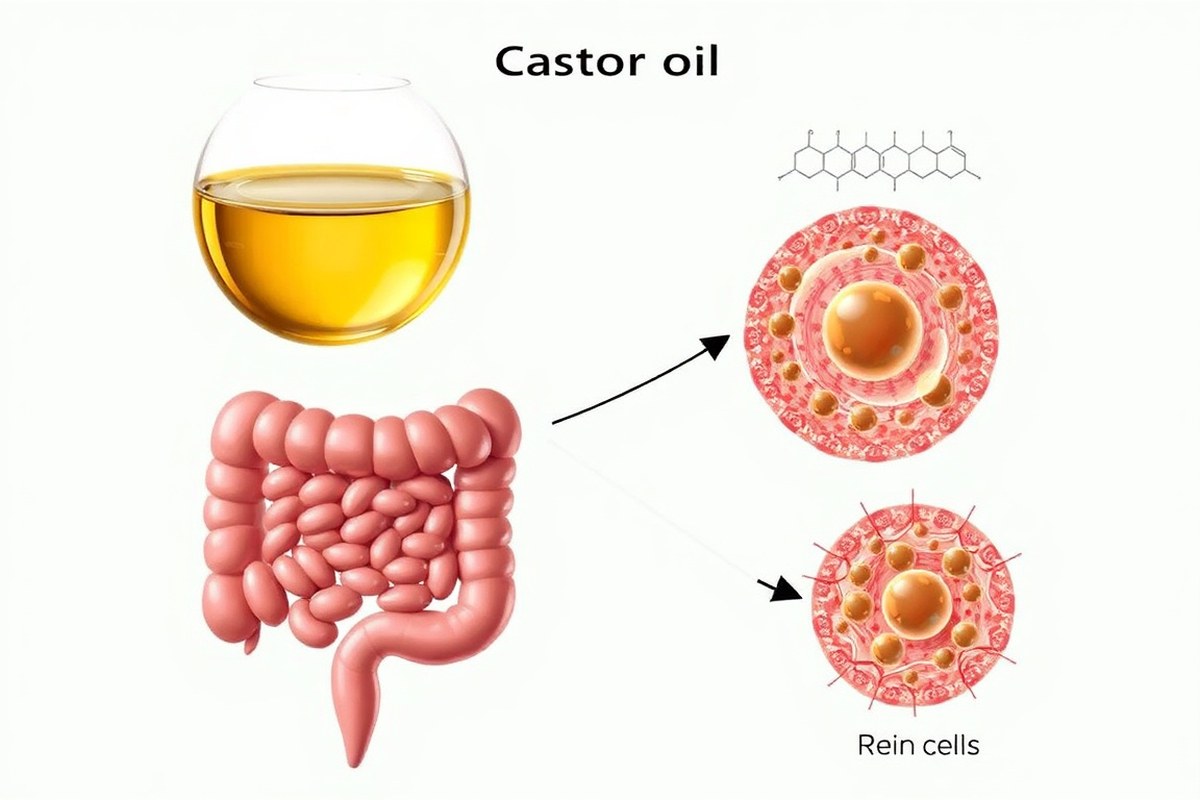
Castor oil’s main active compound, ricinoleic acid, makes it stand out. This fatty acid makes up about 85% to 95% of the oil. It gives the oil a thick and heavy feel.
When you take castor oil by mouth, ricinoleic acid attaches to receptors in your intestines. This triggers muscle contractions, helping move stool along and easing constipation.
Ricinoleic acid also boosts fluid secretion inside your intestines. More fluid softens stool, making it easier to pass. This is why castor oil acts as a strong laxative.
It can work within a few hours. Using it often can cause side effects like diarrhea.
On your skin and hair, castor oil works differently. Its fatty acids, especially ricinoleic acid and omega-6s, moisturize and condition. Castor oil locks in moisture when you apply it.
It smooths dry patches on your skin. It also makes hair shine and feel soft.
It also fights inflammation. So people sometimes rub it on sore joints or wounds to reduce swelling and speed healing.
The uterus effect from castor oil comes from ricinoleic acid. This acid activates EP3 prostanoid receptors. This causes uterine muscles to contract, which can help induce labor.
Some people use about one tablespoon for this purpose. But it’s a strong effect that can cause cramps or nausea.
Check with your healthcare provider before using castor oil to start labor. It is not safe for everyone.
Do a patch test before using castor oil on your skin. This helps avoid allergic reactions or irritation.
3. How Long Does Castor Oil Take to Work for Constipation and Labor?
Castor oil usually causes a bowel movement between 6 and 12 hours. Adults typically take 1 to 4 tablespoons (15 to 60 mL) orally. Take it by itself at least two hours apart from other medicines to avoid interactions.
Some people may have a bowel movement within 2 to 3 hours. This depends on their body and the amount they took. Speed varies from person to person.
A laxative effect often takes 6 to 12 hours to fully work. This is the most common time frame. It may be slower for some.
No bowel movement by 12 hours means don’t take more castor oil. You should talk to a healthcare professional first. Avoid extra doses without medical advice.
For labor induction, castor oil can bring on contractions by activating receptors on uterine muscles. This usually happens within hours of ingestion. Some women notice effects around 6 to 12 hours too, similar to its bowel stimulant action.
Castor oil is a traditional laxative but can have risks. Use it only with a healthcare provider’s guidance. Avoid using it without supervision.
How quickly castor oil works depends on the dose used. The method of taking it also affects timing. Everyone’s body reacts differently.
Drinking it on an empty stomach may speed things up slightly. Smaller doses might delay the effect. Bigger doses increase the chance of side effects like cramping or nausea.
People taking other stimulant laxatives should not combine them with castor oil. This can cause stronger effects or unwanted complications. Talk with your healthcare provider before starting castor oil.
They can help set a safe dose. They also guide you on when to take it.
4. Different Types of Castor Oil and Their Specific Uses
Castor oil comes in several types, each suited for different uses. Cold-pressed castor oil is great for skin and general wellness.
Jamaican black castor oil often helps more with hair growth. Refined castor oil tends to be cleaner but less potent.
Cold-Pressed Castor Oil Characteristics
Cold-pressed castor oil is extracted from seeds pressed at low temperatures, below 120 °F. This method uses little or no heat, preserving the oil’s natural compounds. It has a lighter color than other types.
It has lower acid content, making it gentler on skin. This makes it safe for most medicinal uses.
You’ll often find cold-pressed oil labeled as “100% pure” or “hexane-free.” This oil suits skin care, castor oil packs for pain relief, and general body use. Avoid oils with fragrance if your skin is sensitive.
Jamaican Black Castor Oil Uses
Jamaican black castor oil comes from roasted seeds. Roasting gives it a darker color and smoky scent.
It’s popular in Caribbean hair care and natural hair communities. Its thicker texture is believed to improve hair growth and scalp health.
People often use it for hair loss or thinning hair to boost volume and thickness. It’s less common for skin or medicinal use. The oil can be heavier.
Sometimes, it clogs pores. Use it mainly on hair or scalp for best results.
Refined Castor Oil and Purity
Refined castor oil undergoes chemical or heat treatment to remove impurities. This process lightens the color but may reduce some natural benefits. Refined oil has little to no odor.
It is less sticky than unrefined oil. People choose it for cosmetics or industrial use.
This oil is less suitable for medicinal or hair care because of fewer active properties. However, it’s good if you need an odorless option or a milder product. Always check labels for the method of extraction and purity to match your needs.
Here’s a quick look at the main types to help you choose:
| Type | How It’s Made | What to Know |
|---|---|---|
| Cold-Pressed | Seeds pressed with little or no heat | Lighter color; retains natural oils; good for skin and packs |
| Jamaican Black Castor Oil | Roasted seeds pressed, then oil filtered | Darker; smoky scent; thick; best for hair growth |
| Refined | Heated or chemically processed to remove impurities | Clearer, odorless; less natural compounds; used in cosmetics |
Choosing the right oil means matching it to the use. Cold-pressed oils give natural care for skin and wellness.
Jamaican black oil is your choice for thicker, stronger hair. Refined oils work when you want less smell or an industrial grade.
5. Safe Ways to Use Castor Oil for Hair, Skin, and Eyes
Using castor oil on your hair, skin, and eyes can be helpful when done carefully. Applying it slowly and testing small amounts lowers the chance of irritation. Choose pure or specially made castor oil products for the best safety and results.
Applying Castor Oil to Hair and Scalp
Castor oil has been used for generations in many cultures to keep hair and scalp healthy. It can moisturize and strengthen hair but applying it wrong can cause tangled or itchy scalp. Use a small amount mixed with a lighter carrier oil for easier spreading.
Follow these steps for a safe hair treatment:
- Mix 1 tablespoon of castor oil with 2 tablespoons of coconut or jojoba oil.
- Test a small patch on your scalp to check for irritation.
- Part your hair into sections for easier application.
- Use your fingertips to apply oil mixture directly onto the scalp.
- Massage gently for about 5 minutes to boost blood flow.
- Spread the remaining oil through your hair length to the ends.
- Cover your hair with a shower cap or towel for 30 to 60 minutes.
- Wash your hair with a gentle shampoo to remove excess oil.
Use a carrier oil with castor oil to prevent your hair from hardening or matting.
Using Castor Oil Safely on Skin
Castor oil can moisturize and soften your skin due to its fatty acids. Applying it pure may irritate sensitive skin. Mixing it with a gentle carrier oil lowers the risk of rash or allergic reactions.
Try this easy skin care routine:
- Do a patch test on your inner arm before applying to your face or body.
- Mix 1 part castor oil with 3 parts almond or olive oil.
- Clean your skin thoroughly before applying the oil blend in thin layers.
- Use gentle upward strokes to spread oil on your face or dry patches.
- Allow the oil to absorb for 20 to 30 minutes, then rinse if desired.
- Apply daily for best hydration but stop if you get redness or itching.
Avoid pure castor oil on sensitized or damaged skin to reduce irritation risk.
Castor Oil for Eye Care Tips
Castor oil may help relieve dry eyes and reduce dark circles when applied carefully. Always use sterile, hexane-free, and ophthalmic-grade castor oil. Using non-sterile oils near eyes raises infection risks.
Here’s how to use it safely:
- Purchase eye-specific castor oil from a trusted source.
- Wash your hands well before touching your eyes.
- Use a clean dropper to place one drop in each eye if recommended.
- Or, apply a tiny amount with a clean finger to the eyelid margin.
- Do not share eye products to avoid contamination.
- Stop use immediately if you notice discomfort, redness, or blurred vision.
Only use castor oil around or in your eyes if it is labeled for ophthalmic use.
6. How to Use Castor Oil to Induce Labor: What You Need to Know
Castor oil is sometimes used to induce labor. But it should only be taken under medical supervision. It may work by stimulating bowel movements, which can in turn trigger uterine contractions.
Safety matters for you and your baby. Dosage and timing are important. These help avoid side effects and risks.
Medical Safety and When to Avoid
Don’t take castor oil without your doctor’s or midwife’s approval. Using it without guidance can cause intense cramping and dehydration. Women with certain pregnancy complications or a history of premature labor should avoid it completely.
Doctors recommend waiting until you are at full term, which is after 39 weeks of pregnancy. Early induction can be risky for the baby. Castor oil packs on your skin aren’t safe in pregnancy.
There’s no proof they work. They might not be harmless.
Recommended Dosage and Administration
Typically, the advised dose for labor induction is about 1 to 2 tablespoons taken by mouth. Start with 1 tablespoon to see how your body reacts. Drink plenty of water afterward to stay hydrated.
Usually, castor oil works within a few hours. So plan to use it when you can rest at home. Don’t take more oil than recommended.
More oil won’t speed up labor. It could cause bad side effects. Always follow your healthcare provider’s exact instructions on dosage and timing.
Here’s a basic checklist for taking castor oil safely to induce labor:
- Consult your OB or midwife to confirm it’s safe for you.
- Use a clean spoon to measure 1 tablespoon of castor oil.
- Drink it quickly with a small glass of water.
- Stay near home and plan to rest comfortably.
- Monitor your contractions and note any changes.
- Drink plenty of water to avoid dehydration.
- Seek medical help if you experience severe pain or bleeding.
- Contact your healthcare provider to update them on your status.
Possible Side Effects During Labor
Castor oil may cause abdominal cramping, bloating, nausea, and diarrhea. These side effects come from its strong laxative effect. Some women feel dizzy or dehydrated after taking it.
Watch for unusually strong contractions that cause intense discomfort. Call your doctor right away if you start vomiting.
Also call if you see bloody stools. Safety during labor is the top priority to protect you and your baby’s health.
7. Potential Side Effects and When to Avoid Castor Oil
Castor oil commonly causes nausea, diarrhea, and abdominal cramps, especially when taken by mouth. Some people might get skin irritation like redness and itching. These reactions happen when applied on the skin.
Watch for any signs of allergy after use. Castor oil in your eyes can cause pain or blurred vision.
It might also cause irritation or chemical burns. Avoid getting castor oil in your eyes.
You should never use castor oil internally during pregnancy without explicit medical approval. People getting cancer treatment should check with their care team first. This avoids drug problems or toxicity.
Always ask your doctor before trying new treatments. If you have sensitive skin or allergies, do a patch test first.
This can prevent bad skin reactions. Test a small area and wait 24 hours before full use.
- Nausea and diarrhea
- Abdominal cramps
- Skin redness and itching
- Eye pain and blurred vision
- Serious allergic reactions: swelling, rash, or difficulty breathing
- Signs of overdose: severe stomach pain, vomiting, or dehydration
Castor oil overdose symptoms include severe stomach pain, persistent vomiting, and dehydration. These signs require immediate medical attention. Stop using it and get help if you notice swelling or breathing trouble.
Watch for face or throat swelling too. These signs can mean a serious allergic reaction.
8. How to Store and Choose Quality Castor Oil Products
Look for 100% pure, cold-pressed castor oil on the label. Avoid blends or oils with additives, preservatives, or fragrances.
Organic certification is a good sign of quality and safety. Choose oils in dark glass bottles that block sunlight to keep the oil stable.
Keep your castor oil in a cool, dark place away from heat sources. A kitchen cabinet or a drawer works well. Always close the bottle tightly after using the oil.
This keeps air out. Air can make the oil go bad.
- Check for “cold-pressed” and “hexane-free” to ensure purity.
- Opt for organic certification when possible.
- Choose dark glass bottles rather than plastic containers.
- Store in a cool, dry spot away from direct sunlight and heat.
- Keep the cap tightly sealed after each use.
- Use within 1 to 2 years of purchase for best freshness.
Castor oil generally lasts between one and two years if stored properly. Its thick texture and natural fatty acids make it fairly stable over time. The oil may smell sour, look cloudy, or change color.
You should throw it away then. Fresh castor oil is clear to light yellow and has a mild, nutty scent.
Always follow any storage instructions on the label to keep castor oil safe and effective.
9. Common Myths About Castor Oil Debunked
Castor oil does not reduce belly fat or detox your body. Any weight loss from using it usually comes from losing water. It might also act as a laxative for some people.
It doesn’t break down fat or flush toxins out. Using castor oil on your stomach softens skin and can ease constipation. But it won’t melt fat or clean your liver.
The idea that castor oil boosts eyelash growth or cures eye problems is not true. Experts say there’s no proof castor oil makes eyelashes longer or thicker.
It also doesn’t fix blurry vision or improve eye health. Applying castor oil around the eyes can sometimes cause irritation instead of benefits.
Castor oil cannot cure all skin problems quickly. It helps moisturize dry skin because it has fatty acids. But it won’t heal acne or eczema fast.
These conditions need more care. Some people see smoother skin after consistent use.
But big skin issues need proper treatment. Castor oil supports hydration rather than acting as a quick fix.
- No evidence supports castor oil for hair growth or stopping hair loss
- It can relieve constipation if used internally under medical advice
- Skin feels softer and more hydrated with regular castor oil application
- No scientific proof it detoxifies the body or improves digestion
- Can cause skin or eye irritation if applied improperly or too often
- Immediate weight change usually comes from fluid loss, not fat loss
Many social media trends push these castor oil myths without science. Unlike some oils, castor oil does not trigger hormone balance or fat absorption. The best use of castor oil is on moist skin.
It can also work as a gentle laxative with doctor’s guidance. Don’t rely on unproven claims for important health goals.
Step-by-Step Action Plan to Use Castor Oil Safely and Effectively
Follow these clear steps to get the benefits of castor oil without risks. Track your results carefully as you go.
- Before You Start: Check your skin for allergies with a patch test. Avoid using castor oil when you see redness or itching.
- Day 1: Apply a small amount of castor oil to your hair or skin at night. Look for softening or hydration by morning.
- Week 1: For constipation, take a measured dose of castor oil orally as directed. Notice if bowel movements improve within 6 to 12 hours.
- After 2 Weeks: Use castor oil on your scalp twice weekly to promote hair shine. Watch for any irritation or buildup and adjust use if needed.
- Before Labor Starts (If considering): Talk with your healthcare provider. Only use castor oil for labor induction under supervision to avoid risks.
- Ongoing: Store castor oil in a cool, dark place to keep it fresh. Replace if it smells rancid or changes color.
- When Side Effects Appear: Immediately stop using castor oil. Seek medical advice if you experience severe cramps, diarrhea, or eye irritation.
Frequently Asked Questions
What Are the Main Health Benefits of Castor Oil?
Castor oil mainly helps with constipation and skin hydration. It also reduces inflammation and promotes wound healing in some cases.
Can Castor Oil Be Used Safely During Pregnancy?
Castor oil can induce labor but should be used carefully and only after consulting a doctor. It’s not safe to use without medical advice.
How Does Castor Oil Improve Hair Health?
Castor oil moisturizes the scalp and may reduce dandruff. It is often used to make hair appear thicker and shinier.
Is Castor Oil Effective for Treating Chronic Back Pain?
Castor oil packs applied on the skin relieve chronic back pain for some people. They offer a drug-free way to ease muscle stiffness.
What Are the Different Grades of Castor Oil and Their Uses?
Cold-pressed castor oil keeps most natural properties, good for skin and hair. Refined types work for industrial and medical uses.
Key Points to Remember
Castor oil has many uses but needs care to get safe results. Start slow, watch your body’s response, and ask a doctor if in doubt. Try one small step today to see how your skin or digestion responds.