Is Oil and Water a Heterogeneous Mixture? Complete Guide with Separation Methods
Is oil and water a heterogeneous mixture? Yes, it is.
Oil and water don’t mix evenly and form separate layers. This means they create a visible, uneven blend rather than a uniform one.
The main reason oil and water stay separate is their molecular mismatch. Water molecules stick to each other.
Oil molecules group separately because they repel water. This physical difference makes mixing impossible on a tiny scale.
When you mix oil and water, you’ll notice two clear layers form fast. This visible separation means the mix is heterogeneous, not uniform like alcohol and water. You can even separate them easily with simple tools like a funnel or decanting.
Key Takeaways
- Oil and water form a heterogeneous mixture with visible separate layers.
- Water molecules bond through hydrogen, but oil molecules repel water.
- The molecular difference prevents oil and water from mixing evenly.
- A clear dividing line appears quickly after mixing oil with water.
- Alcohol and water create a uniform, homogeneous mixture unlike oil and water.
- Use decantation or a separating funnel to separate oil from water.
Is Oil and Water a Heterogeneous Mixture?
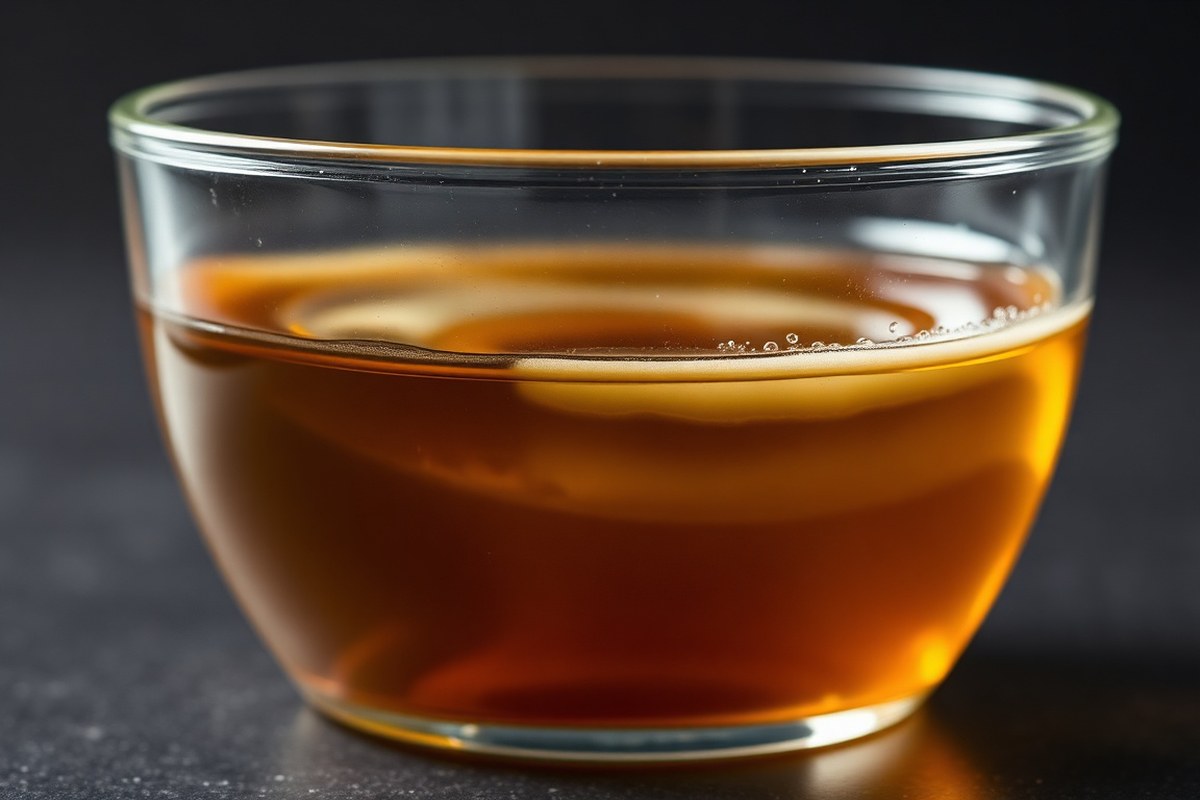
Oil and water form a heterogeneous mixture. They do not mix evenly or dissolve into each other. This causes them to separate into distinct layers that you can clearly see with your eyes.
The main reason oil and water don’t mix is that their molecules repel each other. Water molecules stick together because they are polar, while oil molecules are nonpolar.
This difference stops them from blending. So oil floats on top of water as a separate phase.
Visible separation means you can easily spot each part of the mixture. When you pour oil into water, you’ll see two layers form quickly. This shows the mixture is not uniform, a key trait of heterogeneous mixtures.
What Defines a Heterogeneous Mixture?
What Makes a Mixture Heterogeneous?
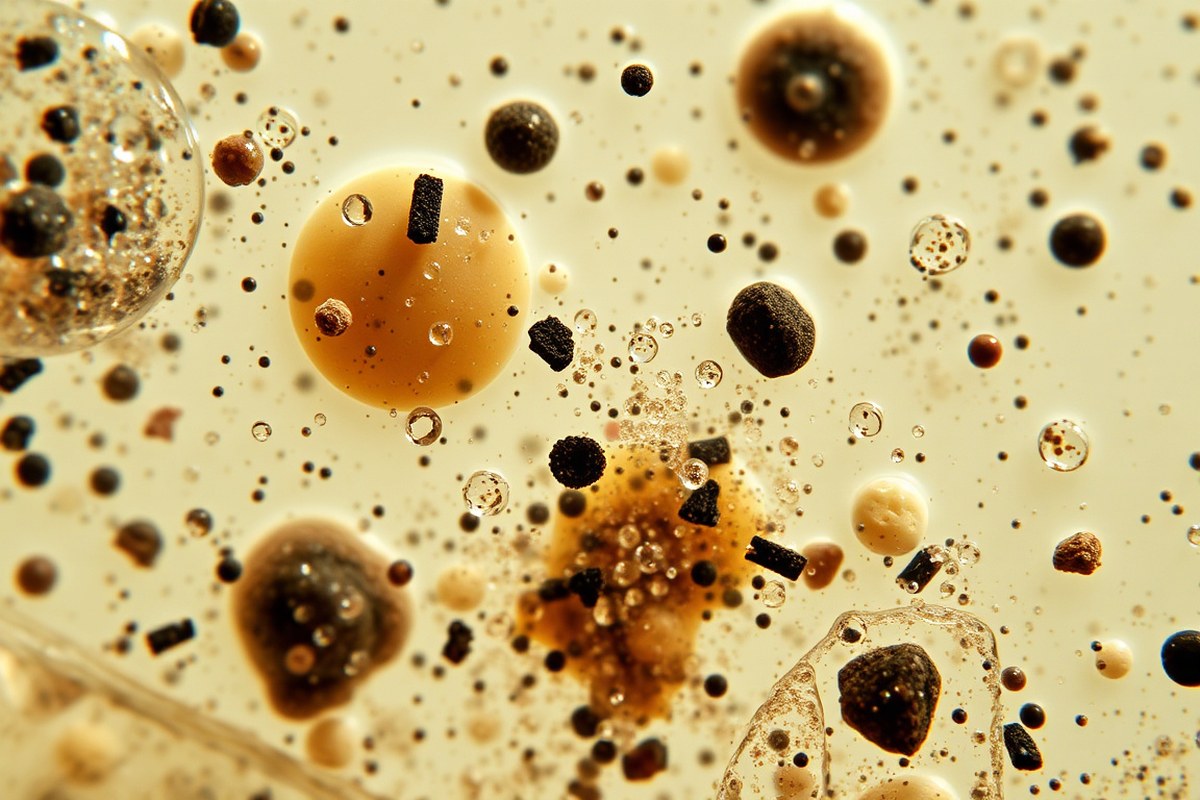
A heterogeneous mixture contains two or more visibly distinct parts or phases. You can see the different components, like oil droplets floating on water. This visible separation shows the mixture isn’t uniform throughout.
A homogeneous mixture blends into one phase. A heterogeneous mixture has parts that don’t mix evenly. The parts stay separate from each other.
You’ll notice clear boundaries between them. These boundaries highlight that each component keeps its own properties.
Number of Phases in Heterogeneous Mixtures
A heterogeneous mixture always has two or more phases. Each phase is a physically distinct part of the mixture. These phases don’t dissolve or mix completely at the molecular level.
For example, oil and water don’t mix well. Oil forms droplets or a layer on top. The oil floats on the water’s surface.
This difference creates two phases: an oil phase and a water phase. You can easily spot these phases with your eyes.
How Heterogeneous Differs from Homogeneous
Homogeneous mixtures look the same everywhere because their components dissolve uniformly. Salt dissolved in water is a common example. The mix looks clear and you can’t distinguish the parts.
Heterogeneous mixtures do not behave this way. Their components stay separate and you can see them clearly. Oil and water are a perfect example because oil floats on water without mixing in.
Why Seeing Separate Layers Matters
Seeing layers or droplets tells you the mixture is heterogeneous. It means the substances don’t mix evenly or dissolve into one phase. This matters when filtering or separating parts.
You can separate heterogeneous mixtures using simple tools like decantation or a separating funnel. You let the mixture settle, then the layers form slowly. This visibility lets you handle each phase correctly.
Common Heterogeneous Mixture Types
Many mixtures fit this category, not just oil and water. You’ll find examples in products like creams and ointments, which combine oil and water phases. Crude oil itself is a complex mixture with multiple phases.
Knowing a mixture’s type helps in choosing the right separation method. Different phases respond differently to techniques like filtration, decantation, or centrifugation.
Always let a heterogeneous mixture settle undisturbed to see the separate layers clearly before attempting separation.
Why Oil and Water Do Not Mix: Molecular and Physical Reasons
Oil and water do not mix because their molecules behave very differently. Oil molecules are nonpolar, while water molecules are polar. This difference in molecular polarity, combined with density and the forces between molecules, keeps them separate.
Molecular Polarity Differences
Water molecules have a polar structure, with a positive side and a negative side. This polarity causes water molecules to stick closely to one another through hydrogen bonds.
Oil molecules lack this polarity. They are nonpolar and do not form hydrogen bonds.
Polar and nonpolar molecules generally do not mix well. Water molecules prefer being surrounded by other water molecules. Oil molecules group together instead, forming a separate layer.
Intermolecular Forces at Work
Hydrogen bonding is a strong force that holds water molecules tightly together. Oil molecules interact mostly through weaker Van der Waals forces. These weaker forces cannot compete with hydrogen bonds to pull oil molecules into water.
Because the strong hydrogen bonds in water exclude the nonpolar oil, the two stay separated. This separation happens naturally and does not require any extra stirring or cooling.
Density Makes Oil Float
Oil is less dense than water, which means it is lighter per unit volume. Typical vegetable oils have a density around 0.9 grams per milliliter. Water has a density close to 1.0 gram per milliliter at room temperature.
The lighter oil floats on top of water, creating two visible layers. The density difference is why oil usually forms the upper layer in mixtures. This layering helps visually confirm the two materials do not mix well.
Why Molecular Structure Matters
The shape and polarity of molecules determine how they interact in a mixture. Polar water molecules attract each other and repel nonpolar oil molecules. This attraction causes water molecules to group tightly and exclude oil molecules.
You can see this effect if you stir oil into water. The two liquids will quickly separate, showing their differing molecular behaviors. This separation proves the oil-water mixture is heterogeneous.
Physical Results of Molecular Differences
The visible layers between oil and water happen because the molecules do not combine uniformly. Oil droplets group together and float above water. This clear boundary forms without any chemical reaction or change.
When mixing liquids with similar polarity, a uniform solution appears instead. Oil and water remain separate because their molecules do not share the same forces. That difference creates an easy way to identify heterogeneous mixtures.
Visual Signs to Identify Oil and Water as a Heterogeneous Mixture
You can tell a mixture is heterogeneous by looking for clearly separate parts. In oil and water, you’ll see two layers because the oil floats on the water. These layers do not mix or blend into a single color or texture.
When you first mix oil and water, oil forms small droplets floating on the water’s surface. Over time, these droplets join together and rise to form a solid oil layer on top. This visible separation shows the components are not evenly distributed.
Oil and water usually separate in a few minutes to an hour. This happens at room temperature. The process stops once they form two layers.
The time varies by how much you shook or stirred the mix and the temperature. Warmer liquid can speed up separation because molecules move faster.
- Look for one liquid floating as big drops over another
- Wait several minutes for droplets to merge into clear layers
- Notice if the mixture looks non-uniform or cloudy in spots
- Watch for the upper layer to feel oily and distinct to touch
- See if stirring briefly mixes but layers return after resting
- Use a clear container to observe changes easily over time
The different densities cause oil to float on water, making layers easy to identify. You can gently tilt the container; the layers stay separate rather than mixing completely. This physical division confirms the mixture is heterogeneous.
Cloudiness or small floating droplets also help. They show the mixture’s parts are unevenly spread. When the liquids blend fully, no droplets or texture changes appear.
How to Separate Oil and Water: Practical Step-by-Step Methods
Oil and water separate because they do not mix well, forming distinct layers. You can separate them physically using decantation or a separating funnel. Both methods rely on the difference in density and immiscibility.
Using Decantation to Separate Layers
Decantation is the easiest way to separate oil from water. It works by pouring off the top oil layer carefully, leaving the water behind.
This method needs patience and a steady hand to avoid mixing layers again. You only need a container with a spout or a glass.
- Let the oil and water mixture sit undisturbed for 10 to 30 minutes.
- Hold the container steady to avoid stirring the layers.
- Slowly tilt the container to pour the top oil into a clean container.
- Stop pouring as soon as you see the water layer approaching.
- Leave the water layer in the original container.
Pour slowly to avoid mixing the layers again or losing oil in the water.
Separating Funnel Technique Explained
A separating funnel lets you separate oil and water more precisely. It has a tap at the bottom to control the flow.
The tap helps keep the layers clear and separate. You can slowly pour out liquid without mixing the layers.
You can separate large amounts of liquids this way, and the funnel minimizes mixing. You’ll need a stand, the funnel, and containers for collected liquids.
- Place the mixture into the separating funnel and secure it on a stand.
- Let the mixture settle until you see two clear layers (oil on top, water below).
- Open the tap slowly to release the bottom water layer into a container.
- Close the tap as soon as the oil layer starts to flow out.
- Remove the funnel and pour out the oil layer separately.
Always close the tap before oils start flowing to avoid mixing the layers again.
Tips to Speed Up Natural Separation
Separation happens faster when the mixture stands still. The temperature is a bit warmer. Warmer temperatures reduce viscosity of oil.
Using a funnel or waiting longer helps layers settle completely and stay distinct. Avoid shaking or stirring to keep separation clear.
- Let the mixture sit for at least 15 minutes at room temperature or warmer.
- Use a funnel or container with a wide surface to increase layer contact.
- Avoid adding anything that stabilizes the emulsion, like soap or detergent.
Moving or shaking the mixture slows down separation and mixes the layers.
Comparison Table: Oil and Water Properties Causing Separation
| Property | Water | Oil | Effect on Mixture Behavior |
|---|---|---|---|
| Density (g/cm³) | About 1.00 | Typically 0.80, 0.93 | Oil floats on water due to lower density, causing layers |
| Polarity | Polar | Nonpolar | Polar water molecules repel nonpolar oil molecules, preventing mixing |
| Solubility | Polar substances dissolve well | Nonpolar substances dissolve well | Oil and water do not dissolve in each other, forming separate phases |
| Phase state at room temp | Liquid | Liquid | Both liquids stay distinct, visible as two separate phases |
| Mixture uniformity | Uniform alone | Uniform alone | Combined mixture is non-uniform, showing clear separation |
The key physical properties causing oil and water to separate start with density. Water is denser, about 1 gram per cubic centimeter.
Oil typically ranges from 0.80 to 0.93 grams per cubic centimeter. Because of this difference, oil always sits on top of water.
Polarity is the reason oil and water don’t mix. Water molecules have positive and negative ends, making them polar.
Oil molecules do not have charged ends and are nonpolar. These opposite polarities cause mutual repulsion and stop them from mixing.
Solubility affects how substances combine. Polar water easily dissolves polar substances like salt but not nonpolar oils.
Similarly, oil dissolves other nonpolar materials but not water. Their low mutual solubility means they remain separate in the container.
Oil and water are both liquids at room temperature. They do not mix into one uniform solution. Instead, they stay separate.
The mixture shows as two spotted layers. You can see the layers easily with your eyes. This visible phase separation shows the mixture’s heterogeneity.
When these properties combine, the mixture behaves as two distinct phases rather than blending smoothly. When you mix them, the oil quickly moves up.
This shows that the two liquids separate. This makes oil and water an easy example of a heterogeneous mixture in chemistry education.
Common Myths and Mistakes When Identifying Mixtures
Many people mistake the mixing of oil and water for creating a true solution. This happens because the two liquids look like they blend for a moment when shaken. Oil and water separate fast.
Water molecules stick tight. They do this because water is polar. Oil, being nonpolar, does not mix well with water.
Some people think oil and water mix well. They stay mixed a little. But that does not mean they form a true mix.
This isn’t correct. The liquids only form an emulsion temporarily, which separates after sitting undisturbed for a few minutes. This temporary mixing does not mean they are truly soluble in each other.
Visual appearance can also mislead you when identifying mixtures. Oil floating on water looks like a single liquid layer from a distance.
Closer inspection reveals a clear border between layers. This visible separation confirms the mixture is heterogeneous, not uniform or homogeneous.
A common error is to classify any combination that looks mixed as a homogeneous mixture. Oil and water form layers. Their molecules don’t mix chemically.
That’s why they separate. This layered look should guide you to classify mixtures properly.
Sometimes people add soap or detergent to make oil and water blend better. These substances act as emulsifiers. These substances change surface tension.
That helps tiny oil drops spread in water. This mix, called an emulsion, stays stable for a while. Without emulsifiers, oil and water quickly separate again.
When checking if a mixture is soluble, look beyond short-term blending. Wait several minutes without shaking to see if layers form. This simple step helps spot where the mixture is truly heterogeneous.
Also, note the material’s behavior: water molecules attract each other. So they naturally exclude oil molecules.
Household Examples of Heterogeneous Mixtures Like Oil and Water
Common household mixtures that resemble oil and water include salad dressings and vinaigrettes. These mixtures separate into layers because their parts do not mix evenly. You can see one layer floating on top, just like oil and water do at home.
Another example is a mixture of sand and water. The sand sinks to the bottom while the water stays clear on top. Both sand and water show visible, separate parts.
Oil and water also act like this. They are called heterogeneous mixtures.
Cleaning products such as oil-based stain removers mixed with water also behave like this. The oil-based part separates out and floats, showing two distinct layers. This makes it easy to remove or separate them without needing complicated tools.
- Salad dressing with oil and vinegar
- Sand and water mixture in a jar
- Oil-based stain remover mixed with water
- Crude oil and seawater in spill cleanup
- Grease and soapy water after washing dishes
Oil and water don’t mix well. They have different densities. Their molecules stop them from blending.
You can easily separate these mixtures by simple methods like decanting, skimming, or using a funnel. For example, after shaking a salad dressing, letting it sit separates the oil on top. So you can pour off the vinegar below.
Decanting separates liquid layers by pouring off the top layer carefully without disturbing the bottom one. Skimming removes floating oil or fat from the surface using a spoon or ladle. Filtering works when one part is solid.
Sand is a good example. The liquid passes through paper or cloth.
Always separate layers slowly to avoid mixing them again and making separation harder.
These simple steps don’t require costly tools and work quickly for household, school, or lab scenarios. You can separate oil and water in 5 minutes. Use a funnel and wait for layers to form.
The oil and water layers will settle. Hurrying or stirring too much mixes the layers again. This makes separation take longer and fail.
Using these everyday examples helps you understand what a heterogeneous mixture looks like. It also shows how physical differences like density and solubility matter in real-world separation processes. Knowing this helps you solve common problems easily.
You can do it in kitchens or classrooms. It needs simple tools and low cost.
Safety Tips and Considerations When Separating Oil and Water
Handling oil and water mixtures requires care, especially in a lab or at home. Oils can be slippery and sometimes flammable.
Certain solvents you might use to help separate them can irritate skin or damage surfaces. Wearing gloves and working in a well-ventilated area helps reduce risks.
Spills increase the chance of slipping or contamination. Quickly clean any drops you find on floors or counters with absorbent paper or cloth. Stay away from open flames near flammable oils or solvents.
These can catch fire quickly. They may cause burns or damage property.
Proper disposal of oil and water waste is important to protect the environment. Don’t pour used oil down sinks or drains. It can block pipes.
It also pollutes water supplies. Place separated oil in a sealed container for recycling or hazardous waste pickup when available.
- Wear chemical-resistant gloves and safety goggles
- Work on a stable surface and clean spills promptly
- Keep flammable materials away from heat or open flames
- Use a fume hood or ventilated space if using solvents
- Store separated oil in sealed containers for disposal
- Follow local guidelines for hazardous waste disposal
When using solvents, always read the label for specific safety directions. Some solvents may require special disposal methods or have restrictions about mixing. Avoid breathing in vapors by working near an open window or under a fume hood.
Handling oil and water mixtures gently and safely lowers the chance of accidents. It also helps you keep your workspace clean and protects your health. Taking time to follow these different precautions means better overall results and fewer headaches during cleanup.
Step-by-Step Action Plan to Separate Oil and Water at Home
Follow these simple steps to separate an oil and water mixture quickly and safely. You will see clear layers forming as the two liquids split.
- Before you start: Gather a clear container, a spoon, and a paper towel. This helps you see and skim the oil layer easily.
- Step 1: Pour the mixture into the clear container. Let it sit undisturbed for 10 to 15 minutes. You should notice the oil floating on top of the water.
- Step 2: Carefully skim the oil layer using the spoon. The oil should separate without mixing back in if done slowly.
- Step 3: Use a turkey baster or pipette to remove the oil layer. This helps get a cleaner separation. Check that the oil is mostly clear of water drops.
- Step 4: Pour the water layer into a separate container, leaving any oil residue behind. The water should look mostly oil-free.
- Step 5: Dispose of each liquid according to local waste guidelines. This prevents pollution and keeps your home safe.
- After 30 minutes: Wash all used items with warm soap and water. This removes any oil or slippery residue.
Frequently Asked Questions
Is Oil and Water a Heterogeneous Mixture?
Yes, oil and water form a heterogeneous mixture because they do not mix evenly. You can see separate layers, showing the substances remain distinct.
What Makes a Mixture Heterogeneous Instead of Homogeneous?
A heterogeneous mixture has visibly different parts or layers that are not evenly mixed. The composition varies in different spots.
Why Don’t Oil and Water Mix on a Molecular Level?
Oil molecules are nonpolar, and water molecules are polar, so they repel each other. This prevents them from combining into a single uniform mixture.
How Can You Tell Visually If a Mixture Is Heterogeneous?
You can see different parts or layers clearly, like oil floating on water. This visible separation shows the mixture is not uniform.
What Are the Best Ways to Separate Oil from Water?
Decantation and using a separating funnel work well because the two form layers. These methods rely on density differences for easy separation.
Key Points to Remember
Oil and water form a clear heterogeneous mixture because they don’t mix. You can easily see and separate the layers at home. Try separating a small sample today to see the difference yourself.