How Much Do Dump Trucks Weigh: A Complete Guide with Key Calculations
How much do dump trucks weigh depends on their type and load. Empty light-duty trucks weigh around 10,000 to 20,000 pounds. Heavy-duty dump trucks can weigh up to 50,000 pounds when empty and much more when loaded.
Loaded weights vary a lot. Small dump trucks might carry loads weighing up to 30,000 pounds. Larger tri-axle trucks can reach 80,000 pounds or more with heavy material inside.
Different dump trucks have different axle setups. More axles mean a greater weight capacity and better weight distribution. For example, a tandem-axle truck handles less weight than a tri-axle model.
Knowing the truck’s weight helps you meet road limits and avoid fines. Always weigh your truck on a certified scale before driving loaded. Overloading increases wear and risks costly damage to the truck and roads.
Key Takeaways
- Empty light-duty dump trucks weigh between 10,000 and 20,000 pounds.
- Heavy-duty dump trucks typically weigh 35,000 to 50,000 pounds empty.
- Loaded dump trucks can weigh between 38,000 and over 80,000 pounds.
- Tandem axles support weights around 25,000 to 33,000 pounds empty.
- Tri-axle trucks can carry loads up to 80,000 pounds gross vehicle weight.
- Always verify dump truck weight on a certified scale before hauling.
How Much Does a Dump Truck Weigh Empty and Loaded?
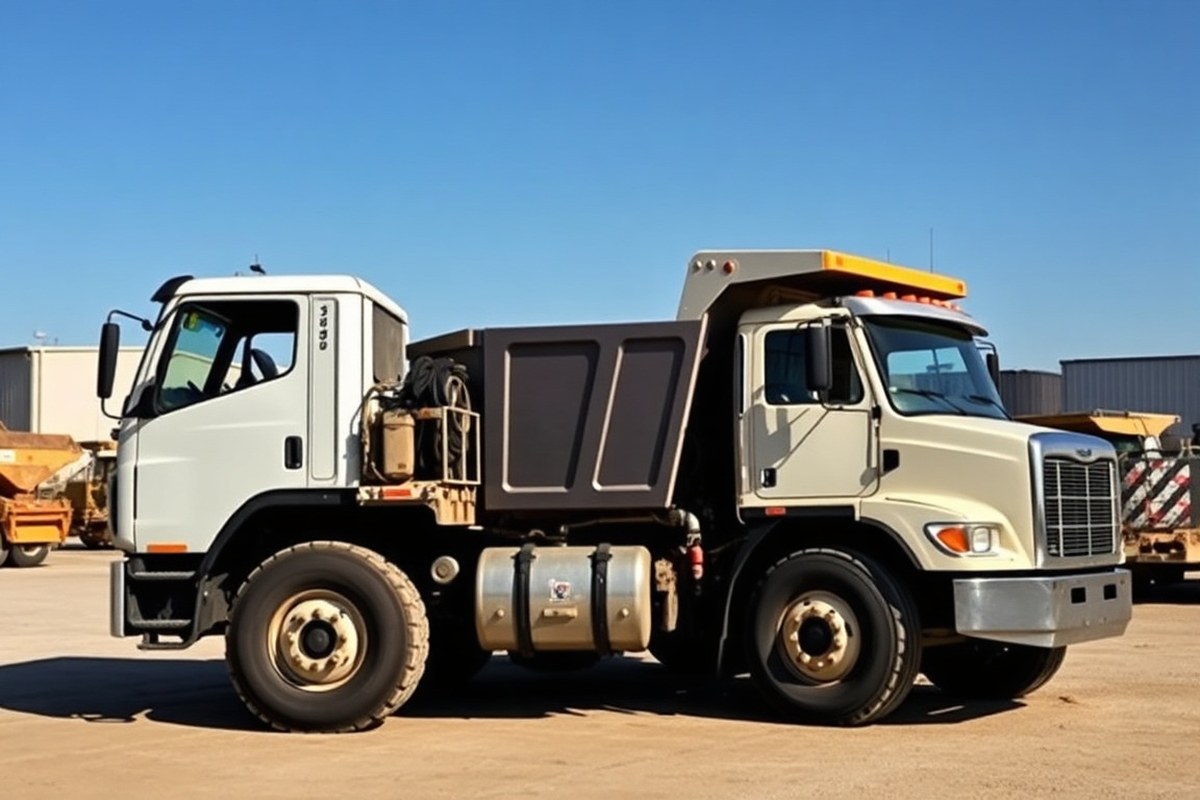
Dump trucks’ weights vary a lot depending on size and type. Empty weights usually start around 10,000 pounds for the smallest models. Larger, heavy-duty trucks empty out near 50,000 pounds or more.
Loaded weights add the cargo to the empty truck weight. A dump truck fully loaded can weigh between 50,000 and 80,000 pounds. The heavier the truck and cargo, the greater the total weight it needs to handle safely.
| Dump Truck Type | Empty Weight (pounds) | Loaded Weight (pounds) | Typical Use |
|---|---|---|---|
| Light-Duty (Two-Axle) | 10,000, 20,000 | 20,000, 26,000 | Landscaping, small hauls |
| Medium-Duty (Three-Axle) | 20,000, 35,000 | 35,000, 50,000 | Construction, roadwork |
| Heavy-Duty (Four or More Axles) | 35,000, 50,000 | 50,000, 80,000 | Large construction, mining |
| Super Dump Truck | 50,000, 60,000 | 80,000+ | High-volume transport |
Most light-duty trucks weigh about 15,000 pounds empty and carry roughly 10 tons. Medium-duty tri-axle trucks hit near 25,000 pounds empty and 50,000 loaded. Heavy-duty models start around 30,000 pounds empty but can haul up to 80,000 pounds total weight.
Axle count usually matches weight capacity. Two-axle trucks fit lighter jobs, while tri-axle or more are built for heavier material.
Oversized super dump trucks carry heavy cargo with high total weight. They need extra axles to support the load.
How Do Dump Truck Types and Axles Affect Weight?
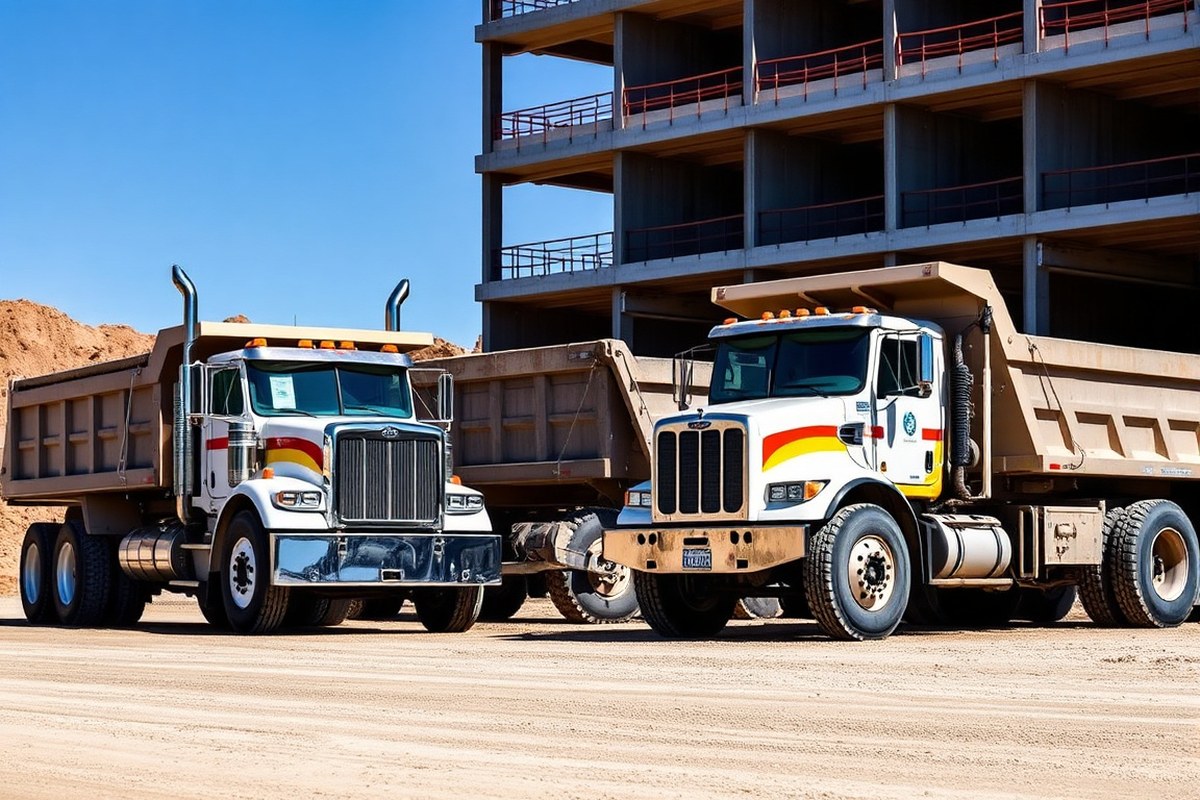
Dump truck types and their axle counts directly influence their empty weights and load capacities. More axles mean the truck can carry heavier loads without exceeding legal limits. Choosing the right truck type helps you haul efficiently depending on job size and terrain.
Single-Axle and Two-Axle Dump Trucks
Single-axle dump trucks usually weigh around 17,000 to 26,000 pounds empty. Their gross vehicle weight rating (GVWR) is about 26,000 pounds. They can carry 5 to 6 cubic yards of material.
This equals roughly 7 to 10 tons. Two-axle trucks handle slightly bigger loads, with GVWRs topping out near 32,000 pounds.
These trucks suit small construction sites or landscaping with tight access. Their simpler axle setup keeps costs and maintenance lower. However, their load capacity is limited compared to trucks with more axles.
Tandem and Tri-Axle Dump Trucks
The tandem axle dump truck has two rear axles, boosting weight capacity. Empty weight runs about 25,000 to 33,000 pounds, with GVWR up to 68,000 pounds. Tri-axle trucks have one more axle than tandem trucks.
This adds 25% to 50% more payload. This means they can carry much heavier loads.
Tandem trucks carry about 12 to 16 tons or 10 to 14 cubic yards. Tri-axle trucks handle 18 to 25 tons and 15 to 18 cubic yards. These trucks perform well on uneven ground and big job sites.
They move materials quickly across rough terrain. This makes them ideal for fast hauling.
Four-Axle and Multi-Axle Dump Trucks
Four-axle rigs extend load capacity further, supporting roughly 25% to 50% more weight than tri-axle trucks. Typical empty weights exceed 35,000 pounds, with GVWR approaching or exceeding 80,000 pounds. Multi-axle trucks, with five or more axles, handle the highest volumes and weights.
These dump trucks haul large quantities over long distances. They are common in highway construction, quarry, or intermodal operations. The extra axles spread the load, preserving road conditions and improving vehicle stability.
- Single-axle: 17,000, 26,000 lbs empty, GVWR ~26,000 lbs, 7, 10 tons load
- Two-axle: GVWR up to 32,000 lbs, 6 cubic yards capacity
- Tandem axle: 25,000, 33,000 lbs empty, GVWR up to 68,000 lbs, 12, 16 tons
- Tri-axle: 18, 25 tons payload, 15, 18 cubic yards
- Four-axle: 25%, 50% higher capacity than tri-axle, ~80,000 lbs GVWR
- Multi-axle: 5+ axles, used for large volume and heavy haul jobs
Axle configurations affect your truck’s ability to distribute weight evenly and comply with road laws. Always plan your truck setup according to job size and route limits.
What Factors Influence a Dump Truck’s Total Weight?
The total weight of a dump truck depends on many factors. The weight depends on the material type and its density. It also depends on the truck’s design.
Extra equipment you add can change the weight too. Each of these adds weight to the truck in different ways.
Material Density and Moisture Content Effects
The kind of material you load affects the truck’s total weight a lot. Denser materials like gravel or wet soil weigh more per cubic yard.
Light materials like mulch weigh less. The difference affects how much the load weighs.
For example, gravel weighs about 2,900 pounds per cubic yard. Sand weighs around 2,700 pounds per cubic yard, and mulch weighs about 500 pounds. A 15-cubic-yard load varies greatly in weight.
It can be 7,500 pounds of mulch. Or 43,500 pounds if filled with gravel.
Moisture in soil or dirt raises the weight too. Wet soil weighs about 2,800 to 3,200 pounds per cubic yard.
This adds hundreds or thousands of pounds. It is much heavier than dry soil.
Truck Frame, Engine, and Body Design Variations
The truck’s empty weight changes due to its frame, engine, and body style. A heavier chassis or a larger engine can add several thousand pounds before loading cargo.
Dump trucks typically weigh 20,000 to 30,000 pounds empty. Larger models, like tri-axle trucks, start at about 25,000 pounds or more. Steel bodies weigh more than aluminum or composite ones.
Body size and shape also change weight. A high-sided dump body built to handle more material usually weighs more. Different manufacturers design their frames and suspensions in unique ways, affecting total weight.
Additional Equipment and Modifications
Extra equipment or legal modifications add more pounds to the total weight. This includes things like heavy-duty tailgates, tarp systems, auxiliary fuel tanks, or protective cages.
Such additions can weigh from a few hundred to over a thousand pounds. A tri-axle dump truck may carry 1,400 pounds of extra equipment.
This is in addition to the truck’s empty weight. Cargo weight is separate from this.
Watch out for aftermarket changes like larger tires or reinforced frames too. They increase overall weight without increasing load capacity but might be necessary for certain jobs.
- Heavy-duty tailgate or lift gate
- Tarp or cover systems for the bed
- Additional lighting or warning beacons
- Reinforced suspension or frame upgrades
- Auxiliary fuel or hydraulic tanks
- Toolboxes and equipment racks
- Protective cages or safety bars
What Are Legal Weight Limits for Dump Trucks on Roads?
Dump trucks must follow strict federal and state weight rules to use roads legally. The federal limit for gross vehicle weight on interstate highways is 80,000 pounds. This limit helps protect bridges and roads from damage caused by heavy loads.
Axle weight limits follow the Federal Bridge Formula, which calculates maximum weights based on axle spacing. A single axle can carry up to 20,000 pounds. Tandem axles, which are two axles close together, can carry up to 34,000 pounds.
Trucks with more axles, such as tri-axle groups, carry heavier loads. The load must be spread out properly across the axles. This helps keep the truck balanced and safe on the road.
State laws vary and can impose stricter limits or require permits for heavier loads. Some states allow higher weight limits with special permits for certain routes.
These permits are temporary and often require paying fees and planning specific travel times. Always check local regulations before hauling overweight loads to stay legal and avoid fines.
| Weight Factor | Typical Limit | Notes |
|---|---|---|
| Federal Gross Vehicle Weight (GVWR) | 80,000 lbs | Standard interstate highway limit |
| Single Axle | 20,000 lbs | Federal Bridge Formula limit |
| Tandem Axle Group | 34,000 lbs | Axles close together carry more |
| State and Local Limits | Varies | Check local rules and permits |
| Oversize/Overweight Permits | Route and time-specific | Required for loads above limits |
Meeting these legal weight limits helps avoid costly fines and delays. Routine safety inspections of tires, brakes, and suspension are key to staying compliant. Overloading increases risks and can lead to equipment damage or accidents on the road.
Plan your loads according to axle limits and total GVWR. When heavier loads are necessary, apply for state permits and verify permitted routes. Following these steps protects your business and keeps roads safe for everyone.
How Is Dump Truck Weight Measured and Verified Accurately?
Dump truck weight is most often measured using a weighbridge. This heavy-duty scale sits flush with the ground and can handle large trucks. You drive the truck onto it, and it shows the total weight very accurately.
Onboard weighing systems are another popular option, especially for real-time checks. These use sensors on the suspension or axles.
They show the current load during truck operation. This helps you avoid overloading on the job.
Portable scales offer flexibility for weighing trucks at different sites. These smaller scales go under each tire or axle. They are less accurate than weighbridges but useful when no fixed scale is nearby.
- Weighbridge: drive-on platform, very accurate, measures whole truck at once.
- Onboard scales: installed on truck, real-time load info, less precise than weighbridges.
- Portable scales: placed under tires, flexible location, lower accuracy.
- Weigh trucks before and after loading for exact cargo weight.
- Regular calibration of scales ensures correct readings over time.
- Consider truck class and axle setup when choosing weighing method.
Weighbridges cost from $50,000 to over $100,000 to install. They need space and maintenance but give reliable results. Portable scales cost less, around $2,000 to $10,000.
But require more work to weigh the whole truck. Onboard systems start around $3,000 and pay off by reducing overload fines.
Check weights at loading and unloading to maintain safe limits and comply with regulations. Also, inspect onboard scales yearly for accuracy. A poorly calibrated scale can give wrong data and cause safety or legal problems.
Always confirm scale calibration before critical weighings to avoid costly errors.
How Much Material Can Different Dump Trucks Carry?
The amount a dump truck can carry depends on bed size. The material’s weight matters too. Both decide the load capacity.
Dump trucks often list capacity by volume in cubic yards. To understand the real load, multiply cubic yards by material density in tons per cubic yard.
A tandem axle dump truck typically hauls 14 to 15 cubic yards. Its gross vehicle weight limit (GVW) is about 52,000 pounds. A tri-axle dump truck has a big bed.
It holds about 18 to 20 cubic yards. The GVW is close to 80,000 pounds.
Materials vary in weight. Gravel weighs about 1.3 to 1.4 tons per cubic yard. Sand is heavier at roughly 1.35 to 1.6 tons per cubic yard.
Moist topsoil weighs less, about 1 to 1.2 tons per cubic yard. These differences affect how much volume you can load without exceeding weight limits.
| Dump Truck Type | Bed Capacity (cubic yards) | Payload Capacity (tons) | Typical Material Weight (tons/cubic yard) | Example Load Volume Limited by Weight (cubic yards) |
|---|---|---|---|---|
| Single Axle | 5 to 10 | 8 to 10 | 1.0 to 1.4 | 6 to 7 (gravel) |
| Tandem Axle | 14 to 15 | 14 to 15 | 1.3 to 1.4 | 10 (gravel) |
| Tri-Axle | 18 to 20 | 21 to 22 | 1.3 to 1.4 | 15 (gravel) |
Volume or weight can limit your load. For a light material like mulch, volume usually limits load size. For heavy materials, weight limits come first.
A tri-axle truck with a 16-yard bed can’t carry full gravel. Doing so would go over weight limits. This happens often with heavy materials.
To decide if volume or weight limits waste truck space, do this calculation:
- Multiply bed cubic yards by material density.
- Compare that number to the truck’s payload capacity in tons.
- The limit is weight when cubic yards times density is more.
- Volume is the limit when cubic yards times density is less.
Hauling 40 cubic yards of mulch weighing 0.3 tons per yard means a total weight of 12 tons. Mulch volume limits the load, not weight. Moist topsoil or sand hits weight limits before volume fills the bed.
These materials are heavier per cubic yard. This restricts load size early.
Knowing this helps you pick the right truck and avoid costly overloads or multiple trips. Don’t assume your truck’s bed capacity is always usable for heavy materials. Double-check by calculating with density and payload limits.
How to Calculate a Dump Truck’s Total Loaded Weight
To find the total loaded weight of a dump truck, add three things. Include the empty truck weight, the weight of the material, and any extra equipment weight. This gives you the full loaded weight.
Knowing these inputs lets you calculate the truck’s total weight before hitting the road. This keeps your load safe, legal, and within limits.
Determine Empty Vehicle Weight
Start with the truck’s empty weight, which is the baseline weight without any cargo. A typical tandem dump truck weighs between 20,000 and 30,000 pounds empty. You can find this number on the vehicle’s door tag or in its manual.
This value doesn’t include fuel, driver, or tools. So sometimes you add a few hundred pounds for those. Keep this number handy, as it’s the foundation for the total weight calculation.
Calculate Material Load Weight
Next, you need to figure out how much the material weighs. Materials like gravel, sand, or dirt have standard weights per cubic yard. For example, gravel weighs about 2,700 pounds per cubic yard.
Multiply the load volume in cubic yards by the material’s weight per cubic yard. This converts cubic yards into pounds, which you can add to the empty truck weight.
Add Weight of Equipment and Accessories
Don’t forget any extra equipment on the truck, like toolboxes, racks, or hydraulic systems. These items add to the total weight and sometimes exceed a thousand pounds. Check manufacturer specifications or weigh the items separately if needed.
Include driver weight and fuel weight if you want the most accurate figure. These aren’t always counted but can affect compliance and safety.
Sum All Components for Total Weight
Once you have these values, add them to get the dump truck’s total loaded weight. This total lets you compare against weight limits to avoid fines and vehicle damage. Be sure to measure each component as accurately as possible.
Here is the formula to calculate the total loaded weight: Total Loaded Weight = Empty Truck Weight + Material Load Weight + Equipment Weight Let’s go through a practical example to make it clear.
- Find the empty truck weight. A tri-axle truck weighs 28,000 pounds empty.
- Estimate the load volume. The truck carries 15 cubic yards of gravel.
- Multiply load volume by material weight. Gravel weighs 2,700 pounds per cubic yard, so 15 × 2,700 = 40,500 pounds.
- Add any extra equipment weight. Assume toolboxes and racks add 1,200 pounds.
- Calculate total weight. 28,000 + 40,500 + 1,200 = 69,700 pounds total.
- Compare this weight to the vehicle’s gross vehicle weight rating.
- Adjust load volume if over limits to avoid penalties and wear.
What Safety and Compliance Issues Does Dump Truck Weight Affect?
Exceeding weight limits on dump trucks raises serious safety risks. Overloaded trucks have worse stability, especially on turns or uneven surfaces. This increases the chance of rollovers and losing control.
Heavier loads also affect braking distance. A dump truck carrying too much weight needs more space and time to stop. This delay can cause accidents, particularly in emergency braking situations or on downhill slopes.
Failing to follow weight regulations invites costly penalties and can lead to more inspections. Authorities monitor compliance strictly to protect roads and other drivers. Noncompliance may result in fines, vehicle impoundment, or work stoppages.
Watch for these common issues linked to overweight dumping:
- Reduced vehicle control and increased accident risk
- Longer braking distances creating hazardous road conditions
- Damage to truck components like brakes and suspension
- Legal fines and penalties from weight limit violations
- Road damage leading to liabilities and repair costs
- Delays caused by mandatory weigh station stops and inspections
- Void insurance coverage in case of crashes from overload
Operators should verify truck weight before each trip. Use certified scales to measure total loaded weight accurately. Cross-check the truck’s gross vehicle weight rating (GVWR) and payload capacity against load estimates.
Keep records of weight checks and materials hauled for inspections. Make sure load distribution stays even over axles to maintain stability. Adjust loads as needed to avoid exceeding limits specific to your state or road type.
Always weigh trucks after loading. Do this before leaving job sites. It helps avoid fines and unsafe conditions.
Following this routine helps you steer clear of safety hazards and stay compliant. Overweight loads strain equipment, increase fuel consumption, and raise maintenance costs. Staying within weight limits also protects road infrastructure from damage caused by heavy trucks.
How to Choose the Right Dump Truck Based on Weight Needs
Choose a dump truck by matching the load size and job needs. A small haul fits a single-axle or 2-axle truck. These trucks handle lighter loads.
They carry about 10 tons or less. Medium loads are 10 to 20 tons.
A 3-axle truck works best for these. It balances capacity and turning ability.
Heavy hauls weigh over 20 tons. Use 4-axle trucks for these loads. They meet legal limits and carry safely.
These trucks spread the weight better and reduce road wear. Always account for legal weight restrictions on highways and job sites before selecting a truck.
Check these key points to pick the right dump truck for your haul:
- Load weight tonnage, not just volume, drives truck choice.
- 3-axle trucks suit 10, 20 ton loads; 4-axle trucks exceed 20 tons.
- Confirm legal road weight limits with certified truck scales.
- Use truck specs and load material density to estimate total weight.
- Plan trip counts per day based on cycle time: load, haul, dump, and return.
- For dense materials, weight limits often reach before volume fills.
- Smartphone apps help estimate loaded truck weight for better planning.
Keep efficiency high by scheduling dispatches that haul fill in and move spoil out. This dual approach reduces empty runs and saves fuel. Use portable axle scales on-site to verify each load stays legal before traveling.
Always consider job timing, material type, and distance to avoid overload fines or delays. When a load nears legal limits, use a bigger truck or carry less. This strategy prevents damage to roads and trucks while meeting project timelines.
Step-by-Step Action Plan for Managing Dump Truck Weights Safely
Follow these steps to keep your dump truck operations legal. Stay within weight limits and drive safely on the road. These tips will help you avoid penalties and accidents.
- Before Use: Check the truck’s empty weight on the manufacturer’s plate. Confirm it matches your records to avoid surprises.
- Loading Time: Use a truck scale to weigh the loaded truck. You’re good to go when your load stays within legal limits.
- During Loading: Monitor the weight of materials added. Stop loading if the scale shows you’re approaching the maximum allowed weight.
- After Loading: Note axle loads if possible. Make sure no single axle exceeds its limit to prevent fines or accidents.
- Daily Operation: Inspect tires and brakes before driving. Heavier loads increase wear, so check for signs of damage.
- Weekly Check: Log weights from every load. Spot trends that push legal limits or damage your fleet over time.
- Monthly Review: Reassess your dump truck choice. Often hitting weight limits means you should choose trucks with extra axles. Go for models with higher capacity to carry more safely.
- Ongoing Training: Teach your crew about weight limits. Make sure everyone understands why staying legal and safe matters.
Frequently Asked Questions
What Is the Typical Weight Range of an Empty Medium-Duty Dump Truck?
A medium-duty dump truck usually weighs between 20,000 and 35,000 pounds empty. This helps you plan projects needing trucks that can handle moderately heavy loads.
How Does the Number of Axles Impact a Dump Truck’s Weight Capacity?
The more axles a dump truck has, the higher its weight capacity. Tandem-axle trucks carry more weight than single-axle models, supporting larger loads for bigger construction jobs.
Can a Light-Duty Dump Truck Legally Carry the Same Weight on Highways as a Heavy-Duty One?
No, light-duty dump trucks have lower legal weight limits on highways than heavy-duty trucks. Exceeding limits risks fines and safety issues. So choose trucks matched to your load needs.
Why Do Some Dump Trucks Weigh Up to 80,000 Pounds?
Super dump trucks are designed to carry very heavy loads, reaching weights near 80,000 pounds. They combine strong frames and multiple axles to handle these large weights safely.
What Tools Do Operators Use to Verify Dump Truck Weight?
Operators use certified truck scales or on-board weighing systems to get accurate weights. This ensures compliance with road limits and helps avoid overloading penalties.
Final Thoughts
Dump truck weight affects your safety, legal standing, and equipment life. Accurate measurement and proper loading keep operations smooth. Start weighing your trucks today to avoid costly penalties and breakdowns.