Is Water Heavier Than Diesel? Complete Guide with Key Facts and Tips
Is water heavier than diesel? Yes, water is definitely heavier than diesel fuel. Water weighs about 8.34 pounds per gallon.
Diesel weighs roughly 7 pounds per gallon. This difference means diesel floats on water because it is less dense.
Because diesel is lighter, you might see water collecting at the bottom of your fuel tank. Water can contaminate your diesel and cause engine problems over time. Watch for signs like rust on your fuel system parts.
Clogged filters also often indicate water contamination. These issues suggest water in your diesel fuel system.
Always remember to check for water during fuel inspections. Removing water quickly helps avoid damage and keeps engines running smoothly. Keeping tanks sealed and dry will keep water contamination to a minimum.
Key Takeaways
- Water weighs about 8.34 pounds per gallon, heavier than diesel’s 7 pounds.
- Diesel fuel floats because its density is less than water’s.
- Water collects at the bottom of tanks due to its heaviness.
- Check fuel tanks regularly for water contamination to avoid engine damage.
- Rust and clogged filters often indicate water presence in diesel fuel.
- Keep fuel tanks sealed and dry to minimize water contamination risk.
Is Water Heavier Than Diesel Fuel?
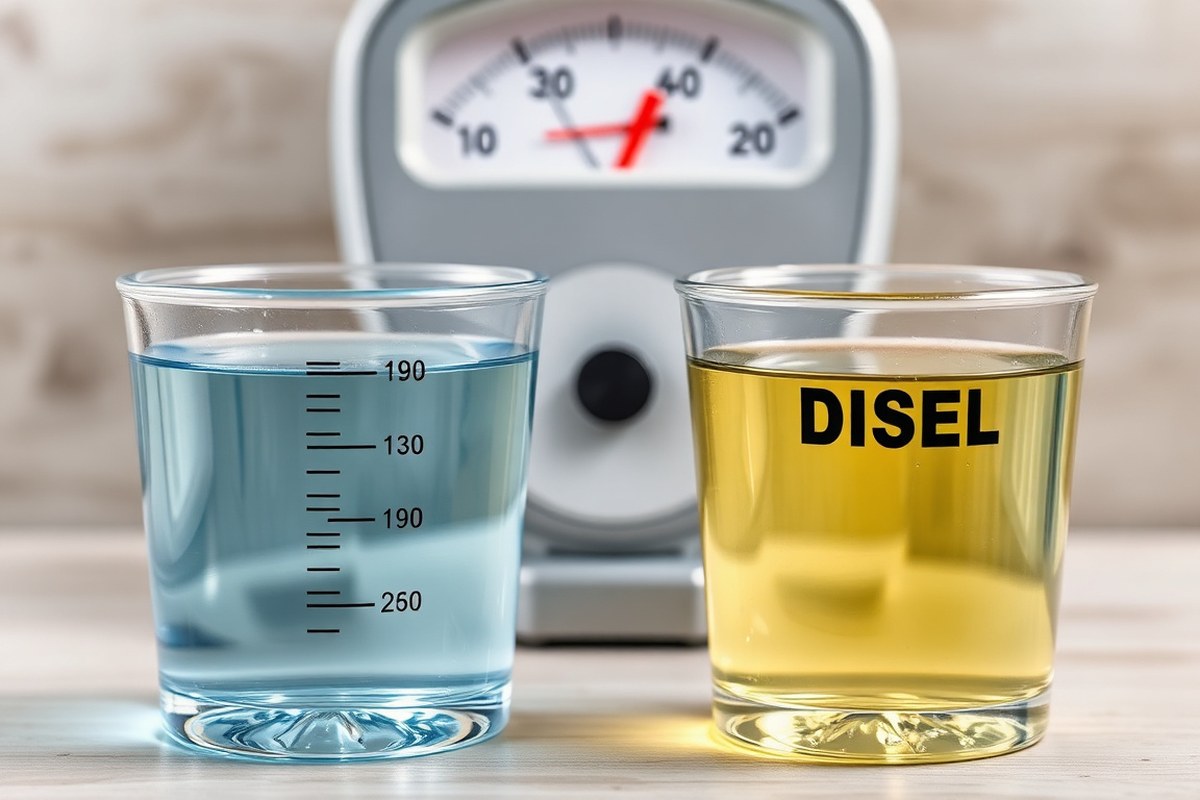
Water is heavier than diesel fuel because it has a higher density. Water’s density is about 1 gram per cubic centimeter (g/cm³).
Diesel’s density ranges from 0.82 to 0.90 g/cm³. That means water weighs more for the same volume compared to diesel.
To see how much heavier water is, consider one gallon of each liquid. One gallon of water weighs roughly 8.34 pounds.
A gallon of diesel fuel weighs about 7 pounds. So, water is about 19% heavier than diesel on a per gallon basis.
Here is a simple comparison: Water density = 1.00 g/cm³, diesel density = 0.82 to 0.90 g/cm³. Weight per gallon for water = 8.34 lbs, for diesel = around 7 lbs. This difference means diesel floats on water and water settles to the bottom in storage tanks.
For a more concrete example, use this calculation for one gallon (3.To get weight, multiply density in g/cm³ by volume in cm³. One gallon equals 3,785,000 cm³. Change grams to kilograms after multiplying.
For water: 1.00 g/cm³ × 3,785,000 cm³ = 3,785,000 g, or 3,785 kg. For diesel at 0.85 g/cm³: 0.85 × 3,785,000 = 3,217,250 g, or 3,217 kg. This shows water is heavier by around 568 kg per 1000 gallons.
The weight difference matters when handling fuel storage and contamination. Water collects at the tank bottom and causes problems. It weighs more than diesel.
So, it sinks below the fuel. Knowing this helps you understand why water must be removed promptly from diesel tanks.
Why Diesel Floats on Water: Density and Specific Gravity Explained
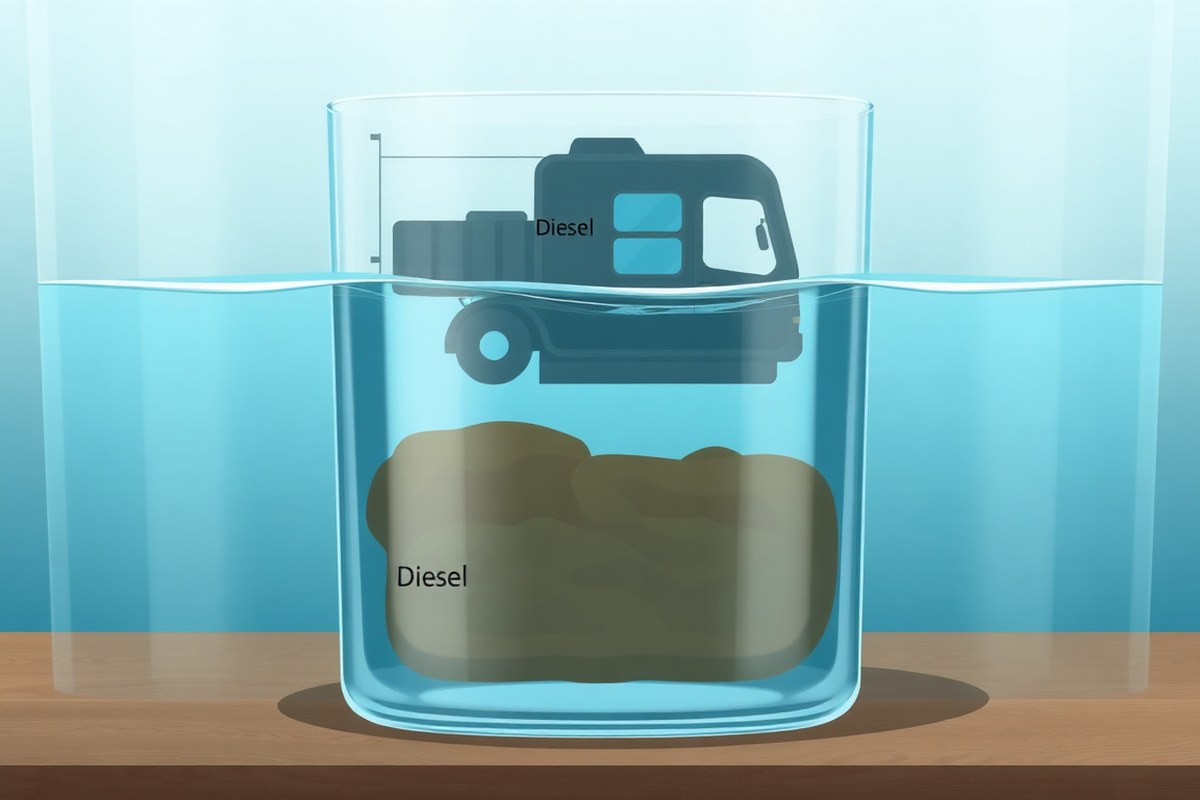
Specific gravity is the ratio comparing a liquid’s density to water’s density. Water always has a specific gravity of 1.
Diesel’s specific gravity typically ranges from 0.82 to 0.96. Because diesel’s specific gravity is less than 1, it is lighter and floats on water.
Density refers to mass per unit volume, such as grams per milliliter. Water has a density of about 1.0 grams per milliliter at room temperature.
Diesel fuel is less dense, usually around 0.85 grams per milliliter. This difference causes diesel to stay on top when mixed with water.
Molecular composition impacts density. Water molecules are tightly packed and polar, creating its higher density.
Diesel consists of hydrocarbons with longer chains and less packing, making it lighter. This molecular difference also prevents diesel and water from mixing, as they repel each other chemically.
Here is a simple diagram illustrating these layers: Layer 1: Diesel fuel (lighter, floats)
Specific gravity ~0.85
Density ~0.85 g/mL Layer 2: Water (heavier, sinks)
Specific gravity = 1.00
Density = 1.0 g/mL
This layering explains why diesel floats in tanks when contaminated with water. Knowing the specific gravity helps you design storage and fuel maintenance systems. It also guides decisions about separating water from diesel safely and efficiently.
Always check specific gravity readings during fuel testing to catch water contamination early before damage occurs.
How Temperature Changes Affect Diesel and Water Density
Both water and diesel fuel get less dense as temperature rises. For instance, at 4°C, water’s density is about 1.0 g/mL.
But it decreases to roughly 0.998 g/mL at 20°C. Diesel’s density also drops. It’s usually around 0.85 g/mL at 20°C but can be slightly higher at colder temperatures.
The weight per volume changes because density defines weight in a set volume. For example, a gallon of water weighs about 8.34 pounds at room temperature (around 20°C). Diesel weighs about 7 pounds per gallon at the same temperature.
It weighs less because it has a lower density. When the temperature rises to 40°C, both densities decrease, making the liquids lighter per gallon.
Water solubility in diesel is affected by temperature too. As temperature goes up, diesel’s ability to dissolve water slightly increases. Warm diesel holds more dissolved water than cold diesel does.
This can cause hidden contamination in your fuel. Keeping diesel cool slows down water absorption and helps prevent this problem.
Picture a graph with temperature on the bottom and density on the side. This helps show how diesel changes with heat. Both water and diesel show downward slopes as temperature increases.
But diesel’s line stays below water’s at all points. At 0°C, water density is about 1.000 g/mL, and diesel is roughly 0.86 g/mL. By 40°C, water drops to about 0.992 g/mL while diesel declines to near 0.82 g/mL.
Let’s walk through a calculation. Take 1 gallon of diesel at 20°C with a density of 0.85 g/mL. One gallon equals 3,785 mL.
Multiply: 0.85 g/mL × 3,785 mL = 3,217 grams or 3.217 kilograms. For water at 20°C, density is 1.0 g/mL × 3,785 mL = 3,785 grams, which is 3.785 kilograms. You can see water remains heavier per volume.
Understanding these temperature effects matters for storage and transport. Tanks heating up makes diesel expand and lowers its density. This changes fuel weight and energy content per gallon.
Water layers at the bottom stay denser and can cause corrosion or engine trouble if unnoticed. Monitoring temperature and keeping tanks cool help maintain fuel quality and safety.
How Water Contaminates Diesel Fuel Storage Tanks
Water gets into diesel fuel tanks mainly through condensation, leaks, and poor handling. Since water is heavier, it settles at the tank’s bottom, causing contamination risks. Understanding the contamination sources helps you keep your diesel fuel clean and avoid engine problems.
Condensation and Humidity Effects
Diesel tanks often pull in humid air as they cool at night. This air condenses on cooler tank walls, producing water inside the tank. Because diesel fuel has no vapor pressure to push air out, condensation is a constant issue.
The cycle of warm, moist air entering and cooling causes small water droplets to form. Over days and weeks, these droplets collect at the tank bottom as free water. Keeping tanks as full as possible reduces the air volume and limits condensation.
Contaminated Fuel Deliveries
Water can enter diesel tanks during fuel delivery if the supplier does not follow proper handling. Water may be present in storage tanks or the fuel system at the terminal. It also happens if delivery trucks have water-contaminated lines.
A checklist to spot contamination sources during delivery includes:
- Checking fuel clarity for haze or cloudiness
- Inspecting storage and delivery hoses for leaks or damage
- Confirming supplier’s maintenance and water removal practices
- Reviewing recent weather for heavy rain or humidity spikes
- Sampling fuel before and after delivery for water presence
Water in delivered fuel causes serious contamination. So staying vigilant saves repair costs and downtime.
Biodiesel Blend Susceptibility
Biodiesel blends attract more water than pure diesel. They absorb water vapor from the air more easily, increasing contamination risks. This makes monitoring and water removal even more important for biodiesel users.
Because biodiesel holds water in solution longer, you might not see contamination signs immediately. This hidden water can lead to corrosion, microbial growth, and filter clogs over time. Routine testing and cleaning protect your fuel system from damage.
Tank Design and Maintenance Issues
Tank design affects how water behaves and collects. Flat-bottom tanks allow water to pool and make removal easier. Sloped or poorly drained tanks trap water in corners, leading to buildup and corrosion.
Regular maintenance is key to managing water contamination. This includes:
- Draining water from tank bottoms monthly or after heavy rain
- Inspecting seals and vents for leaks and debris
- Using water-absorbing filters and coalescers
- Keeping tanks full to minimize air space and condensation
- Cleaning tanks periodically to remove sludge and microbial growth
If you skip these steps, water can harm your fuel. It can also damage your equipment. This may cause costly repairs and downtime.
Signs and Risks of Water in Diesel Fuel Systems
Water in diesel fuel causes serious engine problems. It speeds up corrosion and can damage fuel injectors, leading to poor engine performance. You might see white smoke or find rough idling, which are signs of water contamination.
Corrosion in Fuel System Components
Water in diesel fuel creates rust inside the fuel system. This rust forms on the inside of tanks, lines, and injectors. It eats away at metal parts, causing leaks and breakdowns.
Corrosion increases repair costs and shortens engine life. Even small amounts of water can cause significant damage over time. Proper water removal helps protect your engine investment.
Symptoms of corrosion include:
- Fuel leak spots on tanks and pipes
- Rough engine running or sputtering
- Sudden drops in fuel pressure
- Unexplained increases in exhaust soot or smoke
- Frequent injector or fuel pump replacements
White Smoke and Poor Combustion
Water causes white smoke when it burns in the engine. This happens because water does not combust but creates steam instead. White smoke often shows during cold starts or sudden acceleration.
It also leads to poor fuel combustion. When water mixes with diesel, the engine gets uneven fuel flow. That results in less power and higher emissions.
Look for these signs of water in fuel:
- White exhaust smoke that lasts several minutes
- Engine hesitation or stumbling under load
- Lower fuel economy
- Rough idling or frequent stalling
Fuel Injector Damage Risks
Water in diesel fuel wears out fuel injectors fast. Injectors rely on clean, lubricating fuel to work properly. Water reduces lubrification and causes rust in these precision parts.
Damaged injectors cause uneven fuel spray and poor combustion. You’ll see engine misfires and higher emissions. Injector failures can cost thousands to repair or replace.
Preventing injector damage means keeping water out. Use fuel water separators and check filters regularly. Cleaning or replacing injectors early saves money and engine trouble.
Regularly inspect fuel filters and separators to catch water before it reaches injectors.
Fuel Line and Tank Corrosion
Water settles at the bottom of diesel tanks and fuel lines. It mixes with diesel and causes rust in hard-to-see places. Rust clogs fuel lines and damages seals.
In cold weather, water freezes inside fuel lines. This blocks fuel flow and can stop engines from starting or cause damage through pressure buildup. Regular tank draining helps prevent buildup.
Here’s what to watch for in tanks and lines:
- Visible rust or sediment when draining tanks
- Fuel filter clogging more often than usual
- Hard starting or sudden engine stalls
- Line leaks or swollen seals
- White frost on fuel filters in cold weather
Methods to Detect and Measure Water in Diesel
You can detect water in diesel with visual tests, test kits, and lab equipment. Different methods tell you if water is free or dissolved in the fuel. Testing matters to keep engines running and avoid corrosion or damage from water.
Visual Fuel Testing Methods
Visual checks are the simplest way to spot free water in diesel fuel. Water sinks because it weighs 8.34 pounds per gallon, denser than diesel’s roughly 7.1 pounds per gallon. Look for cloudy sections or droplets at the tank bottom or in a clear sample jar.
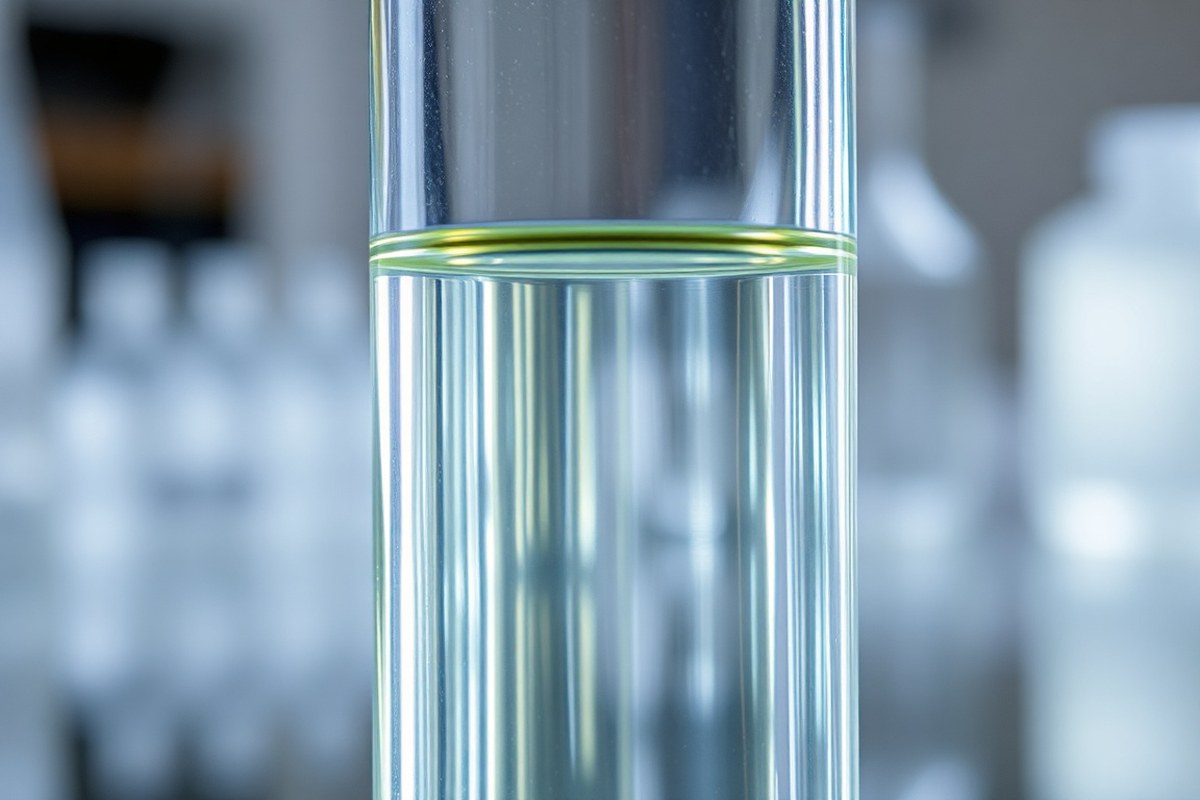
Pour a small diesel sample into a clear container. Let it settle for a few minutes.
Watch for water collecting at the bottom or a separate layer forming. This method won’t detect dissolved water, but it’s quick and free.
Centrifuge and ASTM D2709
ASTM D2709 is a lab test using a centrifuge to separate water and sediment from diesel. Centrifuging quickly settles free water and particles so technicians can measure their volume.
This test doesn’t find dissolved water in diesel. It shows water that can damage engines or clog filters.
This method requires special equipment and trained staff, making it better for commercial or professional testing. Centrifuge testing typically costs more than basic visual or kit methods. It’s a reliable way to confirm free water presence under ASTM rules.
Water-Droplet Test Kits
These kits detect free and some dissolved water by creating a chemical reaction that changes color. Put diesel into a vial and add reagent drops. Watch the color change.
This tells water levels. Many kits detect down to a few parts per million.
These kits are easy to use without special gear. They cost between $20 and $50 per set.
You follow step-by-step instructions, matching sample colors to a chart for water levels. They don’t give readings as precise as lab tests but spot problem water quickly.
- Sample collector vial or test bottle
- Reagent drops for water detection
- Color comparison card or chart
- Instructions and timing guide
- Protective gloves and safety glasses
They work best at normal fuel temperatures, about 60 to 80°F. Cold or hot fuel might affect color accuracy.
Electronic Moisture Analyzers
Electronic moisture analyzers measure water content in diesel fuel accurately and quickly. These devices typically use capacitance or infrared sensors to detect water molecules within seconds. Some models measure total water, including dissolved, with precision up to a few ppm.
These analyzers cost from $1,000 to $5,000 and need calibration with standards. Professionals or fleet managers use them for on-site and ongoing monitoring. Results appear digitally and avoid the guesswork of color or visual tests.
Keep analyzers clean and calibrated to avoid faulty readings. They work best on filtered diesel to prevent sensor fouling by impurities or sediment.
Best Practices to Prevent Water Contamination in Diesel Storage
Keep water out of diesel tanks by sealing all openings tightly. Check for cracks or gaps around lids and vents every week. Use weatherproof gaskets on all caps and covers to stop rain and humidity from sneaking in.
Drain water regularly from tanks using the built-in drains or bottom valves. Water settles below diesel, so removing it prevents corrosion and fuel contamination.
Employ fuel water separators at key points in your fuel system. These catch water before it gets to your engine, reducing damage risks.
Chemical treatments like demulsifiers help separate water from fuel inside the tank. Pour these additives according to label instructions, typically every few hundred gallons of diesel.
This treatment keeps water in a loose layer, making removal easier at drains or traps. Smith Lubricants Diesel Up contains a useful demulsifier for this purpose.
- Inspect tank lids, vents, and seals weekly for tightness and damage
- Drain water from tank bottoms monthly or after heavy rain exposure
- Use fuel water separators inline and clean filters per service schedule
- Apply chemical demulsifiers every few hundred gallons of fuel added
- Keep storage tanks full to minimize condensation inside the tank
- Store fuel in a cool, dry place to reduce moisture buildup
Fuel tanks also collect water from condensation when temperatures shift. Keep tanks as full as possible to reduce air space where moisture forms.
Store diesel away from direct sunlight and heat sources. This slows temperature swings and cuts condensation risks.
Watch fuel system components regularly. Replace worn seals and gaskets to keep moisture out. Clean or replace fuel water separator filters every 3,000 to 5,000 miles.
Follow your vehicle’s recommendations for the best timing. This helps keep your fuel system running smoothly. Neglecting these steps leads to rust, poor engine performance, and costly repairs.
How to Remove Water Safely from Diesel Fuel
Water in diesel fuel settles at the tank bottom due to its higher density. Removing this water is important to protect your fuel system from corrosion and clogging. Common approaches include letting fuel settle, using filters, and draining water manually.
Settling lets water and sediment drop below the diesel. You can then remove them from the tank bottom. This keeps your fuel cleaner and safer to use.
Wait one hour for every foot of fuel above the suction point. This is the general rule for settling diesel. It helps separate water and dirt effectively.
For example, with 5 feet of fuel depth, wait about 5 hours. This lets the water and sediment settle properly.
Following this rule improves fuel quality. You can wait up to 24 hours if the tank is deeper or contamination is heavy.
| Fuel Depth Over Suction (feet) | Settling Time (hours) |
|---|---|
| 1 | 1 |
| 3 | 3 |
| 5 | 5 |
| 10 | 10 |
| 24 (max) | 24 |
Water-stripping filters are a reliable way to remove water while fuel flows. These filters trap water droplets and sediments.
You install them in the fuel line before the engine or fuel pump. Maintenance involves regular filter changes and checking for water collection indicators.
Manual drains are useful for smaller tanks and older systems. You open a drain valve at the tank bottom to let water out.
Drain regularly, especially after rainfall or condensation periods. Avoid frequent draining during heavy fuel use to prevent fuel loss.
Follow these steps to remove water safely from diesel fuel:
- Isolate the contaminated tank to prevent mixing with clean fuel.
- Wait for the fuel to settle based on the depth of the diesel above suction.
- Use water-stripping filters on fuel lines to catch water during use.
- Drain water manually from tank bottom valves carefully and slowly.
- Inspect drained water for clarity and sediment presence.
- Replace filters regularly according to manufacturer instructions.
- Repeat settling and draining if turbidity or water remains visible.
Do not rush fuel use before settling; water remains suspended and damages engines.
Environmental and Safety Risks of Water in Diesel Fuel
Water in diesel fuel creates safety and environmental risks during spills. When diesel mixed with water leaks, it can cause soil and water pollution.
Diesel floats on water. But dissolved fuel components harm aquatic life and pollute drinking water.
Water also speeds up corrosion inside fuel tanks and engine parts. Corrosion damages fuel lines, injectors, and pumps, which can lead to leaks or failures. This increases the risk of fire and mechanical breakdowns, especially in older or poorly maintained equipment.
Microbial growth thrives in fuel phase water in warmer conditions. These microbes produce acids that worsen corrosion and clog filters. Managing temperature and water separation reduces microbial contamination and protects system integrity.
Preventing water contamination starts with regular fuel inspection and tank maintenance. Check tanks monthly for water accumulation and drain it promptly. Proper sealing reduces rainwater entry and condensation build-up inside storage tanks.
Use water-absorbing filters and fuel additives designed to control microbial growth. Filter diesel before use to catch water droplets.
These steps might add $10 to $30 per 1000 gallons. They can help you avoid costly repairs and downtime later.
During a spill, contain diesel and separate any visible water. Use absorbent pads and barriers to limit spread. Notify environmental agencies quickly if a large spill occurs to follow cleanup regulations and minimize harm.
Store diesel tanks in shaded, ventilated areas to reduce temperature swings. Keeping fuel cooler slows water vapor condensation and microbial growth. Tank cleaning every 1 to 3 years prevents sludge and water buildup.
Avoid mixing water with diesel by sealing vent caps and using desiccant breathers. These breathable covers keep air out but let moisture escape. Follow labels on additives and filters for proper use and replacement intervals.
Following these safety steps lowers fuel system damage and environmental risks. Regularly inspecting, cleaning, and filtering diesel fuel keeps water out. Managing temperature and microbial contamination reduces corrosion and fire hazards too.
Your Quick-Start Plan to Manage Water in Diesel Fuel
Keep water out to protect your diesel engine and storage. Follow these steps to spot and fix water issues fast.
- Before you start: Inspect your diesel storage tank for cracks or rust. Fix any damage to stop leaks.
- Day 1: Check your fuel with a water detection paste or test kit. Make sure it shows no water.
- Week 1: Drain water from the tank bottom using the fuel bottom valve. Confirm only clear diesel flows out.
- Week 2: Add a fuel additive that helps separate and remove water. Watch for clearer fuel samples over days.
- Month 1: Replace or clean fuel filters regularly to catch water before it harms your engine. Note fewer clogs or engine stalls.
- Every month: Check tank vents and caps for tight seals. Replace parts if you spot moisture or dirt.
- Every refuel: Use trusted fuel sources and allow settling time before using fuel. Look for no water stains or cloudiness.
- Ongoing: Monitor engine performance for rough running or power loss. Take action if symptoms appear.
Frequently Asked Questions
Is Water Heavier Than Diesel?
Yes, water weighs about 8.Water weighs about 8.34 pounds per gallon. Diesel weighs about 7 pounds per gallon. This makes water heavier than diesel by almost 1.34 pounds per gallon.
Why Does Diesel Float on Water Even Though It Seems Thick?
Diesel floats because it has a lower density than water. Diesel molecules are larger and less packed together.
Because of this, diesel floats on top of water. Water sinks below the diesel layer.
Can Water in Diesel Cause Engine Damage?
Yes, water contamination can cause corrosion and fuel system problems. It’s a good idea to check and remove water regularly to protect engine parts.
How Does Temperature Affect the Weight of Diesel Compared to Water?
Temperature changes can slightly alter diesel’s density. But water remains heavier at most common temperatures. Diesel becomes less dense as it warms, increasing the difference.
Where Does Water Collect in a Diesel Storage Tank?
Water settles at the tank’s bottom because it’s denser than diesel. This forms a layer called the “water bottom.”
It can cause problems with your fuel. Managing this is important to avoid issues.
Wrapping Up
Water is heavier than diesel, so it settles at the tank bottom. Removing water quickly helps prevent engine damage and fuel problems. Start by checking your fuel for water today and keep your diesel clean and safe.