How Many Hours Is 50 Miles? A Complete Guide to Travel Time Estimates
How many hours is 50 miles? The time depends mostly on your travel mode and speed.
Driving 50 miles usually takes 45 minutes to an hour on highways. You travel this distance at normal highway speeds of 50 to 65 miles per hour.
Walking 50 miles takes about 16 to 20 hours. Most people spread this walk over two or more days to avoid exhaustion. Cycling 50 miles typically takes between 3 and 5 hours for most riders, depending on their fitness and route conditions.
Public transportation times vary. A bus covering 50 miles might take an hour or more due to stops. Trains often move faster but schedules can affect total travel time.
Always consider factors like traffic, terrain, and rest breaks. Hills or rough paths slow you down significantly. These can add time, so give yourself some buffer when planning.
Key Takeaways
- Driving 50 miles at 60 mph takes about 50 minutes under good conditions.
- Walking 50 miles usually requires 16 to 20 hours of walking time.
- Average cycling speed means 50 miles takes between 3 and 5 hours.
- Traffic and road conditions can add at least 10 to 20 minutes for car trips.
- Include short breaks to avoid fatigue on long cycling or walking trips.
- Use speed and distance to calculate time with the formula: time = distance ÷ speed.
How Long Does It Take to Travel 50 Miles by Car?
Driving 50 miles can take from 45 minutes to 2 hours. It depends on how fast you drive. The kind of road also matters.
City driving, with traffic lights and congestion, slows you down. On highways with good conditions, you can go faster and finish sooner.
Here’s a table showing how long it normally takes to drive 50 miles at different speeds. These estimates assume steady driving without stops or delays. Use this to pick a speed that matches your trip type.
| Speed (mph) | Time to Drive 50 Miles |
|---|---|
| 25 | 2 hours |
| 40 | 1 hour 15 minutes |
| 50 | 1 hour |
| 60 | 50 minutes |
| 65 | 46 minutes |
On flat, well-maintained highways, you can keep speeds of 60 mph or more safely. Smaller roads or urban streets usually limit you to 25 to 40 mph. Traffic jams or poor weather add delays and push travel time up.
To estimate your own travel time, divide 50 miles by your planned speed. For example, at 55 mph, it takes about 55 ÷ 55 = 0.91 hours, or 55 minutes. Keep an eye on your route’s conditions and adjust speed to stay safe and legal.
Walking and Cycling: Time Needed for 50 Miles
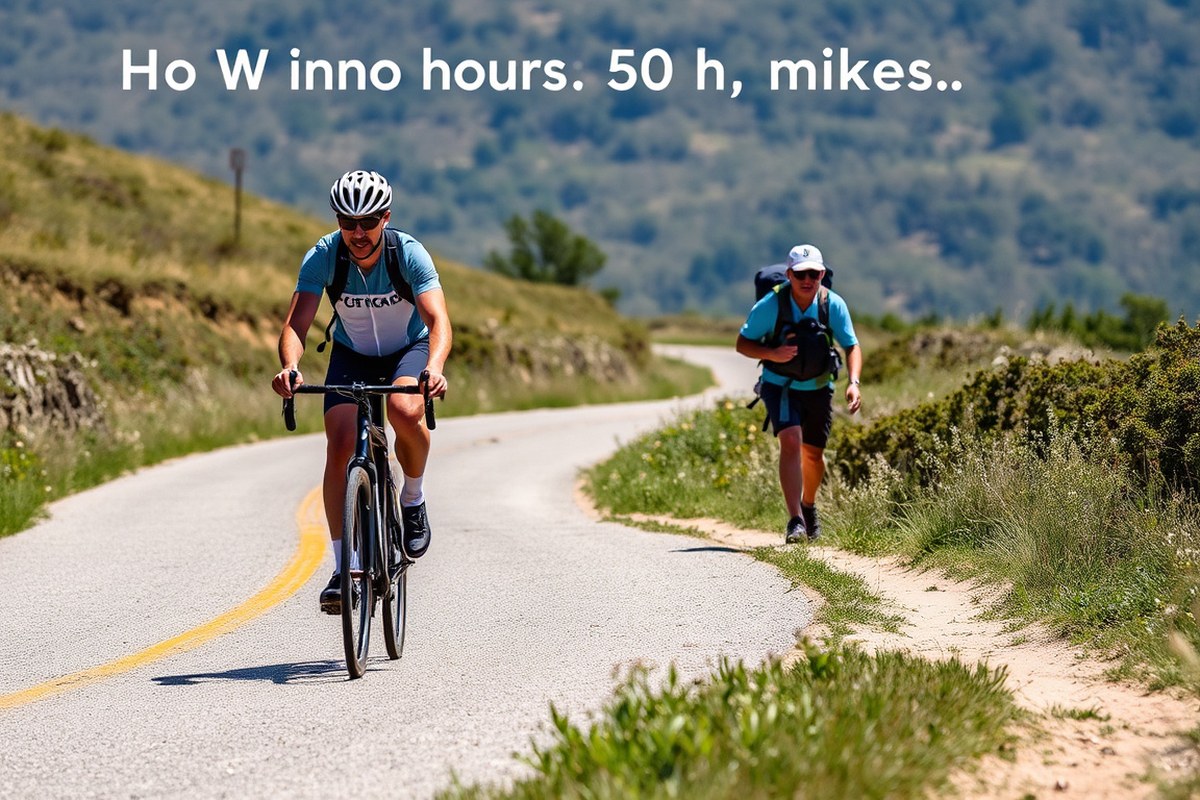
Walking 50 miles usually takes roughly 16 to 17 hours at a steady pace. Cycling that distance often requires around 3 hours and 20 minutes up to 4 hours and 10 minutes. These times depend a lot on the terrain and your fitness level.
Average Walking Speeds for 50 Miles
Most people walk at an average speed of 3 miles per hour. At this pace, walking 50 miles nonstop would take over 16 hours. Riding or walking 50 miles is a long trip.
Many people split it over two or more days. They stop often to rest and recover.
Walking for 16 to 20 hours straight can be very tiring. People usually need overnight stops to recover before continuing.
Cycling Time Ranges by Rider Fitness and Route
Cyclists typically travel about 12 mph on flat roads for 50 miles. This pace results in a ride lasting between 3 hours 20 minutes and 4 hours 10 minutes. Skilled riders tend to go faster, which shortens the trip time.
Beginners or casual riders tend to be slower. So cycling 50 miles might take 5 hours or more. Fitness level plays a big role in how long you will need.
Terrain’s Impact on Walking and Cycling Duration
Hilly or mountainous terrain increases the time and effort needed. Walking uphill slows your pace and wears you out faster. Cycling climbs are tougher and can add several hours compared to riding flat routes.
Flat terrain lets you keep a steadier pace whether walking or cycling. Rough or uneven paths will also slow you down and tire your muscles more quickly.
| Mode | Average Speed | Estimated Time for 50 Miles |
|---|---|---|
| Walking | 3 mph | 16 to 17 hours |
| Cycling (flat terrain) | 12 mph | 3 hours 20 minutes to 4 hours 10 minutes |
| Cycling (hilly terrain) | Varies widely | Several hours longer than flat terrain |
The factors like hills, weather, and rider stamina can change your time by several hours. Plan your trip carefully and expect to slow down on tougher routes.
Begin your 50-mile walk or ride early in the day. Keep a steady pace to save energy. Plan frequent breaks to prevent getting too tired.
How to Calculate Hours from Miles and Speed
To find how long to travel 50 miles, divide distance by speed. This shows the number of hours the trip should take. Use your current speed to get the right time.
This equation shows how time depends directly on speed. Knowing this helps you plan trips or commutes realistically.
Basic Formula for Time Calculation
Time equals distance divided by speed. This means if you know how far and how fast, you can find the travel duration. Use the formula: Time (hours) = Distance (miles) ÷ Speed (mph).
For example, driving 50 miles at 50 miles per hour takes exactly 1 hour. This formula works with any speed, from walking pace to highway driving.
Converting Decimal Hours to Hours and Minutes
Calculating time often gives you decimal hours. You need to convert decimals to minutes for everyday use. Multiply the decimal part by 60 to find minutes.
For instance, 1.5 hours means 1 hour plus 0.5 times 60 minutes, which equals 30 minutes. This makes travel time easier to understand and plan.
Example: Calculating Time at Different Speeds
Calculate travel time at various speeds to see how long 50 miles takes. Below are clear steps to help you do this yourself.
- Write down your distance: 50 miles.
- Choose your speed in miles per hour (for example, 60 mph).
- Divide 50 by your chosen speed to get time in decimal hours.
- Separate the whole number (hours) and decimal fraction.
- Multiply the decimal by 60 to convert it into minutes.
- Combine hours and minutes for your total travel time.
Driving at 60 mph means you divide 50 by 60. This gives 0.83 hours, or about 50 minutes.83 hours.
Multiply 0.83 by 60, and you get 50 minutes. So, driving 50 miles at 60 mph takes about 50 minutes of travel time.
At 75 mph, 50 miles takes 50 ÷ 75 = 0.67 hours. Multiplying 0.67 by 60 minutes equals around 40 minutes. This simple math shows how speed affects your trip length clearly.
Factors That Affect How Long 50 Miles Takes to Travel
Travel time for 50 miles depends on several key factors. Speed limits dictate how fast you can go, which affects your total time. On highways with a 65 mph limit, expect closer to 45 minutes if traffic is light.
Traffic can slow you down a lot. Heavy traffic or many stops from signals can slow you down. The trip might take more than 1 hour and 40 minutes.
Congestion adds extra time to your trip. Driving through suburbs has many stoplights that slow you down.
Highway parts often are short, lowering your average speed. You usually average 40-50 mph, making the trip longer.
Weather impacts your pace too. Rain, snow, or fog requires you to drive slower to stay safe.
Slippery roads might make a 50-mile trip take up to twice as long. Avoid driving through bad weather when possible for more consistent travel times.
- Plan breaks and fuel stops to add 10 to 20 minutes per stop
- Road type matters; highways are faster than city streets
- Hilly or rough terrain lowers average speed
- Local traffic patterns can shift times dramatically
- Vehicle load affects acceleration and fuel stops
- Stay aware of live traffic updates for real-time changes
- Road closures or local rules can force detours
Breaks and refueling add extra time beyond pure driving. Each stop might tack on 10 to 20 minutes depending on location and service speed.
Driving 50 miles at 50 mph without stopping takes about one hour. Adding breaks easily pushes total time over 1 hour and 40 minutes.
Using mapping apps helps estimate timing better by including current traffic and weather conditions. These tools can update your route to avoid delays or road closures. Even so, the final time depends on your actual driving speed and conditions during the trip.
Is 50 Miles a Reasonable Daily Commute Distance?
Fifty miles can be a daily commute, but it’s on the longer side. Many people travel around 25 miles each way for work, adding up to 50 miles total. This distance is common for those choosing affordable housing or specific job locations.
Driving 50 miles can take different times because of traffic and roads. The commute time may change a lot from day to day. Always plan for some delays during your trip.
If the highway is clear, 50 miles can take 45 to 50 minutes. Driving speeds will usually be around 60 to 65 mph then.
Faster or slower speeds will change your arrival time. In busy urban areas, it could easily double, causing frustration and longer workdays.
Challenges include higher fuel and maintenance costs, plus more time spent sitting. Long commutes can cause stress, less free time, and impact your daily energy. Planning your route and travel times carefully can help reduce delays and manage these effects.
Try leaving 10 to 15 minutes earlier to avoid rush-hour traffic and reduce stress.
Using Tools and Calculators to Estimate Travel Time
Digital tools like map apps and online calculators help you estimate travel time for 50 miles. These tools use speed limits, traffic data, and route options to provide accurate predictions. Apps like Google Maps and Waze update travel times constantly.
They change times based on traffic and road conditions. This helps you plan your trip better ahead of time.
Map apps calculate time by factoring in current traffic, road work, and accidents. They use data from other drivers and sensors to adjust your estimated arrival. Travel time can change a lot during the day.
One hour can stretch to over three hours. It depends on traffic and the time you travel.
To get a precise estimate, enter the correct start and end points in the app. Also, include your mode of transport, whether driving, cycling, or walking. Adding planned breaks or stops helps the calculator give a realistic timeframe.
- Input exact starting and ending addresses or coordinates
- Select your mode of transportation (car, bike, walk)
- Add break times for long trips to account for rest or fuel
- Choose preferred routes or avoid tolls and highways as needed
- Check the app during peak travel times for updated traffic info
Many apps let you set arrival or departure times to plan trips ahead. The hours to miles calculators also give step-by-step travel breakdowns. These detailed inputs prevent surprises and help you manage your time.
Keep in mind, the cheapest digital tools are usually free on smartphones. Some advanced GPS devices may charge for live traffic updates. Accuracy can drop if you don’t update the app or if you travel in low-data areas.
How Public Transport Times Vary over 50 Miles
Traveling 50 miles by public transport usually takes between 1.5 to 3 hours. Buses often take longer due to frequent stops and traffic delays.
Trains can be faster on direct routes. The total time depends on your exact route and connections.
Buses can average 25 to 35 mph on highways but slow down in city traffic. Trains generally run 40 to 60 mph but may stop at several stations. Traffic jams, track work, and rush-hour crowding cause delays.
These delays often add 20 to 30 minutes or more. Be prepared for extra travel time.
Transfers between buses and trains take extra time. You might wait 10 to 30 minutes for the next ride. This wait adds to your total trip time.
Check schedules ahead and pick routes with fewer changes to keep total time low. Some transit apps show real-time updates, helping you avoid long waits during layovers.
The transit frequency matters a lot. In busy metro areas, buses or trains may arrive every 10 to 15 minutes. Rural or less served spots often have long waits.
You might wait 30 minutes or longer there. This makes your whole trip take more time. Early planning helps you adjust to these gaps.
Public transport fares for 50 miles vary widely. Some buses charge a flat rate; trains often price by zone or distance.
Budget $5 to $15 for a one-way trip, depending on where you travel. Monthly or day passes can save money if you commute regularly over this distance.
Look for express or limited-stop buses and trains. They skip smaller stops and can cut your trip by 20 to 40 minutes.
For mixed trips, try to minimize walking or waiting between transfers. A 10-minute walk between stations can feel longer after a long ride.
During peak hours, expect crowded vehicles and some standing room. Off-peak travel might take a little longer but feels more comfortable. Leave extra time if your 50-mile route has delays.
Weather or events may slow down your travel. Planning ahead helps avoid rushing or missed connections.
Planning a 50-Mile Trip: Breaks, Fuel, and Safety Tips
Plan your 50-mile trip by estimating fuel needs, scheduling breaks, and taking safety steps. Breaks help you stay alert, and fuel stops avoid running out on the road. Preparing ahead keeps your trip smooth and safe.
Estimating Fuel Consumption and Costs
To estimate fuel, first find your vehicle’s average miles per gallon (mpg). Your car gets 25 mpg.
Divide 50 miles by 25. You will use 2 gallons of fuel.
Next, check local gas prices. Gas costs $4 per gallon.20 per gallon, multiply 2 gallons by $4.20. Your fuel cost will be about $8.40 for 50 miles.
- Know your vehicle’s fuel efficiency (mpg or kWh for EVs).
- Use current gas prices in your area for accuracy.
- Consider extra fuel if your route has hills or heavy traffic.
- Factor in fuel stops every 200 miles or as needed.
- Use online calculators to quickly estimate fuel needs and costs.
Adding a buffer of 10 to 15 percent fuel helps if you encounter delays. This keeps you ready for slow traffic or detours without stress.
Best Timing and Frequency for Breaks
Plan breaks every 45 minutes to an hour when driving or cycling 50 miles. Resting for 5 to 10 minutes keeps your mind sharp and reduces fatigue.
Use breaks to stretch and drink water. This improves comfort and focus as you continue your trip.
- Stop at safe, designated rest areas or fuel stations.
- Quick snacks or meals can boost energy during longer rides.
- Check your body for signs of tiredness or discomfort.
- Adjust break length if traveling in hot or cold weather.
- Leaving early may let you skip peak traffic, cutting break needs.
Breaks aren’t just for comfort, they prevent accidents caused by tiredness or distraction.
Safety Precautions When Traveling 50 Miles
Check your vehicle before leaving. Tire pressure, oil level, and brakes should all be in good shape. A quick inspection can stop breakdowns en route.
Carry an emergency kit with water, snacks, first aid, and a phone charger. This prepares you for unexpected delays or issues.
- Wear your seatbelt and obey speed limits at all times.
- Keep your phone charged and ready for emergencies.
- Share your travel plan with a friend or family member.
- Avoid distractions like phone use or eating while driving.
- Watch for weather changes and adjust your trip accordingly.
Don’t start your trip without checking weather conditions and traffic updates.
Common Mistakes When Estimating 50-Mile Travel Time
Many people make the mistake of assuming the speed limit is their actual travel speed. Traffic, road conditions, and stops often lower your average speed. This causes you to underestimate the time to travel 50 miles.
Another common error is ignoring how speed changes over different segments of a trip. Driving 50 miles often includes highway and city street driving. Speeds vary on highways versus city streets.
This makes the travel time change throughout your trip. Calculating time with just one speed number will be off.
Not factoring in breaks, fuel stops, or traffic congestion also leads to wrong estimates. Even a few minutes stopped can add up, especially on shorter trips. People often forget this while planning trips based on distance alone.
- Don’t use speed limits as exact speeds; expect slower averages.
- Avoid using a single speed value if the route has mixed roads.
- Include extra time for breaks, fuel, or stops in your estimate.
- Check real-time traffic or historic road conditions before setting plans.
- Understand miles per hour measures speed, not overall trip time.
- Calculate travel hours by dividing distance by average speed, not max speed.
To estimate travel time for 50 miles, use average speed. Average speed is better than peak speed for timing. Peak speed does not reflect overall travel conditions.
For example, a highway speed limit might be 65 mph. But you might average 55 mph once traffic or slow zones are included. This changes a 50-mile drive from under an hour to about 55 minutes or more.
Understanding how speed fluctuates and adding time for stops gives you realistic plans. Without these adjustments, you risk arriving late or leaving too early. Accurate travel time estimates keep schedules reliable and less stressful.
Step-by-Step Action Plan to Estimate Your 50-Mile Travel Time
Use this plan to figure out how long a 50-mile trip will take for you. Follow each step to get a clear estimate based on your mode of travel and conditions.
- Before you start: Choose your travel mode, car, bike, walking, or public transport. Look up typical speeds for that method to set a baseline.
- Day 1: Measure the actual distance with a map or GPS app. Confirm it’s close to 50 miles to avoid surprises.
- Day 2: Check current traffic or transit schedules if you’re driving or using public transport. This helps adjust your speed estimate.
- Day 3: Use a travel time calculator to help you. You can also do a simple math calculation. The formula is time equals distance divided by speed. Note your result.
- Day 4: Add extra time for breaks, fuel stops, or delays. Use about 10-20% more time for these factors.
- Day 5: Take a short trip close to 50 miles. Make sure conditions match your planned trip. Check if your estimated time feels right.
- After 1 week: Compare planned versus actual travel time. Adjust your speed or break time estimates accordingly.
- After 2 weeks: Use your improved time estimate for future trips. Change it if routes or seasons are different. Keep updating it to stay accurate.
Frequently Asked Questions
How Many Hours Does It Take to Walk 50 Miles?
Walking 50 miles usually takes about 16 to 20 hours of continuous effort. You would likely spread this time over multiple days for safety and rest.
How Long Does Cycling 50 Miles Usually Take?
Most average cyclists cover 50 miles in 3 to 5 hours. Your speed and fitness level can change this time significantly.
What Factors Affect How Many Hours 50 Miles Takes to Travel?
Traffic, weather, and road conditions can change driving times drastically. Planning ahead helps you estimate time more accurately.
Is 50 Miles a Reasonable Daily Commute Distance by Car?
Yes, a 50-mile daily commute is common but may take around an hour each way. Traffic can lengthen your travel time unexpectedly.
How Can I Calculate the Hours Needed to Travel 50 Miles at Different Speeds?
Divide 50 miles by your average speed in miles per hour. This formula gives you a clear travel time estimate.
Final Thoughts
Traveling 50 miles usually takes about one to two hours. It depends on your mode of travel. Weather and traffic also affect travel time.
Use a calculator or test trip to get a better idea for your specific situation. Start by checking transit or driving times online before you set out.