Can a Small Electric Truck Actually Tow Anything? What Works and What Doesn’t
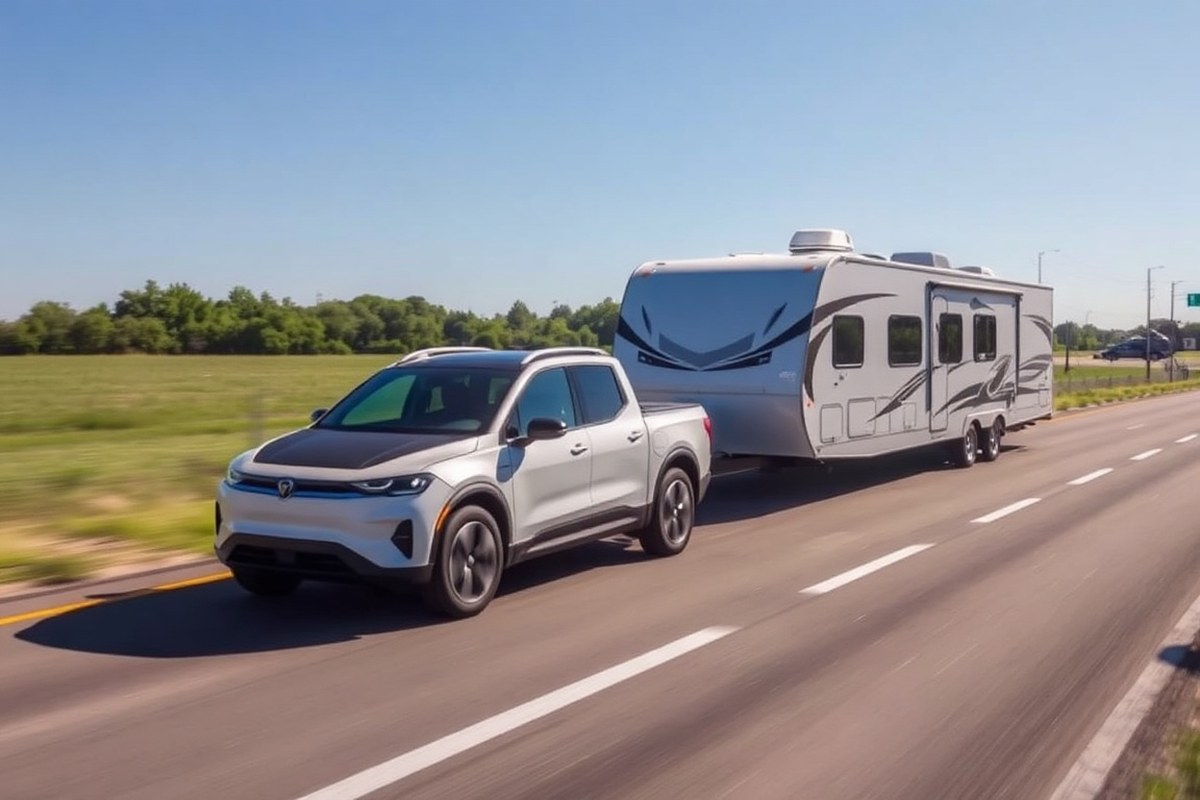
Can a small electric truck actually tow anything? Yes, it can tow effectively. But it depends on the trailer size and trip length.
Small electric trucks usually tow trailers under 6,000 pounds easily. They handle trips below 150 miles round-trip without problems. This suits many daily towing needs well.
Electric trucks match gas trucks in towing power. But towing can shrink their driving range by 30% to 60%. Always check your hitch’s rating to avoid overloading it.
Overloading can cause damage or lead to accidents. Stay within your hitch limits for safe towing.
Start by choosing the right truck and hitch for your trailer’s weight. Plan your charging stops carefully when towing with an electric truck.
Make sure there’s charging at your destination too. This helps manage range loss during trips.
Key Takeaways
- Small electric trucks tow well with trailers under 6,000 pounds on short trips.
- Expect a 30%-60% range drop when towing; plan charging accordingly.
- Check your hitch’s weight rating before towing heavy trailers.
- For trailers over 5,000 pounds, use a weight-distribution hitch for safer towing.
- The Ford F-150 Lightning is capable of towing as much as 10,000 pounds. This maximum depends on selecting the right battery option for the truck. It provides impressive towing power compared to other electric trucks.
- Cold weather worsens range loss, dropping battery life an extra 20%-30%.
Can Small Electric Trucks Actually Tow Effectively?
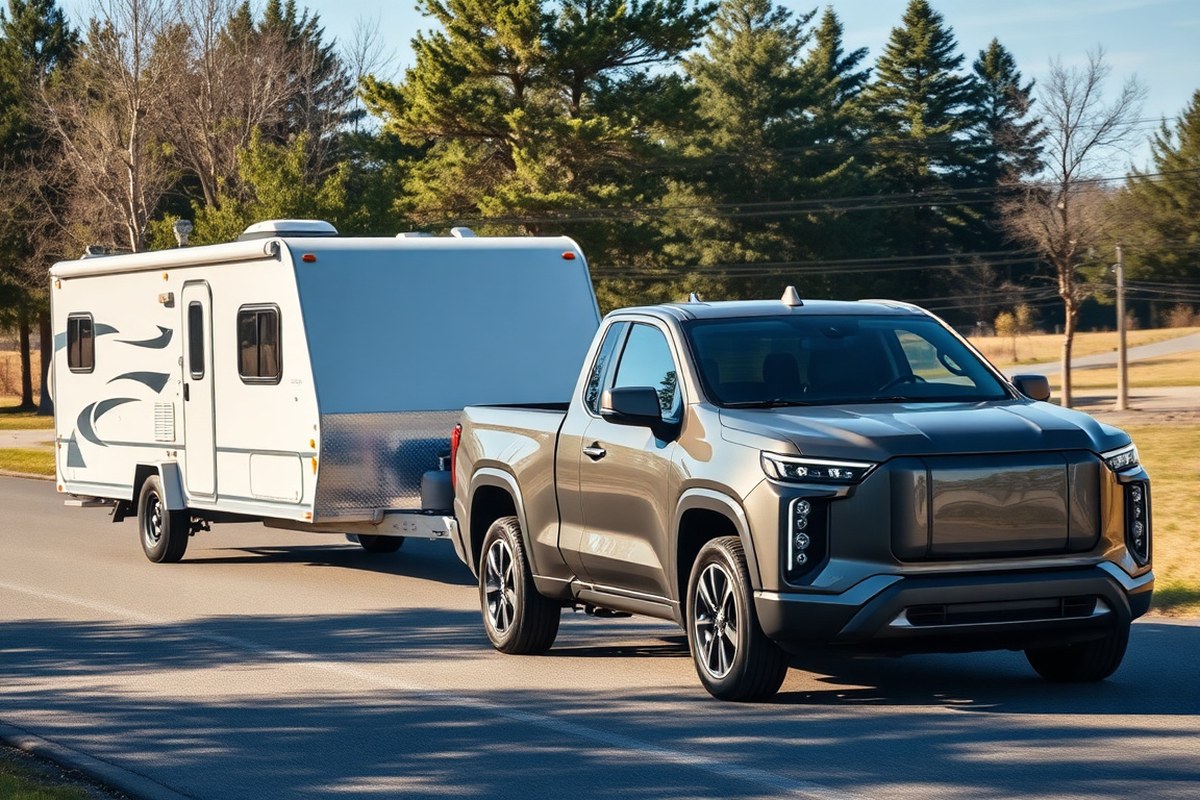
Small electric trucks can tow effectively, matching many gas trucks in raw power today. Most models offer towing capacities from about 5,000 to 11,000 pounds. This puts them on solid footing for towing common trailers, campers, and small RVs.
Electric trucks use dual motors and heavy batteries mounted low, which help with torque and stability. For example, 2026 electric models can tow up to 12,500 pounds.
This lets you handle serious trailers. That means their ability to pull loads is not limited compared to gas trucks.
The real challenge is managing the range drop when towing heavy loads. Towing lowers electric range by 30 to 60 percent. The exact amount depends on trailer weight and road conditions.
The truck can pull heavy loads, but you must plan trips carefully. Expect shorter distances between charges.
Towing capacities vary by model and trim level. So check the exact ratings before buying. For trailers over 5,000 pounds, use a weight-distribution hitch to maintain control and safety.
This advice applies to both electric and gas trucks. It’s more important with EVs because of weight and torque.
Small electric trucks tow under 6,000 pounds well. They work for smaller campers or boat trailers.
With trips under 100 miles, they work perfectly for many recreation uses. Going further requires planning stops around charging availability and expected range drops.
Electric trucks bring benefits like lower per-mile costs and strong torque delivery to the towing equation. Yet, you need to tow with attention to range loss and battery management.
Driving smoothly and avoiding quick acceleration helps save range. This is true for gas trucks but especially EVs.
Comparing Towing Capacities and Range Loss of Small EV Trucks
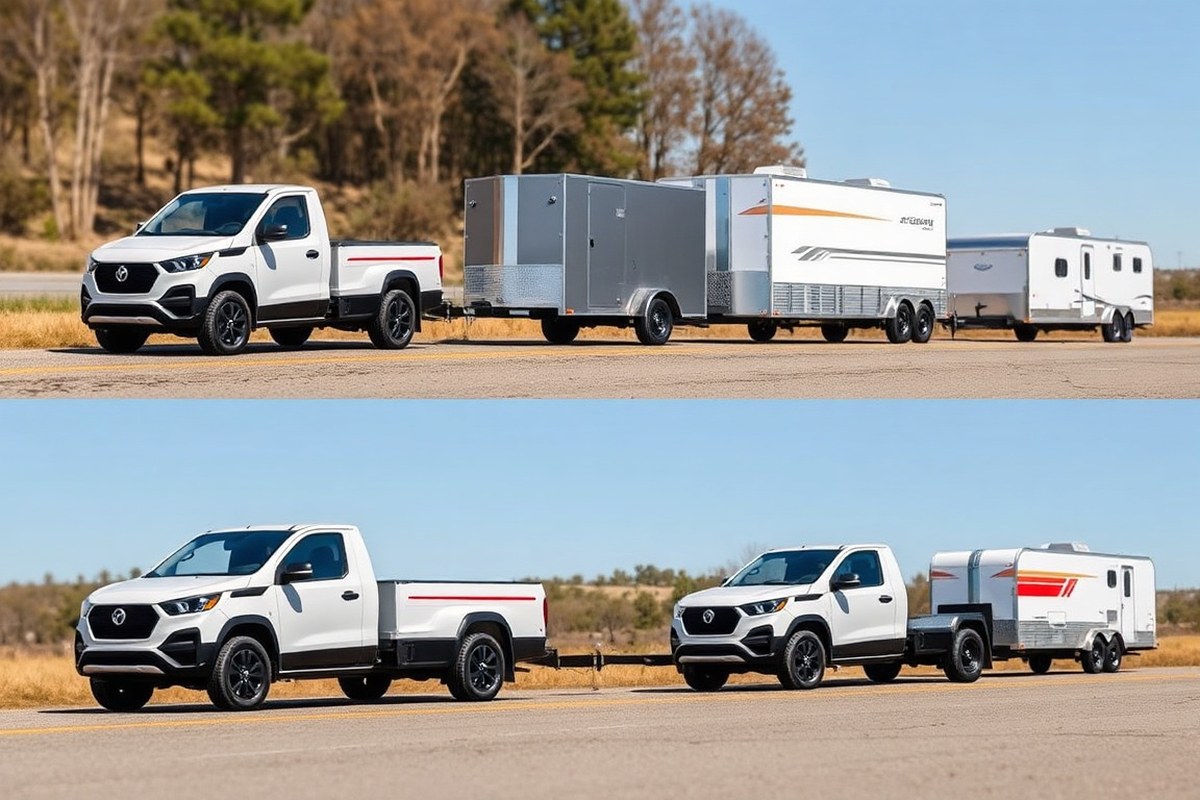
Small electric trucks in 2026 can tow between 3,500 to 11,000 pounds. However, towing cuts driving range by 40 to 60 percent depending on load and conditions.
Most models balance tow capacity and battery size for camper hauling. They suit trailer hauling within practical range limits.
Key Small Electric Truck Models
The Rivian R1T and Ford F-150 Lightning Extended Range have top towing limits. They reach near 10,000 to 11,000 pounds. These trucks have big batteries, ranging from 131 to 149 kWh.
Their EPA ranges run from 320 to 410 miles without towing. Chevrolet Silverado EV offers the longest range and largest battery at 440 miles and 200 kWh.
The Tesla Cybertruck AWD is rated for 11,000 pounds towing. It has a smaller estimated battery and EPA range. The Hyundai Ioniq 5 is a smaller EV.
It can tow just 3,500 pounds with an 84-kWh battery and 305-mile range. These variations shape what trailers or campers you can realistically tow.
| Vehicle | Max Tow Rating (lbs) | Battery (kWh) | EPA Range (mi) | Est. Range Towing* (mi) |
|---|---|---|---|---|
| Rivian R1T Dual-Motor | 11,000 | 149 | 410 | 180, 240 |
| F-150 Lightning Ext. Range | 10,000 | 131 | 320 | 140, 180 |
| Chevrolet Silverado EV 4WT | 10,000 | 200 | 440 | 200, 260 |
| Tesla Cybertruck AWD | 11,000 | 123 (est.) | 340 | 150, 190 |
| Hyundai Ioniq 5 (w/ tow pkg) | 3,500 | 84 | 305 | ~210 (estimate)* |
Range estimates while towing vary but generally halve EPA numbers with heavy trailers. Small EV trucks have good battery sizes and power for medium loads.
Towing maximum loads greatly cuts the driving distance. Chevrolet’s big battery helps it maintain longer range under load.
Range Reduction Estimates by Tow Weight
Towing lighter loads near 3,500 pounds usually drops range by 20 to 35 percent. Weather and speed affect this reduction. Medium to near-maximum trailer weights cause range loss of 45 to 60 percent.
Loss is worse on highways above 65 mph. Cold weather plus towing can drop range by more than half.
For example, pulling a 5,000-7,000 pound camper usually cuts range by 45-55 percent in real-world use. Vans with smaller loads lose less.
But heavy loads and towing max out reductions near 60 percent. Knowing these trade-offs prevents dead stops and lengthy charge breaks on long trips.
Test your truck’s regenerative braking and warm the battery before towing for safer range and control.
Worked Example: Calculating Realistic Towing Range
Say you have a Ford F-150 Lightning Extended Range with a 320-mile EPA range. You plan to tow a 6,000-pound camper, roughly 60% of its 10,000-pound capacity. Using a 50 to 55 percent range loss means towing range hits about 140 to 160 miles.
Charging stops will be more frequent, so plan on recharging after about 150 miles. This shortens travel legs, especially at highway speeds above 65 mph. Preconditioning your battery and driving slower can improve endurance but expect nearly half the no-load range.
Use this formula for any truck: EPA range × (1 – estimated range loss percent) = estimated towing range. Always check truck manufacturer’s towing range if available for more accuracy.
How Towing Impacts Electric Truck Battery and Performance
Towing greatly increases the power your electric truck needs, which boosts battery drain. Pulling a heavy trailer demands extra energy to overcome weight and wind drag. A full tow load can cut an EV’s range in half.
A 320-mile battery pack drops to about 155 miles. This loss happens due to the extra weight and drag.
Instant torque from electric motors helps control the load smoothly. Unlike gas engines that ramp up torque around certain RPMs, EVs deliver maximum torque right away. Your truck handles slow starts and hill climbs better with trailers.
It shifts without jerking. This gives you more control and confidence while towing.
The truck’s low-mounted battery also improves stability while towing. It lowers the center of gravity, helping resist sway caused by the trailer’s weight. This setup makes your rig feel steadier on curves and highways.
It’s more stable than a higher gas truck. That helps with safe, smooth driving.
Towing adds stress to the brake system because the truck has to slow down more mass. Regenerative braking helps recover some energy but is less effective with heavy trailers. Trailer brakes are needed for loads over a few thousand pounds.
They share the stopping force. This reduces wear on your truck’s brakes.
Trailing heavy loads causes internal components like battery cooling systems to work harder. Batteries generate more heat under load, risking reduced performance if they get too warm. To manage this, electric trucks use active cooling.
You may see shorter charge times when towing in hot weather. The truck might limit power temporarily. Continuous towing raises the temperature stress too.
Towing cuts your battery range a lot, sometimes by half or more. You’ll want to plan accordingly for longer trips. Towing increases braking and heat stress on the truck.
The truck uses special systems to handle these extra demands. These systems keep things safe. Use trailer brakes matched to your load.
Watch for temperature warnings. Plan shorter trips to keep your truck in good shape while towing.
Planning and Preparing for an EV Towing Trip
You can tow with a small electric truck, but careful planning is a must. Charging stops, weight limits, and hitch setup all affect your trip’s success. Preparing well means safer, smoother towing without surprises.
Pre-Trip Vehicle and Trailer Checklist
Check your truck’s towing capacity and trailer weight before hooking up. Overloading cuts your range and stresses your electric drivetrain. Confirm that the total trailer weight, including cargo, fits your truck’s limits.
Inspect your trailer’s tires, lights, and brakes to avoid breakdowns on the road. Check the hitch and safety chains to ensure they’re secure and compatible with your truck. Lastly, top off all fluids your truck uses.
Electric trucks don’t need engine oil. Check brake fluid and power steering too, if you have them.
Route and Charging Planning Steps
Plan your route based on reliable DC fast chargers along the way. Avoid relying on stations that can’t fit your trailer or have limited space around them. Trips under 200 miles work best today with good charging stops.
Estimate towing range as 30 to 60 percent less than unloaded range. The exact drop depends on your load weight. Weather and road conditions also change range.
For example, a 300-mile range truck might manage only 120 to 180 miles towing. Budget for more frequent, shorter charging stops to avoid running low.
- Map DC fast chargers that accept vehicles with trailers attached
- Check charger availability and operating hours in advance
- Consider weather impacts on battery range and plan extra stops
- Use your truck’s onboard range estimator with trailer weight settings
- Factor in destination charging options if you plan to stay overnight
Winter trips need special attention since cold weather reduces battery efficiency further. Double-check your planned charging stops before you leave.
Expect your truck’s range to drop more than usual. A trailer attached causes extra drag and power use.
Selecting the Right Hitch and Safety Gear
Use a hitch rated for your trailer’s fully loaded tongue weight. For instance, a 6,000-pound trailer might put about 780 pounds on the hitch. Make sure your hitch matches or exceeds this number for safe towing.
Safety gear needs heavy-duty safety chains and a breakaway switch. Use an adjustable hitch ball for a perfect fit.
It should match your trailer coupler exactly. Don’t skip trailer brake controllers, which work with your truck to stop smoothly and reduce wear.
Invest in quality wiring connectors and test all trailer lights before every trip. Loose or faulty connections cause safety hazards and likely traffic tickets. Always pack tools to adjust or fix hitch components if something shifts during the drive.
Safety and Warranty Considerations When Towing with EVs
Towing within your electric truck’s rated capacity doesn’t void the battery warranty. Manufacturers set these limits to protect your battery and powertrain. Going over limits often can risk your warranty.
Towing trailers above 7,000 pounds regularly may cause problems. This can hurt long-term reliability too.
Your truck’s range drops a lot when you tow. A truck with a 320-mile range might get far less while towing. Pulling a 5,000-pound trailer could cut range to 140 to 180 miles.
Heavy loads make the battery work extra hard. This causes more heat, which stresses battery cells. That can reduce battery life over time.
Safety is important. Overloading the truck or trailer can cause sway or brake failure. Keep your total weight inside the towing limits.
Always use trailer brakes to help control stopping. Sway control systems help keep the trailer steady. A good loaded trailer puts 10 to 15 percent of weight on the hitch.
This helps the truck tow safely. Too much or too little weight can cause problems.
- Check your truck’s max tow rating and never go above it.
- Distribute trailer weight evenly, front to back and side to side.
- Use weight-distribution hitches and sway control devices when needed.
- Inspect tires on truck and trailer for proper pressure before every trip.
- Test trailer brake lights and signals before towing on roads.
- Drive slower and allow extra braking distance with loads attached.
- Monitor battery temperature and recharge often on long towing trips.
Regular heavy towing heats the battery and powertrain parts more than usual. This speeds up wear and might reduce how long your truck stays reliable. Electric trucks with 180 to 200 kWh batteries handle towing better.
Bigger packs run cooler and last longer than smaller ones. They stress less under load.
Driving habits affect safety and truck health. Stay smooth with acceleration and braking. Avoid sudden stops and sharp turns.
Plan your towing trips with charging stops in mind. This helps prevent battery overheating or running too low. Keep battery health good on long trips.
Always use your truck’s trailer sway control when towing. It helps keep stability and avoids accidents. This feature improves safety on the road.
Handling Weather and Load Variables in EV Towing
Towing with a small electric truck in cold weather cuts range more than usual. Batteries lose efficiency below 40°F, dropping usable energy by up to 20%. Combine that with towing a 6,000-pound trailer and driving uphill, and your range shrinks even more.
To reduce risk, warm your EV battery before hooking up a trailer. Use pre-conditioning while still plugged in. Keep tire pressure at the right level.
Cold air lowers pressure. Low pressure hurts traction and range.
Heavy loads and uneven weight distribution cause handling problems and strain your truck. Put about 10% to 15% of the trailer’s weight on the truck’s hitch. This helps stabilize the trailer and improves steering control.
Check that your trailer’s cargo is balanced side to side. Avoid placing heavy gear at the back of the trailer, which can cause swaying. Use weight-distribution hitches if your truck can take them.
They spread the load. This makes towing safer.
Carrying passengers and cargo inside your truck adds weight beyond the trailer load. This reduces your EV’s towing range and affects acceleration. Extra 300 to 500 pounds can cut range by 5% to 10%.
This depends on conditions. Watch your load carefully.
Plan trips limiting extra gear and passengers when possible. Remove roof racks or accessories that add wind resistance, since drag increases sharply at higher speeds. Driving 10 to 15 mph slower than highway speed saves fuel.
You can save 20% to 30% of your towing range. Slower speeds help your battery last longer.
Practice smooth braking and gradual acceleration to avoid sudden battery drain. Keep an eye on your truck’s displays to monitor range and battery temperature. Pull over and let the truck rest if it overheats or loses power unexpectedly.
Electric Trucks vs Gas: Which Is Better for Towing?
Electric trucks cost less to fuel and maintain when towing compared to gas trucks. Gas trucks still offer higher maximum towing capacity and faster refueling. Your choice depends on how often and how far you tow, plus your convenience needs.
Cost Comparison: Fuel vs Electricity
Electric trucks save money on energy and maintenance over five years, even with towing. Charging at home costs about half as much per mile as gas. Insurance and depreciation tend to be higher for electric trucks.
The table below shows estimated costs for electric trucks over five years. It also shows gas truck costs for 75,000 miles and 30% towing.
These figures help you compare expenses side by side. This helps you weigh upfront and ongoing expenses side by side.
| Cost Category | EV Truck (5-Year Ownership) | Gas Truck (5-Year Ownership) |
|---|---|---|
| Purchase Price (after incentives) | $55,500, $62,995 | $52,500 |
| Fuel/Energy (75,000 mi, 30% towing) | $4,800, $7,200 | $11,250, $15,000 |
| Maintenance | $1,500, $2,000 | $4,000, $5,500 |
| Insurance (avg annual × 5) | $12,500, $15,000 | $9,000, $11,500 |
| Depreciation (est. 5-yr) | 45, 55% | 35, 45% |
| Total 5-Year Cost (est.) | $74,300, $102,200 | $76,750, $104,500 |
Electric trucks save about half on fuel and require less maintenance over time. Still, insurance and depreciation costs narrow the total savings. Your actual costs depend on local rates and usage.
Range and Charging vs Refueling Time
Gas trucks can refuel in five minutes. Electric trucks need 30 to 60 minutes per fast charge.
This creates longer stops for long towing trips in EVs. Charging networks are improving but still limited outside cities and highways.
Electric truck range shrinks when towing, similar to gas trucks losing 40-50% fuel economy under load. Home charging keeps costs low but takes overnight. Public DC fast chargers cost between $18 and $35 per 100 miles.
This cost is closer to what gas trucks spend when towing. It shows fast charging prices can add up while towing.
Frequent, long-distance towing near max capacity favors gas or diesel trucks for quick refueling and range. Electric trucks suit shorter hauls or occasional towing where you can plan charging breaks.
Performance and Maintenance Differences
Gas trucks lead with higher maximum towing capacities and flexible fuel stations. Electric trucks deliver instant torque and can handle moderate towing with good control. Battery and motor durability vary with load and conditions.
Electric trucks cost less on maintenance, with fewer oil changes and brake wear. Still, towing heavy loads repeatedly stresses batteries and lowers range. Diesel options or range-extended trucks may suit heavy weekly work better.
You should weigh your towing weight and trip length before choosing a truck. Also think about how okay you are with charging stops.
These factors affect whether electric or gas trucks fit best. For light to moderate towing near home, electric trucks offer a practical and cheaper option.
Best Small Electric Trucks for Towing Campers and Trailers
Modern small electric trucks can tow campers and trailers well within local distances. For example, the 2026 Chevrolet Silverado EV handles up to 12,500 pounds. It can tow about 200 miles at max load.
Its unloaded range is up to 493 miles. This means you get fewer miles with a heavy load.
The 2026 GMC Sierra EV offers similar towing, hitting 12,500 pounds max. It gives roughly 190 to 240 miles of driving range when towing, depending on conditions. The Rivian R1T provides 11,000 pounds towing but cuts its range to about half when loaded.
Some models come with features that make towing and camping easier. You want options like integrated trailer brake control, adjustable suspension, and wall chargers suited for campgrounds. These details improve safety and convenience on and off the road.
- Chevrolet Silverado EV: 12,500 lbs towing, ~200 miles range when towing
- GMC Sierra EV: 12,500 lbs towing, 190-240 miles towing range
- Rivian R1T: 11,000 lbs towing, half of unloaded range while towing
- Ram 1500 Ramcharger: 14,000 lbs, 145 miles EV-only, range extended with generator
- Look for built-in trailer brake controls and adjustable suspension
- Choose trucks with onboard chargers compatible with campsites
The Ram 1500 Ramcharger is unique with a range-extending generator. It offers 145 miles on electric alone and 690 miles combined. This setup reduces range anxiety on longer trips while towing heavy loads.
Always check your trailer weight against the truck’s max towing, including cargo and passengers.
Range varies by load, terrain, and weather. Lighter trailers and slower speeds help maintain better mileage. Using smart driving can stretch your towing range.
You can cover typical weekend trips under 100 miles easily. This helps save battery and avoid running low.
Practical Tips to Maximize Range When Towing with an EV Truck
Towing with a small electric truck cuts your range significantly. Pulling a 6,000-pound trailer drops your range to 90-120 miles. This happens especially when driving at highway speeds.
How you drive and how much you carry affects your range. You can get closer to 120 miles by managing these well.
Speed plays a big role. Driving slower reduces aerodynamic drag and energy use. Driving at 55 mph instead of 65 mph saves battery range.
You keep about 10 to 15 percent more energy on a charge. Also, smooth acceleration and gentle braking protect your battery and improve efficiency.
- Keep speed below 60 mph to lessen range loss
- Use cruise control for steady speed on highways
- Lighten trailer weight by removing unnecessary cargo
- Choose trailers with rounded, aerodynamic shapes
- Plan routes with less elevation change
- Limit extra stops that require heavy acceleration
- Pre-cool or pre-heat vehicle while plugged in
Reducing your trailer’s weight makes a big difference. Dropping a few hundred pounds can add 10-15 miles to your range. Aerodynamics also count, the more rounded the trailer’s front, the less energy it takes to pull.
Climate matters too. Cooler weather reduces battery efficiency, and hauling a heavy load uphill burns more energy.
Choose cooler times of day or flatter routes when possible. Taking these steps makes your trips less stressful and more predictable.
Step-by-Step Action Plan for Towing with Your Small EV Truck
Follow these steps to tow safely and get the most out of your electric truck.
- Before your trip: Check your truck’s towing capacity and trailer weight limits in the owner’s manual. Confirm that your trailer is within those limits.
- Day of towing: Fully charge your truck’s battery to 100 percent before hooking up the trailer. This ensures maximum range and power.
- Pre-departure: Inspect tire pressure on both the truck and trailer. Proper pressure improves safety and efficiency.
- During your drive: Maintain steady speeds below highway limits if possible. Avoid rapid acceleration and hard braking to save battery.
- Every hour or 50 miles: Pull over to check your trailer hitch and connections. Tighten or adjust as needed to prevent issues.
- Mid-trip charging stop: Plan a charging stop at an EV-friendly station. Use apps to find fast chargers along your route.
- After your trip: Inspect the truck and trailer for wear or damage. Report any concerns to a licensed mechanic promptly.
- Weekly maintenance: Monitor your truck’s battery health through the display. Schedule service if you notice unusual performance drops.
Frequently Asked Questions
Can a Small Electric Truck Tow a Camper Effectively?
Yes, small electric trucks can tow campers up to about 6,000 pounds. Keep in mind towing heavier loads will cut your driving range significantly.
How Does Heavy Towing Affect a Small EV Truck’s Battery Life?
Heavy towing can reduce a small electric truck’s range by 30-60%. Plan for more frequent charges on longer trips to avoid running out of power.
Is a Weight-Distribution Hitch Necessary for Towing with an Electric Truck?
For trailers over 5,000 pounds, a weight-distribution hitch is strongly recommended. It helps keep the trailer and truck stable and safe on the road.
Can I Use a Small Electric Truck for Towing Long Distances?
Small electric trucks can tow, but range loss limits long trips without charging. You’ll need to plan stops carefully and may not match gas trucks on trip flexibility.
Do Electric Small Trucks Require Special Maintenance When Towing?
Towing with an electric truck doesn’t usually require special maintenance beyond regular checks. Still, monitor the battery and cooling system during heavy towing to prevent overheating.
Key Points to Remember
Small electric trucks can tow well when you follow safety and prep steps. Start by checking your truck’s limits right now. Take your first short towing trip to gain confidence with your EV truck’s handling.