How Far Can You Drive on a Flat Tire: Practical Limits and Safety Tips
The distance you can safely drive on a flat tire depends on the tire type and condition. Regular tires are not designed to support your vehicle without air. Driving far on a flat risks damaging your rims, suspension, and brakes.
Run-flat tires provide extra protection, allowing up to 50 miles at 50 mph. These tires have reinforced sidewalls to support your car after losing air. Temporary spare tires are smaller and have limits, typically lasting about 50 miles at lower speeds.
Keep your speed under 20 mph while driving on a flat tire. Avoid sudden steering moves, hard braking, or rapid acceleration. This helps prevent further damage and keeps you safer.
Stop as soon as possible in a safe place to change the tire. If you can, use your spare or call roadside assistance. Quick action helps protect your vehicle and keeps you on the road.
Key Takeaways
- Never drive more than a few feet on a standard flat tire.
- Run-flat tires allow up to 50 miles at 50 mph on a flat.
- Temporary spares limit speed and distance, often around 50 miles.
- Keep your speed under 20 mph while driving on a flat tire for safety.
- Press the accelerator lightly to avoid wheel damage on flats.
- Avoid sharp turns and hard braking when driving on a flat tire.
How Far Can You Safely Drive on a Flat Tire?
You should never drive far on a standard flat tire. It loses shape and risks wrecking the wheel, tire, and vehicle.
You must move slowly, under 20 mph. Drive just a few feet to a safe spot.
Run-flat tires are different. These tires let you drive about 50 miles. You can go up to 50 mph.
Make sure to check the tire as soon as possible. It usually needs repair or replacement after that.
Spare tires, especially space-saver or donut spares, have clear limits. They can last up to 50 miles but only at low speeds.
Your owner’s manual or the tire sidewall shows exact limits. Full-size spares act like regular tires but need correct air pressure.
| Option | Typical Safe Range | Main Limit |
|---|---|---|
| Full-Size Spare Tire | Similar to normal tire | Needs space and correct pressure |
| Space Saver Spare | Up to around 50 miles at low speed | Speed and distance limits printed on sidewall |
| Sealant and Compressor Kit | Short drive to repair shop | Works only for small tread punctures |
| Run-Flat Tire | Often up to 50 miles at low speed | Must be inspected and often replaced after use |
Use this rule: don’t drive on a flat standard tire. Only move a few feet safely.
With run-flats or spares, stick to the recommended speeds and distances. Driving faster or farther risks serious damage and safety hazards.
Avoid long trips on a flat or spare unless emergency says otherwise. Low speed keeps heat down, preventing more damage. Take time to check your tire limits before driving any distance on a flat or spare.
What Happens to Your Vehicle When Driving on a Flat Tire?
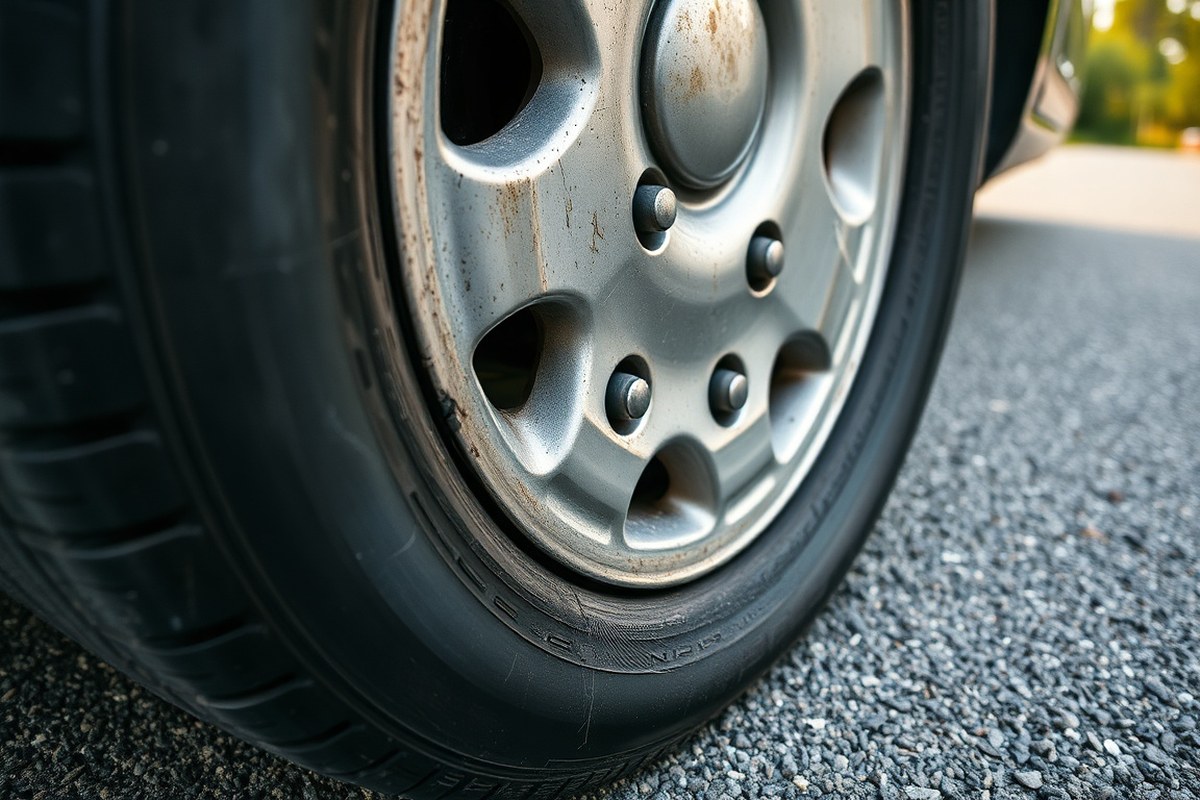
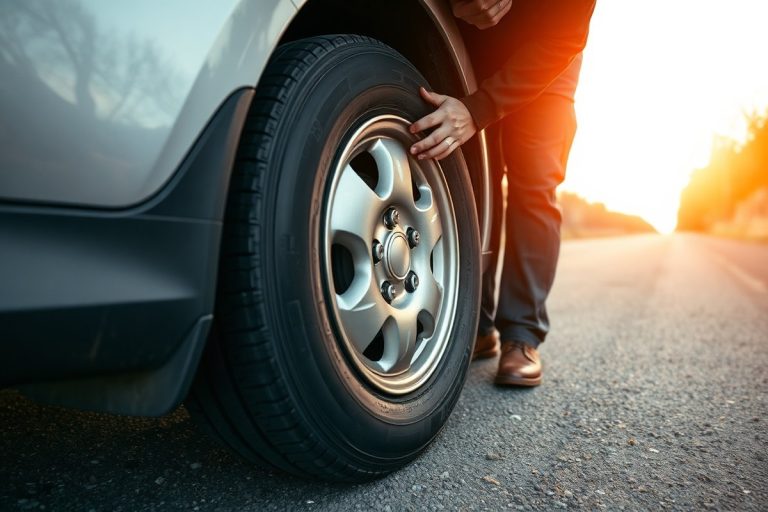
Driving on a flat tire quickly causes damage to the tire, wheel, and vehicle. The sidewall collapses, and the rim can hit the road, risking cracks or bends. This also affects your suspension and vehicle control, creating a dangerous situation.
How a Flat Tire Harms the Rim and Wheel
When a tire is flat, it no longer cushions the wheel. The rim gets closer to the road, often scraping or hitting bumps directly. This contact can bend, crack, or break the rim, making the wheel unusable and unsafe.
Every wheel rotation on a flat tire pinches the sidewall between the rim and ground. This action builds heat and worsens damage.
Damaged rims often cost a lot to repair or replace. Sometimes, these costs can be more than fixing a tire.
Sidewall Collapse and Tire Destruction
A flat tire loses air pressure, causing the sidewall to buckle. This collapse destroys the tire’s structure and flexibility. Punctures or cuts can widen with sidewall damage, making repair impossible and requiring a new tire.
Driving just a few hundred feet on a flat can ruin a tire. What might have been fixed could need full replacement.
Crushing the sidewall risks blowouts or the tire detaching from the wheel. These can make you lose control on the road.
Impact on Suspension and Alignment
When the tire collapses, it changes how the wheel supports the vehicle’s weight. This extra pressure stresses suspension components like shocks, struts, and control arms. These parts can bend or wear prematurely if the flat tire keeps turning.
Uneven tire support may cause alignment problems. This leads to uneven tire wear and handling issues. Suspension damage adds repair costs and can make your vehicle unsafe until fixed.
Vehicle Handling and Safety Risks
A flat tire reduces your vehicle’s ability to steer and brake properly. Handling becomes unpredictable, increasing the risk of accidents. You might notice the car pulling to one side or vibrations in the steering wheel.
Driving on a flat also raises the chance of a blowout or tire failure. Losing control suddenly increases crash risks.
This is more dangerous at high speeds or heavy traffic. Safety experts never recommend driving on a flat even short distances.
Move your car only to a safe, nearby spot. Avoid driving farther on a flat tire. Damage worsens quickly and risks safety.
Why Immediate Attention Matters
Damage to tire, rim, and suspension from flat tires happens fast and can add up. Fixing or replacing a tire is cheaper than repairing a bent rim or suspension parts. Also, avoiding further driving prevents hazards on the road for you and others.
Call roadside assistance or swap to a spare tire quickly. This keeps your car and you safer.
Driving slowly on a flat still damages the tire. This can raise repair costs significantly.
How Run-Flat Tires Work and Their Driving Limits
Run-flat tires let you drive after a puncture, usually up to 50 miles at 50 mph. Their reinforced sidewalls keep the tire from collapsing immediately. You should replace them soon after driving flat to avoid damage.
Technology Behind Run-Flat Tires
Run-flat tires have thicker, reinforced sidewalls to support your vehicle’s weight without air. This design stops the tire from collapsing right after losing pressure. Some use special beads and internal supports to keep the tire snug on the rim.
Normal tires fail quickly when punctured, making driving dangerous. Run-flats give you time to reach a safe spot or repair shop. They are also called zero-pressure or extended mobility tires because of this extra support.
Typical Speed and Distance Limits
Most run-flat tires let you drive about 50 miles after a puncture. You should not go faster than 50 mph during this time.
Some types, like Michelin or Pirelli, allow up to 100 miles but still need slow speeds. Driving faster or farther could damage your tire or rim.
Speed and distance depend on the tire type, vehicle, and road conditions. Driving slower reduces heat and stress on the tire sidewalls. Stopping as soon as possible is best.
- Do not exceed 50 mph while driving on a run-flat tire.
- Limit distance to between 50 and 100 miles depending on the tire.
- Reduce speed on rough or hot roads to avoid damage.
- Check your tire and vehicle manual for specific limits.
- Drive cautiously and avoid sharp turns or hard braking.
- Use the run-flat only to reach a repair or replacement spot.
Ignoring these limits increases the risk of tire failure or rim damage. Run-flat tires are a temporary fix, not a long-term solution.
Manufacturer Recommendations for Use
Tire makers advise replacing run-flat tires after any driving on them while flat. Damage to the tire structure may not be visible but can make repairs unsafe. For example, Michelin states these tires must be replaced, not repaired.
Always follow the instructions in your vehicle and tire manuals. Use the run-flat capability only to get to a safe location or service center. Don’t drive far on a flat run-flat tire.
Keep your speed slow to stay safe. This helps protect your tire and car parts.
Understanding Temporary Spare Tires and Their Limitations
Temporary spare tires, also called “donuts,” are made for short-term use only. They let you drive a short distance at limited speeds after a flat.
You should replace them with a normal tire right away. Waiting risks damage to your car and safety.
Design and Purpose of Donut Tires
Donut tires are smaller and lighter than regular tires. They save space in your trunk and reduce vehicle weight. However, their narrow size means they have less tread and lower durability.
These spares are not built for daily driving or long trips. Using one helps you reach a repair shop safely without further damaging your vehicle. They don’t handle like full-size tires and offer reduced traction and control on the road.
Speed and Distance Restrictions
Donut spares come with strict speed and distance limits to keep you safe. Most manufacturers recommend driving no faster than 50 mph when using a donut. Driving faster risks loss of control or tire failure.
You should not exceed 50 to 70 miles on a temporary spare. The shorter distance prevents excessive wear or overheating that could cause a blowout. These limits help protect your suspension and brakes from extra strain.
| Limit Type | Recommended Range |
|---|---|
| Maximum Speed | Up to 50 mph |
| Maximum Distance | 50 to 70 miles |
| Typical Use | Short-term emergency only |
| Size Compared to Regular Tire | Smaller and narrower |
| Weight | Lighter than regular tire |
Following the table limits helps avoid serious damage or accidents. Don’t treat the spare as permanent. It’s only there to get you to a repair or tire shop.
Replacement Timeline and Precautions
Swap out the donut for a regular tire as soon as you can. Use the spare only for emergency trips to a repair center. Driving beyond the recommended distance causes faster wear and unsafe conditions.
Check the spare tire pressure before and after driving on it. Many drivers forget this step and risk losing control. Also, watch your vehicle’s handling and stop immediately if anything feels off.
Remember, a full-size spare tire usually doesn’t have such limits. Having one means you can use it like a regular tire.
It allows for safe driving over longer distances. Otherwise, the compact spare stays a short-term fix only.
What Factors Affect How Far You Can Drive on a Flat Tire?
The weight of your vehicle greatly affects the distance you can drive on a flat tire. A heavier vehicle puts more pressure on the tire’s sidewall. This pressure speeds up tire damage and can harm the wheel rim faster.
Road surface and weather conditions also play a big role. Rough or uneven roads strain the tire more, cutting down your safe driving distance. Wet or icy roads make controlling a flat tire harder, increasing risk.
Driving speed is critical for reducing damage. The faster you drive, the more heat and friction builds in the tire. This speeds up the tire’s breakdown and can lead to a sudden failure.
- Tire construction: Thicker sidewalls resist damage longer than thin ones.
- Vehicle load: More weight means quicker tire and rim damage.
- Speed: Keep it below 20 mph to minimize harm.
- Road surface: Smooth roads allow a slightly longer distance.
- Weather: Avoid wet or icy roads, which make handling a flat unsafe.
- Puncture size: Small holes let you go farther; big tears are dangerous immediately.
Sidewalls flex under load and develop cracks or tears if pushed too hard. This shows you must stop and replace the tire. Small speed and weight reductions can stretch your flat tire’s life, but only a little.
Avoid driving on a fully flat tire. Stop right away to prevent costly damage. Driving further risks losing control of your vehicle.
Step-by-Step Actions After Experiencing a Flat Tire
Stop safely as soon as you notice the flat tire. Avoid hard braking or sharp steering to keep control. Signal early and slow down gradually before pulling over.
Pick the safest flat surface nearby, such as a wide shoulder or parking lot edge. Turn on your hazard lights right after stopping. This warns other drivers that your vehicle is disabled.
- Pull over to a flat, stable spot with minimal traffic
- Activate hazard lights immediately after stopping
- Apply the parking brake once parked
- Assess the tire damage visually
- Decide if you can safely change the tire yourself
- Call roadside assistance if unsure or unsafe to change
- Keep a reflective triangle or flares handy for added visibility
Assess your tire next. When the tire is shredded, the wheel shows, or car feels unstable, don’t drive. Call a tow or roadside service right away.
When the flat tire is simple and you can change it safely, remove it. Then install your spare tire.
Your owner’s manual has step-by-step instructions. Most tire changes take 15 to 30 minutes with proper tools.
If unsure about the tire’s condition or your skill, call for professional help. It is the safer choice.
They can reach you quickly and avoid damage from driving on a flat. Services like Firestone Roadside Assistance are available 24/7 for such emergencies.
How to Recognize and Avoid Common Mistakes Driving on a Flat Tire
One common mistake is driving too fast on a flat tire. Many people think they can keep driving at normal speeds.
But this speeds up damage to the rim and suspension. Even going 20 miles per hour can cause serious problems if you drive long enough.
Ignoring warning signs also leads to bigger trouble. Stop right away if your car pulls to one side or steering feels loose. Continuing to drive with those signs risks a blowout or losing control.
Delaying tire repair is another frequent error. Some believe a flat tire isn’t urgent if they can still drive a bit. This causes the tire to shred more and harms the wheel, raising repair costs.
- Stop driving as soon as you notice the tire pressure drop.
- Drive slowly, no faster than 20 mph, if you must move the car.
- Avoid sharp turns and sudden stops to keep the tire on the rim.
- Pull off the road safely before the tire or wheel gets worse.
- Get the tire inspected and repaired or replaced right away.
- Use your tire pressure monitoring system alerts to catch flats early.
People usually make dangerous mistakes during rush hour or at night. They hurry to keep moving. This rush can cause trouble.
They ignore tire problems to avoid inconvenience. However, stopping safely and fixing the tire first prevents costly and risky damage.
Driving on a flat starts damaging your car immediately. Keep your speed low if you must move, and avoid stops or turns.
The safest choice is to stop and fix your tire fast. This helps avoid costly repairs or accidents.
How Tire Pressure Monitoring Systems Help During a Flat
Tire Pressure Monitoring Systems use sensors inside each tire to track air pressure. They detect drops in pressure almost right away, warning you when a tire starts losing air. This early alert can help prevent a dangerous flat tire while you’re driving.
These systems have limits. Sometimes they give false alerts due to temperature changes or sensor errors.
A TPMS warning means you should check tire pressure soon with a gauge. Don’t ignore it, even if the tire looks fine at first.
Once alerted, safely pull off the road and inspect all tires. When the tire isn’t flat but pressure is low, add air to it.
Drive slowly and directly to a nearby tire shop to fix the issue. A fully flat tire with no air shouldn’t be driven on at all.
TPMS systems help you catch slow leaks or punctures early. Run-flat tires often depend on TPMS to warn you because they don’t look flat at first. After a TPMS alert, stop safely as soon as you can.
Check the tire pressure yourself or ask for help. Delaying this may cause further tire damage or risk an accident.
After a low pressure alert, check your tire with a gauge before driving. Don’t ignore the warning or drive on a tire with no air pressure.
When to Call Roadside Assistance Instead of Driving on a Flat
Don’t drive on a flat if the tire is shredded or the rim touches the road. These conditions can damage your vehicle further and make driving unsafe. Also, stop right away if you lose control of the car.
Do this especially in heavy traffic. It’s safer to pull over immediately.
Assess your situation before you try to fix the tire yourself. The spare tire might be missing, flat, or damaged. You might also lack tools like a wheel lock key.
In these cases, calling roadside assistance is better. Also, avoid roadside repairs if you’re on a blind bend or in dense traffic. Your safety comes first.
Roadside assistance services like Firestone or AAA operate 24/7 and can provide help quickly. They may patch your tire right there on the spot. Sometimes they tow your car to a shop instead.
The cost usually runs between $50 and $150 based on distance. Calling professionals saves time and reduces the risk of worsening damage or injury.
Stop and call for help if the car feels unstable. Also, call if the tire looks badly damaged. Use this as your decision rule.
You might not feel safe changing the tire yourself. You could also be unsure how to do it.
Let the pros take care of it then. Trying to drive on a flat in these cases risks your car and your safety.
Step-by-Step Action Plan for Handling a Flat Tire
Follow these steps right after you notice your tire is flat. Taking action fast can save your vehicle and keep you safe.
- Right after you feel the flat: Slow down slowly. Pull over to a safe, flat place off the road. You want to be away from traffic with enough space to work.
- Once stopped: Turn on your hazard lights to warn other drivers. Check your surroundings to confirm it’s safe to get out of the vehicle.
- Next: Use your tire pressure monitoring system (TPMS) if available to confirm which tire is flat. This avoids confusion and speeds up the fix.
- Shortly after: Decide if you have a spare and the tools to change the tire. Get your jack, lug wrench, and spare ready.
- During the repair: Follow your vehicle’s manual instructions to replace the flat tire. Make sure lug nuts are tight before lowering the car.
- Once the spare is on: Use a gauge to check its air pressure. Make sure it matches the recommended PSI for your spare. Inflate if needed.
- Before driving off: Remove all tools and double-check the area for safety. Confirm your hazard lights are off and you’re ready to go.
- After replacing the tire: Drive slowly to a tire shop. Get a permanent fix or a new tire there. Temporary spares or run-flats are not for long distances.
Frequently Asked Questions
How Far Can You Drive on a Flat Tire Without Damaging the Rim?
You should avoid driving far on a flat tire to protect the rim. Driving slowly and only a short distance is best to prevent costly damage.
Can You Drive on a Flat Tire to Get Home?
It’s safer to avoid driving on a flat tire at all. Driving on a flat risks accidents and more damage to the car.
How Does Tire Construction Affect Driving on a Flat?
Tires with stronger sidewalls, like run-flats, let you drive farther. Normal tires lose shape quickly and damage starts sooner.
What Speed Is Safe When Driving a Short Distance on a Flat Tire?
Keep your speed under 20 mph if you must drive on a flat. Slower speeds reduce pressure and help prevent more damage.
Is It Possible to Save a Tire After Driving on It Flat?
Often, a tire driven flat needs repair or replacement. Inspect it quickly and don’t ignore signs of rim or sidewall damage.
Final Thoughts
Driving on a flat tire even a short distance can cause serious damage and risks. Stop safely and take prompt action to protect your vehicle. Check your spare and tire tools today so you’re ready if a flat happens.