How Many Gallons Is One Barrel of Oil? A Complete Guide with Conversion Tips
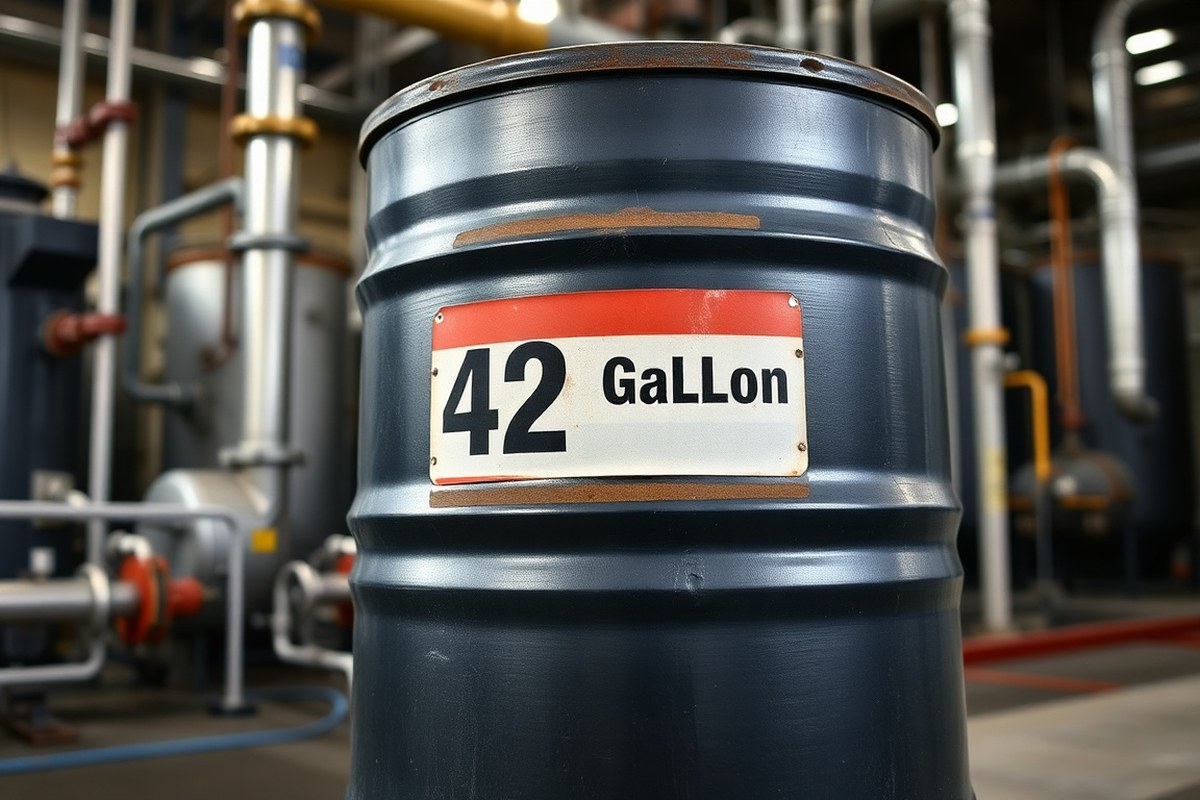
How many gallons is one barrel of oil? One barrel of crude oil contains exactly 42 gallons in the US.
This is the standard measure used by most companies and government agencies. Knowing this helps you understand oil prices and energy reports.
Sometimes you might see barrels described with different volumes, like 55 gallons. But that’s for other liquids.
For crude oil, always think 42 gallons per barrel. This number comes from historical oil trading practices in the 1860s.
Remember, 42 gallons of crude oil doesn’t mean you get exactly that amount of fuel. After refining, a barrel yields about 45 gallons of usable products because the process adds volume. Knowing this helps explain how refining turns crude oil into gasoline, diesel, and jet fuel.
Key Takeaways
- The US standard crude oil barrel equals exactly 42 gallons or 159 liters.
- 42 gallons comes from historical oil container sizes used since 1866.
- Oil barrels outside the US may differ, but 42 gallons is the industry norm.
- Refining crude oil increases volume, producing about 45 gallons of products.
- Gasoline typically makes up close to 20 gallons from one barrel.
- Diesel and jet fuel combined add another 13 gallons from the same barrel.
How Many Gallons Are in One Barrel of Oil?
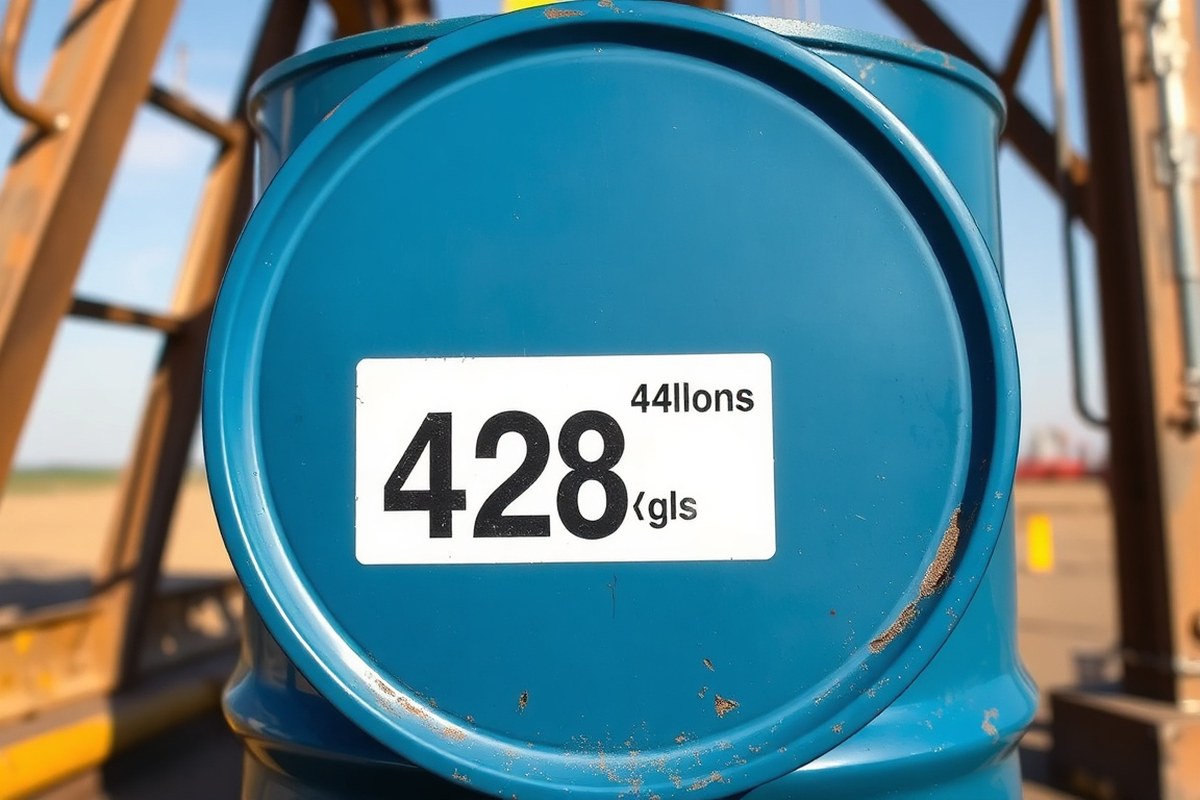
One barrel of oil equals exactly 42 US gallons. This amount is fixed and widely accepted as the standard in the oil industry. You won’t find different official barrel sizes for crude oil.
The U.S. Uses one standard barrel size. This keeps measurements consistent nationwide.
The 42-gallon figure also translates to about 159 liters. This exact conversion is key for international trade where metric units are common. One barrel corresponds to 158.987 liters, which means you can use 159 liters as a close, practical number for calculations.
Using 42 gallons makes it easier to convert barrels to gallons or liters later. To find gallons in barrels, multiply barrels by 42. One barrel equals 42 gallons.
This makes conversions easy and fast. This standard started in the early 1870s.
It simplifies global oil pricing and trading. It keeps oil deals clear and fair.
Why Is an Oil Barrel Defined as 42 Gallons?
Origins During the Pennsylvania Oil Rush
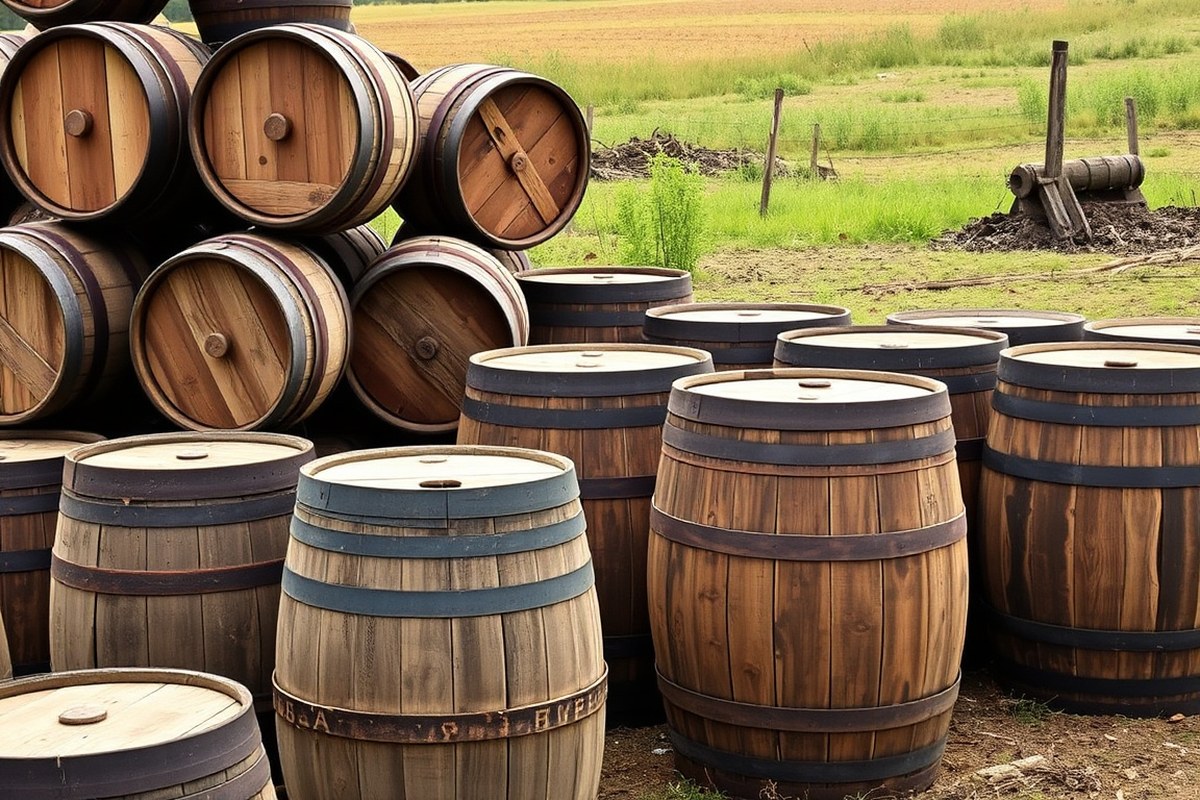
In 1866, oil producers in Pennsylvania needed a practical barrel size. They settled on 42 gallons to balance ease of handling and transport. This size matched the wooden barrels already used for shipping other goods.
Before oil, barrels for whiskey or nails were roughly the same size. The 42-gallon size became a natural standard. It was enough to hold a good volume without being too heavy or bulky.
Weight and Volume Balance in Barrel Choice
The 42-gallon barrel weighs about 300 pounds when full. That weight was manageable for workers loading and moving barrels by hand. It made shipping by horse, wagon, or rail simpler and safer.
This balance between volume and weight mattered. More than 42 gallons would make barrels too heavy.
Less would mean a higher shipping cost per gallon. The standard stuck because it hit a practical sweet spot.
How the 42-Gallon Barrel Became the Industry Standard
Producers and refiners began using the 42-gallon barrel during the oil boom. The size proved convenient and consistent, so it quickly spread. By the late 1800s, it was widely adopted across the US.
Standard Oil, formed in 1870, helped enforce this barrel size. In 1902, it introduced a steel barrel that still held 42 gallons. This reinforced the size as the official measure for oil volume.
Debunking Myths About Barrel Size Origins
Some stories suggest the 42-gallon size came from whiskey barrel sizes or railroad car loading limits. These are partly true but often exaggerated. Whiskey barrels were similar but not standardized at 42 gallons.
The simplest reason is practical: 42 gallons held a good trade-off of volume and weight. It was not designed as a perfect round number or to fit a specific container. The size stuck because it worked.
The 42-gallon barrel isn’t a real barrel you see today. It’s just a measure of volume still used. The oil industry uses it as the standard volume.
How to Convert Barrels to Gallons and Liters
Multiply the number of barrels by 42 to get gallons. Multiply barrels by roughly 159 to find liters. These changes make it easier to see oil amounts in common units.
Formula for Barrel to Gallon Conversion
The basic formula to convert barrels to gallons is simple. Multiply the number of barrels by 42, since one barrel equals 42 U.S. Gallons of oil. To reverse the conversion, divide gallons by 42 to find barrels, or multiply gallons by 0.02381, which equals 1 divided by 42.
Converting Barrels to Liters
One barrel equals about 159 liters. To switch from barrels to liters, multiply the barrel count by 158.987, which rounds to 159.
Liters are useful if you want metric measurements or for international comparisons. You can also convert gallons to liters by multiplying gallons by 3.78541.
Worked Example Converting 100 Barrels
To convert 100 barrels to gallons and liters, follow these simple steps. This example shows how to handle larger quantities while avoiding mistakes.
- Write down the quantity of barrels, in this case, 100.
- Multiply 100 barrels by 42 gallons per barrel: 100 × 42 = 4,200 gallons.
- Multiply 100 barrels by 159 liters per barrel: 100 × 159 = 15,900 liters.
- Check the math to avoid errors in large calculations.
- Use a calculator or spreadsheet to speed up the process for bigger numbers.
Now you know 100 barrels equal 4,200 gallons or roughly 15,900 liters. This method works for any barrel amount.
What Products Come from One Barrel of Oil?
One barrel of crude oil produces about 45 gallons of refined products after processing. This volume exceeds the original 42 gallons due to a processing gain. Gasoline is the largest product, making up around 20 gallons or 45% of the output.
Diesel and jet fuel together supply a significant share of the total volume. Diesel fuel usually accounts for about 12 gallons, roughly 27% of a barrel. Jet fuel contributes close to 4 gallons, or about 9% of the refined products.
| Product | Gallons per Barrel | Percent of Refined Products |
|---|---|---|
| Gasoline | 20 | 45% |
| Diesel (distillate fuel oil) | 12 | 27% |
| Jet fuel | 4 | 9% |
| Kerosene | 4 | 9% |
| Hydrocarbon gas liquids (e.g., propane) | 2 | 4% |
| Petrochemical feedstocks | 2 | 4% |
| Heavy fuel oil and asphalt | 3 | 6% |
Refiners tune outputs to local demand and crude type. U.S. Facilities aim for more gasoline, while others focus on diesel and jet fuel. This affects the exact product volumes from one barrel.
Aside from fuels, refineries extract other products like lubricants, waxes, and asphalt. These make up a smaller portion but are essential for industry and transport. The complex refining process takes several hours and requires precise temperature control.
Why Does One Barrel of Crude Yield More Than 42 Gallons of Products?
Refining crude oil creates more volume than the original 42 gallons. This happens because crude breaks down into lighter, less dense products like gasoline and diesel. These finished products take up more space than the dense raw crude.
During refining, crude oil splits into various hydrocarbons. Each hydrocarbon has a different size and weight. Lighter hydrocarbons, common in fuels, expand when separated from heavier parts.
So, 42 gallons of crude often yield about 45 gallons of finished products. This is called processing gain.
Processing gain affects how refineries measure output and sales volumes. They sell products by volume, not weight. Since volume expands after refining, counting only crude volume would underestimate products.
Barrels of crude don’t match exactly to gallons of fuel or oil. This happens because of differences in measurement and refining. That’s why the numbers don’t line up perfectly.
A refinery starts with 42 gallons of crude at room temperature. It can produce 44 to 45 gallons of gasoline, diesel, and other products. This increase happens during refining.
This happens because gasoline is less dense and fills more space than the original crude. Temperatures during refining also affect volume, as heated fluids expand before cooling down.
Keep records of volume changes during refining to avoid confusion in sales and inventory.
Refineries invest in careful measurement tools to track these volume changes. They use temperature correction factors to standardize volume reports.
Ignoring processing gain could lead to pricing errors or inventory shortages. Knowing this difference helps you understand the oil supply chain better.
Differences Between US and UK Oil Barrel Measurements
Oil barrels are not the same size worldwide. The US standard oil barrel holds 42 US liquid gallons.
The UK uses imperial gallons, which are larger. One oil barrel equals about 35 imperial gallons there.
The difference between US and UK gallons comes from their measurement systems. A US liquid gallon is smaller, about 3.785 liters.
An imperial gallon is about 4.546 liters. This changes the volume you get per barrel when you convert.
Here’s a simple table comparing barrel volumes and gallons in the US and UK standards. It shows the important differences you need to remember.
| Measurement | Barrel Volume | Gallons | Liters |
|---|---|---|---|
| US Standard Oil Barrel | 1 barrel | 42 US gallons | 159 liters (approx.) |
| UK Imperial Gallon Barrel | 1 barrel | 34.97 imperial gallons | 159 liters (approx.) |
| 1 US gallon | – | 1 US gallon | 3.785 liters |
| 1 Imperial gallon | – | 1 imperial gallon | 4.546 liters |
The exact liquid volume of a barrel is about the same in liters for both systems. Each is around 159 liters. The difference lies mainly in how gallons are defined in US versus UK systems.
You use US gallons when dealing with American oil data or contracts. UK gallons come into play with British or Commonwealth country contexts. For international business, it’s best to clarify which gallon you mean to avoid mistakes.
To convert barrels to gallons properly, check the unit type first. Say you have 10 barrels of oil and want to know the volume in UK gallons.
Multiply by about 35 gallons per barrel. For US gallons, multiply by 42.
Mixing these can cause errors in reporting and pricing. For example, a shipment listed in barrels might show different volumes when confused between gallons. Reliable calculations save time and money in trade and logistics.
How Much Fuel Mileage Can One Barrel of Oil Provide?
One barrel of crude oil can make enough gasoline for 280 miles. It also yields enough diesel fuel to power a large truck nearly 40 miles. Variations in refining efficiency and fuel economy affect these distances.
Miles per Gallon for Cars and Trucks
Medium-sized cars often average around 17 miles per gallon (mpg). This figure reflects combined city and highway driving. For trucks, especially large diesel trucks, the average is closer to 5 mpg.
The difference matters because fuel type and vehicle size change how far one gallon can go. Light cars get the most out of gasoline.
Heavy trucks rely on diesel and consume more fuel per mile. Fuel economy also varies with load and road conditions.
Fuel Volume from One Barrel
One oil barrel equals 42 gallons of crude oil. Refining converts this into many products, including gasoline and diesel.
Gasoline generally makes up about 45% of the barrel’s output. Diesel accounts for around 25%.
That means about 19 gallons of gasoline and 10.5 gallons of diesel come from one barrel. Refining yields vary based on crude quality and refinery setup.
So these numbers can shift slightly. Not all the barrel’s volume converts directly into fuel.
Estimated Total Driving Range
To figure out driving range from one barrel’s fuel, use these steps. They show how to calculate with average mpg and typical fuel yields.
- Start with 42 gallons in one barrel of crude oil.
- Calculate gallons of gasoline by multiplying 42 by 0.45 (about 19 gallons).
- Calculate gallons of diesel by multiplying 42 by 0.25 (about 10.5 gallons).
- Apply average mpg: 17 mpg for gasoline cars and 5 mpg for diesel trucks.
- Multiply gasoline gallons by 17 mpg to find car mileage (about 323 miles).
- Multiply diesel gallons by 5 mpg to find truck mileage (about 52 miles).
- Adjust totals as needed for real-world refining differences or vehicle types.
Using these numbers, one barrel fuels a car for roughly 280 miles on average. Diesel from the same barrel drives a truck closer to 40 miles. These estimates show why fuel efficiency and refining details matter when understanding oil’s driving power.
Common Mistakes When Converting Barrels to Gallons
One common mistake is mixing up US and UK gallons. You should use 42 US gallons per barrel, not UK gallons. A UK gallon is about 20% larger, which causes errors in volume calculations.
Another error is ignoring refining volume gains. The 42-gallon crude oil barrel often yields over 45 gallons of products after refining. Counting only 42 gallons underestimates the final output, leading to confusion.
Volume changes due to temperature also affect accuracy. Crude oil volume varies with temperature. But barrels are standardized at 60°F. Forgetting to adjust volumes for temperature causes wrong conversions.
- Confusing US gallons with UK gallons.
- Assuming refinery output equals 42 gallons per barrel.
- Ignoring temperature adjustments in volume.
- Using inconsistent units like liters without clear conversion.
- Skipping the standard 42-gallon definition for crude oil barrels.
For example, saying one barrel equals 50 UK gallons is wrong. Instead, multiply 42 US gallons by about 1.2 to get UK gallons if needed. Temperature corrections involve tables or software to convert volumes accurately.
Always check your unit type before converting barrels to gallons to avoid major miscalculations.
Having a clear conversion factor helps. Write your steps like this: “1 barrel (BBL) = 42 US gallons.”
If you need UK gallons, then multiply by 1.2. Adjust for temperature only when dealing with refined or pipeline volumes.
Use this approach to keep your numbers right in calculations and reports. Mistakes often happen when rushing through.
So take your time and double-check units and conditions. This avoids costly errors in trading or inventory management.
Historical and Modern Uses of the Oil Barrel Measurement
Oil barrels began as actual wooden containers used to move crude oil in the 1860s. After America’s first commercial well in 1859, Pennsylvania oil producers needed a standard container. They picked a 42-gallon barrel because it was easy to handle.
When full, the barrel weighed about 300 pounds. This weight made it manageable for most workers.
Physical barrels helped standardize trading because everyone agreed on the same size. This uniform size simplified pricing and shipping calculations. The oil boom made the 42-gallon barrel very useful.
It worked well for moving oil by wagon and boat. Transporting bulk oil became easier this way.
However, as pipelines and supertankers replaced barrels, physical containers became rare. Modern oil transport no longer uses wooden barrels because bulk shipping is more efficient. Still, the industry kept the barrel as a unit of measure for pricing and contracts.
Today, the New York Mercantile Exchange (NYMEX) and global benchmarks quote oil prices per barrel. A single futures contract covers 1,000 barrels, making the barrel the universal trading unit. This unit links past physical handling with modern finance and reporting.
Maintaining the 42-gallon barrel unit is important. It offers a clear and consistent basis for oil trading worldwide. Traders around the globe rely on this standard.
The exact volume helps everyone agree on price, volume, and shipping amounts despite changing technology. It saves confusion in contracts and official statistics.
Today, barrels are not loaded onto tankers anymore. But traders still use barrels to count and value crude oil. They also use barrels for reporting purposes.
This history-to-modern blend keeps the industry speaking the same language. Using barrels also helps track production, demand, and inventory with ease.
Quick-Start Action Plan to Understand Oil Barrels and Gallons
Get a clear grasp of oil barrel sizes and conversions fast. Use this plan to build your knowledge step by step.
- Day 1: Learn the exact volume of one oil barrel, 42 gallons. Check oil industry or government websites for verification.
- Day 2: Understand the history behind the 42-gallon barrel. Read a short article or watch a video on the topic.
- Day 3: Practice converting barrels to gallons and liters using simple math or an online calculator. Confirm your results.
- Week 1: Explore what products come from one barrel of crude oil. List gasoline, diesel, jet fuel, and others.
- Week 2: Learn why refining produces more than 42 gallons of products from one barrel. Find brief notes on processing volumes.
- Week 3: Review differences in barrel size between the US and UK markets. Make a comparison table.
- Week 4: Calculate how much fuel mileage one barrel can provide using average MPG figures. Check your calculations with real stats.
- After 1 Month: Identify common mistakes in barrel-to-gallon conversions to avoid. Keep a list for quick reference.
Frequently Asked Questions
Is a Barrel of Oil 42 or 55 Gallons?
A standard barrel of oil contains 42 US gallons, not 55. Early oil producers in Pennsylvania chose the 42-gallon size in 1866.
This size became the industry’s standard and is still used today. It defines the typical barrel capacity.
How Much Gas Can Be Made Out of One Barrel of Oil?
A standard 42-gallon barrel of crude oil yields about 20 gallons of gasoline. Gasoline makes up nearly 45% of the total products from refining that barrel. The rest includes diesel, jet fuel, and other products.
How Much Will Gas Be If Oil Hits $200 a Barrel?
Gas prices usually rise when oil hits $200 a barrel, but exact prices vary. Local taxes, refining costs, and demand all affect the final gas price you pay.
How Long Do 400 Million Barrels of Oil Last in the World?
400 million barrels of oil last about 4 days globally. The world uses around 100 million barrels per day. So this supply runs out quickly.
Can One Barrel of Oil Be Divided into Smaller Units?
Yes, one barrel equals 42 gallons and can be split into gallons or liters. This helps in trading and refining various petroleum products.
Before You Go
The standard oil barrel holds 42 gallons in the US. This fixed size helps everyone measure oil the same way. Start by converting a few barrels yourself.
See how numbers change with units. Try this with different products.