How Long Is a Driving Permit Good? Complete Guide with State Timelines & Renewal Tips
How long is a driving permit good? It depends mostly on your state and your age. Many states issue permits that last between six months to two years.
You must keep your permit for at least six months. Only after that can you take your driving test. This rule helps you gain enough practice time.
Permits often require you to log around 50 hours of supervised driving. Some states let you hold a permit for up to four years. That situation is uncommon.
Most people don’t keep a permit that long. Applying for your driver’s license as soon as you qualify lifts most permit restrictions.
Driving with an expired permit is the same as driving without one. You may face fines between $100 and $500. It can also lead to points on your license, so always check the date.
Key Takeaways
- Most learner permits are valid six months to two years, depending on state rules.
- You must hold your permit at least six months before taking the driving test.
- Supervised driving hours required before testing usually total about 50, including night practice.
- Driving on an expired permit can cause fines up to $500 and license penalties.
- Some states allow permits up to four years. But it’s best to get licensed sooner.
- Commercial learner permits usually expire after 180 days, requiring new tests and fees.
How Long Is a Driving Permit Valid Across States?
Driving permits usually last between one and two years, depending on your state. Some states set an expiration based on your age or birthday.
How long your learner’s permit lasts changes your practice schedule. It also decides when you can take the driving test.
Typical Permit Validity Ranges
Most learner permits last from 12 months to two years. A few states extend permit validity up to five years, but that’s less common. Adult learners often get permits valid for shorter periods than teen drivers.
Expiration dates keep the permit holder’s information current and ensure they meet state requirements to progress. These rules let states watch new drivers closely. They help enforce required practice or supervised driving hours.
| State Group | Typical Permit Validity | Examples | Notes |
|---|---|---|---|
| Shorter Validity | 4-5 Years | California, New York | Depends on age or immigration status |
| Medium Validity | 6-8 Years | Texas, Florida | Standard for most adult drivers |
| Longer Validity | Up to 12 Years | Some states offer this option | Linked to driving record and age |
Your permit length depends on if you are a teen or adult beginner. States set different times for each group.
Adults usually get shorter validity periods to keep paperwork updated. Teens may find their learners permits valid longer to complete required practice hours.
Age-Dependent Expiration Rules
Many states tie permit expiration to your birthday. For example, a state can make your permit expire on your 18th birthday.
This happens even if you get it earlier. This means a 15-year-old has a different permit period than a 25-year-old in the same state.
Some states use fixed time frames, such as 12 or 24 months from the issue date. In these cases, your permit expires the day before that period ends. You must factor in your age and when you apply to estimate your permit’s life accurately.
Adult learners, typically 18 or older, follow different rules. Teen permits usually last shorter and need quicker test or class completion. This helps you get your full license faster.
Examples of State-Specific Expiration Policies
| State | Official Validity Example | Important Detail | Source |
|---|---|---|---|
| California | Application and fee valid for 12 months | Provisional permit or application expires beforehand | California DMV |
| Texas | Under-18 learner license expires on 18th birthday | Replacement keeps original expiration date | Texas DPS |
| New York | Approximately five years | Depends on applicant’s date of birth | New York DMV |
| Pennsylvania | One year from initial issue date | Strict one-year term for learner permits | Pennsylvania Driver and Vehicle Services |
You can check your state’s DMV website for exact expiration details before applying. Permit validity affects your total timeline from learner permit through full licensing.
What Happens When Your Permit Expires Before You Get Your License?
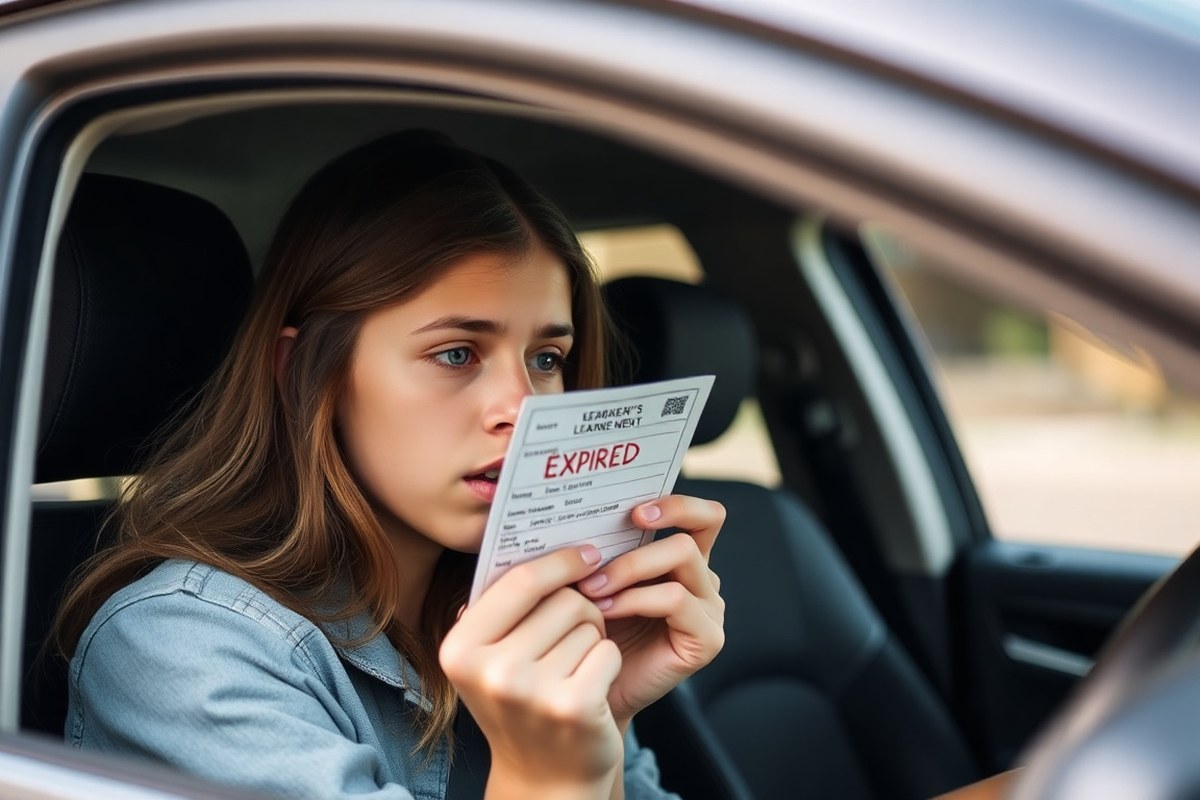
Your permit needs to be active to drive legally with supervision. When it runs out, you can’t drive, even with an adult watching. Most states see driving with an expired permit as driving without a license.
You could be fined between $100 and $500. You might also get points added to your future license. Getting caught can mean paying a fine.
You could face delays getting your full license. Insurance companies may also deny claims if you crash while driving without a valid permit.
Your supervised driving hours might not carry over if your permit expires. States vary on this, so check with your DMV soon after the expiration. Some states make you restart your driving log.
Others require taking another permit first. This is needed before you continue practice hours.
- Stop driving immediately once your permit expires
- Check your state’s DMV website about permit expiration rules
- Visit the DMV in person to renew or reapply
- Be ready to retake the written knowledge test and vision screening
- Pay the new permit fee
- Confirm if supervised hours count or must be redone
- Keep a clear record of your supervised driving log
Going to the DMV is usually necessary to fix an expired permit. You might need to fill out a new application. Taking the written test again could be required.
You will probably have to pay a fee. Renewing online might not be an option in many states for learner permits.
Set reminders a couple of months before your permit expires. This helps avoid fines and losing your driving progress.
Avoid common mistakes like driving after expiration or forgetting to renew on time. Don’t assume driving is allowed with an expired permit.
Keep track of your permit’s expiration date to stay legal and protect your driving progress.
How to Renew or Extend Your Driving Permit
Yes, you can usually renew your learner’s permit. The process depends on your state but involves specific steps, fees, and documents. Renewing on time helps avoid retesting and delays in getting your license.
Required Documents and Fees
To renew your permit, gather your current permit and proof of residency. You’ll also need your Social Security number or another accepted ID. Check your state DMV for exact requirements.
Fees vary by state but expect to pay between $10 and $25. Some states charge the same fee as for a new permit. Keep your payment ready before you start the renewal.
Renewal Timing and Restrictions
Start your renewal up to 30 days before expiration to avoid lapsing. The DMV usually keeps your application and fee valid for 12 months. You must reapply if you don’t hold your permit six months.
Most states don’t require a new test unless you have traffic violations or health issues. Don’t drive after your permit expires unless you have a valid extension. Mark your calendar to track the expiry and renewal dates.
Extension and Reapplication Options
Missing the renewal window by less than 30 to 90 days may mean retaking the knowledge test. Exceeding 90 days often causes states to cancel your permit and ask for a full new application. Most states let you try the written test up to three times before starting over.
Extensions are rare but may be allowed in some states under special circumstances. Contact your DMV quickly if you need more time to finish your permit period.
Let them know if your permit is close to expiring. Acting early can help avoid problems with your permit status.
Here’s a step-by-step renewal checklist to guide you through the process:
- Check your permit expiration date and note your renewal deadline.
- Gather your current permit, proof of residency, and Social Security card.
- Visit your state DMV website or office to get the renewal application.
- Complete any required forms or online applications accurately.
- Pay the renewal fee, usually $10 to $25, as directed by your state.
- Submit your application and documents in person, online, or by mail.
- Wait for your new permit or temporary driving credential, if given.
- Drive only with your valid, renewed permit and follow all restrictions.
| State | Renewal Fee Range | Typical Renewal Window |
|---|---|---|
| California | $17, $33 | Up to 30 days before expiration |
| Texas | $16, $25 | Within 90 days before expiration |
| Florida | $25 | Up to 60 days before expiration |
| New York | $10, $20 | 30 days before to 90 days after expiration |
How Permit Expiration Affects Your Road Test and Licensing Timeline
Your driving permit must stay valid while you complete supervised driving hours. States usually want you to have the permit for six months before taking the road test. During this time, you log hours with a supervising driver’s signature to submit when you schedule the test.
Your logged hours might not count if your permit expires before the road test. Some states have this rule to keep records up to date. You might need to renew the permit and redo part of the supervised driving period.
Avoid letting your permit expire. You need a valid permit on file to schedule the road test. Without it, you may face delays.
After passing the road test, convert your permit to a driver’s license within 30 to 90 days. Time limits vary by state. Missing this can cause problems activating your license.
States differ on time allowed for this step, but most expect prompt action. Delaying may put your new license at risk of cancellation.
Keep a valid permit active to meet supervised driving rules. This helps you qualify for the road test without problems or delays.
Planning your timeline helps. For instance, if your state wants six months of holding a permit and 50 hours logged, start driving and tracking those hours right away.
Schedule the road test a few weeks before your permit expires. This avoids delays and extra fees for renewal or retaking the permit test.
Some states accept supervised hours completed before a permit expires if you renew in time. Others treat expiration as a reset, meaning you start logged hours from scratch. Check your state’s rules carefully so your time counting doesn’t go to waste.
Use a driving log book or app to keep track of hours in real time. Make sure your supervising driver signs each entry.
When you’re ready, take your full log, current permit, and education certificates to the DMV. This completes your application for the road test or license.
Avoid common pitfalls like waiting until the last minute to schedule the road test. Test slots can fill weeks in advance, especially in busy areas. Book your appointment once you meet the minimum permit holding period and have enough logged hours.
Remember, commercial learner permits differ. You must hold a CDL permit for at least 14 days before testing. This shorter timeline reflects the different licensing process for commercial vehicles versus regular passenger cars.
Differences Between Learner Permits, CDL, and International Permits
Driving permits come in several types with different valid times and renewal rules. Standard learner permits usually last from one to five years. Commercial learner permits and International Driving Permits follow separate rules for expiration and renewal.
Standard Learner Permit Validity
Most states issue learner permits that last between one and five years. New York’s learner permit lasts the longest, about five years. States like Florida, Georgia, and Ohio give permits valid 12 months.
You must watch your permit’s expiration date carefully. Don’t miss when it ends.
Permit validity often depends on age or state policy. For example, Michigan’s permit expires when you turn 18.
Other states, like Nebraska, add a few months beyond your 18th birthday for extra time. You must carry your permit every time you drive.
CDL Permit Duration and Renewal
Commercial learner permits (CDL permits) usually have shorter validity periods than standard learner permits. They often last about 180 days (6 months) but this varies by state. The shorter period encourages quicker progress to the full CDL license.
Renewal for CDL permits is stricter and requires passing federal and state tests again. Fees and medical certifications may also be necessary.
Quick renewal isn’t always possible. So plan to complete your CDL training within the permit’s timeframe.
International Driving Permit Expiration
International Driving Permits (IDPs) are valid only for one year after issue. They are not a license themselves but a translation of your home country’s license. You must carry your regular driver’s license along with your IDP while driving abroad.
IDPs cannot be renewed. To drive internationally after permit expiration, apply for a new permit. You must contact the agency that issued your original permit.
They will guide you through the steps. These permits are useful when visiting other countries temporarily.
Here’s a table comparing the typical validity and renewal info for these permits:
| Permit Type | Typical Validity | Renewal Notes |
|---|---|---|
| Standard Learner Permit | 1 to 5 years | Renew based on state policies, some expire at 18 |
| Commercial Learner Permit (CDL) | About 180 days (6 months) | Must retake tests; renewal slower than standard permits |
| International Driving Permit (IDP) | 1 year | Cannot be renewed; apply for new permit instead |
Keep track of your permit’s expiration date; missing it can delay your license progress.
Common Restrictions and Requirements During the Permit Period
Holding a driving permit comes with rules to keep you safe and teach you responsible driving. Most states say you can only drive with a supervising adult.
This adult must be at least 21 years old. This helps you learn how to handle real traffic situations while someone experienced guides you.
Many states require a minimum number of supervised driving hours. You need these before taking the road test. Usually, this ranges from 30 to 50 hours, including some night driving.
You should track your supervised hours carefully. This makes sure you follow state rules. It also helps you get enough practice.
Insurance rules often change during the permit period. Your vehicle must be insured.
Some insurers may charge extra when a learner is driving. Check with your insurance provider to add the permit holder or confirm coverage options.
Driver’s education courses are typically required for permit holders under age 21. These classes teach traffic laws and safe driving techniques.
Passing driving courses is often part of state licensing rules. These courses can also lower your insurance costs.
- Drive only with a licensed adult, usually 21 or older
- Complete 30 to 50 supervised driving hours, including night driving
- Keep a written or digital log of your supervised hours
- Maintain proof of car insurance while practicing
- Complete a driver’s education course if under 21 years old
- Follow any state-specific restrictions, like no phone use or limited passenger numbers
- Always carry your permit while driving to show authorities if asked
Following these steps helps you meet the legal requirements and build safe driving skills. Missing hours or breaking rules can delay your license or cause fines. Start tracking your practice early and plan your driver’s education to finish on time.
Check with your state’s licensing agency about specific rules well before your permit expires. This lets your supervised hours count for your license. You’ll also know if you need more forms or renewals.
Tracking your progress helps you prepare for the road test. It makes getting your license go smoothly.
How Age and State Policies Affect Permit Length and Validity
Age affects how long your driving permit lasts. It also sets the rules you must follow. These rules vary by age group.
Teen drivers under 18 usually face stricter rules and shorter permits. Permits often require you to wait before testing.
The waiting time is a minimum period. This can be shorter than the permit’s validity.
Adults over 18 get more freedom with their permits. Some states give adults longer permit times. These often last 1 to 2 years.
Adults skip many restrictions teens must face. In California and Florida, adults hold permits briefly. Sometimes, they don’t need a permit before testing.
This speeds up the licensing process. Meanwhile, teens may have to hold their permit for six months and log supervised driving hours.
Many states require teens to hold a permit for at least six months. During this time, you must complete supervised driving hours before you take the road test. Georgia and Arkansas start permits early for teens.
They are allowed at ages 14 or 15. These states set minimum periods for practice.
You’ll likely renew or get a new permit if it expires before you pass the test. But the clock resets for the holding period.
Permit expiration rules sometimes differ by age. Some states set shorter expiration dates for teen permits, typically six to twelve months. Adults usually get permits valid for one to two years, giving more buildup time to practice.
Utah and Colorado, for example, issue permits valid for 12 months regardless of age. But teen drivers still need special instruction. Expired permits may require reapplying and retesting, especially for younger drivers.
The exact length and rules depend on your state. States like Alaska and Idaho start permits at 14½. Delaware and Connecticut have the minimum age at 16.
The permit’s validity also links to the state’s licensing process. Understanding your state’s requirements helps avoid lapses or delays in getting your license.
Remember, age limits and permit terms affect when and how you test. So check your local DMV for precise rules.
How REAL ID Rules Impact Your Learner’s Permit
A learner’s permit usually does not count as a REAL ID for federal purposes. The REAL ID Act sets standards for IDs used to board flights or enter federal buildings. Most learner permits fall short of these standards.
States vary in how they handle learner permits and REAL ID rules. Some states issue permits that look like REAL ID but do not meet federal requirements. Others only offer REAL ID once you upgrade to a full driver’s license.
To get a REAL ID, you generally must apply in person at the DMV. You need to bring proof of identity, Social Security number, and proof of residency. The process can cost between $8 and $30, depending on the state.
California, New York, and Illinois mostly give learner permits that aren’t REAL ID. These permits don’t serve as federal ID. You need a REAL ID driver’s license for most federal uses.
Florida and Texas usually let you upgrade to a REAL ID license after the permit phase ends. You can’t get a REAL ID license before finishing learner permit requirements. This rule helps confirm driver readiness.
Washington and Colorado may provide a compliant permit by request. But it’s more common to get REAL ID with your full license.
Learner permits usually expire between a few months and two years. They can also expire when the holder turns 18. The exact time depends on your state’s rules.
Expiration does not usually change REAL ID rules. The learner permit is not valid for federal ID. So, permit expiry rarely affects REAL ID status.
Before getting a REAL ID license, you must pass state-required tests. You also need to meet your state’s residency requirements. These steps make sure you qualify for a REAL ID license.
Visit your state DMV website to check if your learner permit is REAL ID-compliant. It’s important to do this before you travel. Requirements can vary by state and change over time.
After completing the learner permit period, you must schedule a driving test. Passing that test often qualifies you for a REAL ID driver’s license.
The upgrade process includes paying a fee and showing documentation again. This step finalizes your federally accepted ID for travel and access to federal facilities.
Some states mark learner permits with a special note saying they cannot be used federally. Others include a star or symbol indicating REAL ID status. Knowing these details helps avoid surprises at TSA checkpoints or federal buildings.
In short, treat your learner permit as a step toward REAL ID, not the ID itself. Follow your state’s rules carefully for upgrading to a REAL ID-compliant license. This ensures you avoid travel delays and meet federal ID requirements fully.
Tips to Avoid Permit Expiration and Maintain Your Driving Progress
Keep track of your permit expiration date from the start. Mark it on your phone calendar or a paper planner at least one month ahead. This helps you avoid last-minute stress and gives time to schedule your road test.
Create reminders for key tasks: renewal, test scheduling, and practice hours needed. Your permit may expire on your 18th birthday in some states.
Counting every month matters for your practice time. Missing deadlines can mean losing permit time without a chance to renew.
- Set calendar alerts 30 and 7 days before permit expiration
- Check your state DMV website for renewal requirements and fees
- Book your road test 2 to 3 weeks before your permit expires
- Complete required supervised driving hours early to avoid delays
- Keep your training provider informed of your progress and plans
- Life may delay your practice time sometimes. You can ask for an extension if the rules allow.
- Keep emergency contact info handy in case you need DMV help
People often forget when their permit ends. They wait too long to schedule their driving test. Some don’t log enough hours behind the wheel.
Missing renewal deadlines can stop your progress and force you to start over. Some states let you renew a short time after expiration. But waiting too long will cause loss of permit privileges.
Your permit might expire before you’re ready. Contact your school or the DMV to ask what to do.
Some states offer extensions, especially with valid reasons like illness or moving. Check local rules early so you can act fast.
Step-by-Step Action Plan to Manage Your Driving Permit
Follow these steps to keep your permit valid and avoid delays getting your license.
- Day 1: Check your permit’s expiration date. Write it down where you’ll see it often.
- Week 1: Learn your state’s renewal rules online or from the DMV. Find out any fees or ID needs.
- Month 1: Schedule regular driving practice to meet your state’s minimum required hours.
- Month 2: Apply for permit renewal 30 days before it expires, if your state allows it.
- Before road test: Confirm your permit is valid and all requirements are met. Bring paperwork to your test.
- After passing the test: Submit all documents promptly to get your driver’s license without delays.
- Ongoing: Avoid permit expiration by setting reminders and following state-specific rules carefully.
Frequently Asked Questions
How Long Is an International Driving Permit Valid?
An International Driving Permit is valid for one year from issue. You need to renew it annually if you keep driving abroad. Don’t rely on an expired IDP for legal driving overseas.
How Many Supervised Driving Hours Must You Complete on a Learner’s Permit?
Most people must complete about 50 hours of driving practice. At least 10 of those hours should be done at night.
These hours prepare you before your driving test. Check your state’s rules for exact hours needed.
What Happens If You Drive on an Expired Permit?
Driving on an expired permit is treated like driving without a license. You can face fines from $100 to $500 plus points on your record. Always renew your permit before it expires to avoid penalties.
How Long Must You Hold a Learner’s Permit Before Taking the Driving Test?
You generally must hold your permit for six months before testing. However, if you turn 18 first, this rule may not apply. States set these timelines to ensure adequate practice.
How Long Is a Commercial Learners Permit (CLP) Valid?
A CLP usually lasts for 180 days or six months. You need to pass a skills test before this expires. Renew your CLP if you don’t get a license in time.
Final Thoughts
Your driving permit’s validity usually ranges from 6 months to 2 years, depending on state rules. Plan and renew early to prevent gaps. Check your permit date right now and mark your calendar to stay on track.