Do All Diesels Have Turbos? A Complete Guide to Diesel Turbocharging Benefits and Exceptions
Do all diesels have turbos? The short answer is no, but most do. Nearly 98% of diesel engines in vehicles include turbochargers.
They’re key for better power and fuel efficiency. Turbos push more air into the engine, making combustion stronger and more complete.
Turbochargers help diesel engines burn fuel cleaner and use air more efficiently. This boosts power without making the engine bigger or less economical.
You’ll see these turbos mostly on trucks, SUVs, and many commercial diesels. They also reduce emissions, which helps meet environmental standards.
Some diesel engines run naturally aspirated, meaning they have no turbo. These tend to be small, low-power engines used in special tools or machines. Without a turbo, these engines deliver less power but are simpler and cheaper to maintain.
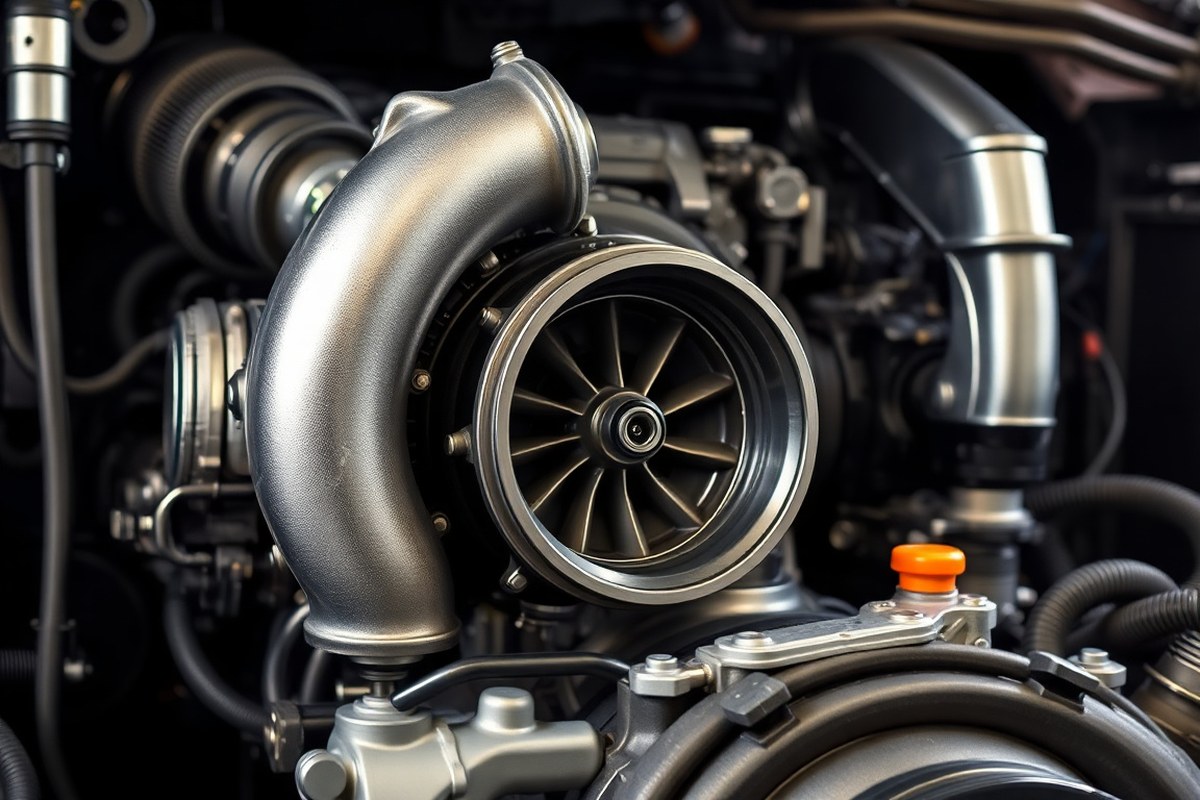
You can usually tell if a diesel has a turbo. Look for large air intake and exhaust pipes connected to it.
Key Takeaways
- Almost all diesel engines in vehicles have turbochargers for power and efficiency.
- Turbochargers use engine exhaust to compress air and increase combustion.
- Smaller diesels in equipment or generators often do not have turbos.
- Turbocharged diesels typically run 8% to 10% more fuel efficiently.
- Look for a bulky air intake or exhaust pipe that suggests a turbo.
- Natural diesels have simpler designs but produce less power and efficiency.
Do All Diesel Engines Have Turbochargers?
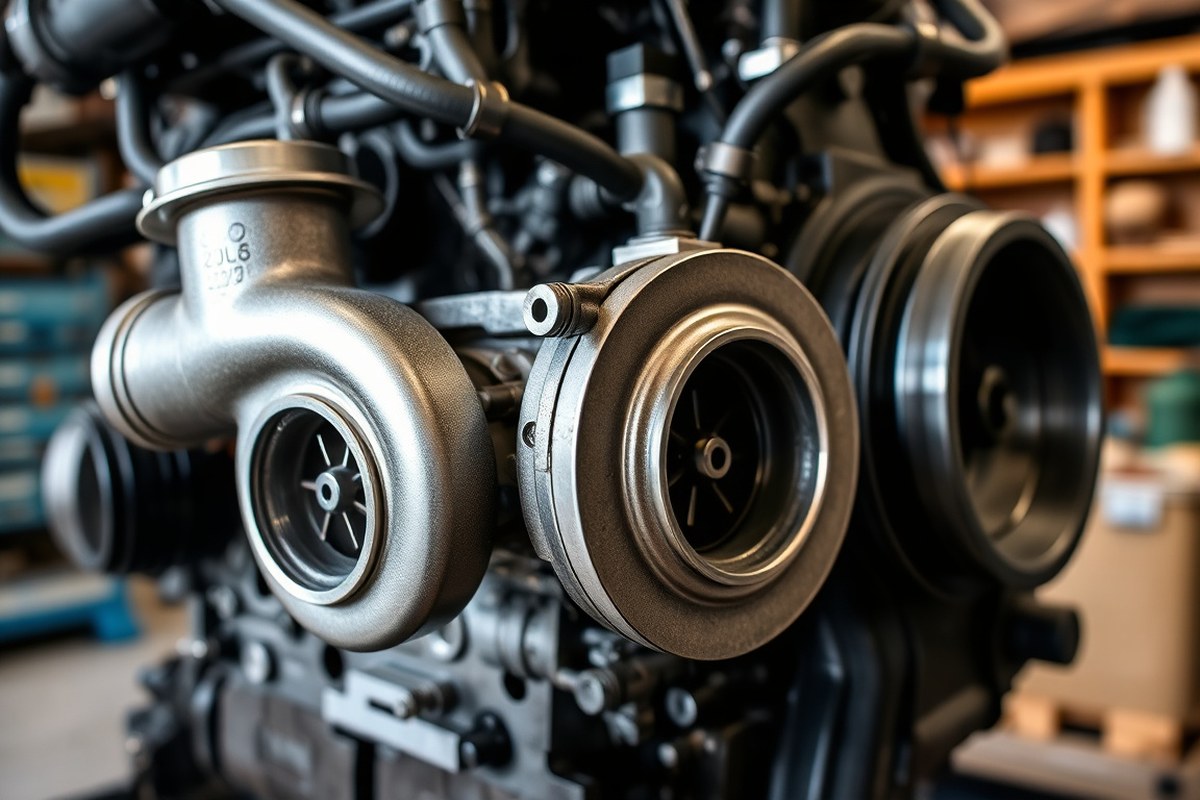
Not all diesel engines have turbochargers. While nearly every modern diesel engine uses a turbo, some still run without one. Diesel engines without turbos are mostly older models or small, steady-speed industrial motors.
Diesel engines use turbochargers to force more air inside. This increases power and fuel efficiency while reducing emissions. Without a turbo, diesel engines have less horsepower and can feel slow in trucks or pickups.
Examples like the Mercedes-Benz OM636 show that some diesel engines work fine without turbos. These engines are simpler and cost less to make. They don’t produce the torque most users want today.
Many people find that power isn’t enough for their needs. For daily driving or heavy towing, turbocharged diesels meet demands better.
Non-turbo diesels still have places they fit. Compact tractors, generators, and small utility engines may use naturally aspirated diesels. These engines focus on lasting longer and easier repairs.
They cost less and don’t deliver high power. This makes them good for steady work or light loads.
Today, turbos are nearly standard because they help engines meet emissions rules and power demands. Installing a turbo can cost several hundred to over a thousand dollars. The exact price depends on the engine and manufacturer.
Adding a turbo raises production costs noticeably. The tradeoff is worth it for stronger performance and cleaner exhaust.
Why Are Turbochargers Common in Modern Diesel Engines?
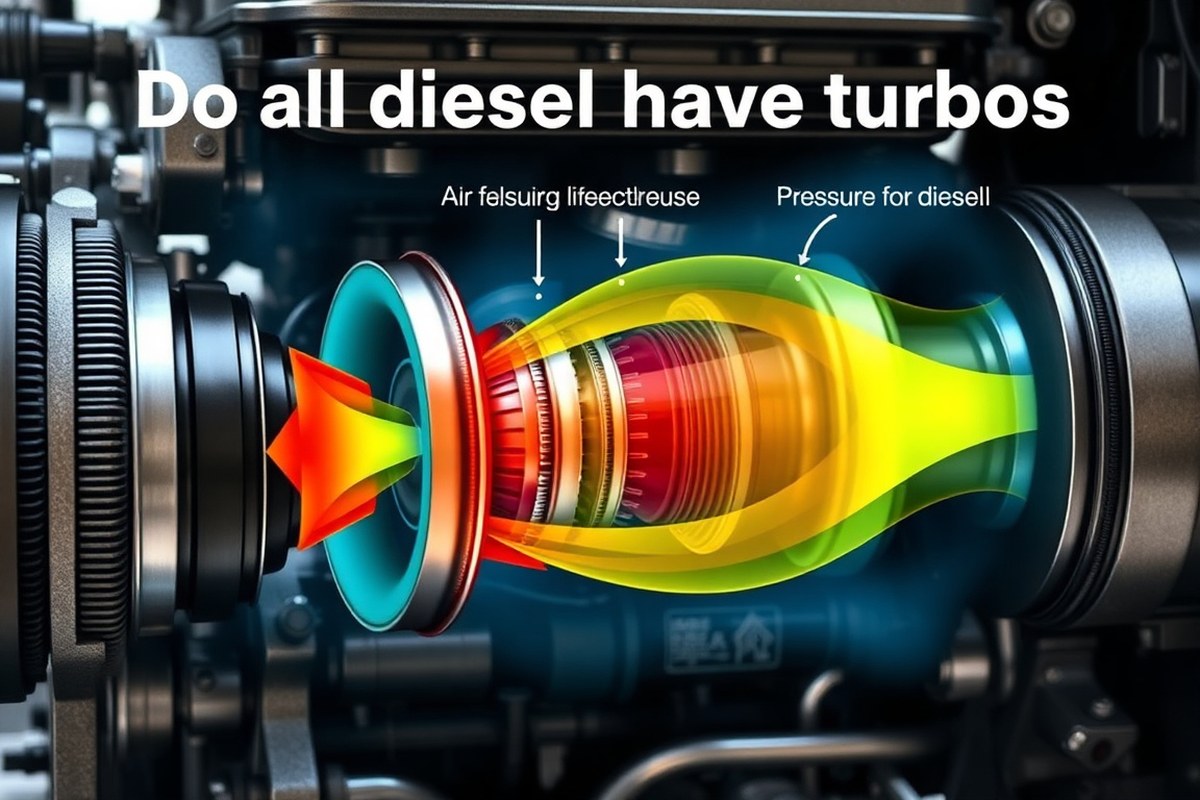
Turbos are common on modern diesel engines because they boost air intake, maximizing power and efficiency. Diesel engines use compressed air heat to ignite fuel. So they need a lot of air to burn it fully.
Adding a turbocharger pushes more air into the cylinders. This lets more fuel burn. It raises torque and horsepower.
This extra air mass makes the engine more fuel-efficient and cleaner. Turbocharging improves combustion by supplying oxygen-rich air, reducing smoke and harmful emissions.
Modern diesel engines run lean, with air-to-fuel ratios as high as 20:1. So a turbo helps maintain that mixture for lower emissions and better fuel economy.
Turbochargers helped meet stricter emission limits. They also improved fuel economy. This started in the late 20th century.
Regulations got tighter and diesel prices rose. Engine makers had to keep diesels powerful.
They also had to make them cleaner. Turbos help since they improve combustion by increasing air pressure without burning extra fuel.
Advanced electronics help control air flow with a turbo now. Common-rail fuel systems use these electronics. This makes turbo control easier.
These systems coordinate fuel injection with turbo boost for optimal performance and efficiency. Boost pressures of 50 to 60 psi are normal.
Turbo kits cost under $1,000. That makes them popular for street diesel trucks.
Keep your turbocharger well lubricated. Check it often for dirt or debris. This helps avoid costly repairs and boost loss.
Where Are Naturally Aspirated Diesel Engines Still Used?
You’ll still find naturally aspirated diesel engines in agriculture, industrial machines, and generators. These engines are common in farm tractors, irrigation pumps, and some skid-steers.
They don’t need to meet strict emissions rules or high power-to-weight ratios. So their simple design works well.
The simplicity of naturally aspirated diesels makes them tough and easier to fix. Without a turbocharger, the engine has fewer parts to wear out or break. This works well for equipment used in remote places.
It fits marine engines where reliability is key. Simple servicing is also important in these cases.
These engines pull heavy loads well but respond slowly and produce less power than turbocharged models. These engines don’t suit modern trucks or buses. They can’t provide the quick acceleration those vehicles need.
They also lack the high horsepower required. Naturally aspirated diesels are great for steady, small jobs.
They power generators or tractors all day without issues. They run smoothly without much fuss.
How to Identify If a Diesel Engine Has a Turbocharger
You can check a diesel engine for a turbocharger by finding key parts. Also, listen for certain sounds it makes. These clues tell if there’s a turbo present.
Visual clues like piping and cast metal housings often reveal a turbo. You can also use data from the engine’s manual or the engine plate for confirmation.
Look for Turbocharger and Piping
A turbocharger looks like a snail-shaped metal housing connected between the exhaust and intake pipes. It usually has a thick pipe running from the exhaust manifold to the turbo’s turbine side. The compressor side connects to intake piping that leads to the engine’s air intake.
You can spot it near the engine block where two different pipes meet. Look closely for oily or metallic surfaces, sometimes covered in heat shields to protect nearby parts. A worn or cracked boost hose near the turbo might cause reduced engine power or smoke.
Check for Intercooler and Boost Hoses
Many turbo diesels have an intercooler to cool the compressed air. It looks like a small radiator with thin fins. You usually find it in front of the main radiator.
It helps cool the engine system. Boost hoses connect the turbocharger outlet to the intercooler and then to the intake manifold.
Here’s what to watch for during an inspection:
- Oily residue on hoses or intercooler fins suggests boost leaks.
- Cracks or loose clamps on boost hoses can cause power loss.
- Bent or damaged fins on the intercooler reduce cooling efficiency.
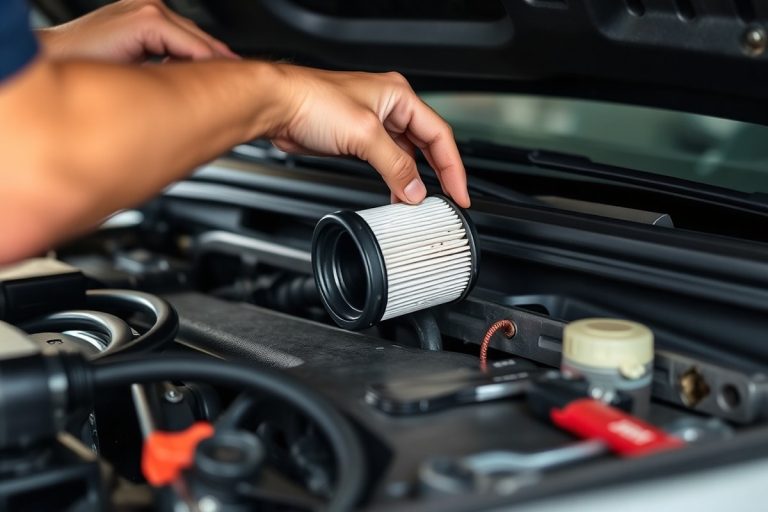
- Clogged or poorly sealed air filters may allow dirt to hit the turbo.
- Regular oil changes help protect turbo bearings from wear.
Bad seals or leaks in this system lead to weak turbo boost. Repairs or replacements can cost a few hundred dollars, depending on parts and labor.
Use Engine Data Plate or Manual
The engine data plate often lists whether the engine comes with a turbocharger. It’s usually on the valve cover, the engine block, or near the air intake. The manual will specify the turbo model or mention “turbocharged” in the engine specifications.
The best way to know if the diesel has a turbo is by checking its data. This info gives a clear and direct answer. It leaves no room for guesswork.
Some manufacturers even include boost pressure specs that confirm its presence. Without this info, it’s easy to misidentify a turbo engine, especially if aftermarket parts are involved.
Listen for Turbo Whistle or Whine
Sound alone doesn’t always prove there’s a turbo. Many turbo diesel engines make a faint whistle or whine while accelerating. Listen closely during faster engine work.
This sound comes from air flowing through the turbo’s spinning compressor blades. It’s easiest to hear under moderate to heavy load.
Listen carefully near the engine bay for a steady hissing or whistling sound. A loud or irregular noise might indicate a boost leak or failing turbo components.
However, some turbos are quiet by design. So absence of a whistle doesn’t rule out a turbocharger.
Differences Between Turbocharged and Naturally Aspirated Diesels
Turbocharged diesels cram more oxygen into cylinders, boosting power and torque. The exhaust gas spins the turbo, recycling wasted energy into engine power. This lets the engine burn fuel more efficiently.
Fuel economy improves and emissions lower. This happens compared to naturally aspirated diesels.
Power delivery differs between the two types. Turbos add significant boost, especially after 3,000 rpm.
Naturally aspirated diesels produce steady, lower power but don’t suffer from turbo lag. However, your diesel may feel sluggish under heavy load without a turbo, especially when towing.
| Feature | Turbocharged Diesel | Naturally Aspirated Diesel |
|---|---|---|
| Power & Torque | Higher, especially above 3,000 rpm | Lower, steady throughout rpm range |
| Fuel Economy | Better due to efficient fuel burn | Worse, burns more fuel for less power |
| Emissions | Lower because of complete combustion | Higher unburnt fuel and emissions |
| Maintenance | More complex; turbo, intercooler, and oil supply | Simpler; fewer parts, less heat stress |
| Engine Heat | Higher; turbos add thermal load | Lower; simpler cooling needs |
| Fragility | Some risk if not maintained; turbos can fail | Generally more strong; fewer weak points |
Turbo diesels can be more fragile if neglected. Turbochargers face high heat and spinning speeds up to 150,000 rpm. This means you must change oil on time and use the right grade.
Failing this wears out bearings or causes turbo failure. Naturally aspirated diesels have fewer parts and simpler maintenance, making them easier to keep running.
Turbos improve stroke efficiency by adding air pressure, allowing more fuel to burn. This higher fuel burn results in more torque and horsepower for the same engine size.
It also lowers fuel cost over time because more power comes from each gallon. But turbos add weight and complexity, so your repair bill might increase.
Let your turbo diesel idle for 1 to 2 minutes. This cools the turbo and avoids damage. Do this before you shut off the engine.
In tough jobs where you need high power density or compact engines, turbo diesels excel. They heat up faster and demand better cooling systems. For simpler uses or lower power needs, naturally aspirated diesels last longer.
They also cost less to maintain. Balancing the power gains against maintenance and potential repair costs is key.
Common Myths About Diesel Turbochargers Debunked
Turbochargers aren’t always fragile like many people assume. They are made to handle high heat and speed, often spinning at over 100,000 RPM.
Regular oil changes and clean filters keep turbos healthy. So skipping maintenance causes most failures, not the turbo itself.
A common myth is that turbo diesels always use more fuel. Actually, turbos help burn fuel more efficiently by pushing more air into the engine.
This improves fuel economy, especially under load or at highway speeds. The extra torque they provide means the engine doesn’t have to work as hard.
Diesel engines don’t need turbos to produce torque, but turbos boost torque significantly. Diesels rely on high compression to ignite fuel, which produces their natural torque. Adding a turbo improves airflow and combustion in diesel engines.
It increases torque and power, especially at low speeds. This boost helps trucks and heavy-duty vehicles perform better.
Popular Turbocharger Configurations in Diesel Engines
Popular Turbocharger Configurations in Diesel Engines
Diesel engines use several turbocharger setups to manage airflow and power. Single, twin, and compound turbos each change how the engine breathes and performs. These setups help tailor power delivery and throttle response for various driving needs.
Single Turbochargers
Single turbos use one turbo to boost air intake. Exhaust gases spin the turbo. This setup is the simplest among turbo types.
You often find single turbos in many diesel trucks. They strike a balance between cost and power.
This makes them a popular choice. Most single turbos are either wastegate or variable geometry types.
Wastegate turbos have a valve that limits boost pressure to avoid engine damage. Variable geometry turbos adjust their internal vanes to control airflow, which reduces turbo lag. This makes them useful for diesels that need flexible power across a wide rpm range.
Twin Turbo Systems
Twin turbos use two turbochargers to improve power delivery and reduce lag. They come in two styles: parallel and sequential. Parallel twins split exhaust flow and intake between two equal-sized turbos, improving response at moderate speeds.
Sequential twins pair a small turbo for low rpm with a larger one for high rpm. The smaller turbo boosts power quickly.
The bigger turbo takes over as engine speed rises. Many performance diesels use sequential twins to get broad power bands.
- Better throttle response than single turbos
- Improved power at both low and high rpm
- More complex plumbing and controls
- Higher cost due to extra turbocharger
- Common in performance and heavy-duty diesels
Twin turbos require more maintenance and tuning but offer smoother power curves. They fit well in diesel trucks that haul heavy loads or need extra acceleration.
Compound (Sequential) Turbochargers
Compound turbos stack two differently sized turbos to boost intake air beyond what one can do. Exhaust gases first spin the smaller turbo, then pass through the larger turbo for additional pressure. This setup is also called sequential because turbos work in stages.
Compound turbos work well for diesels needing high boost. They provide power at all engine speeds. Commercial trucks and performance SUVs use them.
They reduce lag and maximize torque by keeping optimal boost across rpm. Controlling boost levels requires precise valves and sensors.
Diesels with compound turbos handle heavy loads better and have stronger towing capacity. They cost more to build and tune but deliver big power and smooth driveability. Truck owners often see improved fuel efficiency too, thanks to better combustion.
Electronic Controls and Variable Geometry
Modern diesels often pair turbo setups with electronic controls to optimize boost. Variable geometry turbos use movable vanes that change angle to manage airflow inside the turbocharger. This adjusts boost on the fly according to engine speed and load.
Electronic boost controllers work with variable geometry or wastegate turbos to fine-tune pressure. They reduce turbo lag and help meet emissions rules. A BMW 335d uses a small variable geometry turbo.
It works between 1,500 and 2,500 rpm. This improves power at low engine speeds.
- Adjusts boost for better response
- Reduces turbo lag without sacrificing top-end power
- Requires sensors and electronic control unit (ECU)
- More expensive than fixed-geometry turbos
- Common in newer diesel vehicles and luxury models
Electronic controls and variable turbos boost torque at low rpm. They also keep power steady at high rpm.
This gives drivers smooth performance. This technology suits diesels used both on highways and in city traffic.
Maintenance and Troubleshooting of Diesel Turbochargers
Turbo diesels need regular attention to keep their turbochargers running well. Common checks include inspecting hoses, monitoring oil, and watching for signs of failure. Taking care helps you avoid costly repairs and engine damage.
Inspecting Boost Hoses and Clamps
Check all boost hoses for cracks, holes, or hard spots regularly. Damaged hoses cause boost leaks that reduce power and hurt fuel efficiency. Make sure clamps are tight and secure to keep everything sealed.
Here’s a quick checklist for hose and clamp inspection:
- Look for surface cracks or dry rot on all boost hoses
- Feel along hoses for soft or collapsed sections
- Check clamps for looseness or rust
- Tug hoses lightly to confirm secure connections
- Replace any cracked or brittle hoses promptly
- Tighten or swap damaged clamps
Regular checks can stop a boost leak before it causes noticeable issues.
Checking Air Filters and Intercoolers
Keep the air filter clean to prevent turbo damage from dirt and debris. A clogged air filter makes the turbo work harder and can reduce boost pressure. Inspect the intercooler for oil buildup or damage from failed turbo parts.
Leaks or blockages in the intercooler reduce cooling and performance. Look for oily residue near connections, which signals turbo seal leaks. Cleaning the intercooler helps maintain proper airflow and engine temperatures.
Monitoring Oil Quality and Change Intervals
The turbo depends on oil for lubrication and cooling. Use only manufacturer-recommended oil grades and avoid long intervals between changes. Dirty oil can damage the bearings and cause the turbo shaft seals to fail.
Follow these oil care tips:
- Use high-quality synthetic oil designed for turbo diesels
- Change oil and filter every 5,000 to 7,500 miles or per manual
- Check oil level regularly and top off if low
- Avoid harsh driving right after startup; let oil warm up
- Allow the engine to idle a minute before shutting off on hot runs
Proper oil care extends turbo life and prevents common failures.
Signs of Turbo Failure and When to Seek Repair
Turbos often fail when oil seals leak, letting oil into the intake or exhaust. This causes blue or gray smoke and oily deposits in the intercooler. You might also notice loss of power, strange noises, or excessive turbo lag.
Driving with a failed turbo can damage the engine, so get it checked quickly. When the turbo rotor or compressor wheel is damaged, fragments can clog the intercooler and intake. Repairs usually require a professional mechanic.
They can cost several hundred dollars. Sometimes, they go over a thousand dollars.
Don’t drive with a blown turbo; it can cause expensive engine damage fast.
How Turbochargers Impact Diesel Engine Performance in Various Conditions
Turbochargers help diesel engines perform better under heavy loads and towing. They push more air into the engine. This lets it burn more fuel.
It produces more power. That extra power helps your truck haul trailers more easily.
It also helps when climbing hills. Your truck won’t struggle as much.
At higher altitudes, air pressure drops, and engines without turbos lose power. Turbos compress the thinner air, keeping performance closer to what you’d get at sea level. Your turbo diesel won’t feel as weak on mountain roads.
It handles hills better than a basic diesel engine. You get more steady power.
Turbos also change how diesel engines deliver power. They provide a more steady and linear boost by adjusting pressure with engine speed and load. This makes power come smoothly.
Your truck drives easier in stop-and-go traffic. It helps when you carry heavy equipment too.
There is a small catch called turbo lag. It causes a brief delay before the turbo works. You wait moments for extra power.
Modern turbochargers with better controllers reduce this lag. So the engine responds quickly when you press the accelerator. Still, you might notice it slightly when pushing your truck hard from a stop.
Installing or upgrading a turbo can cost hundreds to thousands. The price depends on parts and labor. Be prepared for this range.
When done right, you get better towing ability. Your truck climbs hills more strongly.
Fuel efficiency usually improves on highways. Poor tuning or worn turbos can result in weaker performance and possible engine issues over time.
Step-by-Step Action Plan to Check and Care for Your Diesel Turbo
Use this plan to see if your diesel engine has a turbo. Follow it to keep your turbo running well. This helps avoid big engine problems.
The guide shows simple checks and easy care tips. These steps help you avoid costly repairs.
- Day 1: Look under the hood for a turbine housing or air intake piping. Seeing one usually means your diesel has a turbo.
- Day 2: Check your vehicle’s manual or engine specs online. Confirm the presence of a turbocharger by model number or engine code.
- Week 1: Listen for a whistling or whooshing sound when the engine revs. This often signals a working turbo spinning at speed.
- Week 2: Inspect the turbo’s oil lines for leaks or cracks. Fixing minor leaks quickly prevents bigger engine problems.
- Week 3: Watch your exhaust smoke carefully. Too much black smoke can show turbo trouble. It might also mean filter problems.
- Month 1: Change your oil and air filters regularly. Clean oil keeps the turbo’s bearings healthy and air filters protect its blades.
- Ongoing: Schedule a professional turbo inspection if performance drops or loud noises appear. Early checks save money and keep your engine strong.
Frequently Asked Questions
Are All Turbochargers in Diesels the Same Size?
No, diesel turbos vary in size depending on engine needs. Bigger turbos boost more air for higher power.
Can Diesel Engines Run Well Without Any Boost?
Diesels can run without a turbo, but produce much less power. The turbo greatly improves performance and fuel efficiency.
Do Turbo Diesels Require Special Fuel Compared to Non-Turbo Diesels?
Turbo diesels use the same diesel fuel as non-turbos. Fuel quality matters but turbocharging doesn’t change fuel type needed.
How Does Turbo Lag Affect Diesel Engine Performance?
Turbo lag means a delay before boost kicks in during acceleration. Diesel turbos tend to have less lag than gasoline turbos.
Are Turbos in Diesel Engines Harder to Maintain Than in Gasoline Engines?
Diesel turbos often last longer if properly maintained. They handle lower RPMs and higher boost differently than gas turbos.
Final Thoughts
Not all diesel engines come with a turbo. But many modern ones do for better power and efficiency.
Recognizing a turbo-equipped diesel helps you maintain it properly. Start by checking your engine and taking care of the turbo to enjoy reliable performance.