Can You Drive with a Misfire? Clear Answers, Risks & Repair Tips
Can you drive with a misfire? It depends on how bad the misfire is. Mild misfires that trigger a steady check engine light usually allow you to drive 50 to 100 miles safely without harming the engine.
Stop immediately if your check engine light flashes or the car begins to shake. Continuing to drive risks damaging your catalytic converter and other engine parts quickly, which can get expensive.
For mild misfires, reduce your speed and avoid highways or heavy traffic. Try to reach a repair shop within 10 to 20 miles to avoid worsening the problem.
Make sure to book a mechanic appointment within 24 to 48 hours if you notice any fuel smell inside the car. That often means unburned fuel is leaking, which is dangerous and needs quick attention.
Key Takeaways
- Drive slowly up to 50-100 miles only if the check engine light is steady.
- Stop driving immediately if the check engine light is flashing or car shakes.
- Booking a repair within two days avoids costly damage and keeps your car safe.
- A misfire that smells like fuel means urgent action is needed.
- A flashing check engine light means catalytic converter damage starts within 15-20 minutes.
- Driving over 100 miles with a misfire risks $1,000+ in exhaust repairs.
Can You Drive with a Misfire? What You Need to Know First
Driving with an engine misfire depends on how bad the misfire is. A flashing check engine light means stop immediately. A steady light usually means you can drive a short distance carefully.
You should not push the car if it shakes or loses power. Mild misfires with a steady light let you drive slow. You can go about 10 to 20 miles at low speeds safely.
Keep an eye on the light while driving this way. Avoid highways and heavy traffic to prevent further damage.
Here’s a simple rule: don’t drive if the light flashes or the car shakes badly. Drive short, careful trips only when the light is steady, and the engine feels okay.
| Misfire Symptom | What It Means | How Urgent Is It | Likely Cause | Estimated Repair Cost | Safe to Drive |
|---|---|---|---|---|---|
| Steady check engine light | Misfire detected, mild to moderate | Fix within 2 to 3 days | Spark plug or ignition coil | $50 to $300 | Short distances only |
| Flashing check engine light | Severe misfire, catalytic converter at risk | Stop driving now | Bad coil, injector, or compression | $150 to $1,500 | No, pull over immediately |
| Rough idle and shaking | One or more cylinders not firing | Urgent attention needed | Multiple possible causes | $200 to $1,200 | No, stop immediately |
A small misfire with a steady light lets you drive slowly. You might cover about 50 to 100 miles this way. Try to avoid high speeds during this time.
Stop at the nearest repair shop, even if the symptoms seem minor. Ignoring the light can cause expensive damage fast.
Changing one spark plug or coil may fix a single-cylinder misfire cheaply. But driving too long with a misfire risks harming your catalytic converter and engine. Follow these signs closely to decide when to drive or stop immediately.
What Is an Engine Misfire and How Does It Affect Your Car?
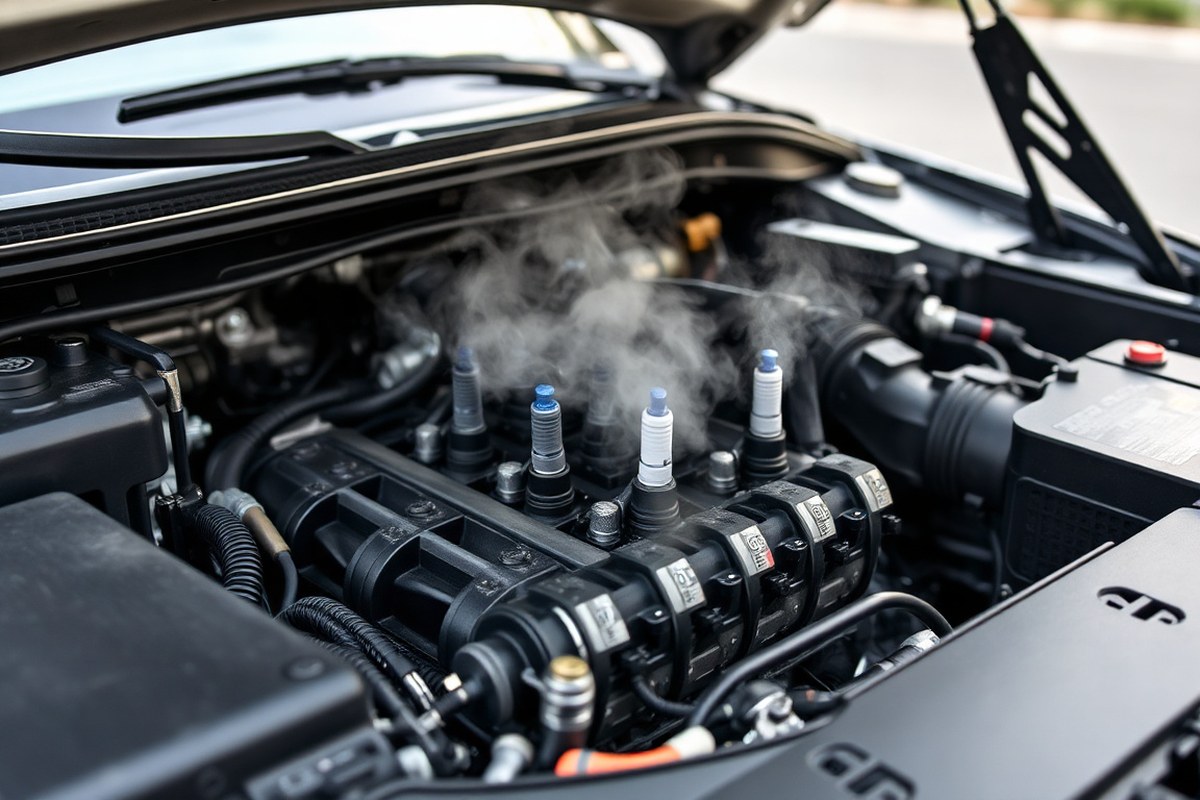
A misfire occurs when cylinders don’t burn the fuel-air mix right. This breaks the engine’s firing rhythm.
It makes the engine shake, lose power, and run rough. Misfires can raise emissions and cause engine damage if ignored.
What a Cylinder Misfire Means
A cylinder misfire occurs when the combustion process in that cylinder doesn’t happen properly. The spark plug might not spark. The fuel may not catch fire.
Air could leak where it shouldn’t. This stops the cylinder from producing power needed for the engine’s smooth operation.
The engine control unit notices bad firing patterns. It saves error codes like P0300 for random misfires.
Codes from P0301 to P0308 show which cylinder misfired. These codes help technicians find which cylinders are misfiring and why.
How Misfires Disrupt Engine Power
Each cylinder in your engine contributes energy to keep the wheels moving. When a cylinder misfires, it doesn’t produce power on that cycle. A spark plug gap that’s off weakens the engine.
You’ll feel less power when you press the gas. It makes the car sluggish.
The uneven firing also causes the engine to vibrate or shake noticeably. You might feel this shaking especially when idling or accelerating slowly. This rough running happens because the engine timing and balance are thrown off by the misfire.
Why Misfires Cause Shaking and Rough Running
Engines fire cylinders in a specific order for smooth operation. A misfire means one cylinder ‘misses its turn,’ causing an unbalanced rotation. This unbalance makes the whole engine shake or jerk, which you feel inside the car.
The engine shakes more when idle or at low speeds. Fewer cylinders fire, so shaking isn’t canceled out.
This makes the vibration worse on idle. A misfire also makes the engine run rough, leading to noticeable noise and poor throttle response.
Engine Systems Impacted by a Misfire
Misfires mainly affect the ignition, fuel, and air intake systems. Problems with spark plugs, ignition coils, or bad fuel delivery often cause these misfires. Vacuum leaks or faulty sensors can also disturb the air-fuel mix, leading to poor combustion.
Besides engine power loss, misfires raise exhaust emissions. The unburned fuel passes through the exhaust system, increasing pollution. This can trigger a failed emissions test and damage the catalytic converter over time.
Don’t ignore a shaking engine or flashing check engine light. Have your car checked immediately to avoid costly damage.
How Serious Is a Misfire? When to Stop Driving Immediately
A misfire isn’t just a minor hiccup, it can quickly turn serious. A flashing check engine light means a bad engine misfire. It can cause damage right now.
You should act fast. Keep driving with this warning and your catalytic converter can fail.
Repair can cost $1,000 to $2,500. It happens within minutes.
Single misfires might feel like rough idling or poor acceleration. But multiple-cylinder misfires make your car shake hard and lose power fast. That’s a sign the engine is struggling badly and could fail suddenly.
Misfires keep unburned fuel flowing into the catalytic converter. This causes overheating and breakdown. Damage gets worse over time.
Solid check engine lights often point to stored faults but don’t always mean immediate danger. The severity increases with flashing lights, especially if the misfire affects several cylinders consistently. Engine damage like worn rings or valve problems cause low compression.
They also cause constant misfires under load. These problems can stop your car.
- Flashing check engine light: stop driving immediately
- Constant misfires across multiple cylinders: urgent danger
- Visible shaking or rough running with misfires indicates severe issues
- Unburned fuel smell or poor fuel economy can hint at serious misfires
- Engine hesitation or stalling under load requires immediate check
- Profound loss of power and rough idle are warning signs
Severe misfires often cause catalytic converter damage in 15 to 20 minutes of driving. Replacing a converter is expensive and takes a few hours at a shop. See a flashing light or these symptoms?
Stop and turn off the engine. Driving longer risks catastrophic damage to both the exhaust system and engine, which adds costly repairs.
Mechanical misfires, caused by broken parts or internal engine failure, are the most serious type. They reduce your engine’s chance to run safely and can lead to engine failure very fast. Stop your car right away if you see these signs.
The safest option is calling for help or towing. Don’t keep driving.
Timeline of Damage: How Long Can You Drive with a Misfire?
Driving with a misfire starts damaging your catalytic converter quickly. Unburned fuel overheats the converter, causing internal melt and failure. The problem worsens the longer you drive, risking your engine and oil quality too.
Here’s a simple timeline showing the damage you can expect with continuous misfire driving:
| Driving Time With Active Misfire | Potential Damage |
|---|---|
| 0-5 minutes | Catalytic converter substrate begins to overheat |
| 5-15 minutes | Internal melting starts inside the catalytic converter |
| 15-30 minutes | Severe catalyst damage and restricted exhaust flow |
| 30+ minutes | Converter destroyed, possibly causing exhaust blockage |
Damage to your engine oil happens slower but can be just as costly. After about 300 miles with a misfire, fuel dilutes the engine oil by more than 3.5%. This causes the oil’s viscosity to break down, reducing its ability to protect engine parts.
Internal engine damage can build over time from multiple causes. Combustion problems lead to poor compression and stressed parts. Also, unburned fuel can wash down cylinder walls, wearing piston rings and valves.
Risk escalates as you keep driving. Short trips under 5 minutes might cause minor heat damage. A misfire lasting 30 to 60 minutes causes serious harm.
Heat starts to ruin the converter during this time. It also puts extra stress on the engine. Driving longer than that with the issue only raises repair costs and risks engine failure.
Common Causes of Engine Misfires and How to Identify Them
Ignition system failures often cause engine misfires. Faulty spark plugs are a top cause. They wear out or foul over time.
Bad ignition coils that fail to send a strong spark also cause misfires. Loose or damaged spark plug wires can interrupt ignition. The spark must ignite fuel at just the right moment for smooth running.
Fuel delivery problems create misfires differently. Clogged fuel injectors limit gas flow to the cylinder. A vacuum leak lets unmetered air in, upsetting the fuel-air mix.
Low fuel pressure can starve the engine. Sometimes, the fuel is poor quality or contaminated. These issues reduce power and cause rough idling.
Mechanical causes tend to be more serious. Low compression from worn piston rings or valve leaks disrupts combustion. A broken timing belt or chain makes the valve and piston timing off.
This shift leads to multiple misfires or engine damage. Listen for unusual noises or check compression if safe to do so.
You can tell which system is at fault by noting symptoms and what triggers the misfire. Misfires only under acceleration often signal ignition coil, injector, or fuel delivery faults. A misfire that’s random and affects multiple cylinders usually means vacuum leaks or sensor trouble.
Visual inspection can catch worn plugs or cracks. Fault codes from a scanner narrow down the cause quickly.
- Check for worn or fouled spark plugs and replace if needed
- Inspect ignition coils for cracks or electrical failure
- Look for cracked, loose, or damaged spark plug wires
- Listen for hissing sounds that suggest vacuum leaks
- Test fuel pressure with a gauge for low readings
- Scan the engine computer for misfire codes like P0300 to P0304
- Try a compression test to check for mechanical wear
Don’t ignore a fuel smell or worsening misfire. These may indicate serious fuel delivery or mechanical faults.
Fuel issues often cause random misfires, which can spread damage quickly if left unchecked. Ignition system misfires usually feel sharper and more predictable. Mechanical misfires come with unusual engine noises or loss of power.
Replacement parts vary in cost. Spark plugs commonly cost $5 to $15 each and coils $50 to $150.
A compression test tool runs about $50. Scanning may be free at many auto parts stores.
How to Diagnose a Misfire: Tools, Codes, and Initial Checks
You can diagnose an engine misfire by reading trouble codes with an OBD2 scanner. Then, check spark plugs, ignition coils, and fuel injectors to narrow down the cause. Early basic steps help avoid expensive repairs later, like catalytic converter damage.
Using an OBD2 Scanner for Codes
Plug an OBD2 scanner into your car’s diagnostic port under the dashboard. Turn on the ignition without starting the engine, then let the scanner communicate with the ECU. Common misfire codes include P0300 for random misfires and P0301 to P0308 identifying which cylinder misfires.
Look for P0300 if the misfire affects multiple cylinders. P0301 to P0308 point to a specific cylinder’s problem. Codes help guide your next checks but never tell the whole story.
- Locate the OBD2 port below the steering column.
- Plug in the OBD2 scanner and power it up.
- Turn the ignition ON without starting the engine.
- Use the scanner to read diagnostic trouble codes.
- Note down all misfire codes displayed.
- Clear the codes to reset the ECU after repairs.
- Drive the car through a cycle to see if codes return.
Visual and Manual Checks on Spark Plugs and Coils
Inspect spark plugs for wear, fouling, or cracked insulators. Spark plugs with dark deposits or gaps wider than 0.035 inches usually cause misfires. You can check the gap with a spark plug gap tool or feeler gauge.
Remove ignition coils and check for cracked boots or corrosion. Use a multimeter to measure coil resistance following your vehicle’s manual specs. Slightly worn coils cause intermittent misfires but may look fine.
Replacing spark plugs yourself costs about $10 to $20 per plug and needs basic hand tools. Coils often cost $30 to $60 each. Inspecting these parts is a quick way to rule out ignition problems.
Basic Fuel Injector Inspection and Leak Test
Fuel injectors can cause misfires if clogged or leaking. Locate them under the intake manifold or rail.
Look for fuel smells or wet spots showing injector leaks. Testing requires a professional injector cleaner or replacement which is complex.
Use a mechanic’s stethoscope to listen for injector clicks. Press a screwdriver lightly against the injector while the engine runs. Listen closely for clicking sounds that show activity.
A missing click may mean a dead injector. Flow variation above 8% triggers misfires.
Replacing injectors costs more due to the intake manifold removal needed. Fuel system tests can be tricky to do yourself.
You need the right tools and skills. It’s better to have a pro handle these tests.
Checking for Vacuum Leaks and Compression Issues
Vacuum leaks can cause random misfires by disturbing the air-fuel mix. Check vacuum hoses for cracks, loose clamps, or disconnections. Spray carb cleaner lightly near the hoses while the engine runs.
Listen for changes in rpm that can signal leaks. Small rpm shifts usually mean air is leaking in.
Compression checks require a gauge for each cylinder. Low compression on one cylinder means either a valve, piston ring, or head gasket issue. These problems often need expert repair.
Vacuum leaks are easier and cheaper to test than compression. Compression testing costs about $50 and is worth it when basic checks don’t find the cause.
How Driving with a Misfire Damages the Catalytic Converter
A misfire lets unburned fuel enter the catalytic converter. Inside, this fuel ignites and rapidly raises the temperature past 1,400°F. Normally, the converter runs between 500°F and 800°F. So this spike causes serious overheating.
This extreme heat damages the converter’s internal ceramic substrate. The delicate honeycomb structure can crack or melt. Once damaged, the converter can’t clean exhaust gases effectively.
The damage not only hurts your car’s emissions but also leads to costly repairs. Replacing a catalytic converter usually costs $1,000 or more.
Fixing a misfire by changing spark plugs costs $100 to $300. This price is much lower than some other engine repairs.
Repeated misfires speed up converter failure. Unburned fuel consistently overheating the system can destroy the converter in days or weeks. The exact time varies based on how often and how bad the misfire is.
Notice a strong fuel smell or poor engine performance? Avoid driving long distances.
Continuing to drive risks permanent converter damage and more expensive repairs. A quick repair of the misfire saves money and prevents deeper engine exhaust problems.
Practical Repair Paths: What Fixes a Misfire and How Much It Costs
A misfire often points to worn spark plugs, bad ignition coils, or dirty fuel injectors. Replacing spark plugs usually fixes most misfires, especially on older cars. Ignition parts like plugs and coils cost less than other parts.
You can buy them at most auto stores. They are usually cheaper to replace.
Cleaning injectors may help, but replacement is safer if they’re badly clogged. The catalytic converter can also get damaged by a misfire and costs much more to replace. Repair or cleaning depends on what the mechanic finds during a diagnosis.
OEM parts usually fit better and last longer. But aftermarket options are fine for budget repairs. Choosing aftermarket spark plugs and wires can save you money.
Check reviews before buying to ensure good quality. Aftermarket parts often cost less than originals. Ignition misfires are quick fixes, so cheap parts usually do the job well.
| Part | Typical Cost Range | Notes |
|---|---|---|
| Spark Plugs | $20 to $100 each | Spark plugs should be replaced depending on their type and use. Replacement intervals range from 30,000 to 100,000 miles. Check the part specifications for your car. |
| Coils | $50 to $150 each | Usually replaced per cylinder with persistent misfire code |
| Fuel Injectors | $75 to $300 each | Replace if cleaning does not fix spraying or flow problems |
| Catalytic Converter | $500 to $2,500+ | Damage from prolonged misfires can exceed OEM thermal limits |
You want to catch misfires early to avoid big damage. Replacing spark plugs and coils is a straightforward fix.
It prevents expensive damage to the catalytic converter. This converter fails when it heats over 900°C. Avoiding misfires helps stop this overheating.
Ignoring a misfire light can lead to repairs costing over $1,000.
Checking service history helps you spot overdue spark plug or coil changes. Fixing ignition parts first saves money and effort. Misfires still happening after these fixes means other parts need checking.
Inspect fuel injectors and the catalytic converter next. These often cause ongoing issues.
When to Call a Professional or Tow Your Car for a Misfire
Stop driving the moment your misfire signs get dangerous. Call roadside assistance when symptoms get worse or the check engine light flashes. Driving with severe misfires risks big repairs or a breakdown.
Signs You Must Stop Driving Immediately
Hard shaking or jerking means the misfire is severe. You should pull over right away. A flashing check engine light warns of major engine problems that damage parts quickly.
Strong, unusual smells inside your car like rotten eggs or gasoline mean fuel isn’t burning right. That’s unsafe for you and can cause fire hazards. A sudden loss of power or stalling also requires immediate stoppage.
- Flashing check engine light
- Severe engine shaking or vibration
- Strong unpleasant fuel or sulfur smells inside
- Loss of power, stalling, or rough running
- Dashboard warning signals besides check engine
- Engine temperature rising fast or overheating
Ignoring these signs can cause costly damage to catalytic converters or the engine. Tow your car to avoid risk and save repair costs.
When Moderate Misfires Can Be Driven Briefly
Your misfire causes mild roughness but the light stays steady. You can drive for short distances.
Keep speeds low and avoid rapid acceleration. Stop the car at the first sign of worsening symptoms.
This approach helps you reach a nearby shop or safe spot. Do not tow heavy loads. Avoid driving in hot weather.
Don’t drive on steep hills. The misfire risk still increases with more driving.
How to Prepare Your Car for Towing Safely
Turn off the engine and set the parking brake once stopped. Locate a flat, secure spot for tow pickup. Remove valuables so a towing crew can access your vehicle without hassle.
Keep the keys handy and note your mileage and misfire symptoms. This helps the mechanic diagnose your problem faster. Put your manual transmission car in neutral before towing.
- Park on flat ground if possible
- Turn the engine off and engage the parking brake
- Remove valuables and lock the car
- Have keys and vehicle info ready
- Shift to neutral if manual transmission
Communicating Misfire Symptoms to Mechanics
Describe all symptoms in detail, like shaking, smells, or power loss. Mention if the check engine light was flashing or steady. Tell them how long the misfire lasted and what made it worse or better.
Share any recent driving conditions, like heavy loads or hills. Provide your car’s trouble codes from an OBD scanner if you have them. Clear info helps mechanics diagnose and fix the problem quicker.
- Describe shaking, smells, and power issues
- Note if check engine light flashes or stays on
- Explain how long symptoms last and triggers
- Mention recent driving stresses or conditions
- Offer any trouble codes read from the car
Step-by-Step Action Plan for Handling a Misfire
Act quickly to avoid damage and costly repairs. Follow these steps to check and fix a misfire.
- Day 1: Check the dashboard for warning lights and listen for rough running. Confirm the engine is misfiring.
- Day 1: Check under the hood for loose wires. Look for cracked spark plug wires too. Fix minor problems yourself if comfortable.
- Day 1: Use an OBD-II scanner to read trouble codes. Codes P0300 to P0308 indicate cylinder misfires. Note the codes.
- Within 2 days: Replace faulty spark plugs or ignition coils identified by the codes. Test-drive to see if rough running stops.
- Within 3 days: The misfire still happens or check engine light stays on. Avoid long drives. Book a mechanic visit soon.
- Within 1 week: Have a professional test fuel injectors and compression if needed. Confirm complete repair to protect your engine.
- Smell fuel or see smoke: Stop driving right away. Call a tow truck. Avoid more damage and fire risk.
Frequently Asked Questions
Can You Drive a Short Distance If the Check Engine Light Is Steady?
You can drive a short distance if the light is steady. It’s best to keep speeds moderate and avoid highways to reduce further damage.
Is It Safe to Drive with a Misfire If the Engine Only Shakes a Little?
Mild shaking with a steady light means short trips might be okay. Still, keep trips under 20 miles to limit damage and get it fixed soon.
What Happens If I Ignore a Flashing Check Engine Light Caused by a Misfire?
Ignoring a flashing light can cause serious engine and catalytic converter damage. You should stop driving immediately and have the car towed.
Can a Misfire Cause Damage Even If I Only Drive a Few Miles?
Yes, every misfire event damages the catalytic converter somewhat. Driving just a few miles can worsen the damage, so minimize driving before repairs.
Will a Car Start If It Has a Severe Misfire?
A severe misfire might cause rough idle or no start at all. If your car struggles to start, it needs a professional check immediately.
Wrapping Up
Driving with a misfire can quickly harm your engine and catalytic converter. Fixing the issue soon saves money and stress. Check your engine today and get repairs done before risking more damage.