How Far Is 13 Miles: Detailed Distance, Time, and Travel Comparisons
Thirteen miles equals 68,640 feet or about 20.9 kilometers. It’s roughly the distance from a suburb to downtown in many mid-sized cities. This gives you a clear idea of how far 13 miles really is.
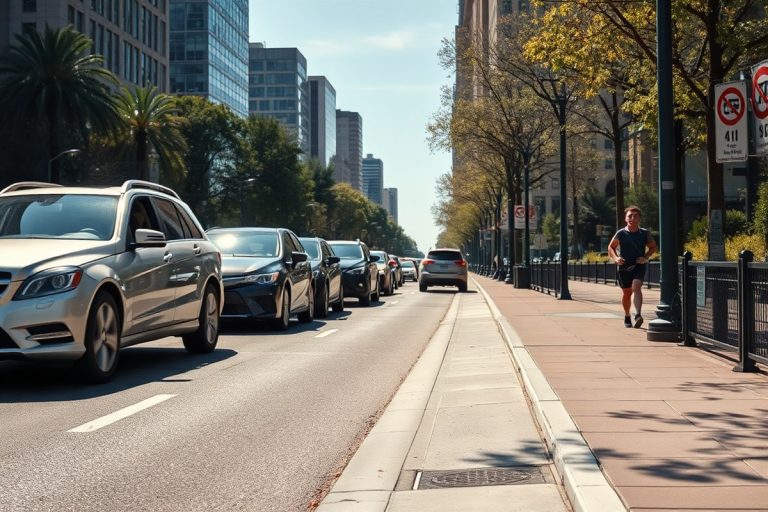
Driving 13 miles usually takes 12 to 30 minutes, depending on your speed and traffic. Expect longer times during rush hour, road work, or heavy highway traffic.
Walking 13 miles can take 4 to 5 hours, depending on your pace. Cycling that distance might take 45 minutes to 1.5 hours, based on terrain and fitness.
Thirteen miles is almost a half marathon, a common running goal. Knowing this distance helps you plan trips and exercise more accurately.
Key Takeaways
- 13 miles equals about 20.9 kilometers or 68,640 feet for clear measurement.
- Driving 13 miles takes 12 to 30 minutes depending on your speed and traffic.
- At 13 mph, it will take exactly 1 hour to cover 13 miles.
- Walking, running, or cycling 13 miles varies widely by pace and terrain.
- In many cities, 13 miles often spans from suburbs to the city center.
- 13 miles falls just short of a half marathon distance in running.
How Far Is 13 Miles Exactly in Metric and Imperial Units
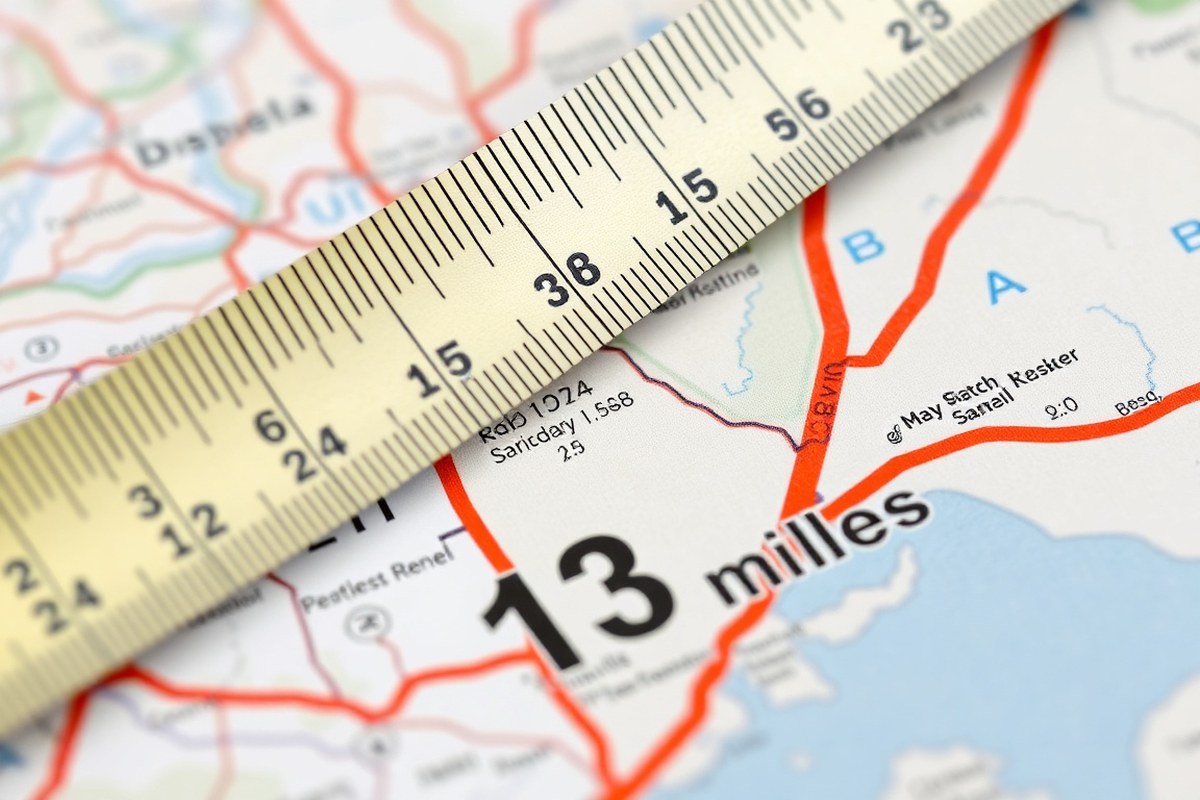
Thirteen miles is exactly 20.921472 kilometers long. This number comes from multiplying 13 by the exact conversion factor of 1.609344 kilometers per mile. To get kilometers, multiply the miles by a fixed number.
This number doesn’t change. Just use it to convert miles to kilometers.
For meters, you multiply 13 by 1,609.344 meters, which gives 20,921.472 meters. Since meters are smaller units, the number looks much bigger.
But it’s just a direct scale change. The same approach works for feet and yards.
| Unit | Equivalent Value for 13 Miles |
|---|---|
| Kilometers (km) | 20.921472 km |
| Meters (m) | 20,921.472 m |
| Feet (ft) | 68,640 ft |
| Yards (yd) | 22,880 yd |
| Nautical Miles (nmi) | 11.2967 nmi |
One mile equals exactly 5,280 feet or 1,760 yards. Multiply those figures by 13 and you get 68,640 feet and 22,880 yards. The exactness helps when you need precision, like planning a race or mapping routes.
The difference between statute miles and nautical miles becomes clear when converting 13 miles. A nautical mile is longer: about 6,076.1 feet, compared to 5,280 feet for a statute mile. That’s why 13 miles equal approximately 11.3 nautical miles.
How Long Does It Take to Drive 13 Miles at Different Speeds
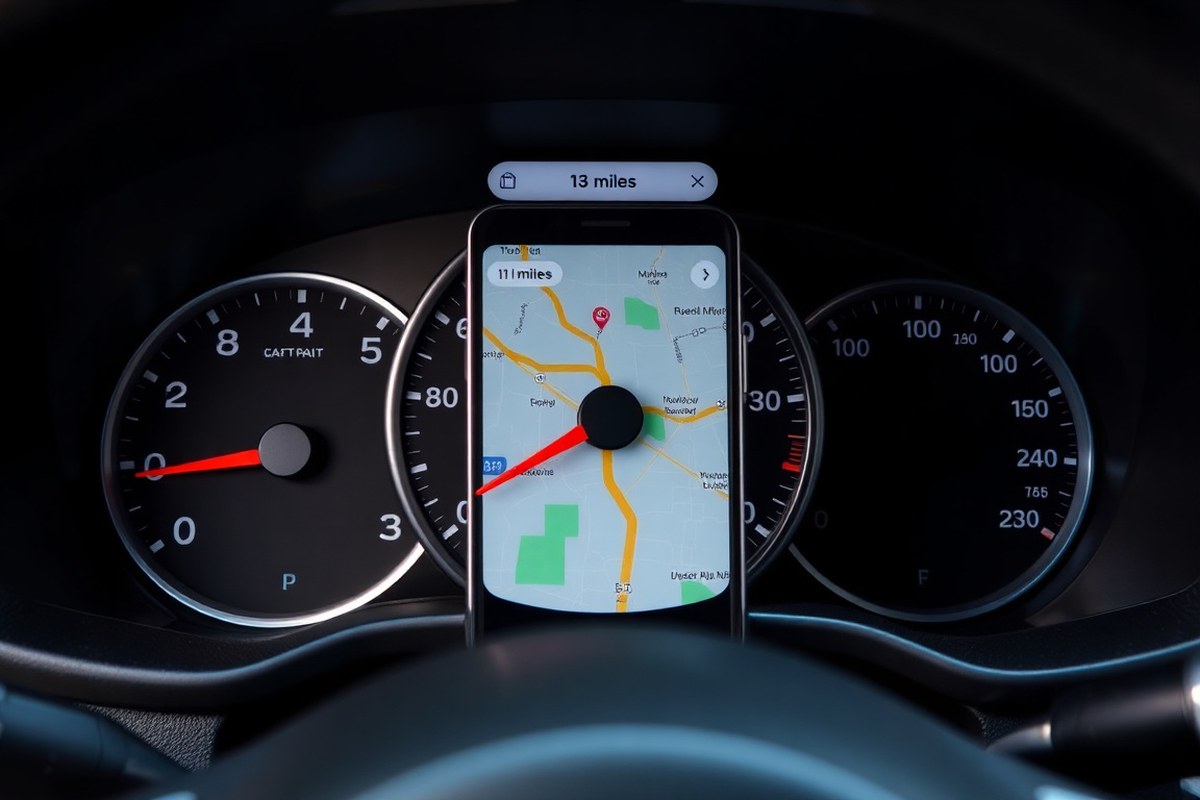
Driving 13 miles can take quite different amounts of time. At low city speeds, it often takes about twice as long as on highways. Traffic lights, stop signs, and slowdowns add to the time, especially in urban areas.
Here’s how long 13 miles takes when you drive at common speeds. The time equals distance divided by speed. For example, at 30 mph, you divide 13 by 30, getting roughly 0.43 hours, or about 26 minutes.
| Speed (mph) | Time to Drive 13 Miles (minutes) |
|---|---|
| 30 | 26 |
| 40 | 19.5 |
| 50 | 15.6 |
| 60 | 13 |
| 65 | 12 |
| 70 | 11.1 |
City driving commonly stays at 25 to 30 mph. So expect 26 to 31 minutes for 13 miles.
Urban traffic and stoplights slow you down even if limits are higher. On highways, traveling 60 to 65 mph drops your time to about 12 to 13 minutes.
Steady speed helps reduce travel time. However, rush hour or construction can double city trip times. Interstates rarely have as many stops, keeping your time closer to the ideal calculation.
Always consider traffic conditions and stop times. Real driving time might exceed simple speed calculations.
Walking, Running, and Cycling Times for 13 Miles by Pace
Covering 13 miles depends a lot on how fast you move. Walking 13 miles takes several hours. Running cuts that time about in half.
Cycling is much faster than running. Your pace matters for each, along with your fitness and terrain.
Walking Speeds and Expected Durations
Walking 13 miles at an easy 3 mph pace takes about 4 hours and 20 minutes. A brisker pace, around 3.5 mph, can cut that down to nearly 3 hours and 45 minutes. These estimates assume relatively flat ground without many stops.
Beginners might want to break that distance into shorter walks or mix in rests. Good walking shoes and lightweight clothing help reduce fatigue. Staying hydrated also keeps your energy steady over 13 miles.
- Casual walk: about 4 hours 20 minutes (3 mph)
- Brisk walk: about 3 hours 43 minutes (3.5 mph)
- Beginner walkers may take 5+ hours
- Walking with hills or rough trails will slow you down
- Wearing comfortable, supportive footwear is essential
Try to maintain a steady, comfortable pace. You can use a stopwatch or app to check your time for each mile. Gradually increase your speed over weeks to walk 13 miles quicker.
Running Paces and Time Ranges
Running 13 miles generally takes between 1 hour 30 minutes and 2 hours 10 minutes. Joggers at 6 mph finish near 2 hours 10 minutes. Faster runners at 8 mph do it in about 1 hour 37 minutes.
Many beginners combine running and walking to build endurance. Using a run-walk method can finish in about 2 hours 45 minutes. It might take up to 3 hours 15 minutes.
This approach mixes running with walking breaks. Proper gear like technical socks reduces blisters on longer runs.
- Jogging pace: about 2 hours 10 minutes (6 mph)
- Fast running pace: about 1 hour 37 minutes (8 mph)
- Beginner run-walk combo: 2 hours 45 to 3 hours 15 minutes
- Pro runners can finish closer to 1 hour
- Wear moisture-wicking clothes to avoid chafing
Practice pacing by timing shorter runs. Increasing your speed steadily helps avoid injuries. Proper hydration and stretch routines support better running times over 13 miles.
Cycling Speeds and Commute Times
The average cyclist rides 13 miles in about 65 minutes at 12 mph. This speed suits moderate fitness and flat terrain. Faster or more experienced riders will take less time, around 45 to 55 minutes.
Using a bike suitable for the route improves speed. Road bikes handle pavement faster than mountain bikes. Wearing a helmet, tight clothes, and using clip-in pedals can also boost your pace.
- Average cycling speed: 12 mph, about 65 minutes
- Experienced cyclists: 14-17 mph, around 45 to 55 minutes
- Mountain biking or hilly terrain slows you down
- Proper bike fit aids comfort and speed
- Wearing a helmet is a must for safety
To estimate your cycling time, divide 13 miles by your average speed. For example, at 15 mph, 13 ÷ 15 = 0.87 hours, about 52 minutes. Keeping consistent speed and pedaling technique helps improve your cycling time for 13 miles.
What Affects How Long 13 Miles Takes to Travel or Cover
Traveling or covering 13 miles can take very different amounts of time. Factors like traffic, terrain, weather, fitness, and stops change how long it feels or actually takes. Knowing how these affect time helps you plan better and set realistic goals.
Traffic and Road Conditions
Traffic can slow down driving times by a lot, especially in cities or during rush hours. Stoplights, construction, and accidents add delays that can double regular travel times. Road quality also matters; rough or narrow roads force you to go slower.
On the other hand, smooth highways with little traffic let you cover 13 miles quickly. For driving, adding 10 to 20 minutes for moderate traffic is common. When biking or walking near busy roads, crossing delays and cars waiting add extra time too.
Terrain and Elevation Changes
Going uphill slows you down a lot, whether walking, running, or cycling. Downhill can speed you up but consumes different muscles. Hills usually add between 10% to 30% more time, depending on steepness and length.
Add 1 to 2 minutes for each percent of elevation gain per mile. This helps you plan for hills. It gives a more accurate travel time estimate.
For example, a 5% grade over 3 miles adds roughly 15 to 30 minutes more. Flat terrain keeps times more predictable and steady.
Weather Impacts on Speed
High heat, cold, rain, or wind can all slow you down. Heat makes you tire faster.
So pacing slows even if the distance stays the same. Strong headwinds need more effort and lengthen your travel time by 10% or more.
Rain slicks surfaces for bikes and makes footing tricky on foot, forcing caution. Cold weather can stiffen muscles, shifting your pace as well. Dress right for the weather, and wear proper gear.
Tough conditions add extra minutes over 13 miles. Expect a bit more time on rough days.
Fitness Levels and Fatigue Effects
Your fitness affects how quickly you cover 13 miles on foot. When you’re well-trained, you keep a steady pace for hours. Less fit individuals slow down as fatigue builds, especially in the last 3 to 5 miles.
Mental toughness is important for running or walking this distance. Fatigue can double time compared to your normal pace if you don’t rest or eat properly. Schedule breaks every few miles to stay stronger and avoid a big slowdown near the end.
Stop Times and Realistic Time Adjustments
Stopping for rest, water, or traffic lights adds to your total travel time. Outdoors, a typical short break is 5 minutes every 3 to 5 miles. For walking or running 13 miles, add about 10 to 15 minutes total.
Here’s a checklist to help adjust your time estimate when planning to cover 13 miles:
- Account for traffic delays or stoplights if driving or cycling
- Add 10% to 30% more time for hilly terrain
- Include extra minutes in bad weather, like wind or rain
- Plan breaks every 3 to 5 miles to manage fatigue
- Adjust pace if you’re not regularly trained for this distance
- Factor in wait times if crossing busy roads or intersections
Use these steps to fine-tune your estimated travel time for 13 miles. That way, you won’t get surprised by long delays and can better manage energy and expectations.
How to Mentally Estimate or Visualize the Distance of 13 Miles
Visualizing 13 miles is easier when you connect it to places and routes you know. Think of a half marathon, a well-known distance close to 13 miles. Many cities have routes or landmarks around 13 miles long.
These help you understand how far 13 miles really is. Use them to picture the distance better.
For example, Manhattan stretches about 13 miles from Harlem through downtown to Battery Park. In a mid-sized city, 13 miles often means a trip. You might go from a quiet suburb to downtown.
It’s a common travel distance. Think of a round trip for errands around town.
You might visit the grocery store, gym, then a friend’s house. These places are usually nearby.
Using math can help mentally estimate the distance too. Multiply 13 by 1.6 to get kilometers, for example, 13 miles equals about 20.8 kilometers. This trick helps compare 13 miles if you think in metric units.
- Identify a familiar half marathon route or local race of about 13 miles.
- Picture a city walk crossing major landmarks, such as parks and shopping areas, totalling 13 miles.
- Recall a common drive, like Gulfport, Mississippi, to Biloxi, which is exactly 13 miles.
- Visualize traveling across your city, from suburbs to downtown, matching the 13-mile span.
- Multiply the miles by 1.6 to convert to kilometers for faster mental math.
- Plan a ‘tourist trek’ visiting three or four spots locally. The total distance should add up to about 13 miles. This shows you how far 13 miles travels.
Always base your mental estimate on familiar routes or places you’ve visited. Guessing without a reference is often way off.
How 13 Miles Relates to Popular Race Distances and Fitness Goals
Thirteen miles is a key distance for runners because it almost matches the half marathon length. It helps runners measure how close they are to running 13.1 miles in a race. Training to cover 13 miles builds endurance and confidence for longer distances like marathons.
Comparison to Common Race Distances
Runners often compare 13 miles to popular race distances like 5K, 10K, or full marathons. Knowing how these relate helps set realistic goals and plan training. It also shows how much longer 13 miles is than shorter races you might already do.
| Race Type | Distance | Relation to 13 Miles |
|---|---|---|
| 5K | 3.107 mi | Less than one-quarter of 13 miles |
| 10K | 6.214 mi | Roughly half the distance |
| Half Marathon | 13.109 mi | Almost identical (0.1 mile difference) |
| Full Marathon | 26.219 mi | Just under twice the distance |
This chart shows how thirteen miles fits between well-known events. It’s a big step up from a 10K but only half a marathon. Most beginners use this as a milestone before trying longer races.
Half Marathon Significance
Running 13 miles is almost the same as completing a half marathon. The official half marathon distance is 13.1 miles, which is just 0.1 mile longer. That tiny difference means training for 13 miles prepares you perfectly for a race.
A half marathon is half the distance of a full marathon, making it a popular goal. Many runners see this distance as tough but doable for reaching new fitness levels. It tests your endurance without the commitment needed for a full marathon.
Think of reaching 13 miles as finishing a great book, almost at the last chapter. It shows you can handle long efforts.
It also helps build confidence. This prepares you for longer runs or races ahead.
Beginner Training Milestones
Start with a running base of three miles. You can reach 13 miles. It takes 12 to 14 weeks to get there.
This timeline depends on your schedule and how often you train. Most runners slowly add distance each week to stay injury-free.
A typical plan adds about one mile to your long run. Do this every week or two. Increase gradually to avoid injury.
You’ll also include rest days and shorter runs to build recovery strength. Training often goes through different seasons, so expect to run in varying weather.
Your schedule affects how you add these miles. Balancing family life can change your plan. Starting out also affects your timing.
It helps to set realistic weekly goals and adjust if you feel tired or sore. Staying consistent matters more than running too fast too soon.
Calories Burned and Energy Costs Walking or Running 13 Miles
Walking 13 miles burns roughly 65 to 100 calories per mile based on your weight. For someone weighing 150 pounds, expect to burn between 850 and 1,300 calories.
A 200-pound person might use 1,000 to 1,600 calories. A 250-pound person could burn 1,300 to 1,800 calories walking 13 miles.
Running burns more calories, about 115 to 195 calories per mile depending on speed and size. A 150-pound runner might burn 1,500 to 2,200 calories running 13 miles.
If you weigh 200 pounds, expect 1,800 to 2,500 calories. At 250 pounds, calorie burn can range from 2,100 up to 2,800 calories.
You can get a rough calorie count using this formula: Calories = 0.63 × weight (lbs) × miles. For example, a 180-pound person walking 13 miles burns about 0.63 × 180 × 13 = 1,475 calories. Swap 0.75 for 0.63 to estimate running, giving about 1,755 calories for that same 180-pound runner.
Tracking calories can be tricky as speed, terrain, and fitness also matter. Use a heart rate monitor or fitness tracker to get closer estimates. They adjust for your pace, body variations, and effort during your 13-mile walk or run.
Remember, slower walking burns fewer calories per mile than brisk walking does. Running faster will raise your calorie burn, but not always by a lot.
Your body weight strongly influences the total energy cost for 13 miles. So it’s the key number to include.
Real-World City and Landmark Distances Close to 13 Miles
Distances around 13 miles often show up in city travel and outdoor activities. For example, many daily commutes fall close to this length. Knowing these examples can help you see if 13 miles fits your drive.
It also works for training routes. This shows how that distance feels in real life.
Here are some commonly known distances about 13 miles apart in US cities and landmarks:
- Bright Angel Trail from Grand Canyon rim to Colorado River
- Downtown Boston to Logan Airport
- Times Square in New York City to LaGuardia Airport
- Central Park in New York City to Yankee Stadium
- Golden Gate Park to San Francisco International Airport
- Washington D.C. Capitol Building to Arlington National Cemetery
- Seattle Space Needle to SeaTac Airport
These distances help put 13 miles into perspective for daily trips or planning workouts. For many people, 13 miles is about the usual one-way commute. This is common in suburbs and mid-sized cities.
It gives an idea of a typical trip length. It can take roughly 20 to 30 minutes by car depending on traffic.
Understanding these typical city distances also helps when you plan running or cycling routes. You might match a 13-mile ride to a trip between two landmarks. Biking from Central Park to Yankee Stadium covers about 13 miles.
This example helps you picture that distance clearly. It shows how far you’d travel in New York.
Choose routes with familiar landmarks to better track your distance and time.
Keep in mind that road layouts and traffic can make actual travel times vary a lot. Distances might be straightforward “as the crow flies” but longer on driving or walking paths. These examples help you understand how 13 miles feels in real life.
They show practical distances and times. This helps you compare 13 miles to your own trips.
Common Mistakes When Estimating 13-mile Travel Times and How to Avoid Them
People often guess travel time for 13 miles too fast. They forget to include stops or changes in speed. This causes their estimates to be wrong.
Traffic lights, hills, and road conditions slow you down more than steady speed. On foot or bike, fatigue can lower pace much faster than you expect.
Speed changes cause errors in time estimates. A 13-mile drive at 30 mph takes about 26 minutes. But at 60 mph it only takes 13 minutes.
You should add extra time for gas stops or waiting at signals. Base this on usual delays you see.
For walking, a steady pace is rare. You may start fast but slow in the middle or end.
Checking your assumptions helps avoid these mistakes. Write down your expected speed or pace. Add 10 to 20 percent more time for traffic or tiredness.
These things can slow your trip down. Look at your route for hills, stop signs, or other delays to fine-tune your estimate.
- Ignore stops or traffic and you underestimate travel time
- Assuming one speed throughout ignores real speed changes
- Overestimating your pace leads to late arrivals
- Not adjusting for hills or terrain skews walking or biking times
- Skipping a buffer for fatigue or breaks causes wrong guesses
Decide if your trip is easy, medium, or hard. Base this on the conditions you expect. For easy trips, use your normal speed or pace.
For medium, add 15 percent more time. For hard trips with many stops, poor roads, or steep hills, add 30 percent extra time.
This way, your 13 miles estimate adjusts to your situation. You get closer to how long it really takes. Checking conditions and adding time buffers costs nothing but saves stress and wasted time.
Step-by-Step Action Plan to Estimate and Use 13 Miles
Use these steps to understand what 13 miles really means. It helps you plan better for travel or workouts. Knowing this distance can guide your timing and effort.
- Day 1: Convert 13 miles to kilometers (about 21 km) to understand metric units. Check your calculator or phone to confirm.
- Day 2: Drive 13 miles at your usual speed and time yourself. Note how traffic or stops affect your trip time.
- Day 3: Walk or run 13 miles using a fitness app to track your pace. See how long it takes in your real-time effort.
- Week 1: Visualize 13 miles by identifying familiar local routes or landmarks that match this distance. Walk or drive them if possible.
- Week 2: Estimate calories burned by tracking a 13-mile walk or run. Use that data to adjust your fitness goals.
- Week 3: Check how your travel time fits with race distances. A half marathon is about 13 miles long. Compare your effort for these similar distances. See how your pace stacks up.
- Week 4: Use your experience to make better travel or training plans. Take note of mistakes you made estimating time or effort and avoid them next time.
Frequently Asked Questions
How Many Minutes Drive Is 13 Miles?
Driving 13 miles usually takes between 12 and 30 minutes. Traffic and speed limits change your trip time a lot.
How Far of a Drive Is 10 Miles?
Driving 10 miles generally takes 10 to 20 minutes, depending on speed. It’s a short drive but city traffic can slow it down.
How Long Does a 13 Mile Drive Take at 35 Mph?
At 35 mph, driving 13 miles takes about 22 minutes. This speed is common on suburban roads or light traffic areas.
How Far Is 13 Miles in Kilometers?
Thirteen miles equal roughly 21 kilometers. This helps if you are tracking distance outside the US.
How Can I Estimate 13 Miles Without a Car?
You can estimate 13 miles by timing your walk or bike ride. Average walking covers 13 miles in about 4 to 5 hours.
Key Points to Remember
Thirteen miles can take very different times and energy depending on how you travel. Try timing your own trip or workout to see what fits you best. Use your real experience to plan your next outing or workout smartly.