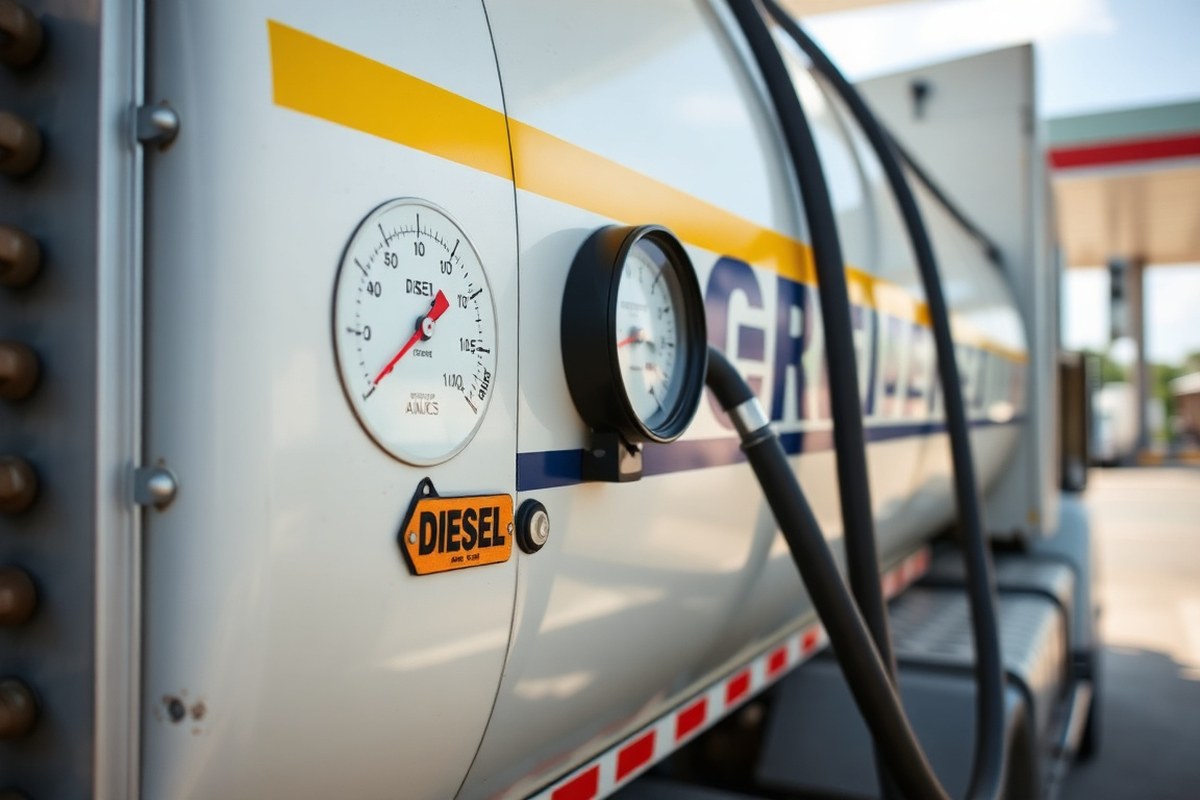
How Much Does 100 Gallons of Diesel Weigh? A Complete Guide with Exact Numbers
Wondering how much does 100 gallons of diesel weigh? It typically weighs about 680 to 710 pounds depending on the diesel grade. Temperature also plays a key role, making the weight slightly heavier in cold weather.
Diesel #1, which is lighter, weighs close to 690 pounds for 100 gallons. Diesel #2 is denser and will weigh around 710 pounds for the same volume. Knowing this helps you plan fuel transport without surprises.
Diesel’s weight is measured in pounds per gallon, usually around 6.8 to 7.1 pounds. Seasonal blends can affect density, especially for farmers storing fuel through winter. This difference impacts your truck’s total load and transport safety.
Always remember, diesel weight isn’t fixed. It changes with temperature and fuel type, so check these factors first. That way, you’ll get a more accurate weight for your trucks or generators.
Key Takeaways
- 100 gallons of diesel usually weigh between 680 and 710 pounds.
- Diesel #1 weighs about 690 pounds per 100 gallons, Diesel #2 about 710 pounds.
- Cooler temperatures increase diesel’s weight; hotter temperatures reduce it slightly.
- To quickly estimate weight in pounds, multiply gallons by 6.943.
- Plan your fuel loads based on current diesel grade and temperature for accuracy.
- 150 gallons of diesel weighs roughly 1,041 pounds, useful for bigger loads.
Exact Weight of 100 Gallons of Diesel Fuel

Diesel weighs about 6.943 pounds per gallon at 59°F (15°C). One hundred gallons of diesel then weigh about 694 pounds. That equals around 315 kilograms for 100 gallons.
Diesel’s weight changes because its density changes with temperature. Different fuel grades also affect the weight. These factors cause small shifts in diesel weight.
One hundred gallons usually weighs between 690 and 730 pounds. Most often, standard diesel falls between 700 and 710 pounds. That range covers typical fuel weights.
For example, Diesel #1 weighs near 690 pounds per 100 gallons. Diesel #2 can be closer to 710 pounds.
Here’s a practical way to calculate weight: multiply gallons by 6.943 pounds. For instance, 100 gallons × 6.943 equals 694.3 pounds exactly. This formula lets you estimate diesel weight quickly if you know the volume.
Temperature changes can make diesel weight differ from estimates. Different diesel types also cause weight to shift slightly. Expect small differences in real-world use.
How Temperature Variations Affect Diesel Fuel Weight
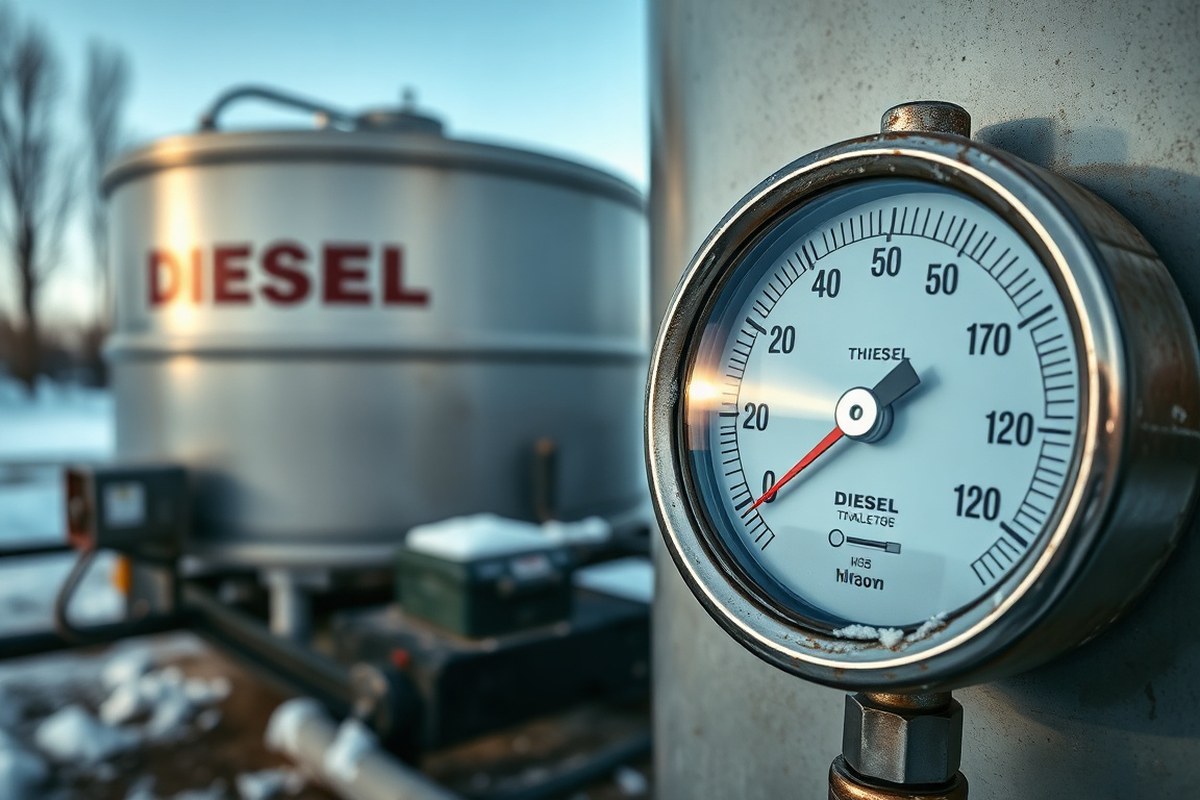
How Temperature Changes Diesel Volume and Density
Diesel expands when heated and contracts when cooled. This expansion lowers its density, so it weighs less per gallon in hot weather. Cooler diesel shrinks, which raises its density and weight per gallon.
The weight difference between hot and cold diesel can reach about 0.3 pounds per gallon. For example, 100 gallons of diesel weighs about 680 pounds at 100°F. At 14°F, the same amount weighs around 710 pounds.
Temperature affects diesel fuel weight noticeably. This change matters when you calculate fuel loads or fill up tanks.
Exact Impact on Diesel Weight at Different Temperatures
At 104°F (40°C), diesel weighs about 6.75 pounds per gallon. At 14°F (-10°C), it weighs near 7.10 pounds per gallon. This means the colder diesel is heavier by roughly 0.35 pounds per gallon.
In practical terms, that weight difference totals about 30 pounds on 100 gallons. Fuel weight changes between winter and summer.
This impacts truck payload limits. It also affects how you calculate fuel costs.
Why Diesel Expands and Contracts with Temperature
Diesel’s hydrocarbons move more at higher temperatures, causing the fuel to take up more space. The molecules get farther apart, reducing density and weight per volume. Cooler temperatures slow molecules down, packing them closer together.
This behavior follows the basic science of liquids changing volume with temperature. Understanding that keeps your fuel estimates accurate and helps you avoid overloading or underfilling tanks.
How to Adjust Diesel Weight Calculations for Temperature
Start with the diesel’s density at the current temperature, like 6.75 pounds per gallon at 104°F or 7.10 at 14°F. Multiply your volume by the right pounds per gallon for an accurate weight. For example, 100 gallons × 6.75 equals 675 pounds for hot diesel.
Use a temperature-based density chart every time you fuel equipment or trucks. This adjustment is especially important for bulk deliveries or long hauls where every pound counts. Keep a chart handy or use an app that includes this feature for quick reference.
Tips for Fueling in Varied Temperature Conditions
Cold mornings mean diesel weighs more. So your tanks hold more weight for the same volume.
Avoid filling fuel tanks to their exact volume limits during winter to prevent overloading. Hot days make diesel lighter, so expect a bit less weight in the tank.
For generators or farm gear used year-round, diesel weight changes matter. Factor this into your fuel use and cost calculations.
Keep seasonal weight shifts in mind. These small shifts matter most when fueling large tanks or planning fuel deliveries over long distances.
Always check diesel temperature or local weather. This helps avoid fuel weight errors. It also reduces the risk of overloading your truck.
Differences Between Diesel #1 and Diesel #2 Weights
Diesel #1 and Diesel #2 differ mainly in weight and use. Diesel #2 is heavier due to its longer hydrocarbon chains. This affects fuel handling, especially in trucks and farm equipment.
Characteristics of Diesel #1
Diesel #1 is a lighter, more refined diesel fuel. It weighs around 6.7 to 6.85 pounds per gallon at 59°F (15°C). It contains shorter hydrocarbon chains, making it less dense than Diesel #2.
This fuel is best for cold weather since it resists gelling better than Diesel #2. You’ll find it common in winter blends for trucks and farm machines operating in freezing temperatures. Diesel #1 looks clearer and is closer to kerosene in appearance.
Characteristics of Diesel #2
Diesel #2 is the standard highway fuel with a slightly heavier weight. It usually weighs between 6.85 and 7.00 pounds per gallon at 59°F (15°C). Longer hydrocarbon chains make it denser than Diesel #1.
Most trucks, farm equipment, and power generators use Diesel #2 year-round. It meets EPA requirements for most engines since 2006. Diesel #2 looks darker and is a bit thicker.
It holds more energy because of that. This thickness can make it gel when cold.
Weight Comparison Table
This table shows the typical weight ranges for common diesel grades. It highlights how Diesel #1 and Diesel #2 compare in weight and best uses.
| Diesel Grade | Weight (lbs/US gal at 59°F) | Best Used For | Notes |
|---|---|---|---|
| No. 1-D (1-D ULSD) | 6.70, 6.85 | Cold climates, winter operation | Lower density, won’t gel in cold |
| No. 2-D (2-D ULSD) | 6.85, 7.00 | Standard trucking, agriculture, power gen | Most common; EPA mandated since 2006 |
| No. 4-D | 7.05, 7.25 | Large marine engines, industrial boilers | Not used in most road vehicles |
| B5 Blend | ~6.95 | General use (5% biodiesel) | Common in many US states |
Using Diesel #2’s weight at about 7.1 lbs/gal brings 100 gallons to 710 pounds. Diesel #1’s lighter weight means 100 gallons weigh around 670 to 685 pounds. This difference matters for transport limits and fuel tank design.
Calculating Diesel Fuel Weight for Any Volume
To find diesel fuel weight, multiply gallons by weight per gallon. This gives you the total weight of the fuel. One US gallon of diesel weighs about 6.8 pounds or 3.08 kilograms.
This basic formula helps you quickly estimate diesel fuel weight. You can convert units as needed in each case.
Here is the basic formula to calculate diesel weight in pounds: Weight (lbs) = Volume (gallons) × 6.8 lbs/gallon To convert pounds to kilograms, divide pounds by 2.205: Weight (kg) = Weight (lbs) ÷ 2.205 For US tons, divide pounds by 2,000: Weight (US tons) = Weight (lbs) ÷ 2,000
Each step uses simple math. You can do it on a calculator or phone. For liters, note that 1 US gallon equals about 3.785 liters.
So you multiply volume in gallons by 3.785 to get liters. Then multiply liters by diesel’s density, which is about 0.832 kg per liter, to get the weight in kilograms.
- Multiply gallons by 6.8 for pounds
- Divide pounds by 2.205 to get kilograms
- Divide pounds by 2,000 for US tons
- Convert gallons to liters by multiplying by 3.785
- Multiply liters by 0.832 to get kg for liters input
To see this in action, take 100 gallons of diesel. Multiply 100 by 6.8 pounds, and you get 680 pounds. Dividing 680 pounds by 2.205 gives about 308.5 kilograms.
For liters, convert 100 gallons to 378.5 liters. Multiply 378.5 by 0.832.
You reach roughly 315 kilograms, close to converting from pounds. Minor differences come from rounding or temperature changes.
Knowing these conversions helps drivers, farmers, and fleet owners manage fuel loads. Accurate weight calculations keep trucks legal under weight limits and avoid fines. It also aids fuel purchasing, storage, and delivery planning without confusion between units.
Comparing Diesel Fuel Weight with Gasoline, Water, and Milk
Diesel weighs more than gasoline but less than water. You get about 694 pounds for 100 gallons of diesel. Gasoline for the same volume weighs around 607 pounds, making diesel roughly 15% heavier.
Water weighs 833 pounds per 100 gallons. So diesel is lighter than water by nearly 140 pounds.
These weight differences matter when you store or move fuel. Tank farms and trucks need structures strong enough for the actual fuel load. Knowing weight helps avoid overloading gear or causing unsafe conditions on roads or farms.
| Property | Diesel Fuel | Regular Gasoline | Water | Milk |
|---|---|---|---|---|
| Weight per 100 gallons (lbs) | 694 | 607 | 833 | Approximately 860 |
| Weight per gallon (lbs) | 6.94 | 6.07 | 8.33 | ~8.6 |
| Specific gravity at 15°C | 0.82, 0.85 | 0.72, 0.78 | 1.00 | ~1.03 |
| Energy content (BTU/gal) | ~138,700 | 114,000, 125,000 | N/A | N/A |
Milk weighs slightly more than water because it contains fats and proteins. Diesel floats on water since it’s less dense. This affects how spills behave and how you separate fuels from water in storage.
You can expect diesel’s lighter weight to reduce stress on tanks compared to water. But it still demands solid supports on trucks and in farms’ bulk tanks.
When transferring large volumes, knowing weight matters for fuel pumps and delivery gear limits. Overestimating weight causes slow delivery or damage.
Underestimating may lead to spills or structural issues. Tracking density also helps avoid mixing errors if storing fuels and liquids together.
Check tank and truck weight limits before ordering fuel by volume to avoid overload risks.
How Diesel Grade and Biodiesel Content Affect Weight
Diesel grade changes density and weight slightly. Ultra-Low Sulfur Diesel (ULSD) weighs less than older diesel. This is because it has fewer heavy sulfur molecules.
Older diesel has a higher sulfur content. Diesel sold before 2006 had more sulfur in it.
This made it denser and heavier for each gallon. Newer diesel weighs less because of lower sulfur.
Biodiesel blends also shift the weight of diesel fuel. Pure biodiesel (B100) tends to be heavier than petroleum diesel because of its oxygen content. Adding 5% biodiesel (B5) increases the overall weight slightly.
So, a 100-gallon tank of B5 diesel weighs more than 100 gallons of pure ULSD. You add more weight when you use higher blends like B20.
Biodiesel content makes the fuel heavier. This affects your fuel calculations and load.
Multiply the base diesel weight by the blend percent first. Then add the weight of pure biodiesel. This estimates how biodiesel changes the fuel’s weight.
100 gallons of ULSD weighs about 7,000 pounds. B100 weighs about 8,000 pounds per 100 gallons.
B5 then weighs roughly 7,050 pounds. This simple math helps make quick weight adjustments.
Lot-to-lot variation in sulfur content is usually small today. But older fuels with high sulfur had a noticeable density bump. Tracking fuel specs shows if your diesel leans toward heavier grades.
Farms or fleets with older fuel stocks must know this weight change. It helps you avoid overload or wrong fuel measures. Ignoring it can cause problems.
Specialty diesel grades with winter additives may change weight a little. These additives don’t add much weight overall. Still, be aware for precision.
These additives don’t usually affect weight enough to change load calculations. Focus more on grade and biodiesel percentage when you plan fuel weight.
When deciding weight for trucking or generators, write down your diesel’s grade and blend. Check fuel invoices or supplier specs for sulfur levels and biodiesel percentages.
Use those numbers to refine your weight estimate instead of a standard figure. It keeps you safer and compliant with transport weight limits.
Practical Diesel Weight Planning for Trucks and Farm Equipment
Knowing diesel’s weight helps you stay within vehicle limits. It adds a lot to your truck’s payload and farm equipment loads. Plan fuel loads carefully to avoid fines or damage.
Truck Fuel Load Weight Considerations
Diesel weighs about 7.1 pounds per gallon, so 100 gallons add roughly 710 pounds. A full 300-gallon tank can add over 2,000 pounds to your truck’s weight. You need to consider this when calculating your gross vehicle weight (GVW).
Pay close attention to your truck’s GVW limit. Overloading reduces safety and causes wear on brakes and tires. Use a scale or your truck’s onboard weight system to check weight before and after fueling.
- Know your truck’s unloaded weight and GVW limit.
- Calculate diesel weight: gallons × 7.1 lbs as an estimate.
- Add fuel weight to your cargo weight for total payload.
- Use a weight scale to verify total loaded weight.
- Plan fuel stops to avoid excess fuel weight on hills or bridges.
- Keep records of weight checks for compliance and audits.
If your truck weighs 30,000 pounds without cargo, add the cargo. The cargo weighs 20,000 pounds.
Adding 710 pounds of fuel brings you to 50,710 pounds total. Make sure this is under your legal limit.
Farm Equipment Fuel Planning
Tractors and other farm machines often have tanks between 50 and 200 gallons. Diesel weight affects not just fuel needs, but also load and balance on wheels. Keep accurate track of fuel added during refilling.
Calculate expected fuel weight during daily operations. A tractor using 4 gallons per hour runs for 8 hours. It uses 32 gallons in total.
This adds about 227 pounds in fuel weight. This matters for transport and storage planning.
- Note your equipment’s tank size and typical fuel consumption rate.
- Estimate fuel loads for daily or weekly work periods.
- Keep fuel weight in mind when transporting farm machines on trailers.
- Account for fuel weight changes if blending biodiesel or additives.
- Store fuel safely, with proper ventilation and spill containment.
Checking fuel weight prevents overweight trailers during equipment delivery or moving between fields. It also helps estimate how much fuel to carry for long jobs.
Tools for Accurate Fuel Weight Tracking
Digital fuel management systems can display real-time fuel volume and estimated weight. They reduce guesswork and improve compliance when loading trucks or filling generators. Use these tools for precise fuel tracking.
Manual calculations work but can lead to mistakes. Use apps or software that factor fuel temperature and diesel grade for better accuracy. This helps you avoid costly overloads or fuel shortages.
- Install onboard fuel weight sensors or scales.
- Use mobile apps for diesel weight and volume conversions.
- Implement fuel logs with time-stamped refuel data.
- Cross-check manual calculations with digital readings.
- Train operators on proper fuel load measurement techniques.
Accurate tracking supports regulatory compliance, budgeting, and operational safety. It saves time and reduces risks on road or farm.
Common Mistakes When Estimating Diesel Weight
Common Mistakes When Estimating Diesel Weight
Many drivers and fleet operators forget to account for the temperature of the diesel. Diesel weight changes with temperature shifts because warmer fuel expands and cool fuel contracts. This causes errors, especially when fuel is stored outdoors in changing weather.
Another common error is assuming all diesel grades weigh the same. Diesel #1 and Diesel #2 have different densities due to their chemical makeup. Using a single weight figure for every type can lead to under- or overestimating.
Failing to include biodiesel blends in calculations often causes trouble. Biodiesel is lighter than pure diesel. Not adjusting weight for biodiesel percent makes your fuel weight wrong.
- Ignore temperature range: Use tables or temperature-corrected formulas for accurate weight
- Assume diesel grade is the same throughout. Check fuel label closely. See if it’s Diesel #1, #2, or a blend.
- Forget biodiesel content: Calculate weight adjustment based on biodiesel percentage
- Use volume-only numbers: Always convert volume to weight using standard density values
- Skip container tare weight in measurements: Weigh containers separately and subtract
Not checking your tools or instruments leads to errors too. Scales and meters need calibration to keep measurements right. Poor equipment upkeep can cause your weight estimates to be wrong.
Skipping careful recordkeeping is another mistake. Precise logs help spot trends and errors quickly. Neglected records can let small mistakes pile up and impact fuel budgets or delivery accuracy.
Always calibrate your fuel meter or scale before measuring diesel to reduce weight errors.
Wrong estimates can disrupt truck loading limits and cause costly fines or unsafe conditions. Overestimating fuel weight might reduce available payload capacity. Underestimating adds risks during transport and can cause truck stability issues.
To avoid mistakes, use temperature-adjusted tables or apps that calculate diesel weight. Always confirm grade and blend type, then follow a reliable method. Do this each time you measure fuel to keep your fuel calculations on point.
Quick Reference Tables for Diesel Weight by Volume and Temperature
Finding diesel weight quickly means using tables that match volume and temperature. Diesel gets heavier or lighter as temperature changes. Using a table helps you pick the right weight without guesswork.
Here’s a quick table made from common diesel volume and estimated weights near standard temperatures. It focuses on typical volumes you might buy or carry, like 50, 100, and 150 gallons. The numbers give you a range to expect during colder or warmer weather.
| Volume (gallons) | Approximate Weight (lbs) at 40°F | Approximate Weight (lbs) at 60°F | Approximate Weight (lbs) at 80°F |
|---|---|---|---|
| 50 | 355 | 350 | 345 |
| 100 | 710 | 700 | 690 |
| 150 | 1,065 | 1,050 | 1,035 |
Use the lower temperature column for cold-weather trucking or farming. Diesel densifies when cold, so it weighs more. For summer or warm climates, use the higher temperature column to account for expansion.
Checking your diesel weight before fuel delivery or loading helps avoid overloads. You just match your fuel volume to the right temperature column. For example, carrying 100 gallons in 80°F summer heat means using 690 lbs.
This weight matches the fuel’s heating condition. It helps you plan the load accurately.
Keep in mind, exact weight can vary by diesel blend or additives. This table covers basic diesel at common temperatures. You can easily scale values by volume to fit your fuel.
This saves time on calculations during trucking or fleet management. It works well when you’re quickly adjusting loads.
Step-by-Step Action Plan for Managing Diesel Fuel Weight
Use this plan to handle 100 gallons of diesel fuel safely and accurately. Follow each step to keep your diesel fuel transport and storage on track.
- Before you order: Check the diesel grade and biodiesel blend for your fuel. Confirm their weight differences to plan transport limits accurately.
- On delivery day: Measure the diesel volume carefully using calibrated equipment. Make sure the temperature is stable to avoid volume errors.
- Right after filling: Weigh your fuel container or truck to check the total diesel weight. Compare it with your expected weight for confirmation.
- During storage: Monitor temperature changes daily to estimate any weight shifts, especially in extreme climates.
- Before transport: Calculate the real diesel weight at the shipment temperature using reference tables. Adjust load plans accordingly.
- During transport: Watch closely for leaks or spills. Handle diesel safely to avoid weight loss and dangers.
- After delivery: Record the final diesel weight at the receiving end. Use this data to improve future order accuracy.
Frequently Asked Questions
How Much Does 100 Gallons of Diesel Weigh When Delivered in UK Gallons?
100 UK gallons of diesel weigh about 836 pounds. UK gallons are bigger than US gallons. That means each gallon weighs more in the UK.
This is heavier than 100 US gallons of diesel. You should consider this when planning fuel loads. The difference matters in the UK.
Does Diesel Fuel Weight Vary Enough to Affect Truck Legal Load Limits?
Diesel weight can change by up to 40 pounds per 100 gallons. Temperature and fuel grade cause this difference.
Keep this in mind for weight estimates. Truckers should adjust their calculations accordingly to avoid exceeding legal load limits.
Can Diesel Fuel Weight Impact Fueling Schedules for Farm Equipment?
Diesel weight affects how much fuel your tractor carries but not fuel burn rates. Planning fuel stops based on weight helps avoid overloading transport but doesn’t change consumption.
Is There a Significant Weight Difference Between Diesel and Biodiesel Blends?
Yes, biodiesel blends usually weigh slightly more than pure diesel. Fuel weight can rise a few pounds per 100 gallons.
This matters when calculating fuel for biomass farm generators. Knowing this helps avoid miscalculations.
How Does Altitude Affect Diesel Fuel Weight Measurements?
Altitude does not change diesel’s true weight. Volume readings can change because of temperature and pressure differences.
This can affect your fuel measurement accuracy. Calibrate your measuring devices at the site for accurate fuel weight estimates.
The Bottom Line
One hundred gallons of diesel weighs about 700 to 850 pounds depending on grade and temperature. Always check your fuel’s temperature and type for the best estimate. Track diesel weight regularly to avoid surprises in transport or storage.