
How Many Miles Is 22k Steps? Accurate Conversion and Practical Fitness Tips
Wondering how many miles is 22k steps? On average, 22,000 steps equals about 9 to 11 miles. This range depends mostly on your stride length and walking speed.
The typical stride length for an average woman is around 2.2 feet. That turns 22,000 steps into roughly 9.17 miles, which is about 75% to 85% of a half-marathon distance. For men, the average stride length is often longer, about 2.5 feet, making 22,000 steps closer to 10.5 miles.
Walking faster can also increase your stride length slightly, pushing the total miles higher. Slower walking usually means shorter strides and fewer miles for the same step count.
To get a closer estimate for your walk, measure your stride length. This helps you convert your step count more accurately into miles and track your fitness progress better.
Key Takeaways
- 22,000 steps cover roughly 9 to 11 miles depending on your stride length.
- Average stride length is about 2.2 feet for a typical woman.
- Use your height to estimate stride length, around 41% of your height.
- 22,000 steps are close to a half-marathon but slightly shorter.
- A slower pace may reduce mileage per 10,000 steps compared to a brisk walk.
- Tracking your stride length helps improve your step-to-mile conversions.
How Many Miles Are in 22,000 Steps?
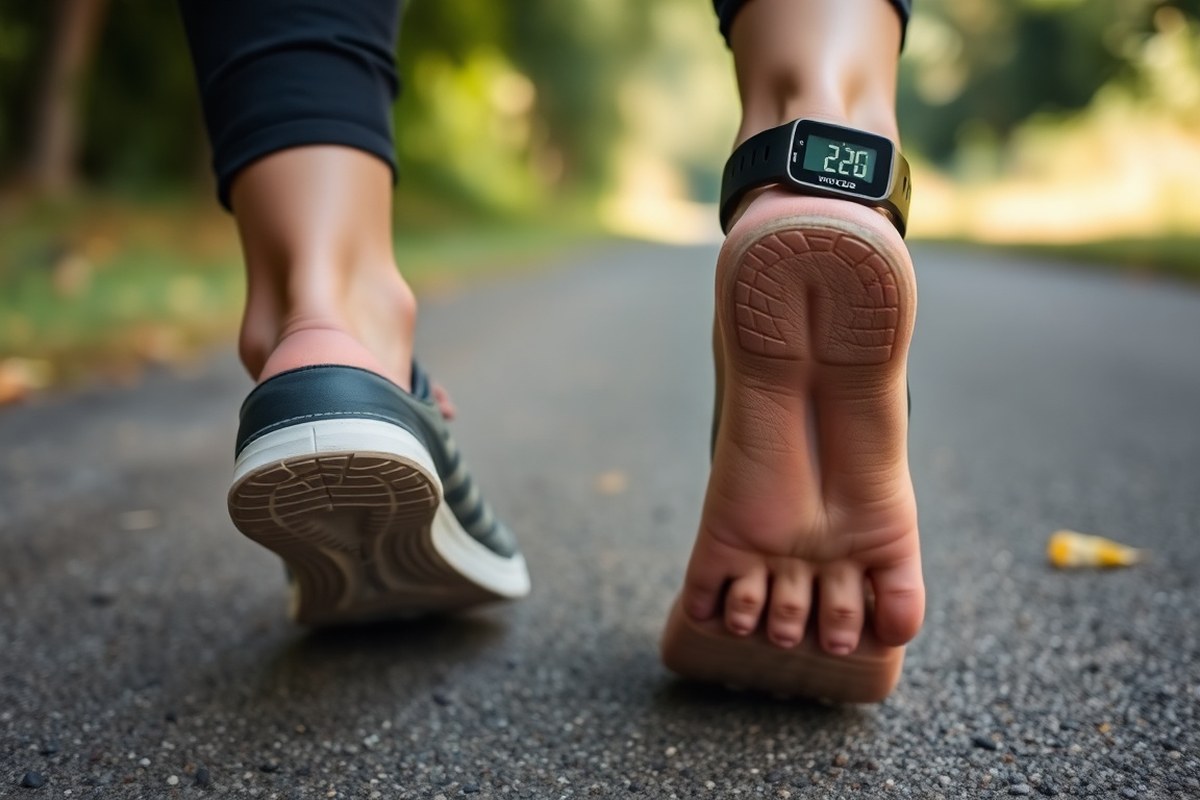
For an average adult man, walking 22,000 steps equals roughly 10.83 miles. This number comes from multiplying the steps by an average male stride length of 2.6 feet. For women, 22,000 steps typically cover about 9.17 miles, based on an average female stride of 2.2 feet.
Multiply your steps by your stride length in feet. Then divide by 5,280. This converts feet to miles.
For example, for men: 22,000 steps × 2.6 feet = 57,200 feet. Dividing 57,200 by 5,280 gives about 10.83 miles. For women: 22,000 steps × 2.2 feet = 48,400 feet, which is about 9.17 miles.
This range matters because stride length varies with height and walking style. The accepted miles for 22,000 steps usually fall between 9 and 11 miles.
Keep in mind, shorter stride lengths lower total miles. Longer strides increase distance walked for the same step count.
The Formula to Convert Steps into Miles

The formula to convert steps into miles uses your total steps and stride length. You multiply the number of steps by your stride length in feet.
Then, divide the result by 5,280, which is the number of feet in one mile. The formula looks like this: Miles = (Steps × Stride Length in feet) ÷ 5,280.
Your stride length is the length of a single step measured in feet or inches. To calculate distance, convert your stride to feet for accuracy. For example, a 30-inch stride equals 2.5 feet when divided by 12.
Understanding stride length helps find the real distance walked beyond just step numbers. People with shorter strides take more steps per mile.
Longer strides mean fewer steps. For example, an average woman’s stride is 2.3 feet and a man’s is 2.5 feet, making 10,000 steps about 4.73 miles with a 2.5-foot stride.
Always measure your stride length in feet, not inches or meters, before converting steps to miles.
How Stride Length Affects Steps to Miles Conversion
Stride length varies by gender, height, and walking pace, affecting how you convert steps into miles. Men tend to have longer strides than women. Men with the same height usually have a 5-8% longer stride.
This happens because their leg length and body movements differ. These small differences affect how far each step goes.
Height also influences stride length. Research shows your stride length is roughly 41.3% of your height during normal walking.
Taller people naturally cover more ground with each step. Your pace plays a role too: running increases stride length compared to walking.
| Pace | Steps per Mile | Average Step Length (feet) |
|---|---|---|
| Walking (20 min/mile) | 2,250 | 2.35 |
| Jogging (12 min/mile) | 1,875 | 2.82 |
| Moderate Run (10 min/mile) | 1,600 | 3.30 |
| Run (8 min/mile) | 1,400 | 3.77 |
| Fast Run (6 min/mile) | 1,064 | 4.96 |
Stride lengths change from about 2.2 feet for women walking to nearly 5 feet during fast runs. For men, the average walking stride is closer to 2.6 feet or 30 inches. These details can help you better estimate your miles from your step count.
Walk 10 steps on level ground to find your stride length. Measure that total distance in feet and then divide it by 10. This helps you track distance better than using standard stride guesses.
How Long It Takes to Walk 22,000 Steps at Different Paces
Walking 22,000 steps can take between four to seven hours depending on your pace. Slower walking speeds around 2 mph take longer.
Power walking over 4 mph cuts the time nearly in half. Knowing your pace helps you plan when and how to reach this step count comfortably.
Walking Time at a Leisurely Pace (2.0 Mph)
At about 2.0 mph, walking 22,000 steps takes roughly 6 to 7 hours. This pace means you cover about 2 miles per hour.
So it’s a slow, relaxed walk. Your stride length is shorter, so steps add up but miles come slower.
Walking this slow feels easy and is gentle on your joints. It’s good if you want to enjoy sights or recover from exercise. Slow pace burns fewer calories but still helps with endurance and low-impact cardio.
Here are traits of walking at a leisurely 2.0 mph pace:
- Duration: About 6.5 to 7 hours for 22,000 steps
- Distance covered: Roughly 9 miles
- Stride length slightly shorter than moderate pace
- Calories burned lower than brisk or power walking
- Easy to maintain, good for recovery days
Time at Moderate Brisk Walking (3.0 Mph)
A moderate pace of 3.0 mph cuts time down to about 4.5 hours for 22,000 steps. This speed is close to a natural walking rhythm for many adults. It also matches CDC guidelines for moderate physical activity.
At this pace, your stride length averages about 2.1 feet, roughly 2,500 steps per mile. The calorie burn improves, making this a good balance of fitness and stamina. Walking 3 mph fits well into daily routines without much strain.
Walking 22,000 steps at moderate pace benefits you by:
- Completing the walk in about 4 hours and 30 minutes
- Burning 350 to 400 calories for a 155-pound person
- Engaging cardiovascular and muscle endurance systems
- Helping maintain steady energy without fatigue
- Building sustainable daily activity habits
Power Walking and Impact on Duration (4.0+ Mph)
Power walking at 4 mph or faster shortens 22,000 steps to about 3 to 3.5 hours. This pace uses a longer stride that can grow by 5 to 10 percent. Power walking also feels more intense and burns more calories per minute.
If you want to finish 22,000 steps on a tighter timeline, walking fast works well. It improves cardiovascular fitness better but requires more energy and joint care. You should warm up and stay hydrated during fast sessions.
Power walking advantages include:
- Finishing the walk in 3 to 3.5 hours
- Increasing calorie burn significantly
- Improving leg strength and stamina
- Saving time compared to slower paces
- Possibly more joint stress, wear good shoes
Calories Burned Walking 22,000 Steps
Walking 22,000 steps burns about 700 to 900 calories for a person weighing 150 pounds. The exact number depends on your weight and walking pace. Heavier people burn more calories, while faster walking raises the number too.
One mile of walking burns 70 to 110 calories on average. This depends on your body weight and effort level. The heavier or faster you walk, the more calories you burn.
About 22,000 steps equal 9 to 11 miles. To find calories burned, multiply miles by 70 to 110.
This gives a simple estimate of your calorie use. For example, a 180-pound person walking briskly might burn closer to 900 calories for 22,000 steps.
Body weight affects calories burned because moving extra weight takes more energy. Your pace matters since jogging or running uses more calories than slow walking. Terrain counts too, hilly routes make your muscles work harder, boosting calorie use.
Use this calorie info to adjust your fitness goals or diet. Losing one pound a week needs a 500-calorie daily deficit. This means burning or cutting 500 calories every day.
It adds up to about 3,500 calories a week. Walking 22,000 steps can burn a big chunk of that deficit.
Your total depends on your diet and other activities too. Walking alone might not cover everything.
Start tracking your weight, steps, and walking speed to fine-tune your calorie estimates. Many apps and fitness trackers gather your step data.
They then suggest calories burned based on that info. This helps you track your progress easily.
Walking on uneven terrain or increasing your pace helps burn more calories without extra steps.
Practical Tips for Measuring Your Stride Length
To measure your stride length accurately, walk 10 normal steps on a flat, measured surface. Measure the total distance you covered and then divide by 10. This gives you a stride length good enough to convert steps into miles precisely.
Selecting a Flat, Measured Surface
Choose a surface that is flat and even, like a sidewalk or gym floor. This avoids uneven ground that shortens your stride.
Uneven terrain cuts your stride by 10 to 20%. This change can affect your measurement accuracy.
Use a spot with a visible measuring tape. Or mark a fixed distance with tape or chalk.
Keep the distance easy to see while you walk. Avoid grassy or sloped areas since they create inconsistent step lengths.
Counting and Measuring 10 Normal Steps
Start by marking your starting point on the surface. Walk 10 steps at your usual speed without stretching your stride.
Mark where your last step lands. Then, use a tape measure or ruler to check the total distance from start to endpoint. The more precise your tape or ruler, the better your reading.
- Place a tape measure on the flat surface or prepare a measuring wheel.
- Mark a clear start line with tape or chalk.
- Walk 10 normal steps, counting each one carefully.
- Mark where your tenth step lands.
- Measure the distance between the start line and end mark.
- Record the total distance in feet or inches for accuracy.
Calculating Average Stride Length
Divide the total distance you measured by 10 to get your average stride length. For instance, if your 10 steps cover 50 feet, each step is 5 feet.
Re-measure your stride length every few months or if you change your walking pace or footwear. This helps keep your steps-to-miles conversion accurate.
How Walking 22,000 Steps Compares to Fitness Milestones
Walking 22,000 steps equals about 10.4 miles, depending on your stride length. This distance is close to running or walking a half-marathon, which is 13.1 miles. You cover roughly 80% of a half-marathon by walking 22,000 steps.
A daily goal of 22,000 steps is ambitious but doable for highly active people. Many start with 5,000 to 7,500 steps daily, which means about 2.37 to 3.55 miles. Moving up to 22,000 steps means nearly tripling your effort.73 miles.
Consistently walking 22,000 steps boosts endurance and burns a significant number of calories. It can improve cardiovascular health, stamina, and help with weight management.
The tradeoff is time: walking 10.4 miles usually takes around 3 to 4 hours. So you need to set aside enough time and stay hydrated.
Here’s a quick comparison of steps, distance, and activity:
| Daily Goal | Distance (miles) | Approximate Walk Time | Activity Level |
|---|---|---|---|
| 5,000 | 2.37 | 46 min | Sedentary / Beginner |
| 10,000 | 4.73 | 1 h 31 min | Active |
| 15,000 | 7.10 | 2 h 17 min | Very Active |
| 20,000 | 9.47 | 3 h 03 min | Highly Active / Athlete |
| 22,000 | 10.4 (approx) | 3 h 20, 4 h | Highly Active / Athlete |
To reach 22,000 steps safely, build up gradually. Add 1,000 to 2,000 steps to your daily average each week. Overdoing it too fast can cause soreness or injury.
This goal isn’t for everyone daily but sets a strong benchmark. Achieving it shows a high fitness level and serious walking stamina. Even reaching 15,000 steps regularly offers great health improvements without demanding as much time.
Common Pitfalls When Converting Steps to Miles
Step counts vary a lot between devices like smartphones, fitness bands, and smartwatches. Each device uses different sensors and algorithms to detect movement.
So results don’t always match. That’s why comparing step counts across gadgets can cause confusion when converting steps to miles.
Not measuring your actual stride length is a common mistake. Many people assume the average stride fits them or rely on fixed numbers online. Your stride length changes based on your height, pace, and even the type of activity.
So guessing can make your distance estimate off by a mile. Over 22,000 steps, the error can be even bigger. This means you won’t track your walking accurately.
Terrain and activity type also affect how far you go per step. Walking uphill, on trails, or through crowded places shortens your stride.
Running or walking fast lengthens it. These shifts skew your conversion if you use one stride length for all conditions.
- Using device step counts without checking accuracy.
- Assuming one average stride length for all walks.
- Ignoring pace changes that alter step length.
- Mixing walking and running steps in one calculation.
- Not resetting devices regularly, which can accumulate errors.
- Not considering variations from uneven terrain or obstacles.
Measure your stride length on flat ground at your usual pace to improve accuracy.
You can reduce errors by measuring your stride length yourself. Mark 20 feet on a sidewalk, walk it naturally, and count your steps.
Divide 20 by steps taken for your average stride. Update this number if you change your pace or terrain often.
Also, check your device’s manual to understand its step-counting method. Some apps let you calibrate stride length manually or adjust for running versus walking. That extra effort makes your distance tracking more real.
It keeps your fitness goals on point. Your progress reflects what you’ve really done.
A Practical Schedule to Reach 22,000 Steps Safely
Gradually increase your steps each day to reach 22,000 without injury. Split your goal into smaller, daily targets that fit your schedule. Take rest days to recover and avoid burnout.
Starting with a Baseline Step Count
First, find out how many steps you take on an average day. Use a tracker for a few days to get this baseline number. Knowing your starting point helps set a realistic, safe daily goal.
Starting at 5,000 steps is a safe jump from 3,000 steps. Walking 3,000 steps equals about 1.4 miles, so this won’t overstress your body. This gentle start keeps soreness and injuries away.
Incremental Increases over Weeks
Add steps gradually each week to build endurance and strength. Increase your daily step count by 1,000 to 2,000 every 5 to 7 days. This method helps your muscles and joints adjust comfortably.
Here’s a step-by-step plan to raise your steps safely:
- Track your usual daily steps for three days.
- Add 1,000 steps per day next week beyond your baseline.
- When comfortable, increase by another 1,000 to 2,000 steps the following week.
- Repeat these weekly increments until you reach 22,000 steps.
- Break your walks into smaller sessions during the day if needed.
- Wear proper shoes to support longer walking sessions.
- Stay hydrated and carry water for longer walks.
Start with 5,000 steps. Add 1,000 steps next week. Add 2,000 steps the week after.
Split walking sessions into morning, lunch, and evening to avoid fatigue. This pacing prevents overuse injuries like shin splints.
Rest and Recovery Days Integration
Rest days let your muscles heal and reduce injury risk. Include at least one or two rest or light activity days weekly. Light activities can be stretching or gentle yoga to stay limber.
Pay attention to any pain or persistent soreness. Cut back your steps or rest more to avoid long-term problems when these occur. Recovery also means good sleep, proper nutrition, and stretching after walks.
Your Step-by-Step Plan to Walking 22,000 Steps
Follow this plan to reach 22,000 steps safely and track your progress well.
- Day 1: Measure your stride length using the tips shared. This helps convert steps to miles correctly.
- Week 1: Walk 10,000 steps daily to build a routine. Notice if you feel comfortable or tired.
- Week 2: Increase your step count to 15,000 daily. Track your total miles using your stride length.
- Week 3: Add short breaks during your walks if you feel too tired. Check how this affects your pace.
- Week 4: Aim for 22,000 steps on three days. Note how long it takes at your usual pace.
- After 4 weeks: Review your calorie burn estimates from your activity tracker. Adjust your meals if needed.
- Ongoing: Keep tracking your steps and miles weekly. Modify your stride length if your walking style changes.
Frequently Asked Questions
How Many Miles Are 22,000 Steps for an Average Person?
For most people, 22,000 steps equals about 10 to 11 miles. It depends on your stride length, which can vary by height and walking style.
Is Walking 22,000 Steps Equivalent to Running a Half-Marathon?
No, 22,000 steps cover roughly 75% to 85% of a half-marathon distance. A half-marathon is 13.1 miles, so you’re close but not quite there.
How Can Measuring My Stride Length Improve Step Distance Accuracy?
Knowing your precise stride length gives you a better steps-to-miles estimate. This makes your fitness tracking more accurate and useful.
What Is the Best Pace to Walk 22,000 Steps Comfortably?
A moderate pace that you can sustain for hours works best. Walking too fast might cause early fatigue while too slow extends the total time.
Can Walking 22,000 Steps Daily Help with Weight Loss?
Yes, walking this many steps burns significant calories and supports weight loss. Consistency matters, so pair walking with a balanced diet.
The Bottom Line
Walking 22,000 steps equals about 9 to 11 miles based on your stride. Use your stride length for an accurate count. Start walking today and watch your health and fitness improve step by step.