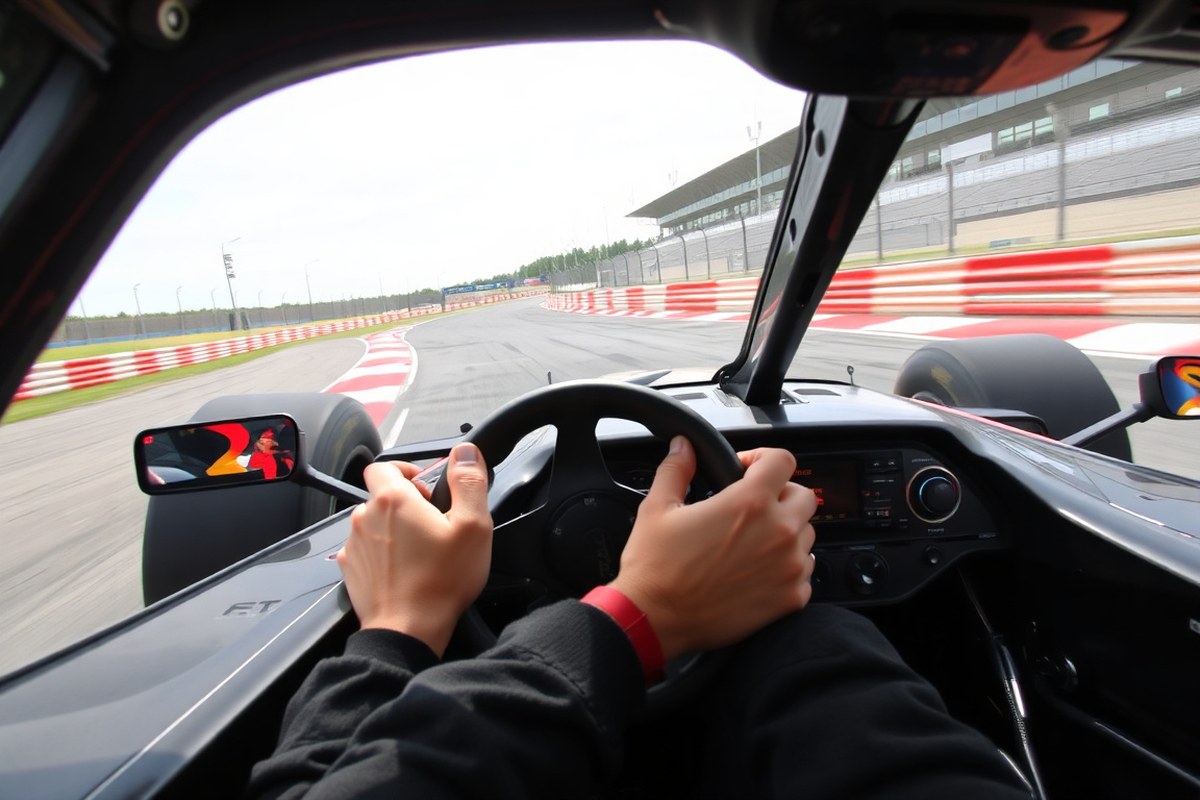
Do F1 Cars Have Power Steering? Full Guide to How and Why It Works
Do F1 cars have power steering? Yes, they do, but it’s not like what you find in regular road cars. Formula 1 cars use a special hydraulic power steering system.
It is very light and helps drivers control the car precisely at high speeds. Without this system, steering through fast corners would be very hard.
The forces on the wheel are extremely strong. Drivers need help to handle them.
This power steering reduces driver fatigue during the race. It lets drivers focus more on speed. They don’t have to fight muscle strain as much.
The system is built to be very lightweight. This keeps the car fast and easy to move. Engineers work hard to add little extra weight.
You hear drivers mention steering a lot in F1 broadcasts. They often talk about how it helps on tough tracks. The steering makes driving easier for them.
Key Takeaways
- F1 cars use hydraulic power steering systems to handle extreme driving forces.
- Power steering in F1 reduces driver fatigue during intense races.
- The system is very lightweight to avoid slowing the car down.
- Without power steering, controlling an F1 car at high speeds would be nearly impossible.
- F1 power steering provides precise feedback for better driver control.
- Power steering systems in F1 are compact to maintain aerodynamic efficiency.
Do Formula 1 Cars Have Power Steering?
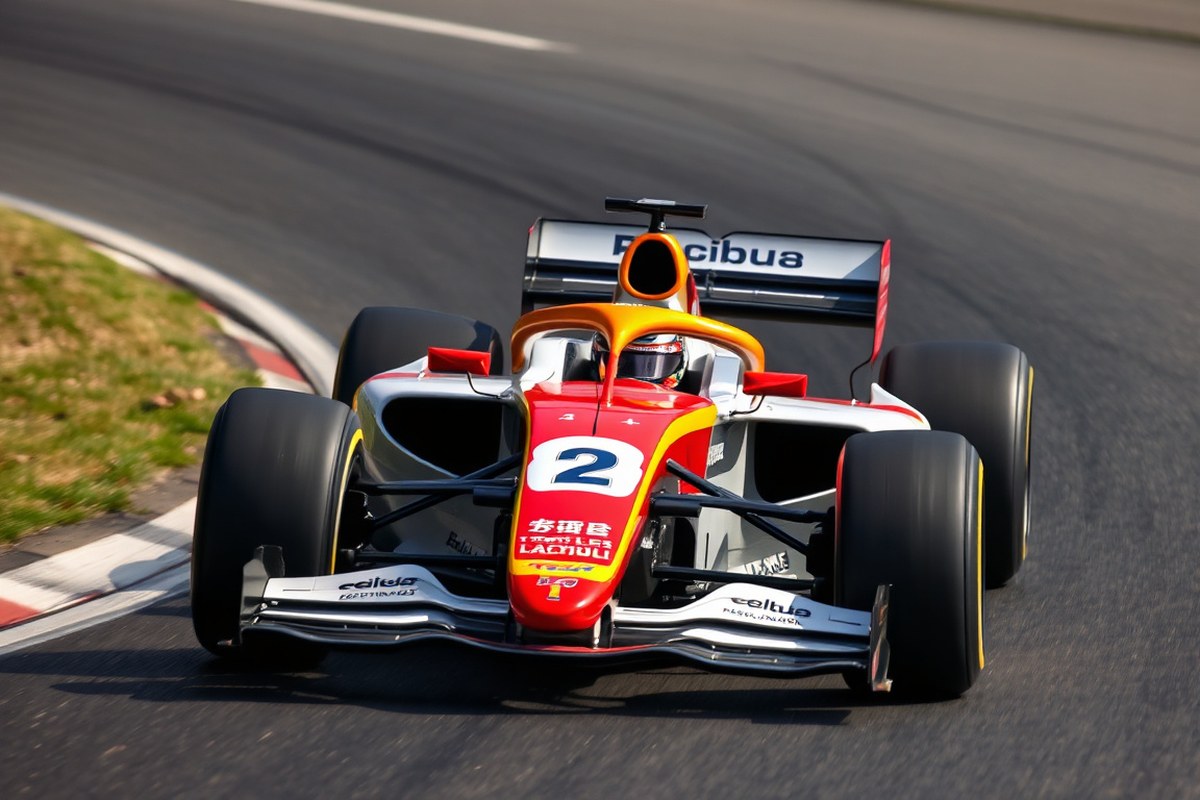
Formula 1 cars do have power steering. It’s a hydraulic system built for precision. Unlike normal power steering, F1 systems do more than ease effort.
They help drivers feel the car better. This control is important in tough conditions. At speeds above 300 km/h, downforce pushes hard on the tires.
These forces make steering by hand nearly impossible. Power steering is a must.
The system uses a conventional rack and pinion setup with hydraulic assistance that responds instantly. This system keeps steering sharp and direct. It matters a lot on tight corners.
Drivers rely on this to save milliseconds. The power assistance keeps the steering effort manageable without losing feedback from the road.
This hydraulic power steering is important because F1 cars generate massive grip and cornering forces. F1 cars weigh about 746 kg. Still, high speed and downforce cause heavy steering loads.
This combination makes steering tough without help. Assisted steering helps drivers stay in control during tough moments.
Quick and sharp turns need this support. It’s key during intense racing.
How Does the Power Steering System in F1 Cars Work?
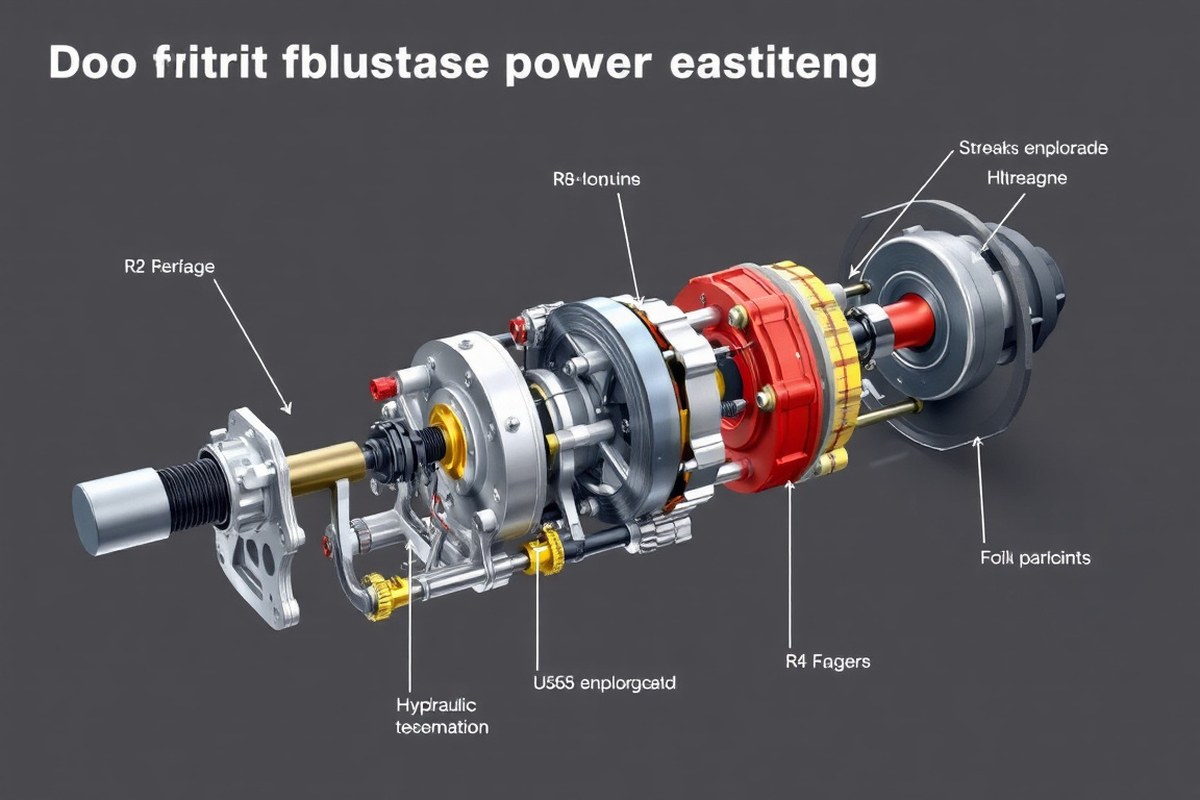
Formula 1 cars use hydraulic power steering systems. These systems help drivers handle high speeds and heavy downforce. They make steering easier and more precise.
The system reduces the effort needed to turn the steering wheel during intense cornering. It relies on hydraulic pressure combined with electronic control for precise and adjustable assistance.
Hydraulic Assistance Mechanism
The hydraulic system pumps fluid under pressure to help move the steering rack. When the driver turns the wheel, sensors detect this input and command a valve to open. This valve adjusts hydraulic pressure that assists the rack’s movement, reducing driver effort.
The pressure changes according to the car’s speed through a variable-assist valve. At high speeds, less assistance is given to maintain direct steering feel. At lower speeds or sharper turns, more hydraulic pressure helps the driver steer easily.
Hydraulic fluid flows through lines from a pump powered by the car’s engine. The system uses an electro-hydraulic setup. It combines electronics with hydraulics.
This gives instant response and fine control. It also helps to tune the system’s linearity for a natural steering feel.
Rack and Pinion Steering Design
The core part is the rack and pinion. It converts steering wheel turns into side-to-side rack movement. This controls the front wheels.
The pinion gear is attached to the steering shaft and meshes with the rack’s linear teeth. Turning the wheel spins the pinion, sliding the rack left or right.
Hydraulic assist is built into the rack. Hydraulic pressure pushes or pulls the rack. This happens when you steer.
This reduces the force needed by the driver, especially under heavy loads during cornering. The setup also allows fine adjustments of assistance levels through the variable-assist valve in the rack.
This design originated from BMW’s 1930 invention but evolved for racing’s demands. The system balances assistance with precise feedback.
This lets drivers feel what the tires do on track. It keeps control sharp.
Steering Wheel Input and Feedback
The steering wheel is connected to electronic sensors that measure the driver’s movements precisely. These sensors send data to the power steering control unit. The unit adjusts the hydraulic valve.
It gives just the right assist for input and speed. This helps the driver steer smoothly.
Feedback is a key factor. The system must deliver hydraulic help without dulling the driver’s connection to the road. Engineers tune the system’s responsiveness carefully.
Drivers feel both power assist and the tires’ grip. This balance improves driving feel.
High-speed corners require strong downforce, meaning the driver would struggle to steer without assistance. The hydraulic system ensures the driver can make quick, controlled inputs while maintaining feel and accuracy.
Keep hydraulic fluid clean and check pressure regularly. Dirty fluid can reduce system precision and cause failures.
Why Can’t F1 Power Steering Be Electric?
Electric power steering is not allowed in Formula 1. The FIA permits only systems that ease steering effort. These systems must not use electronic control.
The rules guard against any system that can do more than assist the driver physically. Hydraulic systems remain the standard because they provide the right balance of performance and driver feedback.
FIA Regulations on Power Steering
Since 2002, FIA regulations prohibit power steering systems with any electronic control or electric power input. The rule states power steering may only reduce the effort needed to steer the car. This means no electrically powered or controlled steering systems are allowed in Formula 1.
The FIA says power steering must only reduce driver effort. This means teams can use just hydraulic setups.
No computer control or adjustments are allowed. They want steering to stay mechanical and direct.
Technical Challenges of Electric Systems in F1
Electric power steering adds complexity, weight, and maintenance demands that don’t fit well with F1 priorities. The systems need intricate calibration and constant monitoring to ensure reliability at high speeds. This increases costs and makes setup harder for teams balancing performance and efficiency.
Electric power steering needs to connect with other vehicle parts. This raises the chance of faults during the race. Unexpected issues can come up with these systems.
Hydraulic systems, while not perfect, are simpler and easier to trust under racing conditions. Teams focus on optimizing hydraulic valves and pumps to get the best steering feel and response.
Performance and Feedback Considerations
One major drawback of electric power steering is poor driver feedback. F1 uses hydraulic systems for steering feel drivers require. Electric systems can’t give the detailed feedback drivers need.
This tactile info is important at high speeds. Feeling the road surface and tire grip through the steering wheel affects safety and performance.
With electronic systems, some natural feedback is lost, making the steering feel artificial. This can lead drivers to lose confidence, especially in challenging corners. Hydraulic power steering lets drivers feel limits better, helping them push the car effectively.
The table below shows how hydraulic and electric power steering compare in Formula 1 terms:
| Feature | Hydraulic Power Steering | Electric Power Steering |
|---|---|---|
| FIA Legal Status | Allowed (since 2002) | Banned (since 2002) |
| Driver Effort Reduction | Yes, purely mechanical | Yes, electronically assisted |
| Driver Feedback | Direct and precise | Reduced and artificial |
| System Complexity | Moderate, mechanical parts | High, requires electronics |
| Weight Impact | Added weight from pumps and valves | Similar or higher due to motors/controllers |
| Maintenance & Reliability | Established, easier to maintain | Higher risk due to electronics |
| Cost | Costly but manageable | More expensive and complex |
This comparison explains why hydraulic power steering remains the only viable option in F1. Its balance between feedback, simplicity, and rule compliance suits the sport’s demands. Electric systems, while advanced, introduce issues that hinder racing performance and driver control.
Since When Have F1 Cars Used Power Steering?
Power steering first appeared in Formula 1 in 1988, introduced by the Ligier team. This early use aimed to help drivers control increasingly powerful and fast cars. The extra steering assistance made tight corners easier without exhausting the driver.
During the 1990s, more teams adopted hydraulic power steering systems. These systems used hydraulic pressure to reduce steering effort.
By the early 2000s, power steering had become standard on every F1 car. This trend matched the rise in aerodynamic downforce and tire grip, which increased steering loads.
The governing body made no early bans on power steering. Instead, they focused on safety and fairness with other tech rules. Hydraulic power steering stayed popular because it matched the cars’ needs well.
It worked better for F1 cars than electric systems. That’s why teams kept using it. This kept the steering precise under extreme race conditions.
Rules later tried to restrict power steering. This cut car complexity. It also helped lower the weight of the cars.
These rules pushed teams to optimize hydraulic systems rather than remove them. Steering systems had to be small and reliable.
F1 cars need tight packing of parts. Keeping weight low was also a must.
Power steering systems evolved alongside car design. Teams improved response times and controllability without adding too much weight. These upgrades helped drivers keep control at fast speeds.
They worked well in tight chicanes. That gave an edge on technical tracks.
Over time, the technology also adjusted to regulate power assist levels, helping preserve driver skill. Too much assistance could reduce feedback, so engineers balanced pressure and system performance carefully. This balance remains critical to racing success and vehicle safety.
How Does Power Steering Improve F1 Car Handling and Driver Safety?
Power steering in F1 cars helps drivers maintain precise control and handle intense cornering forces. It lowers the physical effort required to steer the car. This reduces driver fatigue during long, fast races.
Less effort means the driver stays fresher for longer. This lets drivers focus better on racing lines and strategies.
They don’t get as tired from turning the wheel all the time. Steering feels easier, so concentration improves.
The main safety benefit comes from better stability and quicker corrections, especially at high speeds. Power steering systems allow drivers to make swift, accurate maneuvers without losing grip or control. That improves the car’s overall performance and lowers the risk of losing control during critical moments.
- Reduces steering effort, preventing early muscle fatigue
- Allows faster, smoother cornering with high downforce cars
- Improves driver focus by lessening physical strain
- Improve vehicle stability through precise steering control
- Supports quicker corrective actions at high speeds
Even with power steering, F1 drivers still train hard to handle lateral forces. The system isn’t set to make steering easy but to balance physical demand with control. Experts say this setup lets drivers keep top form all race long.
It works well under heavy track loads and shifting tire grip. The driver can push harder and stay consistent.
Always make sure your power steering system is properly adjusted. Incorrect tuning can cause unpredictable handling.
Without power steering, turning the wheel would be really tough. Wide tires and strong downforce make the steering very heavy. Drivers would get exhausted quickly during races.
That would increase fatigue quickly and reduce safety margins. Power steering in F1 is subtle but very important.
It helps cars stay fast and drivers stay alert. This tech keeps race performance high in tough conditions.
What Are the Disadvantages of Power Steering in Formula 1 Cars?
Power steering in F1 cars adds some weight. Engineers design these systems to be as light as possible. They carefully manage weight to keep performance high.
This extra mass affects the car’s power-to-weight ratio, which is critical in racing. Every few pounds gained can slightly slow down acceleration and reduce overall lap times.
The system’s mechanical parts also add complexity. More parts mean more chances for something to break during a race. Power steering failures increase steering effort suddenly.
This can cause loss of driver control. The risk is higher in fast corners.
Also, power steering can dull driver feel. F1 drivers usually prefer precise feedback from the road and tires. Adding power steering can make it feel less direct.
This reduces the driver’s feel for small track changes. It can slow quick adaptation during driving.
Teams carefully weigh these trade-offs. They minimize weight by using lightweight materials like aluminum and carbon fiber. Systems are also built to be compact to reduce aerodynamic drag.
The power steering pump and fluid add a few pounds. They also take up space inside the car. This space might be used for other parts.
Reliability is another concern in racing. An unexpected failure could cost the driver precious seconds or cause an accident.
Teams spend extra time testing steering components to avoid this. Still, the more complex the system, the bigger the risk compared to a pure mechanical setup.
Some drivers feel power steering can interfere with skill expression. Steering effort with assistance might not train the driver as well in feel and strength. Some argue power steering makes drivers less connected to the car.
Feeling the car’s handling is important in F1. This debate happens often among engineers and drivers.
Using power steering means balancing weight and complexity. The benefits include better control and less driver fatigue. Teams weigh these factors before deciding to use it.
Losing even a few pounds is tempting but sacrificing steering ease can hurt performance. Each team decides based on their car design and driver preferences.
Do Formula 2 and Formula 3 Cars Have Power Steering?
Formula 2 and Formula 3 cars generally do not have power steering. The latest Formula 3 car in 2025 did not have it. It kept the steering effort within FIA limits.
This meant no power steering was added. The Formula 2 car for 2027 to 2029 was shown in 2026.
It also did not have power steering. The tradition of manual steering was kept.
Drivers feel much more steering force in F2 and F3 than in Formula 1. Without power steering, they rely completely on physical strength and skill. This adds to the challenge and driver development in these junior series.
Power steering systems in Formula 1 reduce steering effort drastically, allowing faster reactions on tight corners. F2 and F3 avoid it to keep cars simpler and cheaper.
The steering effort in F2 and F3 must also comply with FIA safety limits. So it cannot be too heavy.
| Category | Formula 1 | Formula 2 | Formula 3 |
|---|---|---|---|
| Power Steering System | Hydraulic electric-assist | No power steering | No power steering |
| Steering Effort | Low (due to power assist) | Moderate to high (manual effort) | Moderate to high (manual effort) |
| Reason | Reduces driver fatigue, improves control | Cost control, developmental challenge | Cost control, developmental challenge |
| Introduction Year (latest model) | Ongoing development | 2027 model | 2025 model |
Without power steering, F2 and F3 drivers experience greater steering resistance. This helps them build strength and learn car handling at lower speeds. The absence also keeps car maintenance simpler and reduces costs for teams.
Steering effort across these formulas reflects their goals. Formula 1 uses technology to help drivers handle speeds and forces.
Formula 2 and 3 focus more on driver skill and affordability. So they avoid power steering systems.
What Unique Technologies Have Been Used in F1 Power Steering Systems?
F1 power steering systems have seen unique innovations like the Mercedes DAS and tiny hydraulic valves. These developments help drivers steer with more precision and less effort on high-speed tracks. The technology evolves to keep up with F1’s intense demands for speed and handling.
Mercedes DAS and Its Influence
Mercedes introduced the Dual-Axis Steering (DAS) system in 2020. It lets drivers change the front wheels’ toe angle. They do this by pushing or pulling the steering wheel along its axis.
This controls how the wheels point. This reduces tire wear and improves grip during tire warm-up laps and straights.
DAS impacts steering by changing how the car behaves in corners and straights. Drivers can fine-tune the car’s direction in real time without mechanical changes. While the system temporarily improved performance, it was banned after 2020 due to rule changes.
Miniature Hydraulic Servo Valves
Modern F1 cars use highly precise miniature hydraulic servo valves inside their power steering systems. These valves control oil flow to help the driver turn the wheel with minimal effort. The valves operate at very high pressures, around 150 bar (2,175 psi), to provide quick responses.
Tiny valves make steering feel smooth and responsive. This helps drivers correct quickly in fast corners. The valves control flow for better steering.
They must withstand intense heat from the engine bay, often over 100°C (212°F). Teams invest thousands of dollars in custom-built hydraulic components to balance weight and durability.
Evolution of Steering Wheel Controls
Steering wheels now combine power steering with multiple controls for car settings. Drivers can adjust brake bias, engine modes, and differential settings without letting go of the wheel. This integration helps them respond fast to changing race conditions.
Buttons and paddles are ergonomically arranged to avoid accidental inputs while maintaining steering feel. The control systems link electronically to actuators in the power steering hydraulics, allowing smooth tuning. This tech lets teams extract the maximum from both driver and machine.
Keep hydraulic fluid clean to avoid steering issues. Maintain the right pressure too. This prevents lag or failure during the race.
What Would Happen If F1 Cars Didn’t Have Power Steering?
Without power steering, drivers would struggle to handle F1 cars at high speeds. These cars are extremely agile, and their steering effort is very high without assistance. Experts say cornering fast without power steering would be nearly impossible, especially on tight turns.
Removing power steering would reduce cornering speeds significantly. The grip and speed drop without precise steering. Drivers can’t react fast enough.
They also can’t apply enough force. Drivers would tire faster too, increasing the risk of losing control during long races.
Steering these cars without help feels like holding a heavy force. You must keep it steady all the time. Then, you still need quick, fine turns.
The steering system must generate much more torque manually, which can slow down driver responses. Over the course of a race, the pain and fatigue would reduce driver performance and safety.
Experts in motorsport engineering argue that power steering helps drivers maintain control and reduce mistakes. It improves safety by making steering smooth and predictable under extreme G-forces. Past tests without power steering showed significant drops in lap times and more driver fatigue.
No major calls to ban power steering have surfaced recently. The current rules require it to keep drivers safe and competitive. All recent F1 cars use power steering.
Even Formula 2 and 3 require it. It helps drivers handle the cars better.
Without power steering, F1 cars slow down in corners. They would also be less safe. More steering effort uses up drivers’ strength fast.
This lowers their ability to push hard. That’s why this technology remains essential for the sport’s speed and safety standards.
How to Understand and Appreciate Power Steering in F1 Cars
Understand why power steering matters in Formula 1. It changes how drivers handle the car.
Power steering helps drivers steer with less effort and more control. Use this plan to follow along with races and technical news.
- Before Watching a Race: Read up on the current F1 steering systems used by top teams. Notice mentions of hydraulic or mechanical parts to spot power steering in action.
- During the Race: Watch how drivers handle tight corners and quick direction changes. Good power steering shows in smoother, faster steering inputs without tiring the driver.
- After the Race: Check post-race tech analysis from official F1 sources or engineers. Look for comments on steering feel and how it affected lap times or driver safety.
- Week 1: Follow news on any new power steering developments or rule changes. That helps understand how teams try to gain an edge within regulations.
- Week 2: Compare F1 power steering with Formula 2 and Formula 3 systems online. Seeing differences sharpens your insight into racing tech levels.
- Ongoing: Listen to driver interviews about steering difficulty and feedback. Their insights reveal how important power steering is for controlling the car at high speed.
- Month 1: Visit forums or read blogs where engineers discuss steering hydraulics. That deepens your technical knowledge and keeps you updated on trends.
Frequently Asked Questions
Is It Hard to Steer a F1 Car Without Power Steering?
Yes, it would be very hard to steer an F1 car without power steering. The extreme downforce and high cornering speeds create forces too strong for manual effort alone. Power steering helps drivers maintain control and focus during the race.
What Is the 75% Rule in F1 Qualifying?
The 75% rule requires drivers to beat 75% of the fastest Q1 time. Drivers must set a lap within that limit to qualify. This rule ensures only fast drivers move on.
It ensures only competitive cars race. This rule keeps the field safer and fairer by limiting very slow entries on track.
Why Can’t Lamborghini Join Formula 1 as a Constructor?
Lamborghini doesn’t have a current F1 engine program or constructor entry. F1 requires a full team with design, chassis, and engine development. Without that, they can’t compete, even if they supply engines to other teams.
Why Did Formula 1 Ban Refuelling During Races?
F1 banned refuelling to improve safety and reduce pit stop complexity. Removing refuelling lowers fire risks and makes strategies simpler. It also shifted teams to focus more on tyre management instead of fuel loads.
Which Race Cars Other Than F1 Use Power Steering?
Many modern racing series use power steering, including NASCAR and Formula 2. These vehicles also face high cornering forces requiring driver aid. Power steering helps reduce fatigue and maintain precision under tough conditions.
The Bottom Line
Formula 1 cars use power steering to manage extreme forces with precision and safety. Understanding its role makes watching races more engaging and insightful. Start by noticing steering actions in the next Grand Prix and how they help drivers win.