How Do You Know When Your Transmission Is Out: 9 Clear Signs and What to Do
How do you know when your transmission is out? The most obvious signs include difficulty shifting gears, strange noises, and leaking fluid.
These problems point to major transmission issues that need quick attention. Ignoring these signs can make repairs more costly or even require a full transmission replacement.
Start by checking your transmission fluid. The color and smell reveal internal damage before it’s too late.
Also, listen carefully for grinding or whining sounds when you drive. These noises usually mean the transmission is wearing down or parts are failing.
Watch how your vehicle shifts. Hesitation, slipping, or harsh shifts signal trouble inside the transmission. Don’t keep driving if these problems worsen.
Let the car cool down. Then get a mechanic to inspect it soon. Have the mechanic do a full check as soon as possible.
Key Takeaways
- Transmission fluid that smells burnt or is dark suggests internal damage.
- Grinding, whining, or clunking noises often mean transmission parts are failing.
- Slipping gears or delayed shifting usually signals transmission problems.
- Check for fluid leaks under your car regularly to catch issues early.
- Let an overheated transmission cool for 20 to 30 minutes before driving.
- Early repairs cost less than waiting for a full transmission rebuild.
1. Recognizing When Your Transmission Is Failing

The most common way to know your transmission is out is by noticing several major signs. These include grinding or shaking when shifting gears and a delay or hesitation in gear changes.
The vehicle likely has a failing transmission when it slips out of gear. It may also struggle to move forward or backward properly.
Unusual noises, such as clunks and whines, can also signal transmission trouble. Look for fluid leaks under the car, usually a reddish or brownish stain.
Low or dirty fluid harms how the transmission transfers power. This causes noise and shifting troubles.
It helps to check a transmission trouble checklist to spot problems early:
- Grinding, shaking, or jerking when shifting gears
- Delayed or rough gear changes
- Transmission slipping out of gear during acceleration
- Low or leaking fluid with a burnt smell
- The vehicle hesitates or won’t move when in gear
One symptom alone might not mean your transmission is shot. Multiple signs together raise the odds it’s failing.
This matters because internal parts like clutches and solenoids wear down fast without fix. The more you drive with these symptoms, the more damage happens.
You can confuse transmission noise with engine or exhaust sounds, so listen carefully. Also, slow or rough starts might look like a battery or fuel issue instead. The key difference is that transmission problems happen mostly when shifting or accelerating.
Notice these symptoms? Don’t drive far. Have a mechanic check the transmission soon.
Repairs may be expensive, often around $4,000 or more if a full replacement is needed. Spotting problems early can save money and prevent getting stranded on the road.
2. How Transmission Fluid Reveals Internal Issues
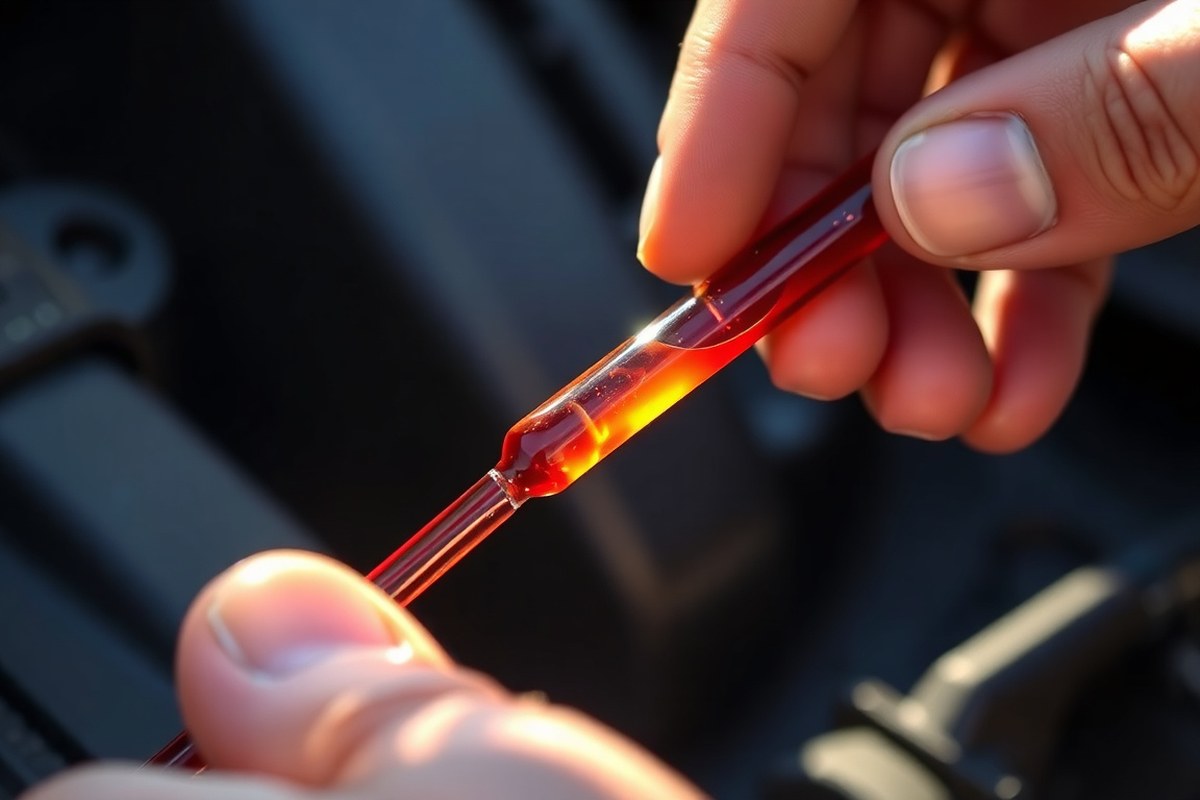
Transmission fluid condition and levels tell you a lot about your transmission’s health. Dark, burnt-smelling fluid or low fluid levels often point to internal issues. Checking your transmission fluid regularly helps catch problems early before they get worse.
Checking Transmission Fluid Level Safely
Always check transmission fluid on a level surface with the engine warm and running. Many automatic transmissions have a dipstick near the engine labeled “transmission.” Pull it out, wipe it clean, then reinsert and remove again to check the level.
The fluid should reach the marked “full” line on the dipstick. Low fluid is a red flag, possibly showing a leak or consumption inside the transmission. Don’t open the transmission reservoir while hot to avoid burns or damage.
Identifying Healthy vs Burnt Fluid
Transmission fluid is usually bright red and clear when healthy. It should feel slick and smooth on your finger. Over time, fluid darkens with use but should not smell burnt or sharp.
A burnt smell, like burnt toast, means the fluid got too hot. It may no longer protect the parts. This can cause damage to your transmission.
Dark brown or black fluid with grit means serious wear inside. Metal flakes also show damage.
This needs immediate attention to avoid failure. That calls for professional attention immediately.
- Bright red or pink fluid means good condition
- Clear fluid without cloudiness is healthy
- Dark brown or black fluid signals overheating
- Burnt or sharp smells mean burnt fluid
- Gritty texture or metal flakes show internal damage
Smelling fluid that smells burnt almost always means it’s time for a mechanic.
Locating and Understanding Fluid Leaks
Look under your parked vehicle for red puddles or spots. Transmission fluid leaks usually appear near the front or under the middle of the car. Follow the spots to their highest point to find the source.
Leaks may come from old seals, cracked pans, or damaged hoses. Any visible leak means fluid levels can drop dangerously low, risking transmission failure. Have a professional check and fix leaks to avoid long-term damage.
3. Common Noises That Signal Transmission Damage
Whining, grinding, humming, and clunking are common noises that point to transmission issues. Whining often signals worn bearings or low transmission fluid.
Grinding usually means metal parts in the transmission are scraping. This is serious and needs quick attention.
Humming or buzzing noises tend to change with your vehicle’s speed. This can indicate a failing transmission pump or gears starting to wear out.
Clunking sounds happen more with manual transmissions. They occur when gears don’t engage smoothly or the clutch wears out.
To know if noise comes from the transmission or engine, notice where you hear it. This helps narrow down the problem. Transmission noises usually come from under the vehicle near the middle or back.
Engine noises come from the front under the hood. Also, listen to how the noise changes when shifting gears.
The sound moves with the transmission or happens in neutral. This shows the transmission likely causes the noise.
Quick sound check: A high-pitched whining during acceleration is common. First, check the transmission fluid level. Low or dirty transmission fluid costs $100 to $200 to replace but can fix many issues.
Grinding sounds usually need a mechanic’s inspection because they can signal serious damage. Humming or buzzing that grows louder with speed points to worn gears or bearings.
Driving with these noises can cause more damage quickly. Minor pump failure can quickly lead to total transmission failure. Repairs or replacement usually cost between $1,800 and $4,500.
The noise gets worse or happens with slipping gears or delays. Stop driving and contact a professional immediately.
Sometimes similar sounds come from failed clutches or engine parts. To be sure, check if the noise is there when the car is in neutral.
Transmission noise usually persists even then, unlike engine sounds that often disappear. When in doubt, a quick visit to a mechanic can prevent a costly repair later.
4. How Shifting Problems Point to Transmission Trouble
Shifting problems show up differently in automatic and manual transmissions. Automatic cars may hesitate or jerk when changing gears. You might feel a pause between shifting gears and moving.
It’s called delayed engagement. This happens when shifting into Drive or Reverse.
Delayed engagement happens when low or dirty transmission fluid can’t properly engage the gears. This issue lets the engine rev before the car moves. It signals worn parts or problems with the fluid.
Notice this pause? Check both your fluid level and its color.
Healthy fluid is clear red. Brown or burnt smells mean it’s time for a change.
Slipping gears mean the transmission unexpectedly changes or loses power while driving. It feels like the engine racing without acceleration. For manual transmissions, slipping can cause grinding noises when shifting.
It may also make the car slip out of gear. Pressing the clutch fully during shifts sometimes helps. But repeated slipping usually means worn clutches or damaged gears.
Hard or jerky shifts happen when the transmission fluid pressure drops or solenoids fail. The fluid pushes gears into place. So if it’s low or thickened, gears shift roughly or not at all.
In this case, you might feel or hear sudden jolts during gear changes. Check fluid first, but don’t ignore these symptoms. Continuing to drive this way can cause more damage.
Your transmission won’t shift at all. This is a serious problem you need to fix. In automatics, the car may not move from Park or Neutral.
Watch for warning lights or limp mode signs. Manuals might not let you engage gears smoothly, or the clutch may feel loose or stuck. These symptoms indicate severe transmission or clutch failure.
Testing shifting problems yourself starts with these steps. First, check the transmission fluid level and appearance using the dipstick while the car is warm. Notice any delay or jerk when shifting from Park to Drive.
Also watch for gear slips when accelerating. Third, listen for grinding sounds in manual shifts and feel clutch engagement smoothness.
Address shifting problems early. Repairing or replacing transmission parts often costs between $1,000 and $3,500, depending on severity.
Ignoring slipping or delayed engagement can lead to full transmission failure or costly repairs. Routine fluid checks and shifts that feel smooth help you avoid big trouble.
5. Diagnosing Transmission Faults Using Warning Lights and Codes
The check engine light warns about engine trouble. The transmission warning light signals gearbox issues. Both lights show your car spots transmission problems.
By using an OBD2 scanner, you can read trouble codes that help pinpoint the problem. These codes guide you or the mechanic in addressing issues before they cause total failure.
Reading Transmission-Related Warning Lights
The check engine light often comes on when the transmission computer spots a fault. Some vehicles also have a dedicated transmission warning light for more specific alerts. A transmission temperature warning light can appear if the system overheats.
When these lights activate, your car might enter limp mode. This means it limits gear shifting to protect the transmission. Don’t ignore any warning light, it means the computer has found something abnormal.
Using an OBD2 Scanner to Find Trouble Codes
An OBD2 scanner plugs into your car’s diagnostic port, usually under the dashboard. It reads stored trouble codes that reveal what the transmission system detected as faulty.
Basic code readers start at around $20. More advanced tools range up to $100.
Using a scanner is simple. Turn the ignition on with the engine off. Connect the scanner to your car.
Follow the scanner’s steps to read codes. The reader shows codes that start with ‘P’.
Each code has four digits after the ‘P’. Some of these codes mean transmission problems.
Interpreting and Acting on Transmission Codes
Transmission-related codes often begin with “P07” or “P08,” meaning shifting and internal control issues. For example, P0700 signals a general transmission control fault. Codes like P0740 point to torque converter clutch circuit problems.
Use the codes as a diagnostic tool, not a final answer. Some transmission codes might appear due to engine or sensor issues. Confirm your findings with a professional mechanic with transmission expertise before authorizing repairs.
Address the cause quickly to prevent more damage. Rechecking with the scanner after repairs ensures the fix worked and clears the warning light. Follow these steps to diagnose transmission problems using warning lights and codes:
- Note any warning lights or unusual dashboard alerts.
- Locate your vehicle’s OBD2 diagnostic port, usually below the steering wheel.
- Plug in your OBD2 scanner to the car’s port. Turn the key to the “on” spot. Don’t start the engine while scanning.
- Run the scan and write down all stored trouble codes.
- Look up the codes in the scanner manual or online to identify transmission-related codes.
- Clear the codes if the scanner allows, then test drive to see if they return.
- Codes still showing? Take them to a trusted transmission expert. They can diagnose your car’s transmission issues.
- Follow recommended repairs based on accurate code interpretation and professional advice.
Never ignore a transmission warning light, early diagnostics can save costly repairs down the line.
6. Differentiating Transmission Problems from Clutch or Engine Issues
Transmission problems often seem like clutch or engine issues. This makes it hard to find the true cause. You need to watch closely for exact signs.
A slipping feel can happen if clutch plates wear. It also occurs if the transmission loses hydraulic pressure. Both cause similar driving issues.
Both show signs like the engine revving without proper power delivery. But the fix differs greatly.
Start by noting when symptoms appear and how the vehicle behaves. The engine revs higher but the car doesn’t speed up. This can mean a problem with the transmission or clutch.
Check these parts carefully. This happens only during acceleration, it points to slipping either in the clutch or transmission. A slipping clutch usually feels like dragging or difficulty shifting gears.
The clutch pedal feels spongy or won’t fully release. This usually means worn clutch parts.
It needs repair or replacement soon. Transmission slipping often causes sudden surges or irregular gear shifts even without changing your input.
Watch if the car moves in neutral or not at all when the engine runs. This shows transmission problems for sure. It doesn’t happen with other issues.
The vehicle barely moves in any gear or only in certain gears. This points to a transmission issue. You should get it checked quickly.
Engine problems like misfires or bad motor mounts look similar. They usually show stalling or strange engine noises too. These help tell engine issues apart.
Writing down these details helps your mechanic diagnose faster. It also avoids fixing parts that don’t cause the problem. Good notes save time and money.
7. Assessing When to Stop Driving and Call a Mechanic
Stop driving right away if your transmission shows severe signs. Driving with major issues risks costly repairs and safety hazards. Call a mechanic or arrange towing to avoid further damage.
Risks of Driving with Transmission Issues
Continuing to drive with transmission problems can lead to complete failure. This failure can leave you stranded and cause damage to other parts. Repairs become more expensive as the damage worsens.
Early small fixes often cost under $400, but ignoring signs can quickly add up. Major repairs like a rebuild can cost between $2,000 and $4,500. Transmission replacement often exceeds $3,000 and may reach $7,000 or more.
Driving with low or leaking fluid risks overheating. Overheating makes internal parts wear faster and fail sooner. Maintaining fluid and controlling temperature extends your transmission’s life.
Signs That Require Immediate Stop
Stop the car if you notice four or more severe symptoms. These include slipping gears, no movement, or strange noises while driving. Such signs often mean your transmission can fail at any moment.
Other urgent signs are fluid leaks, burning smells, or trouble shifting gears. Your car won’t move or stays in one gear; stop right away. Ignoring these can lead to dangerous driving conditions.
- Car won’t move or shifts unpredictably
- Grinding or clunking noises during shifts
- Transmission fluid leaking under the car
- Burning smell coming from under the hood
- Warning lights related to transmission
- Vehicle slips out of gear while driving
- Unresponsive or delayed shifting
Spot any two early signs? Book a transmission check soon.
A mechanic’s diagnostic takes about an hour and may save repair costs later. It also clarifies if the problem is a minor fix or a major repair.
Preparing for Safe Towing or Repair
Don’t try to fix the transmission yourself unless you have the right tools and skills. Most repairs require professional tools and safety gear. Call a trusted mechanic or towing service instead.
Plan towing safely by removing personal items and securing loose parts. Inform the tow operator about your transmission problems so they handle the car carefully. Avoid unnecessary driving to reduce transmission damage.
Living somewhere hot or towing a lot? Add a transmission cooler.
This helps control temperature and prevents overheating during repairs or daily driving. Follow your mechanic’s advice on timing and costs for repairs or fluid changes.
8. Repair Options and Typical Costs Explained
Minor transmission repairs usually cost a few hundred dollars. These fixes include replacing solenoids, sensors, or seals outside the transmission housing. Late repairs can prevent bigger issues that would require rebuilding or replacing the whole transmission.
Rebuilds are less expensive than replacements in many cases. A rebuild involves taking the transmission apart, replacing worn parts, and reassembling it.
This work costs between $1,500 and $5,000, depending on the car and parts. Replacement transmissions cost more but come ready to install, with prices ranging widely.
The exact repair needed depends on diagnostic results. A mechanic uses codes and tests to decide if a minor fix will help.
If damage is bad, they might recommend a rebuild or replacement. High-end or all-wheel-drive vehicles often cost more to fix or replace.
| Type of Repair | Typical Cost Range (USD) | When to Choose |
|---|---|---|
| Minor Repairs (solenoids, sensors, seals) | $200 – $500 | Early symptoms, small leaks, or electronic faults |
| Transmission Rebuild | $1,500 – $5,000 | Mechanical wear, moderate damage, cost savings over replacement |
| Transmission Replacement (new or remanufactured) | $2,500 – $8,000+ | Severe damage, total failure, or when rebuild isn’t viable |
| CVT Specific Rebuild/Replacement | $3,500 – $8,000+ | CVT failures, requires specialized repair or replacement |
Simple fixes like topping off fluid or changing a pan gasket cost very little. Ignoring these can lead to a $3,000 rebuild from damage. Regular fluid changes and addressing leaks early can keep your transmission running longer and cheaper.
Rebuilding is cheaper than replacing if the core transmission is mostly sound. Replacements suit transmissions with severe mechanical failure or very high wear. A professional assessment is key to avoid wasting money on unnecessary replacements.
Don’t ignore small leaks or warning signs; early repair may cut thousands off your bill.
9. How Driving Habits and Climate Affect Transmission Lifespan
High heat can really wear out your transmission faster. When temperatures rise above 90°F often, fluid breaks down quicker and parts wear out sooner. Cold weather thickens fluid, causing harder shifts and extra strain on components.
Driving style plays a big role too. Towing heavy loads beyond your vehicle’s limit makes the transmission work overtime and heat up.
Strong acceleration, frequent stop-and-go driving, and riding the brakes add stress too. All these habits increase heat and wear.
To protect your transmission, check your fluid regularly for level and color. Use the right type of fluid your vehicle needs.
Replace fluid every 30,000 to 60,000 miles or as the owner’s manual directs. Make sure your radiator and transmission cooler are clean and working well.
Avoid towing more than your vehicle’s rated capacity to prevent overheating. Watch out for slipping gears or burning smells. These signs appear when climbing hills or carrying heavy loads.
Pay close attention to these warnings. Your climate is very hot. Choose transmission fluid with a higher temperature rating.
Regular maintenance helps prevent costly repairs later on. Have a mechanic inspect your transmission cooler and lines at least once a year.
Flush out old fluid if it’s dirty or smells burnt. These checks take about an hour and rarely cost more than $100 to $150.
You drive in cold weather. Warm your car up gently before heavy use. This reduces the shock on your transmission.
Sudden cold starts can cause internal wear and poorer oil flow. Try to avoid driving through deep snow or ice until your transmission is fully warmed up.
Early attention helps your transmission last longer. Drive gently to reach 150,000 to 200,000 miles. This extends its life beyond average mileage.
Skipping fluid changes can cause failure early. Ignoring overheating worsens the problem. Transmission can fail before 100,000 miles in hot climates.
Watch how your climate affects your transmission. Pay attention to your driving habits, too. These help you extend its life significantly.
Step-by-Step Action Plan to Check Your Transmission Today
Follow these steps to spot transmission trouble early and avoid costly repairs.
- Day 1: Check your transmission fluid level and color. Clear or pink fluid smells sweet; brown or burnt smells mean trouble.
- Day 2: Listen for unusual noises while the engine is running. Grinding or whining can point to transmission wear.
- Day 3: Test shifting in a safe spot. Hesitation or slipping during gear changes shows a possible problem.
- Day 4: Watch for dashboard warning lights; scan your car’s codes if you can. These codes reveal specific transmission faults.
- Day 5: Compare symptoms with clutch or engine problems to avoid confusion. Transmission issues usually affect gear changes and fluid.
- Day 6: Decide if driving feels unsafe or if slipping worsens. Stop driving and call a mechanic if problems persist.
- Day 7: Arrange a professional inspection if you notice warning signs. Early fixes cost less than full replacements.
Frequently Asked Questions
Can a Transmission Problem Cause Poor Fuel Economy?
Yes, a failing transmission can reduce fuel efficiency by making the engine work harder. Fixing transmission issues often improves your gas mileage and overall driving smoothness.
Is It Safe to Drive with a Slipping Transmission?
Driving with a slipping transmission is risky because it can suddenly fail. Stop driving as soon as you notice slipping to avoid costly damage or unsafe situations.
Why Does My Transmission Overheat on Hills?
Transmission fluid can get too hot on steep or long climbs. Overheating can damage internal parts of your transmission.
Use lower gears on hills. Avoid heavy towing if you notice the transmission is hot.
Can Low Transmission Fluid Cause Hard Shifting?
Low fluid can cause tough shifts and jerky movements. Check your transmission fluid levels often to keep it healthy.
Add fluid or change it if needed. This helps shifts stay smooth and protects parts.
How Often Should I Get a Transmission Fluid Flush?
Most specialists suggest every 30,000 to 60,000 miles. Regular fluid flushes prevent wear and help spotting leaks or contamination early to extend transmission life.
Key Points to Remember
Your transmission shows signs through fluid, noises, and shifting problems. Catching these early stops bigger damage. Schedule a mechanic visit soon to protect your car and wallet.