Why Did My Car Turn Off While I Was Driving? A Complete Guide to Causes and Fixes
Why did my car turn off while I was driving? Usually, a sudden engine shutdown happens because of fuel, electrical, or sensor problems. These parts are critical for running your engine smoothly and safely.
The best first step is to watch for warning signs first. Look out for stalling and odd noises. Notice these before the car shuts off.
Sometimes your car can shut off and then restart after cooling down. This often points to electrical issues or overheating sensors that need quick attention.
Don’t ignore these symptoms. Fixing a cheap relay or sensor now can stop much bigger, and costly, damage later.
When a car turns off unexpectedly, safety is your priority. Try to pull over calmly and turn on your hazard lights. Knowing why the car shut off helps avoid the same problem happening again on the road.
Key Takeaways
- Check for stalling or hesitation before the engine shuts off to spot trouble early.
- Overheating sensors or electrical faults often cause shutdowns after 20 to 30 minutes driving.
- Quickly fix small issues like a faulty relay to avoid expensive repairs later.
- Your car may restart after cooling down. This can mean wiring or sensor problems.
- Pull over safely and turn on hazard lights immediately if the engine dies while driving.
- Use an OBD-II scanner to read live data and spot error codes quickly.
Why Does My Car Suddenly Turn Off While Driving?

Your car can shut off suddenly while driving. It happens because key engine systems fail. These systems keep your engine running smoothly.
Fuel delivery problems stop fuel from reaching the engine. A bad fuel pump or clogged filter causes this.
Without fuel, the engine will stall. Without fuel, the engine will lose power and shut down unexpectedly.
Electrical system failures are another common cause. A bad alternator can make your car turn off. It can’t charge the battery or supply power.
This causes electrical parts to lose power. When power drops, parts like ignition and injectors stop working. This cuts off the engine’s running systems.
Lost power leads to engine shutdown. A faulty ignition switch may also cut power to the engine suddenly.
Engine sensors play a important part in controlling your engine operation. A bad crankshaft position sensor can make the engine stall. It stops sending the spark timing signal.
Without this signal, the engine can’t run. Failed sensors confuse the engine control unit. Camshaft or mass airflow sensor problems cause this.
The engine control unit then stops the engine. Sensor problems cause random stalls while driving.
You might have trouble restarting your car until it cools. These issues point to sensor failure.
Mechanical problems like engine overheating and low oil pressure may also cause sudden shutdown. Overheating damages engine parts and triggers automatic shutdown to prevent serious harm.
Low oil pressure can lead to engine seizing, forcing the car to turn off while driving. Many engines have built-in safety features that cut the engine when conditions get dangerous.
Bad spark plugs rarely cause full shutdowns. But, combined failures of key parts can leave you stranded. Check all critical parts for safety.
The exact cause depends on your car’s condition, model, and how well it has been maintained. Get the issue diagnosed fast with proper tools.
Professional help usually avoids costly repairs. Quick diagnosis reduces unsafe driving situations.
How Fuel System Problems Cause a Car to Shut Off While Driving
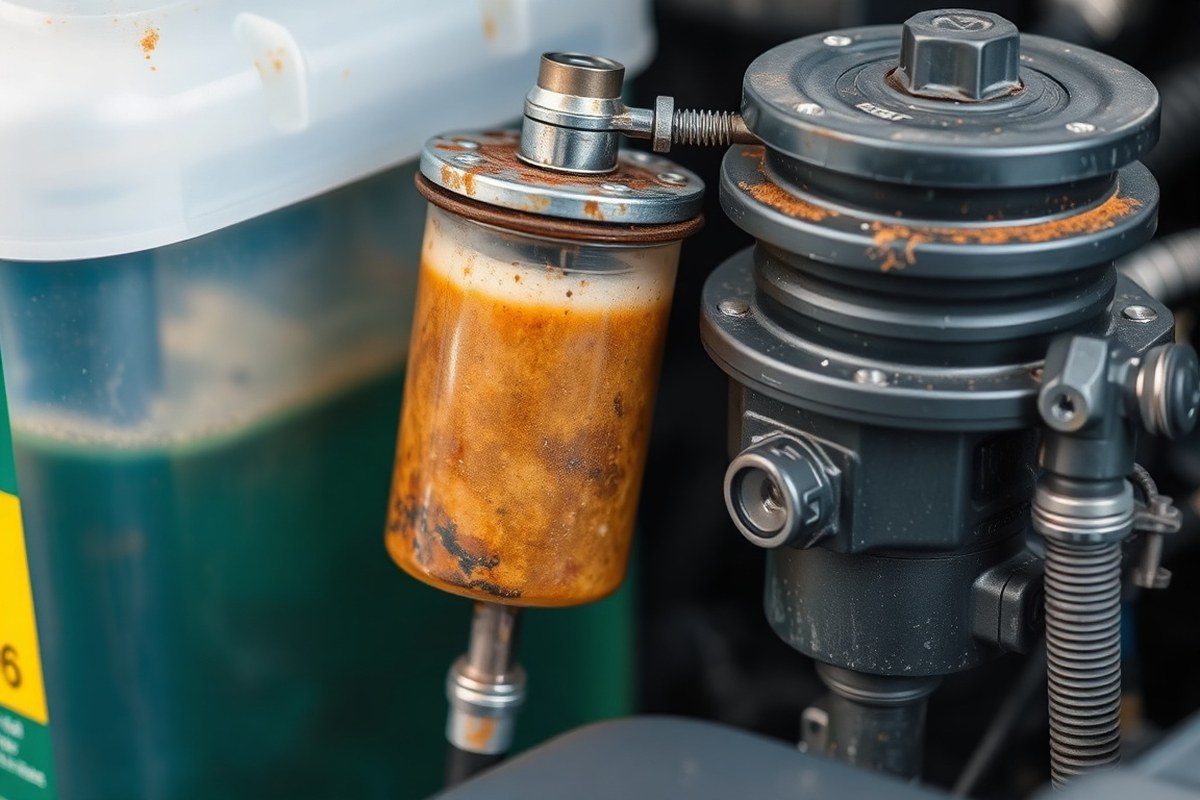
A car turning off while driving often points to fuel system problems. Problems include bad fuel pumps, clogged filters, and fuel blockages. These problems stop fuel from getting to the engine right.
How a Failing Fuel Pump Causes Shutdowns
The fuel pump pushes gas from the tank to the engine. When it weakens, the fuel pump can’t meet engine fuel needs. Low fuel pressure makes the engine sputter, then shut off.
A weak pump might still work at idle but fail when the engine demands more fuel. Repairs usually cost between $300 and $700, depending on your car model. Ignoring a failing fuel pump can leave you stranded unexpectedly.
Clogged Fuel Filter and Its Effects on Engine Performance
The fuel filter removes dirt and particles from fuel before it hits the engine. Over time, it clogs, cutting fuel flow and causing the engine to starve. This blockage often leads to power loss and stalling, especially during heavy loads like accelerating or going uphill.
Replacing a clogged filter costs about $50 to $150. It’s a simple fix that typically restores normal fuel flow and engine performance. Ignoring this repair can damage the fuel pump badly.
Fuel Gauge and Fuel Level Sensor Issues
The fuel gauge and sensor tell you how much fuel is in the tank. Faulty fuel gauges or sensors may cause sudden fuel loss. Bad sensors can send false signals that shut the engine off.
Try adding a small amount of gas, like one gallon. Repairing or replacing the sensor or gauge can cost between $100 and $300. It’s a good idea to fix this quickly to avoid getting stuck on the road.
Common Fuel Delivery Problems to Watch For
Fuel delivery issues cover a range of problems that stop fuel from reaching the engine properly. These can cause sudden or intermittent shutdowns, making your drive unsafe. Here are common signs that point to fuel delivery problems:
- Engine sputters or dies under load like uphill or acceleration
- Car suddenly shuts off while stopping or turning
- Intermittent power loss or stalling at random times
- Car restarts after shutting off but then stalls again
- Fuel gauge shows empty but fuel tank is not completely empty
Addressing these symptoms early can prevent more costly repairs and dangerous breakdowns on the road.
Check your fuel gauge regularly and refill before it hits empty to avoid unexpected engine shutdowns.
Electrical System Failures That Cause Unexpected Engine Shutdown
Electrical system failures are a common cause of a car turning off while driving. Problems like a bad alternator, weak battery, or ignition switch can cut power. Bad relays or wiring issues might also cause this.
Each can stop the engine from running. Testing these parts helps pinpoint electrical problems and rules out other causes.
Testing the Car Battery and Alternator
The battery provides power to start your car. But when the engine runs, the alternator keeps it charged. A weak battery rarely causes stalling alone, but a failing alternator can.
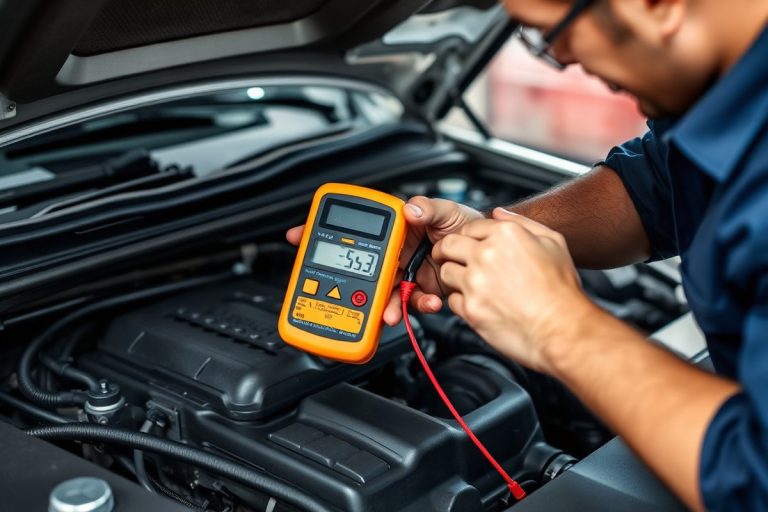
Use a multimeter to check the battery voltage. It should read about 12.6 volts when the engine is off.
With the engine running, voltage should rise to 13.5 to 14.5 volts, showing the alternator is charging. It stays near 12 volts.Voltage below 6 volts means a bad alternator. It needs replacing.
This usually costs $400 to $1,000. You can also have an auto parts store test your battery and alternator for free.
Checking the Ignition Switch and Fuel Pump Relay
The ignition switch sends power to the engine and electrical systems. A malfunctioning ignition switch can make the engine suddenly die. Faulty ignition switches might cause hard starts, dashboard light flickers, or a dead battery.
The fuel pump relay controls power to the fuel pump. A failed fuel pump relay often causes sudden engine shutdown. It stops fuel delivery.
Swap the suspect relay with a similar one in the fuse box. See if the issue stops for a time.
Replacing an ignition switch costs around $200 to $600. A relay replacement is usually under $50. Both are fixable at most shops or by experienced DIYers with a repair manual.
Inspecting Wiring and Connectors for Damage
Wiring faults can cause intermittent power loss and stalling. Look for loose, corroded, or broken wires at battery terminals and fuse box.
Check ignition switch and fuel pump wiring too. Poor battery connections are a common source of electrical trouble.
Wiggle wires or connectors while the engine runs to see if the car stalls. Moving a wire that causes the engine to cut out shows wiring needs repair or replacement. Loose grounding wires or oxidized terminals can cause voltage drops that kill the engine.
Electrical repairs usually cost less than parts replacements but depend on the damage extent. Fixing wiring issues quickly prevents more expensive damage to sensors and control units.
How Sensor Malfunctions Cause Your Car to Shut Off While Driving
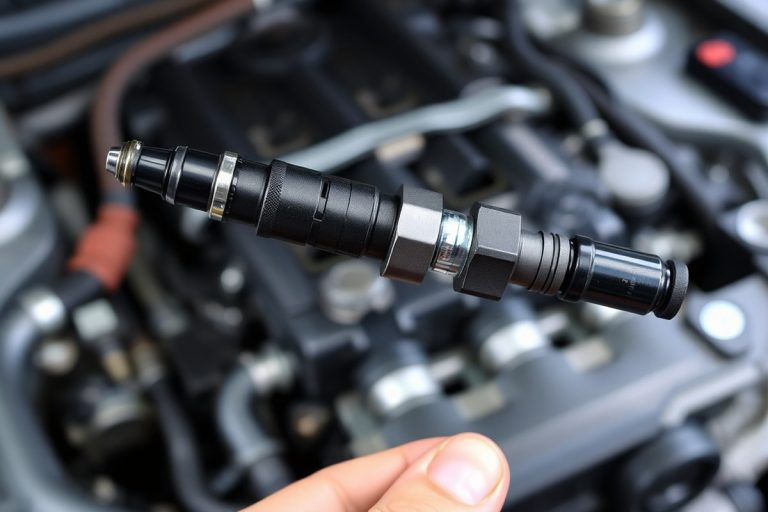
The crankshaft position sensor monitors the crankshaft’s speed and where it is. The engine control module (ECM) uses this data to time ignition and fuel delivery.
If the sensor fails, the ECM can lose timing, causing the engine to shut off while driving. Usually, a faulty sensor makes the engine run rough or misfire before stalling.
The camshaft position sensor works closely with the crankshaft sensor. It lets the ECM know the camshaft’s position to synchronize fuel injection precisely. A bad camshaft sensor can cause poor engine performance.
It may also cause rough running and hard starts. Sometimes, it can shut the engine down unexpectedly. This sensor error confuses the ECM, leading to abrupt engine stops.
The mass airflow (MAF) sensor measures the air entering the engine. When the sensor sends wrong info, the ECM mixes fuel and air incorrectly.
This imbalance often leads to engine stalling or hesitation. Cleaning or replacing a faulty MAF sensor typically restores smooth engine operation and prevents shutdowns.
The throttle body and idle air control valve regulate engine speed at idle. Problems here can cause the engine to stall, especially when stopped or at low speed.
Dirt, carbon buildup, or a faulty idle control valve disrupt airflow, making the engine die unexpectedly. These parts need regular cleaning or replacement to avoid stalling problems.
- Test crankshaft and camshaft sensors with an OBD-II scanner for trouble codes.
- Check sensor wiring and connectors for damage or looseness.
- Replace a crankshaft sensor, often costing $30 to $100, with a 30-minute install.
- Clean or replace the MAF sensor if dirty or faulty, costing $50 to $150.
- Inspect and clean the throttle body and idle control valve every 30,000 miles.
- Scan the ECM for faults; a faulty ECU may need professional diagnosis.
Damaged wiring or loose sensor connections can cause intermittent shutdowns hard to trace. A simple sensor replacement often fixes sudden engine stalls.
But complex ECM or sensor wiring faults may require a mechanic. Diagnosing these parts step-by-step prevents repeated stalls and unsafe driving conditions.
Engine Mechanical Problems and Overheating Issues That Cause Shutdown
Overheating can definitely make your car shut off while driving. When engine temperature hits 220 to 250 degrees Fahrenheit, parts can get damaged. Critical pieces like gaskets and pistons suffer harm at this heat level.
Many modern cars have safety systems to protect the engine. These systems shut down the engine if it overheats too much.
Low oil pressure also poses a serious threat to your engine’s operation. The oil keeps all the moving parts lubricated and cool. When oil level is too low or oil pump fails, pressure drops.
This drop raises friction inside the engine. This can cause your car to stall or suddenly shut off. Cars with protective shutdown features often have this response.
Mechanical failures like broken timing belts or severe overheating often cause an immediate shutdown. For example, a snapped timing belt stops the engine’s critical timing, so it can’t run. Severe overheating or oil starvation can damage the engine inside.
This damage may cause your car to shut off suddenly. Repairing these failures often means professional work. Costs can be from hundreds to thousands of dollars.
Regularly checking and topping off engine oil helps keep oil pressure stable. It also prevents overheating problems. You should watch the temperature gauge on your dash.
Stop driving and get your car checked if the gauge stays in the red zone. Cooling system problems often cause overheating and car shutdowns.
So inspect coolant levels and radiator condition often. A mechanic can run pressure tests to find leaks or faulty parts before they cause shutdowns.
Never keep driving if your car shows overheating or oil pressure warnings; damage worsens quickly.
Cars without shutdown systems may keep running with low oil pressure. This can lead to serious engine damage. Other times, the engine will stall or turn off to protect itself.
Diagnosing issues often means a mechanic must inspect the engine. They check belts, oil sensors, coolant flow, and more with special tools.
Symptoms and Warning Signs Before Your Car Turns Off Unexpectedly
Your car often gives signs before it shuts off while driving. You might notice sputtering, where the engine sounds uneven or struggles.
The engine is not getting steady fuel or spark. This can cause it to stall.
Another common sign is losing power. Your car may hesitate when you press the gas pedal or feel jerky.
The engine can’t run without enough fuel or proper ignition. This can cause shutdowns.
Dashboard warning lights also warn you of trouble. The battery light, oil pressure light, or check engine light might flicker on or off.
Warning lights signal a problem like electrical faults or low lubrication. These may cause sudden stops.
- Engine sputtering or rough running
- Sudden loss of acceleration or power
- Dashboard lights flickering or turning on
- Dim or flickering headlights and interior lights
- Engine stalls after heating up, then restarts after cooling
- Car won’t start or struggles to turn over
- Oil pressure warning light appearing while driving
Your car shuts off but restarts after cooling down. This often means overheating parts. A fuel pump or ignition module may fail when hot.
It can work again after cooling. Problems start after about 30 minutes driving.
Ignoring these signs lets problems worsen and risks your car stopping in unsafe places. Check fuel levels, scan for trouble codes, and inspect electrical connections right away. A basic diagnostic test can cost around $100, which is cheaper than fixing major damage later.
Immediate Steps to Take If Your Car Turns Off While Driving
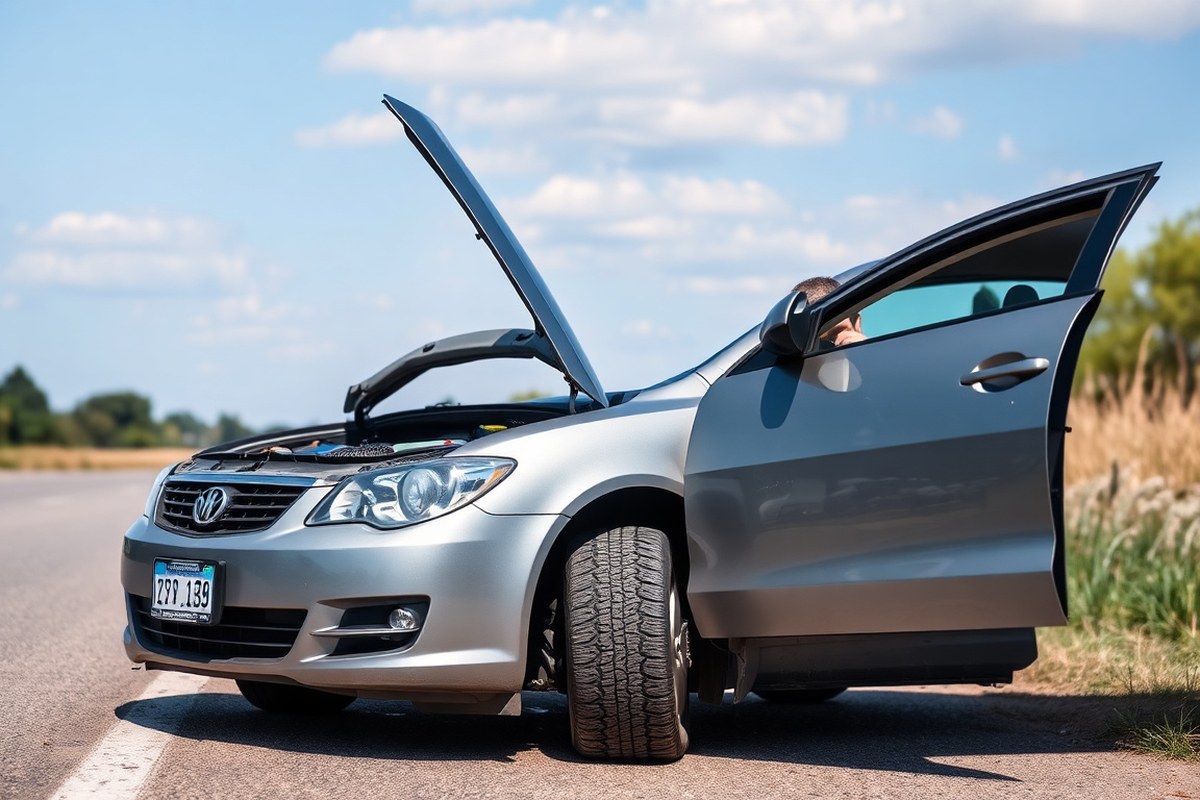
Stay calm when your car turns off while driving. Keep a firm grip on the steering wheel. Avoid sudden moves or braking that could surprise other drivers.
Look around and find the safest place to stop. Signal your turn to move to the roadside with your emergency blinkers. Pull over smoothly to avoid blocking traffic or creating hazards.
- Turn on hazard lights right after stopping to alert others.
- Try restarting the car only once you have fully stopped.
- Don’t keep trying if the car won’t start after one attempt.
- Call roadside assistance if you’re unable to restart safely.
- Stay inside the vehicle if the area is dangerous or visibility is poor.
- When safe, get out and wait behind a barrier or away from traffic.
Restarting the car after it shuts off is safe only after stopping. Check for unusual noises or smells before restarting. Restart attempts are best limited to once or twice to avoid damage.
Keep emergency flashers on if the car won’t restart. This warns other drivers to pass cautiously. Roadside help can diagnose and fix the problem without risking safety.
How to Diagnose the Cause Using Tools and Inspections
To find out why your car turned off while driving, you’ll need some tools and inspections. Using an OBD-II scanner, a multimeter, and visual checks can help narrow the problem. Some cases need a professional mechanic’s expertise to avoid mistakes.
Using an OBD-II Scanner and Interpreting Codes
An OBD-II scanner plugs into the port under your dashboard. It reads error codes from the car’s computer that point to faulty parts. The codes might show problems in the engine, sensors, or electrical systems.
After connecting the scanner, turn the ignition on without starting the engine. Follow the scanner’s instructions to retrieve codes.
Then, check the code meanings online or in the scanner’s manual. This will tell you what needs fixing.
Sometimes, the codes can be vague or point to multiple possibilities. Getting confusing results means it’s best to ask a mechanic for help. This tool costs between $20 and $100 for a basic model.
Performing Battery and Alternator Voltage Tests
Use a multimeter to check the battery voltage first. With the engine off, healthy batteries show about 12.6 volts. Anything below 12.4 volts means the battery may be weak or discharged.
Next, start the engine and measure voltage again at the battery terminals. It should read between 13.7 and 14.7 volts if the alternator works properly. Lower or higher numbers suggest the alternator has issues.
Testing these parts every 4 to 6 months helps catch electrical problems early. Not seeing these voltage ranges means you should fix or replace parts. Avoid driving until repairs are done.
Inspecting Sensors and Fuel Delivery Components
Look closely at sensors like the crankshaft or camshaft position sensor for damage or loose connections. These sensors send signals to keep your engine running smoothly. A broken or dirty sensor can cut the engine suddenly.
Check the fuel pump and fuel filter too. A failing fuel pump won’t deliver enough fuel, causing the engine to shut off. Replace clogged filters regularly to keep fuel flow steady.
Fuel issues often mimic electrical symptoms. So it’s best to combine these checks with the OBD-II scan. Sensors or fuel parts that look worn need a mechanic’s quick evaluation.
Testing voltages with a multimeter while the engine runs helps spot alternator troubles fast.
Repair Costs and Preventive Maintenance to Avoid Shutdowns
Repair costs vary widely depending on the cause of your car shutting off. Fixing sensor or computer issues usually costs less. These repairs are cheaper than fixing major engine faults.
Fuel system problems also cost more to repair. Knowing typical price ranges helps prepare your budget for repairs.
| Problem | Typical Repair Cost Range (USD) |
|---|---|
| Oxygen Sensor Replacement | $150 – $300 |
| Fuel Pump Replacement | $400 – $800 |
| Throttle Body Cleaning/Repair | $100 – $300 |
| Ignition Coil Replacement | $150 – $300 |
| Spark Plug Replacement | $100 – $200 |
Keeping up with regular maintenance cuts your chance of sudden shutdowns. This includes replacing sensors before they fail and cleaning parts like throttle bodies. Preventive care usually costs less than emergency repairs and avoids safety risks.
Here’s a sample maintenance checklist to follow for your car, spaced by time or mileage:
- Every 5,000 miles: Change oil and filter, check spark plugs.
- Every 15,000 miles: Inspect fuel system and clean throttle body.
- Every 30,000 miles: Replace oxygen sensors and ignition coils if needed.
- Every 45,000 miles: Check electrical system connections and battery health.
- Every 60,000 miles: Perform full engine tune-up and sensor diagnostics.
Inspecting your car regularly lets you catch issues before they cause shutdowns. Preventive inspections also avoid costs from towing or accidents due to sudden loss of power. Being proactive keeps you safe on the road and helps your car last longer.
Step-by-Step Action Plan to Handle a Sudden Engine Shutdown
If your car turned off while driving, follow these steps to find and fix the problem safely.
- Immediately after shutdown: Pull over to a safe spot and turn on your hazard lights. This keeps you visible and safe on the road.
- Within 30 minutes: Check the fuel gauge to spot empty or low fuel. Refuel if needed and try restarting the engine.
- Within 1 hour: Look under the hood for obvious issues like disconnected wires or leaks. Fix simple problems like loose battery cables.
- Within 24 hours: Use an OBD-II scanner to check for error codes. Codes point to specific sensor or engine issues. Most auto parts stores loan this tool for free.
- Within 2 days: Inspect or replace the fuel filter and ignition components if the problem persists. These parts often cause shutdowns when faulty.
- Within 1 week: Have a mechanic check engine mechanical parts and the cooling system. Overheating and worn parts need professional fixes.
- After 1 week: Follow preventive maintenance tips, like regular oil changes and sensor checks. This keeps your car running and lowers shutdown risk.
Frequently Asked Questions
Why Did My Car Turn Off While I Was Driving?
Your car likely turned off due to fuel, electrical, or sensor issues. These common faults disrupt the engine’s operation and cause it to shut down unexpectedly. Fixing these issues prevents repeated shutdowns and potential damage.
Can a Bad Battery Cause My Car to Turn Off While Driving?
Yes, a failing battery can cut electrical power and stall the engine. The battery powers sensors and the ignition system in your car. If the battery dies, the car may stop running.
You need a working battery for the engine to run. Getting the battery checked can avoid breakdowns.
Why Did My Car Turn Off When Driving and Won’t Start Again?
This might show a bigger issue like a broken fuel pump. The ignition system could also have failed. Both can cause the car to stop working.
The car lacks the needed fuel or spark to run again until repaired. A professional diagnostic is best in this case.
What Are Common Signs That My Car Might Shut Off While Driving?
You might notice poor engine performance, stalling, or dashboard warning lights. These signs show your engine or systems need quick attention to avoid sudden shutdowns. Don’t ignore these early warnings.
How Much Do Repairs Usually Cost for a Car That Turns Off While Driving?
Repair costs vary widely from about $100 to over $5,000, depending on the issue and vehicle. Simple sensor fixes cost less, while engine or electrical damage can run much higher. Early repairs save money and trouble.
The Bottom Line
Cars shut off suddenly because of fuel, electrical, or engine problems. Acting fast and checking basics keeps you safe and limits damage. Start with the fuel and electrical system checks before moving to tougher repairs.