
How Many Miles Is 11000 Steps? Accurate Conversion & Fitness Tips
Wondering how many miles is 11000 steps? On average, 11,000 steps equals about 5.2 miles for most adults. That distance depends mostly on your stride length, which varies by height and walking speed.
Your stride length typically measures about 41% of your height. A taller person covers more distance with the same 11,000 steps than a shorter one.
For example, someone around 5 feet 2 inches walks roughly 4.5 miles. But someone 6 feet 2 inches walks over 5.3 miles at the same step count.
To get a better idea for yourself, measure your stride or use an app. So you track how far you really go. Keep in mind walking pace slightly affects step length, which changes your total miles.
Key Takeaways
- Eleven thousand steps generally equals about 5.2 miles for an average adult.
- Stride length affects distance; taller people walk farther per step.
- Calculate stride length by measuring your steps over a known distance.
- Walking pace influences stride length but shifts mileage only slightly.
- Each 2,100 to 2,200 steps typically make up one mile for most adults.
- Use tracking apps or pedometers that allow input of your stride length.
How Many Miles Does 11,000 Steps Cover Exactly?
Eleven thousand steps cover between about 4.6 and 5.5 miles. Your exact distance depends mainly on your stride length, which changes with your height.
For example, a person who is 5 feet 2 inches tall usually walks around 4.58 miles at 11,000 steps. Taller people, like those around 6 feet 2 inches, might cover roughly 5.42 miles with the same step count.
Stride length is often around 41 percent of your height. This means someone who is 5 feet 4 inches tall typically has a stride around 2.3 feet. Would walk close to 4.79 miles in 11,000 steps.
In contrast, someone at 6 feet tall with a stride about 2.6 feet long might walk roughly 5.42 miles. The difference can add up to nearly a mile, about 0.86 miles, between shorter and taller walkers at this step amount.
Here is a quick look at how stride length changes distance. A person 5 feet tall has a stride length of 2.1-foot stride covers near 4.38 miles in 11,000 steps. A taller person at 5 feet 8 inches with a 2.5-foot stride reaches 5.21 miles.
To find your distance, multiply stride length by your steps. Then divide by 5,280, the number of feet in a mile.
For example, if you have a 2.4-foot stride: 2.4 ft × 11,000 steps = 26,400 feet. Divide 26,400 by 5,280, and you get 5 miles exactly.
How to Convert Steps to Miles: Formulas and Methods
Calculating Your Average Stride Length at Home
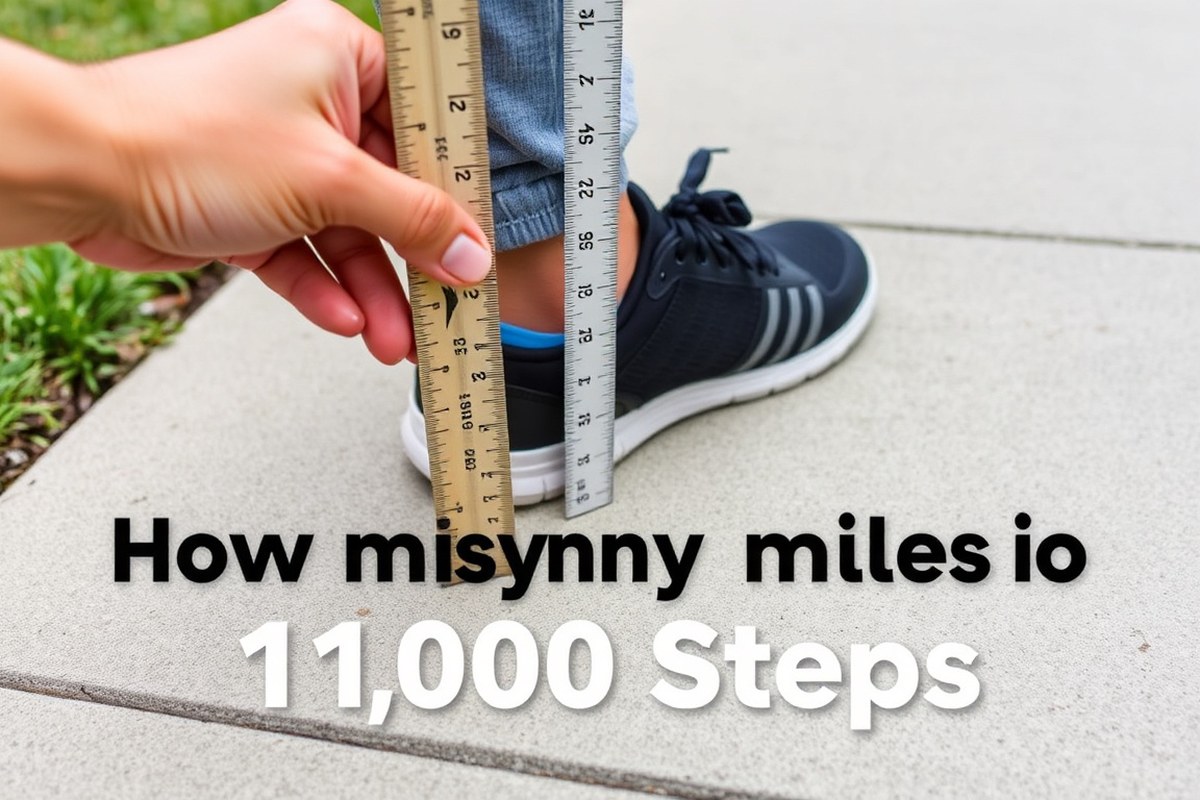
Knowing your stride length helps you convert steps to miles accurately. Stride length is the distance covered in one full step, usually measured in feet or meters. Measuring it at home only requires a bit of space and a tape measure.
To find your stride length, walk a set distance. Count your steps as you walk.
Divide the distance by your step count. Divide the total distance by the number of steps to get your average stride.
- Find a straight path like a hallway or driveway around 20 feet long.
- Mark the start and end points clearly using tape or cones.
- Walk the marked distance at your normal pace, counting your steps.
- Stop exactly at the end point, and note your step count.
- Measure the total distance in feet or meters between the points.
- Divide the distance by the number of steps to find your stride length.
- Repeat the process two more times and average the stride lengths.
Measure your stride several times to avoid errors from uneven steps.
Using the Standard Formula to Convert Steps to Miles
The key formula multiplies your step count by stride length. Then divide that result by 5,280 if your stride is in feet. This converts feet walked into miles since a mile equals 5,280 feet.
In metric, multiply steps by stride length in meters, then divide by 1,609.344. This converts the total meters into miles. Both give a rough distance based on your walking pattern and step size.
For example, if you walked 11,000 steps with an average stride of 2.4 feet, multiply 11,000 by 2.4 to get 26,400 feet. Divide 26,400 by 5,280, and you get exactly 5 miles.
Adjusting Formulas for Gender Differences
Stride length varies by gender because average height and leg length differ. Women typically have an average stride of about 2.2 feet, men around 2.5 feet. Using these defaults can improve your distance estimates.
You can estimate stride by multiplying height in inches by 0.413 for women or 0.415 for men. This method reflects height differences better than a generic average stride length.
A man 70 inches tall might have a 29-inch stride. This comes from multiplying 70 by 0.41.
That gives his approximate stride length.415), or around 2.4 feet. Use this value in the same formula: Steps × stride length ÷ 5,280 to get miles.
How Height and Stride Length Affect the Distance of 11,000 Steps
Your height directly affects your stride length, which changes how far you travel in 11,000 steps. Taller people usually have a longer stride. That means they cover more miles than shorter people walking the same number of steps.
Average Stride Lengths by Height for Men and Women
Stride length grows with height. For example, someone 5 feet tall might have around a 24.8-inch stride. By contrast, a 6-foot tall person typically has a stride near 29.7 inches.
Men and women have similar stride lengths at the same height. Small differences exist, but height is the main factor. Stride length is measured from heel to heel during walking.
Typical Steps per Mile Variation Across Height Ranges
The number of steps to walk a mile decreases as height increases. A shorter person takes more steps per mile because each step covers less distance.
For example, a 5-foot-tall person may take about 2,557 steps per mile. A 6-foot person takes roughly 2,131 steps per mile.
These step counts reflect how stride length affects total distance. It can vary by walking speed. But height-linked stride length has the biggest impact on steps per mile.
Example Distances Covered by 11,000 Steps for Different Heights
At 11,000 steps, the distance you travel varies with stride length. Someone 4 feet 10 inches tall with a 24-inch stride covers about 4.16 miles. A 6-foot tall person covers 5.16 miles walking the same 11,000 steps.
These differences show why counting steps alone can mislead you about actual distance. Knowing your height helps you figure out a more accurate mileage estimate from your step count.
| Height | Stride Length | Steps per Mile | Distance Covered in 11,000 Steps |
|---|---|---|---|
| 4’10” | 24.0 in | 2,645 | 4.16 miles |
| 5’0″ | 24.8 in | 2,557 | 4.30 miles |
| 5’2″ | 25.6 in | 2,474 | 4.45 miles |
| 5’4″ | 26.4 in | 2,397 | 4.59 miles |
| 5’6″ | 27.3 in | 2,324 | 4.73 miles |
| 5’8″ | 28.1 in | 2,256 | 4.88 miles |
| 5’10” | 28.9 in | 2,192 | 5.02 miles |
| 6’0″ | 29.7 in | 2,131 | 5.16 miles |
Step length differences of just a few inches change your total distance quite a bit. Two people can each walk 11,000 steps.
Yet, they may cover different miles outdoors or on a treadmill. This happens because walking environments and step length can vary.
How Long Does It Take to Walk 11,000 Steps at Different Paces?
How Walking Speed Changes Your Time
Walking 11,000 steps can take different amounts of time based on your pace. A slow walk at about 2 mph requires over 2 hours. A faster walk of 4 mph cuts that down to around 1 hour and 25 minutes.
Your speed directly affects how long the walk lasts. Even a small increase in pace saves minutes across the distance.
Typical Adult Walking Speeds
Most adults walk between 2.5 and 3.5 mph during everyday activity. At 3 mph, completing 11,000 steps usually takes about 1 hour 50 minutes. This pace fits many fitness walkers aiming for moderate exercise.
Speeds can vary depending on your fitness, terrain, and whether you’re walking indoors or outside. Expect casual strolls to last about 2 hours for 11,000 steps.
Time Estimates for Common Walking Paces
Strolling slowly at 2 mph takes about 2 hours and 18 minutes. That covers roughly 11,000 steps.
A moderate pace near 3 mph lowers time close to 1 hour 50 minutes. Fast walking at 4 or 4.5 mph reduces the time to under 1 hour 20 minutes.
For example, a 4 mph pace’s 11,000 steps take about 1 hour and 25 minutes. That’s nearly an hour saved compared to a leisurely 2 mph walk.
Fitting 11,000 Steps into Your Day
You might break 11,000 steps into several short walks or active moments. A 20-minute morning walk adds about 2,200 steps. Take a couple of these walks each day.
Add some casual walking too. This can help you reach your step goal.
Knowing your approximate pace helps you plan how long each walk takes. You can adjust your timing by speeding up or splitting walks into smaller chunks.
What Pace to Choose and Why It Matters
A brisk pace burns more calories and improves fitness faster but requires more energy. Slow walking is easier but takes longer for 11,000 steps. Choose a pace that fits your current fitness and daily schedule.
Even small increases in pace can cut your walking time by 10 to 30 minutes. Aim for what keeps you consistent while still challenging your body.
Calories Burned Walking 11,000 Steps: What to Expect
The number of calories burned walking 11,000 steps ranges between 450 and 600. Your body weight and walking pace primarily influence this range. Heavier people burn more calories, and faster walking increases calorie burn.
For example, a person weighing about 155 pounds burns roughly 410 calories by walking 11,000 steps. This equals almost 2,870 calories per week, which can contribute to nearly 0.8 pounds of fat loss weekly before diet changes. Adding 1,000 extra steps burns about 40 more calories per day.
These steps add roughly 0.5 miles to your walk. This boosts your daily calorie burn.4 more miles.
| Steps | Distance (miles, walking) | Calories Burned (155 lbs) |
|---|---|---|
| 10,000 | 4.73 | 370 (approx.) |
| 11,000 | 5.20 | 410 (approx.) |
A person walking at a brisk pace will burn more than someone strolling leisurely. Pace affects heart rate, which fuels calorie burning. Also, adding hills or carrying weight can increase the total calories burned.
Track your pace and heart rate for better calorie estimates. This is key if you want to lose weight. It helps tailor your workout’s impact.
Comparing 11,000 steps to 10,000 shows a 10% increase in steps and calories burned. Even a small daily step increase can boost your total calorie burn and support weight loss. Adjust your daily goals based on how much time you can realistically walk.
Differences Between Walking, Running, and Jogging 11,000 Steps
Running 11,000 steps covers more distance than walking the same number of steps. Running strides tend to be longer, so you take fewer steps per mile. For walking, it takes about 2,112 steps to cover one mile.
Running needs about 1,348 steps per mile. This means your 11,000 running steps would equal roughly 8.15 miles compared to about 5.2 miles walking.
Stride length makes a big difference in distance and calorie burn. When you run, your feet push off harder, and your legs extend farther forward. Walking strides are shorter and slower.
So you cover less ground in the same number of steps. Running burns more calories because your body works harder.
You move faster and support your weight with every step. That impact uses extra energy.
| Activity | Steps | Approx. Distance (miles) | Approx. Time | Calories Burned |
|---|---|---|---|---|
| Walking | 11,000 | 5.0 | ~1 hr 50 min | ~410 |
| Running | 11,000 | ~8.15 | Varies (faster pace) | Higher than walking |
Walking those steps typically takes almost two hours. But running your 11,000 steps will take less time. You might burn 40% to 60% more calories running the same number of steps.
Calorie burn varies by weight, pace, and running or walking intensity. Running burns more energy per step, even though you take fewer steps per mile.
Track your stride length and pace to get an accurate estimate. Do this for both walking and running.
Use your own data for better results. This will help you understand how your personal steps translate to distance and calories.
Practical Tips to Achieve 11,000 Steps Every Day
Increasing your daily step count starts with small, realistic changes. Carry a pedometer or use a smartphone app that accurately records your steps. Check your step count during the day to stay motivated.
This helps you know when to move more. Tracking steps keeps you on track with your goals.
Adding steps doesn’t mean long walks every time. Small moves like walking on phone calls add steps. Park farther from stores to increase your walking.
Taking stairs instead of elevators boosts your step count. Splitting walks into short bursts during breaks often fits busier schedules better than one long walk.
- Walk around your home during TV commercials.
- Take 5-minute walking breaks every hour at work.
- Use stairs instead of elevators or escalators.
- Park farther away in parking lots.
- Walk to nearby stores or friends instead of driving.
- Choose routes with parks or sidewalks for more steps.
- Set step reminders on your phone every two hours.
Your regular activities may already get you about 2,500 steps. Add a 20- to 30-minute brisk walk or other planned movement to incrementally increase your steps. For example, a mile typically equals about 2,000 to 2,500 steps, depending on stride length.
Use apps that sync with fitness trackers to monitor trends and set daily goals. Many apps let you set reminders and celebrate milestones, which keeps you motivated. Some trackers even alert you when you’ve been inactive too long, encouraging regular movement.
Incorporate step goals into your routine by linking them to other habits. For instance, walk to get your morning coffee, or take evening strolls after dinner. These habits turn walking into a simple part of your day instead of an extra chore.
Common Mistakes When Estimating Distance from Step Counts
Step counters often don’t show accurate distance because they rely on guessed stride lengths. Most devices use a standard stride length based on generic height ranges. That approach overlooks your unique walking style and terrain changes.
Stride length calibration errors happen when your personal step length isn’t set right. For example, if you are taller than the device’s default, distance will show less. The device uses a shorter default height.
So, it underestimates how far you actually walked. Shorter people can see the opposite problem, where distance runs too high.
To avoid overestimating or underestimating distance, adjust your stride length with a simple test. Measure a known distance, like 100 feet.
Count the exact steps you take crossing it. Then divide the distance by the step count to get your average stride length in feet.
Enter that stride length into your tracker’s settings. This helps your device convert steps to miles more accurately. Recheck your stride length after changing shoes, walking surfaces, or if your pace shifts drastically.
Also, keep in mind that walking uphill, downhill, or on uneven paths changes your step length. Devices can’t always adjust for those changes, so the distance might still vary. Regularly updating your stride length cuts errors but won’t erase all differences.
Calibrate your stride length on flat, hard surfaces to get the most reliable measurement. It helps your step count reflect true miles better over time.
Health Benefits and Weight Loss Potential of Walking 11,000 Steps
Setting a goal of 11,000 steps daily is a strong choice for overall health. It goes beyond the classic 10,000-step mark, providing extra benefits without too much added effort. Walking this amount regularly lowers your risk of heart disease and stroke.
It also reduces type 2 diabetes risk by improving blood flow. Walking helps lower your blood pressure too.
To get these benefits, add 60 to 70 minutes of steady walking. Do this on top of your usual daily activities. This extra walking helps improve your health.
This consistent movement raises your heart rate enough to strengthen your cardiovascular system. You don’t have to walk all at once. Breaking it into smaller walks throughout the day works just as well.
Walking 11,000 steps a day also helps with weight loss by burning calories consistently. Depending on your weight and walking speed, this can burn about 400 to 600 calories daily. Combine walking with a balanced diet to lose weight.
This creates a calorie deficit, which is important. A calorie deficit helps your body burn fat.
A good way to stay on track is planning each morning. Decide then how you’ll reach your step goal. This keeps you focused and motivated.
For example, walk briskly 30 minutes before breakfast. Take another 20-minute walk in the evening. These two walks help you meet your daily steps.
These planned walks help make 11,000 steps a habit. They boost your chances of sticking to your goal. Regular habits keep you consistent over time.
People who walk less might find jumps toward 11,000 steps challenging at first. Start with smaller targets, then add 1,000 steps every week until you reach 11,000. This approach reduces injury risk and makes the habit easier to sustain over time.
It’s normal to hit a plateau after several months of daily walking. To keep improving your fitness, adjust your pace or include small hills and stairs. Adding variety challenges your heart and muscles, which improves your fitness beyond steady walking.
Step-by-Step Action Plan to Hit 11,000 Steps Daily
Start tracking your steps today to build a habit. Use these steps to reach your goal of 11,000 steps consistently.
- Day 1: Download a reliable step-tracking app or wear a pedometer. Check your current daily step count.
- Week 1: Add 1,000 extra steps each day by taking short walks. Notice your energy and motivation improving.
- Week 2: Try walking part of your commute or taking stairs instead of elevators. See your daily steps rise closer to 7,000.
- Week 3: Schedule a 20-minute walk after meals or during breaks. Track if your total steps hit 9,000 or more.
- Week 4: Plan weekend hikes or longer walks to boost steps. Feel yourself moving toward the 11,000-step mark.
- After 1 month: Set step reminders to stay active. Adjust your pace or route if needed to maintain 11,000 steps daily.
- Ongoing: Mix walking with light jogging for variety. Notice your fitness improving without overdoing it.
Frequently Asked Questions
How Many Miles Is 11,000 Steps for Someone with a Short Stride?
For those with short strides, 11,000 steps cover about 4.6 miles. Shorter strides mean you walk fewer miles for the same step count compared to taller people.
Can 11,000 Steps Help Improve Endurance or Is It Just for Daily Activity?
Walking 11,000 steps regularly can improve your endurance over time. It challenges your cardiovascular system more than lower step counts.
Does Walking 11,000 Steps Daily Reduce Belly Fat?
Walking 11,000 steps daily may help reduce belly fat with a balanced diet. Consistent movement adds to your calorie burn but spot reduction isn’t guaranteed.
How Should I Adjust My Step Goal If I Switch from Walking to Running?
Running covers more distance per step, so you might lower your step goal. For example, 11,000 running steps equal about 5.8 miles, more than walking.
Is It Better to Split 11,000 Steps into Several Sessions or Walk Them All at Once?
Splitting 11,000 steps into sessions still offers health benefits and can be easier. Your body gains cumulative effects from multiple walking bouts.
Key Points to Remember
Walking 11,000 steps covers about 4 to 5 miles depending on your stride. Start tracking steps today and focus on small daily increases. Your body and fitness goals will thank you for it.